


More news on this day
Transportation Secretary Sean Duffy said on Wednesday, November 25, that most U.S. flight delays recorded so far this Thanksgiving travel week are being attributed to weather, as airlines and airports navigate a record volume of holiday passengers alongside the lingering effects of recent technology failures and a nationwide ground stop earlier this month.
Get the latest news straight to your inbox!
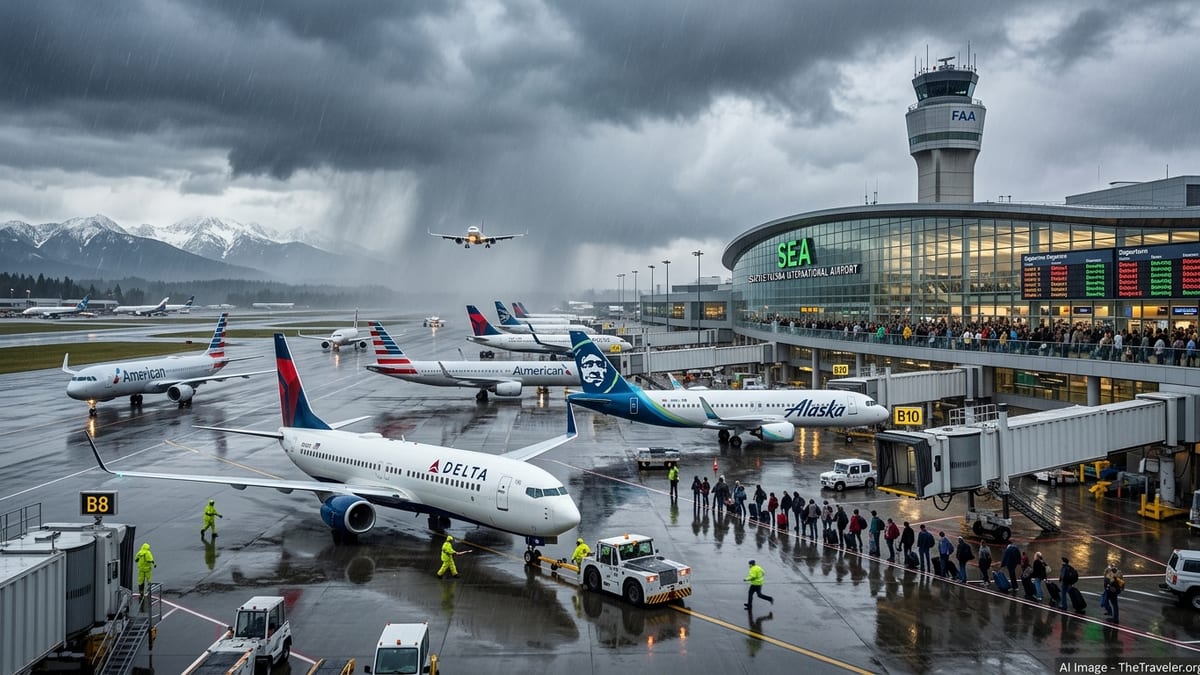
Record Thanksgiving air traffic meets active weather pattern
Duffy’s comments came during one of the busiest travel weeks in recent years, with the Federal Aviation Administration forecasting 417,775 flights across the nine-day Thanksgiving period from November 23 to December 1, a 16-year high for the holiday timeframe. FAA figures and Department of Transportation briefings indicate that Tuesday, November 24, alone saw roughly 52,000 scheduled flights in U.S. airspace, putting additional pressure on air traffic control facilities and airline operations as storms move across key regions.
According to posts on the social platform X and subsequent reports summarizing his remarks, Duffy said that internal DOT and FAA updates for the early part of the week showed the majority of delay minutes being coded to weather-related categories, rather than to airline-controlled issues such as crew or maintenance or to new infrastructure problems. He cited an average delay time of about 32 minutes on Tuesday across delayed flights, noting that, in his view, this was a manageable level given the volume of traffic and the unsettled weather pattern affecting multiple hubs.
Pre‑Thanksgiving forecasts from the National Weather Service and NOAA highlighted a series of storm systems affecting both coasts and parts of the Midwest, including heavy rain, strong winds and coastal flooding risks. Those systems have already prompted advisories about possible turbulence, low clouds and icing at cruise altitudes, with the FAA’s live status tools on Wednesday evening showing weather-related departure delays at several large airports, including Miami and San Francisco, and lower‑level delays or ground delay programs at others as storms moved through their terminal areas.
Where delays are showing up so far
While detailed, airport‑by‑airport statistics for the full week will only be available when November data are compiled, real‑time information from the FAA and airport operators points to a pattern in which weather has been the primary trigger of operational slowdowns in the run-up to Thanksgiving Day. On Wednesday, November 25, the FAA reported low‑ceiling conditions contributing to delays at San Francisco International Airport, while thunderstorms and heavy rain in Florida were associated with departure delays of 15 to 60 minutes at Miami International at various points in the day. Similar weather‑linked interruptions have been reported at East Coast hubs as a developing coastal storm has approached.
These localized weather disruptions have sometimes combined with isolated non‑weather events. In Miami, for example, a FedEx MD‑11 cargo aircraft overran a runway on Wednesday night, temporarily closing all but one runway and leading to additional delays for both passenger and cargo operations as the Thanksgiving getaway continued. By early Thursday, the accident was still under investigation by federal authorities, and the FAA was reporting extended delays for some flights using the remaining active runway, with passengers advised by the airport and their airlines to monitor flight status closely before heading to the terminal.
Beyond Miami and San Francisco, live delay tracking services that ingest FAA status data showed relatively few airports under formal ground stops or comprehensive delay programs as of late Wednesday, but several large hubs were handling moderate weather‑related departure queues. In the Northeast, preparations for a strong nor’easter expected to arrive late Wednesday into Thursday have already led to schedule adjustments and waivers by multiple airlines, even before the worst of the conditions have hit, in an effort to avoid more severe day‑of disruptions.
Impact of recent system outages and the November 13 ground stop
Duffy’s emphasis on weather comes less than two weeks after a rare nationwide ground stop on November 13, when a telecommunications problem in the FAA’s network temporarily disrupted communications between air traffic control centers and aircraft, leading to the grounding of all domestic departures for several hours. It was only the second time since the September 11, 2001 attacks that a systemwide ground stop had been ordered across the United States. Subsequent briefings from DOT and the FAA described the issue as linked to a router brought online during a system upgrade that overwhelmed older equipment with data, interrupting key controller communications channels.
The ground stop prompted thousands of delays and cancellations on November 13 and into November 14, and some displaced passengers only completed their journeys days later. Separate technology outages at individual airlines have added to the strain. Delta Air Lines, for example, experienced an automation system problem on Sunday, November 22, that forced delays to many flights across its network, particularly affecting customers on connections through its main hub. United Airlines also reported a recent outage affecting its own systems, unrelated to FAA infrastructure, that briefly halted some departures.
These incidents have raised questions among travelers about whether current Thanksgiving delays are still being driven by lingering effects of those earlier disruptions. For now, Duffy and FAA statements have drawn a distinction between the November 13 ground stop, which was resolved before the peak of the Thanksgiving rush, and the more routine mix of weather and volume-related delays occurring during the holiday week. The DOT has reiterated that airlines must still report the official causes of significant delays and cancellations under federal rules, and the agency has signaled that it will review November performance once carriers submit their standard monthly statistics.
Storms, parade changes and what travelers can expect next
Travel over the next several days remains exposed to additional weather disruptions, particularly in the Northeast and along parts of the West Coast. Forecasts for Thanksgiving Day itself and into Friday point to heavy rain, strong winds and possible coastal flooding along the mid‑Atlantic and New England coast, with the National Weather Service warning of gusts that could exceed 50 or 60 miles per hour in some coastal locations. In New York City, those conditions were significant enough that organizers postponed the Macy’s Thanksgiving Day Parade for the first time in its century‑long history, moving it from Thursday to Saturday to avoid operating giant balloons and floats in potentially hazardous winds.
On the West Coast, forecasters have warned of large waves and record high tides in parts of northern California, as well as periods of heavy rain that could affect operations at San Francisco and other Bay Area airports during the holiday period. Mountain corridors in the Pacific Northwest and northern Rockies are likely to see a mix of rain at pass level and accumulating snow at higher elevations, which could slow both road and air travel, particularly on regional routes that rely on smaller aircraft more sensitive to icing and wind conditions.
For air travelers, the combination of this active weather pattern and already record flight volumes means that even when weather is the primary cause of a slowdown at one airport, effects can ripple across the national network. Airlines have already issued flexible travel waivers in several markets to allow customers to move their flights away from the worst of the forecast conditions without change fees, and carriers continue to adjust schedules by trimming some departures in advance. Those measures can reduce the number of outright day‑of cancellations but may result in fewer available seats on alternative flights if plans need to be changed at the last minute.
How travelers should navigate the rest of the holiday week
Because airlines will not finalize and report detailed November delay and cancellation data until mid‑December, Duffy has been careful to frame his comments about weather as provisional, based on the real‑time codes that airlines and air traffic facilities apply to flights as they operate. Still, his message has consistently emphasized that passengers should prepare for continued pockets of disruption from Wednesday through the Sunday, November 29, return peak, particularly at large coastal and Midwestern hubs where storms are forecast.
Travelers flying over the next several days are being advised by the DOT, FAA and major airlines to build in additional time not only for the journey to the airport, which may be affected by heavy rain or snow, but also for check‑in, baggage drop and security screening once there. With daily screening volumes at TSA checkpoints approaching or exceeding record levels, even airports reporting only minor flight delays can experience longer than usual lines at peak morning and late‑afternoon departure banks, especially on Sunday when the bulk of holiday travelers return home.
Passengers are also encouraged to monitor multiple information sources before and during their trips. The FAA’s public status tools show when an airport is under a ground stop, ground delay program or experiencing significant weather-related departure queues, while airline apps and text alerts provide flight‑specific departure and gate updates. Duffy has urged travelers to stay in close contact with their carriers and to “take it slow” on the way to the airport when conditions are poor, arguing that awareness and extra time are among the most practical ways passengers can minimize the stress that sometimes accompanies holiday flying.
Looking ahead to the remainder of the holiday window, neither DOT nor the FAA has offered a firm projection for how severe delays will be on Sunday, typically the busiest return day of the period. Officials instead have indicated that they will continue to manage traffic around evolving storm systems, use air traffic flow management tools to meter departures when necessary and coordinate closely with airlines on preemptive schedule adjustments. For travelers, that means the most reliable strategy is to keep a close eye on forecasts along their route, verify flight status repeatedly in the 24 hours before departure and maintain as much flexibility as possible in their itinerary in case weather once again becomes the main source of Thanksgiving travel disruption.