


More news on this day
New aviation risk advisories from the United States, United Kingdom and Australia are tightening alongside stringent European Union guidance on Gulf airspace, intensifying disruption for travelers flying through major Middle East hubs including Dubai, Doha, Abu Dhabi, Bahrain and Kuwait.
Get the latest news straight to your inbox!
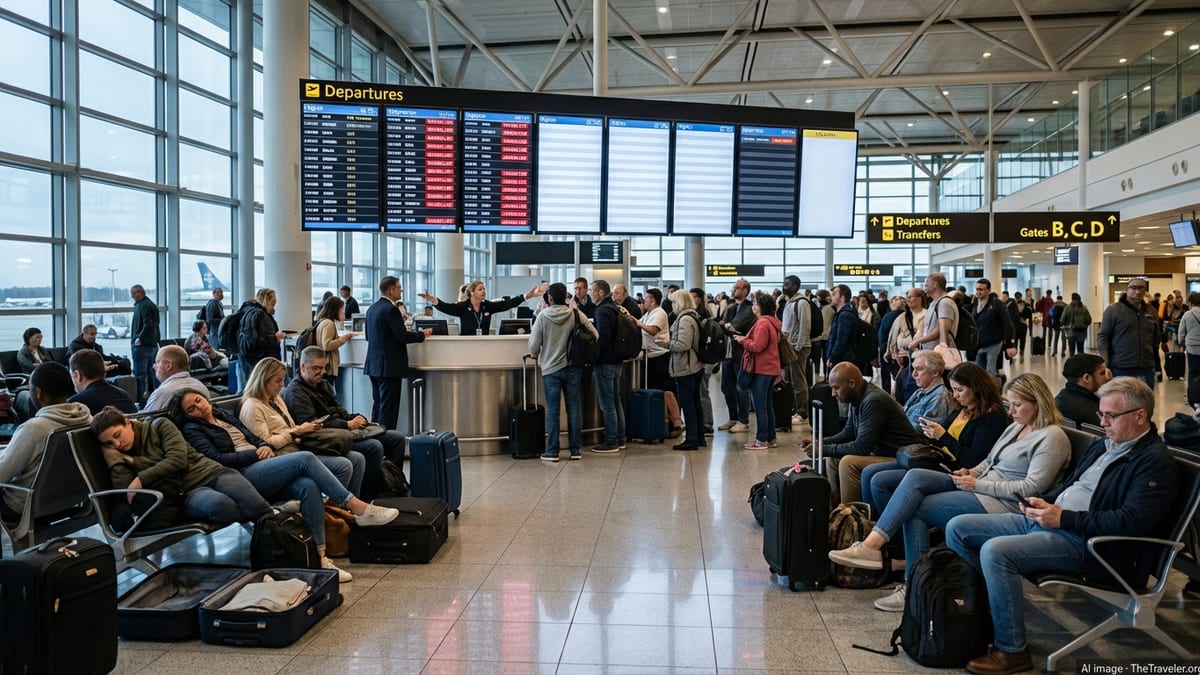
Escalating Gulf Airspace Warnings Reshape Global Routes
Publicly available regulatory updates from the European Union Aviation Safety Agency show that airlines registered in Europe are now advised not to operate in the airspace of Bahrain, Kuwait, Qatar and the United Arab Emirates, as well as parts of the Gulf of Oman, at any altitude. The strengthened guidance follows a sharp deterioration in security conditions linked to renewed military activity between the United States and Iran and missile and drone threats around the Strait of Hormuz.
According to recent aviation safety summaries, the new European conflict zone bulletin for the Persian Gulf identifies a high risk to civil aviation from long range missiles, armed drones and advanced air defence systems that could be activated with little warning. The area of concern includes the Bahrain, Kuwait, Doha and Emirates flight information regions, along with western sections of the Muscat region over the Gulf of Oman, which together underpin much of the traffic to and from Dubai, Doha, Abu Dhabi and other Gulf gateways.
While an earlier broad European advisory for the wider Middle East expired this month, it has effectively been replaced by a tighter cluster of specific warnings covering Iran, Iraq, Lebanon and the Gulf states. Industry analysis notes that this combination of targeted bulletins still translates into a significant operational constraint on many of the key corridors used by Europe to Asia and Europe to Australasia flights, forcing carriers to consider longer and more southerly or northerly routings.
For passengers, the shift may not be immediately visible when booking a ticket, but the practical impact is emerging in the form of extended flight times, altered routings avoiding the central Gulf and, in some cases, last minute aircraft changes or refueling stops as airlines adjust schedules and fuel planning.
United States, United Kingdom and Australia Tighten Their Own Advisories
In parallel with the European measures, publicly available information from government travel and aviation notices in the United States, United Kingdom and Australia indicates a converging risk picture for civil aviation over parts of the Middle East. Recent updates from the United States describe an ongoing threat of missile and drone attacks linked to conflict with Iran and acknowledge significant disruption to commercial flights serving the region.
The Federal Aviation Administration has maintained and refined advisory notices urging United States operators to exercise extreme caution, or in some cases avoid, specified segments of Middle East airspace where there is a credible risk of military activity and anti aircraft systems. These advisories are frequently aligned with State Department travel warnings that highlight potential targeting of transport hubs and critical infrastructure.
In the United Kingdom, long running guidance on conflict affected airspace has been supplemented by renewed warnings regarding the Gulf and surrounding regions, with published material drawing attention to the risk of miscalculation in congested skies that mix civil and military traffic. Updates reference the possibility that rapidly evolving operations could outpace the ability of local authorities to close or restrict airspace in time to protect overflying passenger aircraft.
Australia’s Smartraveller service has also flagged the latest European Union aviation warnings and stresses that global travelers may experience indirect effects, even when flying between destinations outside the Middle East. Public advisories there underline that higher alert levels, new overflight restrictions and the potential for further escalation could trigger delays, diversions and cancellations across a broad network of long haul routes.
Hub Airports in Dubai, Doha and Abu Dhabi Face Network Strain
Dubai, Doha and Abu Dhabi, which collectively function as major transit hubs for travel between Europe, Asia, Africa and Oceania, are particularly exposed to the changing risk assessments. While the new European and allied advisories are primarily focused on overflight rather than ground operations at the airports themselves, reports from aviation analysts suggest that any sustained avoidance of surrounding airspace is likely to reduce the flexibility that made these hubs attractive in the first place.
Operational briefings compiled by specialist flight planning services note that, for now, many carriers continue to serve the Gulf hubs by threading narrow safe corridors or operating at times and levels considered less exposed. However, with several states now advising complete avoidance of specific Gulf flight information regions for their own operators, network planners are modeling scenarios in which non Gulf hubs take on a greater share of connecting traffic between Europe and Asia.
For travelers, this is starting to manifest as longer minimum connection times, tighter booking conditions on itineraries that rely on Gulf transfers and, in some cases, the proactive rebooking of passengers onto flights via alternative hubs such as Istanbul, Cairo or European gateways. Industry commentary highlights that premium long haul traffic, which is highly sensitive to disruption, may increasingly favor routings that sidestep the most heavily warned areas if credible alternatives exist.
Airport authorities and airlines in the United Arab Emirates and Qatar continue to emphasize the resilience of operations, but network data shows a gradual reshaping of schedules as carriers rebalance capacity between Gulf and non Gulf routes. Analysts caution that even a modest shift in overflight permissions or insurance requirements could accelerate this trend.
Bahrain and Kuwait Sit Closer to the Front Line
Compared with the mega hubs of Dubai and Doha, Bahrain and Kuwait occupy smaller but strategically significant positions in the regional aviation map. Recent conflict assessments point out that both states host key military facilities, which raises the level of concern among risk assessors regarding potential targeting in any escalation between the United States and Iran.
European conflict zone bulletins and independent safe airspace maps now highlight Bahrain and Kuwait alongside the larger Gulf states as areas where the threat to civil aviation is considered high. The advisories reference recent missile and drone activity in and around these countries, stressing that military operations could take place with little or no advance notice for civil users of the airspace.
As a result, some international airlines have already trimmed frequencies or shifted overflight tracks away from Bahrain and Kuwait, even if they continue to serve the region more broadly. Airline schedule data and route tracking platforms show a complex patchwork in which certain carriers avoid specific flight information regions altogether, while others maintain limited operations under enhanced risk mitigation procedures.
Passengers booked on flights that would typically cross Bahrain or Kuwait airspace are increasingly being advised to check itineraries close to departure and to allow additional time for possible rerouting. Travel insurance providers are also updating policy information to clarify how they treat disruptions linked to conflict driven airspace advisories.
What Travelers Should Expect in the Coming Weeks
Travel risk agencies and government advisories broadly agree that the situation remains fluid, with the prospect of further changes to airspace access and airline routing decisions in the short term. Reports indicate that regulators in Europe, North America and Australia are continuing to review new intelligence and operational data, and could tighten or relax their guidance as events evolve.
For passengers planning to travel through Dubai, Doha, Abu Dhabi, Bahrain or Kuwait over the coming weeks, this means a heightened likelihood of schedule changes. Even where airports remain open and flights continue to operate, aircraft may divert to longer alternative routes to avoid high risk zones, adding flight time and, in some cases, requiring unscheduled refueling stops.
Travel specialists recommend that passengers monitor their airline’s notifications closely, keep contact details up to date in booking profiles and consider the timing of tight onward connections, particularly where itineraries involve multiple carriers. Public information from consular services also advises travelers to keep a close eye on local news in both departure and transit points, as security incidents far from the airport can still feed into aviation risk assessments.
Industry observers note that the alignment of the United States, United Kingdom and Australia with updated European Union assessments has created a more unified front among major aviation regulators. While this may complicate travel in the near term, analysts argue that coherent cross border guidance is designed to reduce the chance of civil aircraft being exposed to fast moving military operations in one of the world’s most strategically sensitive air corridors.