


More news on this day
Americans across the Middle East are being urged to brace for sudden flight cancellations, airspace closures and wider travel disruption as heightened tensions raise the risk of rapid escalation in the region, according to newly updated security alerts.
Get the latest news straight to your inbox!
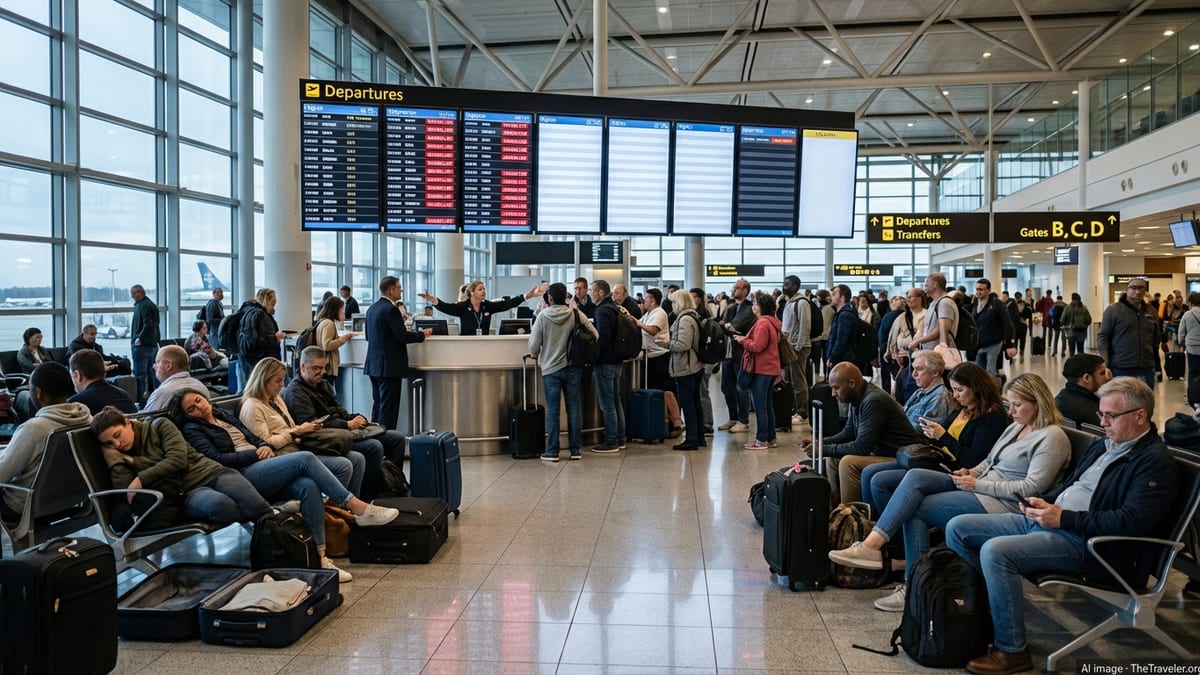
Region-wide alerts highlight risk of sudden escalation
Newly issued and updated security alerts from US missions in the Middle East describe a security environment that “remains complex with the potential for unforeseen escalation,” with American travelers warned that conditions can change quickly across multiple countries.
Coverage of the latest notices indicates that embassies in Israel, Qatar and Jordan have all drawn attention to the possibility of flight cancellations, airspace restrictions and other interruptions to normal travel patterns as tensions linked to the ongoing conflict with Iran persist and in some areas intensify.
Reports on the alerts note that Americans in the region are being encouraged to exercise heightened vigilance, monitor local and international news and be ready to adjust itineraries at short notice, including being prepared for delays or an inability to depart during periods of airspace closure.
The broader context includes a sustained US military buildup and a renewed cycle of strikes involving US and Iranian forces, which has raised concerns among security analysts that localized incidents could quickly widen into broader regional disruption affecting commercial aviation and cross-border movement.
Travel disruption: flight cancellations and airspace closures
Air travel is emerging as one of the most immediate pressure points for Americans in the region, with recent alerts explicitly warning that commercial flights may be canceled or rerouted and that airspace could periodically close with little advance notice.
Publicly available information from the US Embassy in Israel describes the possibility of further flight cancellations and airspace closures affecting travelers across the Middle East, while corresponding alerts in Qatar emphasize similar risks and urge passengers to stay closely in touch with airlines and airport announcements for last-minute schedule changes.
Separate country travel advisories for Gulf states such as Bahrain, Saudi Arabia and the United Arab Emirates already highlight the impact of hostilities with Iran on regional aviation, noting previous disruptions to commercial routes and the threat of drone and missile activity over key air corridors.
While major hubs in the Gulf continue to operate, travel industry coverage indicates that airlines have periodically adjusted routings, altered overflight paths or introduced schedule changes in response to shifting risk assessments, leaving passengers with reduced flexibility and, at times, limited rebooking options.
Heightened travel advisories across the Middle East
Recent updates to official US travel advisories show a patchwork of elevated risk levels across the region, reflecting both the direct conflict environment and broader security concerns that pre-date the latest spike in tensions.
Guidance for several US partners in the Gulf, including Bahrain, Saudi Arabia, Qatar and the United Arab Emirates, urges Americans to reconsider non-essential travel, citing the threat of Iranian drone and missile activity, terrorism and potential spillover from hostilities, alongside longstanding warnings regarding local security and legal conditions.
Separate regional summaries indicate that destinations such as Iran, Iraq, Lebanon, Syria, Gaza and Yemen remain under the highest “do not travel” category, with references to ongoing armed conflict, the risk of kidnapping, terrorism and limited US government ability to assist citizens in an emergency.
Travel analysts note that for many Americans living and working in the Middle East, the current alerts are less about encouraging immediate departure and more about emphasizing the need to plan ahead, understand country-specific rules and remain prepared for abrupt changes to airport access, border crossings and internal transport networks.
What Americans in the region are being urged to do
Across the latest alerts and advisories, US citizens in the Middle East are being encouraged to adopt a more cautious posture, with particular emphasis on monitoring official information channels and having contingency plans that do not rely on rapid consular evacuation.
Public guidance points travelers toward checking destination-specific pages on the US State Department’s travel website and enrolling in the Smart Traveler Enrollment Program, a free service that provides security updates and helps embassies and consulates contact Americans in case of emergencies or significant changes on the ground.
Additional recommendations highlighted in recent coverage include allowing extra time at airports, maintaining flexible tickets where possible, ensuring access to sufficient funds and essential medications in the event of unexpected delays, and staying alert at locations that may be seen as symbolic or high-profile targets.
Security assessments produced by private-sector risk consultancies underline that corporate travelers and expatriates may also wish to review their employers’ evacuation and continuity plans, including options for overland movement if commercial air links are temporarily suspended or constrained during periods of heightened tension.
Implications for future Middle East travel
The latest alerts suggest that elevated travel risks in parts of the Middle East are likely to persist in the near term, even if active hostilities ebb and flow, as regional tensions remain closely tied to the conflict between the United States and Iran and to volatile front lines in neighboring states.
Travel and aviation experts note that major carriers serving hubs such as Dubai, Doha and Riyadh have gained experience managing crisis scenarios over the past decade, yet any further escalation involving missile or drone activity could still prompt rapid, wide-ranging changes to flight paths and schedules.
For leisure travelers considering future trips to the region, published guidance stresses the importance of reviewing the latest country-level advisories shortly before departure, understanding insurance coverage for conflict-related disruption and recognizing that conditions can vary sharply between destinations that share the same regional label.
For Americans already based in the Middle East, the message from the new alerts is to stay informed, stay prepared for disruption and remain flexible, as the balance between routine travel and sudden interruption continues to shift with each new development in the broader security picture.
Bahrain Travel Advisory – travel.state.gov
United Arab Emirates Travel Advisory – travel.state.gov
US warns citizens in Middle East of flight cancellations – aa.com.tr