


By the time PR‑3 narrows into PR‑7710 and drops you onto the skinny spit of land that is Pozuelo, Guayama stops feeling theoretical on a map and becomes a place you can smell. Salt air drifts in through the car windows, mangroves line the shallows of Jobos Bay, and a huddle of pastel colored seafood joints and kiosks presses right up against the asphalt. This is Guayama’s newly formalized Coastal Gastronomy Trail, a lived in strip where fishermen back pickup trucks to the curb and families in beachwear queue for fritters. I spent a weekend here eating my way from one end of the road to the other, keeping notes on what was actually worth ordering, what felt like a tourist trap, and how to time a visit so you enjoy the bay breeze instead of just sitting in traffic with a growling stomach.
Get the latest updates straight to your inbox!
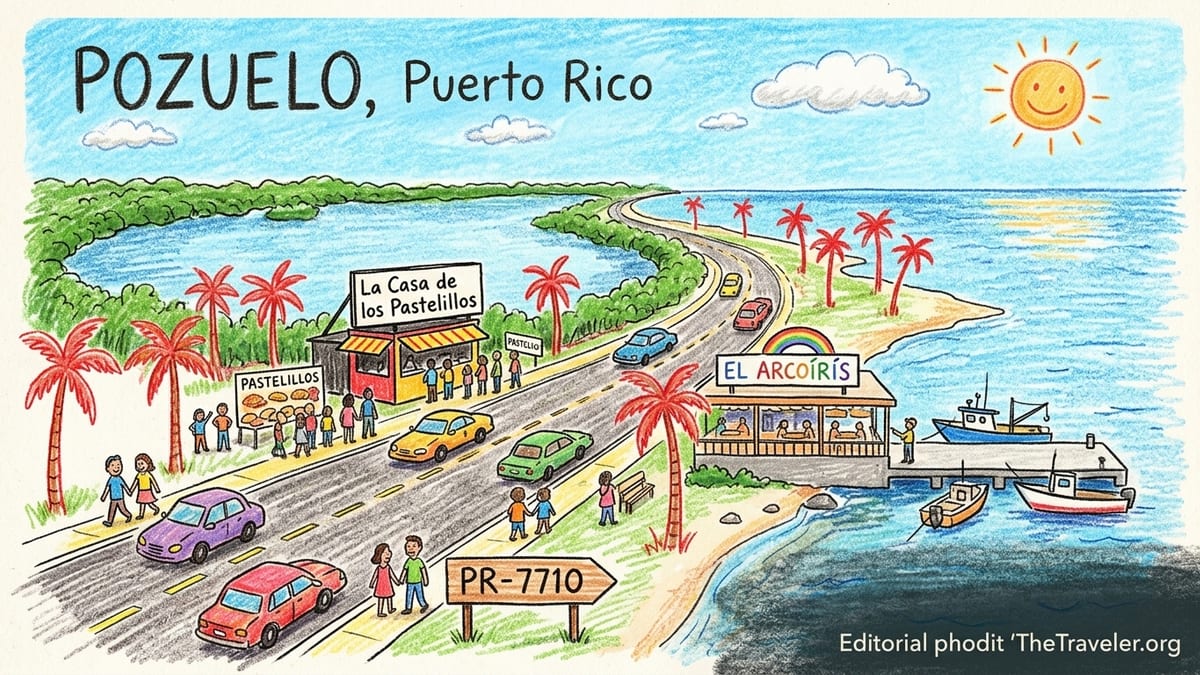
What PR‑7710 Through Pozuelo Really Feels Like
PR‑7710 is the only road into the coastal community of Pozuelo, a low lying peninsula between Jobos Bay and the open Caribbean. Official highway data still lists it as the access route to one of Guayama’s best beach sectors, and Discover Puerto Rico’s August 25, 2026 update now explicitly brands this strip as the Ruta Gastronómica de la Costa. As you turn off PR‑3, the four lane highway gives way to a two lane coastal road that feels immediately more local. Houses in varying states of repair share space with fishermen’s shacks, concrete piers and restaurant signs shouting camarones, chillo and mofongo into the breeze.
Driving in, you see why locals come on weekends. On one side of the road, the mangrove lined edge of Jobos Bay glints through gaps between buildings. On the other, small parking lots and improvised shoulders fill with cars bearing Guayama and San Juan plates. The smell is a mix of hot oil from deep fryers and grill smoke curling around the sweet and slightly muddy scent of the bay. From a visitor’s perspective it feels less like a curated food court and more like a working waterfront that happens to be obsessed with feeding people.
Because PR‑7710 is a narrow, dead end peninsula road, traffic and parking shape the entire eating experience. Midday on a Saturday, I crawled along at under 10 miles per hour for the last kilometer, dodging pedestrians and double parked cars. On Sunday late morning I had a much easier time pulling straight into roadside spots. Guayama’s tourism office also promotes a separate Ruta Gastronómica Urbana in town and a Ruta Gastronómica de la Montaña in the interior barrios, but those are different drives altogether, through plazas and hills rather than this flat finger of asphalt pressed between bay and sea. I researched them as possible side trips, yet for this visit I stayed on the coast and ate only where I physically sat down or ordered at a counter along 7710.
La Casa de los Pastelillos: Fritter Heaven With Caveats
La Casa de los Pastelillos is the most famous stop on the trail and probably the one you have already seen on social media: a sprawling beachside kiosk at roughly kilometer 4 with bright signage, plastic tables under a covered patio and direct views to the open water behind it. It appears in official regional guides as a beachfront kiosk in Pozuelo known for more than forty varieties of pastelillos and alcapurrias, including an outsized novelty fritter. The reputation is deserved in one sense: this is where I ate the best single pastelillo of the weekend, and also where I ran into my longest wait.
I visited on a Saturday around 1:30 p.m. The small gravel lot in front was already packed, so I joined a line of cars creating a third informal lane along the road shoulder. I waited about ten minutes for a space to open when a family in a minivan pulled out. Inside, a handwritten sign warned of approximately 25 to 30 minute waits for frituras. I ordered at the counter and paid in cash for a pastelillo de mariscos, a beef pastelillo and a guava and cheese pastelillo, along with a Medalla beer. The total came to just under 18 dollars. My tray hit the counter 28 minutes later, which matched the estimate but still felt long when you are standing under a fan, smelling fryer oil and watching other tables dig into their orders.
The seafood pastelillo justified the delay: thinner, crisper dough than the others, packed with a loose mix of shrimp and white fish in a well seasoned tomato base. The ground beef version was decent but tasted more like comfort food than a special destination bite. The guava and cheese pastelillo was closer to a dessert pastry, sticky and sweet with powdered sugar clinging to my fingers. I also tried a meat alcapurria from a companion’s plate. The filling was generous and flavorful, but the yautía and green banana shell was darker and more heavily fried than I like, bordering on hard at the tips.
From a value and comfort standpoint, La Casa de los Pastelillos is complicated. The sea view is undeniably charming, with tables that practically sit on the sand and the sound of waves coming in under the chatter. Portions are large enough to share. On the other hand, the line system can feel chaotic on crowded days and the high volume means some fritters spend slightly too long in the oil. On my visit, the seafood pastelillo and the view were worth the stop. The guava and cheese pastelillo I would order again as a shared sweet, but I would skip the alcapurria in favor of other places along the road where the fritters tasted fresher and less heavy.
El Arcoiris Restaurante: Sitting Down for Seafood With a Bay Breeze
For a calmer, sit down meal with a view, El Arcoiris Restaurante along PR‑7710 at about kilometer 3.2 felt like the best balance of atmosphere, fresh seafood and reasonable wait times. Tucked into the Pozuelo fisherman’s neighborhood, it has been serving land and sea dishes for decades according to local sources, and today it presents as a cozy, family run dining room that opens to a covered terrace overlooking the water. Parking here was easier than at the big kiosks: a small paved lot accommodated about a dozen cars, and overflow vehicles lined the roadside without blocking traffic.
I arrived at El Arcoiris around 4:30 p.m. on a Sunday, just ahead of the dinner rush. The host quoted a 10 to 15 minute wait for a terrace table for two. We were seated in eight minutes, with a direct line of sight to the bay and the moored fishing boats. The restaurant offers an extensive menu of Puerto Rican style seafood and meat dishes. We ordered an octopus salad to share, a full fried snapper with tostones and a mofongo stuffed with garlic shrimp. With two soft drinks, the pre tip total came to roughly 64 dollars.
The octopus salad was the standout: tender slices marinated in olive oil, vinegar and herbs, brightened by onion and cilantro. It paired beautifully with the tostones, which were crisp on the outside and still soft inside without feeling oily. The fried snapper, medium sized and seasoned simply with salt and a touch of garlic, arrived sizzling and flanked by lemon wedges. The skin was crisp, the flesh moist and flavorful, clearly a fresh catch. The mofongo with shrimp showcased the kitchen’s balance with fried elements. The mashed plantain ball was rich but not greasy, and the garlicky shrimp sauce soaked into it without making it heavy.
If there was a downside at El Arcoiris, it was the noise level once the restaurant filled. By 6 p.m., families and groups had packed the terrace. Conversations bounced off the low ceiling and made it harder to linger over a quiet drink. Service stayed friendly but slowed slightly as more tables turned. Still, the combination of competent seafood cooking, fair prices for whole fish and one of the better vantage points over Jobos Bay put El Arcoiris at the top of my sit down recommendations on the trail. It is where I would send someone who wants to taste Guayama’s coastal cuisine without eating everything out of a paper boat.
Villa Pesquera Punta Pozuelo: Eating at the Water’s Edge
Further along PR‑7710, Villa Pesquera Punta Pozuelo doubles as a working fishermen’s cooperative and a casual seafood restaurant at the waterfront of Jobos Bay. Local descriptions emphasize that fishers bring their catch directly to the kitchen here, and that played out in the menu that greeted me: a chalkboard with a short list of whatever they had that day, rather than the permanently printed booklets at more conventional restaurants. Parking was straightforward when I visited on a late Saturday afternoon. A gravel lot in front of the building held about fifteen cars, and several fishermen’s trucks were parked closer to the dock.
The dining area is a mix of indoor space with big windows and an open air terrace with plastic tables right up against the bay railing. From my terrace table I could see the curve of Jobos Bay and, in the distance, the ridge of the Cordillera Central that I had driven over to reach Guayama. I ordered a half portion of garlic mahi mahi, arroz mamposteao, tostones and a limeade. The bill before tip was about 24 dollars. Friends at neighboring tables raved about the seafood cazuela, but it was a too large and creamy dish for the amount of eating I still had planned.
The mahi mahi was lightly grilled, not fried, which I appreciated after a day of fritters. It was firm and flaky, with a garlicky crust that left the interior moist. The arroz mamposteao leaned on smoky bits of pork and beans and arrived in a generous mound that would have easily fed two people if you were also sharing appetizers. Tostones here were a little thicker than at El Arcoiris, and a couple of them had absorbed more oil than I would have liked. Still, eating them while watching fishermen unload their afternoon catch grounded the meal in the local economy in a way you do not always get in more polished environments.
My only hesitation about recommending Villa Pesquera is logistical. Because it functions in part as a working fishery, hours can feel dictated by the day’s catch and community events. On my weekend, service paused briefly while staff coordinated an activity on the pier, and a few menu items had already sold out by early evening. If you prioritize hyper fresh fish and bay views, it is worth accommodating that unpredictability. If you are on a tight schedule or want a long list of guaranteed options, this might feel frustrating, especially on a busy Sunday when locals fill most of the tables.
Beyond the Icons: Smaller Spots and Fritter Comparisons
Between these better known names, PR‑7710 is peppered with more modest kiosks and small restaurants such as El Sabor de Mi Tierra and El Fogón de Susa, both mentioned in current tourism materials as outdoor spots with tarp covered seating. I stopped at a small roadside kiosk signed El Sabor de Mi Tierra for an afternoon fritter break rather than a full meal. Parking here meant edging two wheels onto the dirt shoulder and trusting the slow speed of passing traffic. There was no formal lot, just a cluster of cars doing the same thing.
At the counter I ordered a meat alcapurria, a bacalaíto and a small order of sorullitos de maíz, along with a bottle of water. The total came to around 9 dollars. The wait was under ten minutes despite the fact that everything hit the fryer after I ordered. The alcapurria was the best I had along the trail: a lighter colored shell, crisp outside but tender within, and a well seasoned ground meat filling that tasted freshly prepared rather than reheated. The bacalaíto was broad and lacy, all crunchy edges and bits of salted cod. Sorullitos arrived hot and slightly sweet with a crisp exterior.
Compared directly to La Casa de los Pastelillos, El Sabor de Mi Tierra’s fritters were less photogenic but more balanced in terms of frying. I left feeling pleasantly full rather than weighed down. The downside is the lack of amenities. Seating was limited to a few plastic tables under an awning facing directly onto the road, without any sea view. There were no fans, and the heat of the day pressed in. For travelers, that makes this more of a targeted snack stop than a linger worthy lunch. Still, if your aim is to taste an alcapurria that lets the flavor of the masa and filling shine without the distraction of extra oil, a quick detour here is worth the minor parking hassle.
Other small operations, including basic stands set up in front of homes, offered pastelillos and pinchos along the road. I tried one more pastelillo de carne from a nameless kiosk near the entrance to the peninsula. It cost around 3 dollars and came wrapped in paper without ceremony. The dough was thicker and the filling sparse, making it the least satisfying bite of the weekend. That experience underscored an important point on the Coastal Gastronomy Trail: not every stand with a hand painted sign delivers value. With so many options, it pays to be a little choosy rather than simply stopping at the first fryer you see.
Researching the Mountain and Urban Routes as Alternatives
Guayama’s 2026 tourism messaging does a good job of separating its three main gastronomic routes: the coastal trail along PR‑7710 through Pozuelo, an urban route centered on the historic downtown and nearby commercial districts, and a mountain route that climbs into interior barrios and the foothills of the Cordillera Central. For this article I did not eat on the latter two, so I will not pretend to review dishes I did not taste. I did, however, dig into descriptions and menus to understand how they compare for travelers planning a longer stay.
The Ruta Gastronómica Urbana revolves around plazas, cafes and sit down restaurants in the city core, with a stronger presence of bakeries, coffee shops and full service dining that mixes Puerto Rican cooking with broader Latin and international influences. Menus there feature plenty of mofongo, arroz con gandules and asopao, but the setting is more urban than maritime. The Ruta Gastronómica de la Montaña, on the other hand, focuses on lechoneras, countryside eateries and spots attached to agro tourism projects in the hills, where roasted pork and hearty stews dominate. Both sound compelling in their own right, especially if you have a car and several days.
What makes the Coastal Gastronomy Trail distinct is the immediate proximity between fishing activity and the plate. In Pozuelo, the presence of fishers’ cooperatives, modest docks and an active small boat fleet shows up directly in the freshness of the snapper, mahi and octopus that appeared at my table. Even when a dish was not perfect in execution, it rarely tasted like it had sat around for days. If your time in Guayama is limited, that connection between sea and kitchen is the reason to prioritize PR‑7710 first, then branch into the city or mountains on a return trip.
What I Would Skip or Do Differently Next Time
Not every part of eating along PR‑7710 was a win. The most obvious downside was weekend crowding. Arriving at peak lunch hours on Saturday meant slow progress along the road, tight parking and longer waits at the most popular spots. La Casa de los Pastelillos in particular demanded patience that might feel excessive if you are traveling with small children or anyone sensitive to heat. Standing in line for nearly half an hour within sight of empty tables that are simply waiting on orders dulls enthusiasm, no matter how good the pastelillo that eventually arrives.
I also found that trying to chase too many fried items in a single afternoon backfired. Between pastelillos, alcapurrias, bacalaítos and tostones, it is easy to end up with a table full of brown and crunchy food that overwhelms your palate and stomach. There were moments, especially after my first round at La Casa de los Pastelillos, when the heavy fry on the alcapurria and beef pastelillo left me wishing I had ordered at least one grilled or stewed dish instead. It is not that the food was poor quality, but that the cumulative effect became exhausting.
Another mild disappointment was a famous sweet pastelillo that looked better than it tasted. The guava and cheese version at La Casa de los Pastelillos, while fun as a concept, skewed so sweet and rich that a full serving felt like too much for one person. Next time I would split one among three people or skip it in favor of something lighter. I would also avoid nameless or sparsely patronized kiosks near the start of the peninsula, where my experience with a bland pastelillo suggested less care in preparation. On a route with many strong options, there is little reason to gamble on a stand that does not show signs of local support.
Finally, I would temper expectations about service speed and polish. Even at places I liked, such as El Arcoiris and Villa Pesquera, ticket times stretched once the dining rooms filled, and servers juggled many tables at once. If you arrive expecting resort like efficiency, you may feel let down. Framed instead as a relaxed afternoon by the bay, with room for a second drink or a slow conversation between courses, the same pacing feels much more natural.
The Takeaway: What to Order First and When to Arrive
Looking back over a weekend of meals along Guayama’s Coastal Gastronomy Trail, certain patterns are clear. Freshness is the through line that justifies the drive to Pozuelo. The best dishes I ate combined direct access to the day’s catch with restraint in the kitchen. If you have only one full meal on PR‑7710, make it a sit down seafood lunch or early dinner somewhere that lets the bay breeze reach your table. At El Arcoiris, that means ordering an octopus salad, a full fried snapper to share and a mofongo topped with garlic shrimp. At Villa Pesquera Punta Pozuelo, it might mean letting the chalkboard decide between mahi mahi, chillo or a mixed seafood casserole while you watch boats shift on their moorings.
For fritter lovers, I would prioritize a seafood pastelillo at La Casa de los Pastelillos, eaten at a table as close to the water as you can snag, and a meat alcapurria at a smaller kiosk such as El Sabor de Mi Tierra where the fryer turns over frequently. Treat bacalaítos and sorullitos as shared sides rather than individual portions. That way you taste a variety of textures without succumbing to fried fatigue. If you want something sweet, split a guava and cheese pastelillo or look for a lighter dessert in town later, rather than ending your coastal visit on an overly sugary note.
Timing matters. To balance atmosphere with sanity, aim to arrive on PR‑7710 by 11 a.m. on weekends or just after opening on weekdays. That window gives you easier parking near your chosen restaurant, shorter waits and a chance to watch the strip come to life as locals trickle in. Plan to linger through early afternoon, then retreat to Guayama’s urban core or your lodging before the heaviest evening traffic. If you can only visit once, choose a clear day when Jobos Bay’s colors are on full display. The combination of sun on the water, plates of fresh seafood and the hum of a community that still lives off the sea is what sets Guayama’s Coastal Gastronomy Trail apart from more generic beachside food clusters elsewhere on the island.
FAQ
Q1. What is Guayama’s Coastal Gastronomy Trail and where is it located?
It is a cluster of restaurants and kiosks along PR‑7710 in the coastal community of Pozuelo, Guayama, focused on fresh fish, seafood and Puerto Rican fritters.
Q2. Do I need a car to explore the PR‑7710 food route in Pozuelo?
Yes, you effectively need a car or private transport, since PR‑7710 is a narrow peninsula road with limited public transit and the venues are spread along several kilometers.
Q3. What time of day is best to arrive to avoid long waits and parking problems?
Arriving between 11 a.m. and noon, especially on weekends, offers the best balance of available parking, shorter lines and a lively but not yet crowded atmosphere.
Q4. Which dishes are most worth ordering on the Coastal Gastronomy Trail?
Standout choices include seafood pastelillos at La Casa de los Pastelillos, octopus salad and whole fried snapper at El Arcoiris, and grilled mahi mahi at Villa Pesquera Punta Pozuelo.
Q5. Are there good options if I want to avoid eating only fried food?
Yes, several restaurants serve grilled fish, seafood stews, mofongo with sautéed toppings and salads, which balance out heavier items like alcapurrias and bacalaítos.
Q6. How expensive is it to eat along PR‑7710 in Pozuelo?
Based on recent visits, expect to pay around 8 to 12 dollars for fritter combinations at kiosks and roughly 20 to 35 dollars per person for full seafood meals at sit down restaurants.
Q7. Is the Coastal Gastronomy Trail suitable for families with children?
Yes, but plan around heat and crowds. Many spots are casual with outdoor seating, but weekend lunchtime waits can be long, so earlier arrivals and snacks for kids help.
Q8. How does the coastal route compare to Guayama’s urban and mountain gastronomic routes?
The coastal route focuses on bay side seafood and fritters, the urban route centers on downtown restaurants and cafes, and the mountain route highlights countryside lechoneras and hearty countryside dishes.
Q9. Do the restaurants along PR‑7710 accept credit cards, or should I bring cash?
Some sit down restaurants accept cards, but smaller kiosks often work primarily with cash, so bringing cash in small denominations is advisable.
Q10. Can I combine a visit to the Coastal Gastronomy Trail with other activities nearby?
Yes, many travelers pair a meal in Pozuelo with time in Guayama’s historic center, a drive into the mountains, or a relaxed afternoon enjoying the views of Jobos Bay.