


If you are planning a trip to Oslo and reading up on things to do, you will quickly see two names appearing again and again: Vigeland Sculpture Park and Frogner Park. Many guides list them as if they were separate attractions, and visitors often wonder which one to choose. In reality, the relationship between them is more like that between a museum and the building that houses it. Understanding that distinction, and what each area actually offers, will help you make the most of a short stopover or a full Oslo city break.
Get the latest updates straight to your inbox!
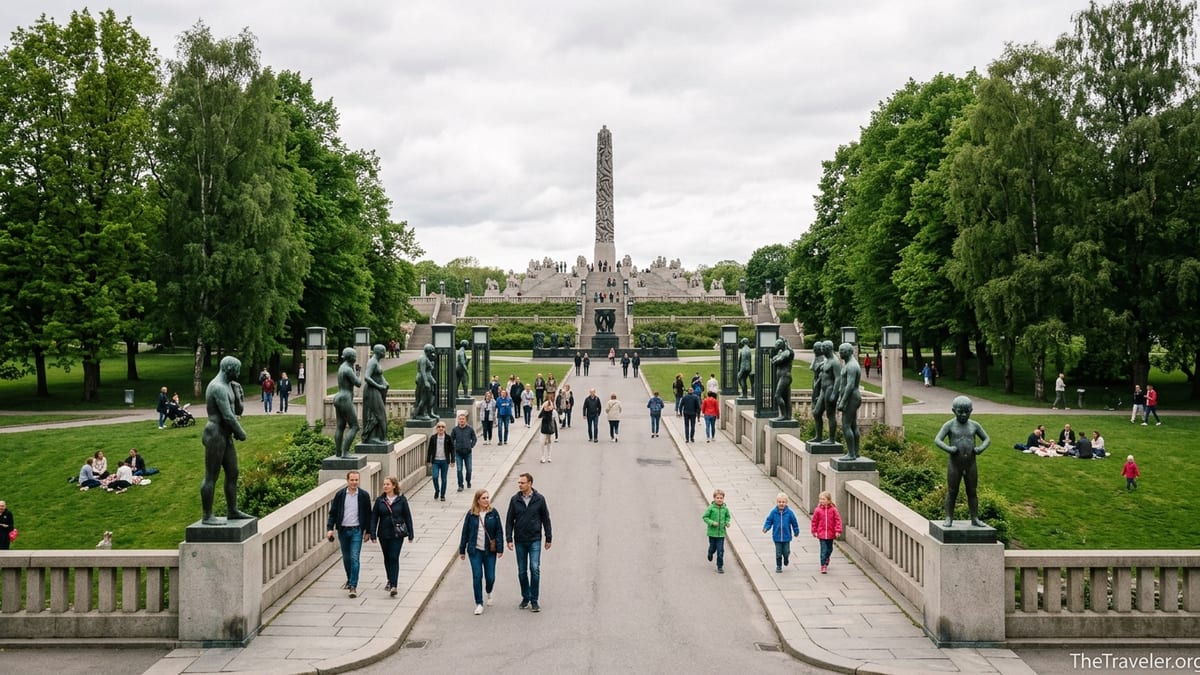
Vigeland Park vs Frogner Park: What Is the Actual Difference?
Despite what many guidebooks and tour brochures suggest, there is no separate place in Oslo officially called Vigeland Park. The correct name of the large green space in the west of the city is Frogner Park, or Frognerparken in Norwegian. Within the park, in its central axis, you find the Vigeland installation, often marketed in English as Vigeland Sculpture Park. This installation is the sequence of more than 200 sculptures in bronze, granite and wrought iron created by Norwegian sculptor Gustav Vigeland.
In practical terms, this means you do not have to choose between Vigeland Park and Frogner Park. When you step through the monumental wrought-iron gates near the tram stop called Vigelandsparken, you are entering Frogner Park and, immediately, the beginning of Vigeland’s sculpture area. If you walk away from the central axis toward the rose gardens, playgrounds or sports facilities, you are still in Frogner Park but outside the main sculpture installation.
This dual identity explains why tours, hotel concierges and taxi drivers use the names interchangeably. A hop-on hop-off bus might list “Vigeland Sculpture Park” as a stop because that is the well-known attraction, while Oslo locals will tell you they are going to “Frognerparken” for a picnic or a run. For visitors, the key is to realize that you can experience both the world-famous sculpture park and the broader local green space in the same visit, simply by how you spend your time once you arrive.
Think of it this way: if your priority is art, you will probably spend most of your time walking the central axis of the Vigeland installation. If you want an easy local park day with kids, space to throw a frisbee or a swim in summer, then Frogner Park beyond the statues becomes just as interesting as the sculptures themselves.
What You Experience in the Vigeland Sculpture Area
The Vigeland installation is the reason most international visitors first hear about Frogner Park. It is the world’s largest sculpture park created by a single artist, with more than 200 pieces arranged along a straight axis roughly 850 meters long. The route begins at the ornate main gate and continues across the Bridge, past the Fountain and up to the Monolith plateau, ending at the Wheel of Life. Each section is dense with symbolic and often emotional scenes of human life, from playful toddlers to ageing couples.
One of the most photographed works is the small bronze figure known as The Angry Boy. Perched on the bridge rail, this toddler mid-tantrum is rarely without a ring of people snapping photos. On a typical summer afternoon, you might see a cruise group from Germany, a Singaporean family and Norwegian schoolkids on a field trip all waiting their turn to pose beside him. A little farther along, the massive granite Monolith rises from a stepped platform, carved as a swirling column of intertwined human bodies that took stone masons more than a decade to complete.
For many visitors, the intensity and repetition of the human form in Vigeland’s work can be surprising. The figures are nude, not for provocation but to keep them timeless and to focus on gesture and relationship. Travelers sometimes describe an almost cinematic feeling walking past scenes of fathers tossing children in the air, lovers embracing, or people wrestling with what look like mythical beasts. These “dragons” or reptile-like figures often represent inner struggles or evil forces, rather than anything literal, and spotting them becomes something of a treasure hunt for art-curious travelers.
Because the sculptures are spread out over a large but walkable area, you should plan about 60 to 90 minutes if you want to stroll the whole axis at a relaxed pace, stopping for photos and to read the small plaques. Visitors who are especially interested in sculpture or photography often stay longer, revisiting the same works in different light as the weather shifts from sun to clouds, which happens frequently in Oslo even on a single day.
What Frogner Park Offers Beyond the Statues
While the Vigeland sculptures receive the most international attention, Frogner Park is much more than an open-air gallery. It is also one of Oslo’s largest and most used local green spaces. On a sunny Saturday in July, you are just as likely to find a group of friends grilling sausages on portable barbecues, teenagers kicking a football and parents pushing prams under tall trees as you are to see tour groups moving between statues. For many Oslo residents, this is simply their neighborhood park.
To the west and south of the sculpture axis, Frogner Park opens into large lawns where locals lay out picnic blankets or play rounders. The park also hosts Norway’s largest rose collection, with tens of thousands of roses in more than a hundred varieties planted in formal beds. Time your visit for late June or July and you will walk through corridors of color and scent that rival more famous European rose gardens, all without an entry fee.
On the eastern edge of the park, near the busy street Kirkeveien, you will find Frogner Stadium and the outdoor summer pool complex Frognerbadet. In warm months, usually from mid-June to mid-August, this area becomes a mini resort for Oslo families, with diving boards, waterslides, grassy sunbathing areas and a kiosk selling ice creams and hot dogs. Entry prices change slightly each season, but you can expect to pay in the region of 90 to 120 Norwegian kroner per adult, with cheaper child and family tickets. For budget-conscious travelers, combining a free wander through the sculptures with a half-day swim here can make an easy, low-cost Oslo itinerary.
Scattered through Frogner Park are several playgrounds, including one close to the bridge and another nearer to Frogner Manor. They make the park particularly attractive for travelers with children, who can balance time spent walking past serious art with more energetic stops at swings and climbing frames. A couple of small cafés and a more formal restaurant inside the park boundaries offer coffee, waffles, simple lunches and, in summer, outdoor seating. Prices are typical for Norway: expect to pay around 50 to 70 kroner for a coffee and 80 to 130 kroner for a slice of cake or a light snack.
Practicalities: Location, Getting There and Entry Costs
Frogner Park is in the west of central Oslo, in the Frogner district, roughly 3 kilometers from the area around Oslo Central Station. Many visitors arrive by tram. From central stops such as Jernbanetorget or Nationaltheatret, tram lines commonly numbered 12 or 13 run toward Majorstuen and stop at Vigelandsparken or Frogner Plass, depending on the route and current schedules. The stop marked Vigelandsparken delivers you almost directly to the main gates of the sculpture axis, while Frogner Plass is useful if you want to enter through a quieter corner and wander in gradually.
If you prefer the metro, Majorstuen station on several T-bane lines is about a 10 to 15 minute walk from the park. Many cruise visitors and strong walkers simply stroll from the waterfront, taking 30 to 40 minutes each way depending on pace and photo stops. Taxis and ride-hailing services are widely available in Oslo, but for most travelers public transport is cheaper and easy to navigate. A single zone ticket, valid for 60 minutes on tram, bus, metro and local trains, typically costs around 42 Norwegian kroner when bought via the official city transport app or ticket machines.
One of the biggest advantages of visiting Frogner Park and the Vigeland installation is that the sculpture area is open 24 hours a day, year-round, and there is no entry fee. You can walk in at sunrise in June, when the sky barely gets dark, or in the blue twilight of January with snow crunching underfoot. This makes the park particularly appealing if you are dealing with a tight budget, a long airport layover or a late arrival when many museums have already closed.
Within the park grounds, the Vigeland Museum occupies the former studio and residence of Gustav Vigeland. It lies just outside the main sculpture axis, a short walk from the Bridge. The museum has its own opening hours and admission fee, so visitors who want a deeper understanding of the artist’s process should check current details before planning a combined visit. Allow at least 45 to 60 minutes more if you intend to tour the museum as well as the park.
When to Go: Seasons, Crowds and Light
Frogner Park changes character dramatically with the seasons, and deciding when to visit depends on what you value most. From late spring into summer, typically May through August, you will find green lawns, leaves on the huge trees and the rose gardens in bloom. This is the most popular time for visits, particularly in July when Oslo fills with cruise ships and holidaymakers. Expect the bridge around The Angry Boy and the Monolith steps to be busy from late morning to mid-afternoon, especially on weekends.
To enjoy the sculptures with fewer people in the frame of your photos, consider visiting early in the morning or later in the evening. In June and early July, Oslo experiences very long days, with the sun setting after 10 pm. An 8 pm stroll through the park on a clear evening can give you beautiful soft light, long shadows and a calmer atmosphere than at midday. Travelers who enjoy photography often plan two visits, one at midday when the bronze gleams under strong light and another later when warm tones make the granite look almost golden.
Autumn, usually September and October, brings cooler temperatures and a canopy of yellow and orange leaves over the paths. The crowds thin out, and you might share the bridge only with a few locals walking dogs or joggers on their evening loop. Winter transforms Frogner Park again. Snow often blankets the lawns and gathers around the base of the statues, creating stark contrasts and a more contemplative feeling. Dress for icy paths and cold winds, but the reward is a quieter, almost surreal walk among snow-dusted figures, and the chance to see how the same works feel utterly different in another season.
As for weather, Oslo is changeable. Even in July, you might experience sun, clouds and a shower all within an hour. A compact umbrella or waterproof jacket, plus shoes with decent grip, will make your park visit more comfortable. In colder months, spikes that slip over your shoes can be helpful for avoiding tumbles on frozen sections of path, especially near steps up to the Monolith.
Which Should You Visit: Vigeland Sculpture Park or Frogner Park?
Since Vigeland Sculpture Park is the sculpture installation within Frogner Park, the question is really about how much of your time in the park you should devote to the statues versus general park life. The answer depends on your interests, schedule and who you are traveling with, but a few patterns tend to hold true for most visitors.
If this is your first time in Oslo and you have limited hours, for example just an afternoon from a cruise ship, focus on the main Vigeland axis. Enter at the monumental gate near the Vigelandsparken tram stop, walk across the bridge, visit the Fountain and climb to the Monolith plateau. Even at a gentle pace with plenty of photos, you can complete this in 60 to 90 minutes. This route delivers the strongest impression of Vigeland’s work and explains why so many guidebooks place the sculpture area high on their lists of must-see Nordic art experiences.
If you are traveling with children, or you are on a longer city break, plan extra time to enjoy the wider Frogner Park. After you have explored the sculptures, detour into the rose gardens, let kids burn energy at the playgrounds and, in summer, consider spending part of the day at Frognerbadet pool with its slides and diving boards. Pack a picnic from a nearby supermarket if you want to keep costs down, or grab a coffee and Norwegian waffle from one of the park cafés while you watch local life unfold around you.
Travelers who are especially sensitive to crowds or prefer quieter experiences might choose to walk a loop that includes both. Start at a less busy corner such as Frogner Plass, wander through the lawns and trees and then join the sculpture axis from the side near the Fountain. This lets you approach the most popular artworks after you have already experienced the more everyday side of the park. In short, unless you are extremely short on time, there is little reason to treat “Vigeland Park” and Frogner Park as an either-or decision. With a bit of planning, you can comfortably experience both sides of this Oslo icon in a single outing.
Tips for Making the Most of Your Visit
A few simple choices can greatly improve your experience of Frogner Park and the Vigeland sculptures. Clothing is the first. Even in summer, temperatures can be modest, and the park is slightly elevated and exposed. A light windproof layer and comfortable walking shoes will serve you better than fashion shoes or sandals with little grip. In winter, consider insulated boots and a hat that covers your ears; wind on the plateau around the Monolith can feel particularly sharp.
Time of day matters too. If you enjoy people-watching, visit in the middle of the day or early afternoon in summer, when the lawns fill with picnics and the bridge buzzes with visitors speaking multiple languages. If you prefer a reflective atmosphere, aim for morning around 8 or 9 am, or late evening, especially in the light months of May through July. Solo travelers often appreciate these quieter windows to take in some of the more intense sculptures without the distraction of large tour groups.
Spend a few minutes before or during your visit reading about Gustav Vigeland and the themes behind his work. Even a short overview of how he negotiated with the city to create this life project, and how the sculptures represent the human life cycle, will change how you see certain pieces. For instance, understanding that the Wheel of Life at the far end of the axis symbolizes eternity can make that final viewpoint feel like a satisfying conclusion rather than just a decorative roundabout.
Finally, remember that Frogner Park is a living public space as well as a tourist site. Respect the grass and flowerbeds, avoid climbing on sculptures or stepping into roped-off areas and be mindful of noise if you are playing music or in a large group. These small courtesies will not only keep the park pleasant for local users but also preserve the works that make it such a distinctive place to visit.
The Takeaway
The supposed choice between Vigeland Sculpture Park and Frogner Park is largely a matter of naming. The world-famous sculpture installation is the heart of Frogner Park, not a separate destination on the edge of the city. Visit the central axis if you want a powerful, sometimes challenging encounter with one artist’s vision of human life, told through hundreds of bronze and granite figures. Expand your wander into the lawns, rose gardens, playgrounds and summer pool if you want to experience how Oslo residents use their largest central park in everyday life.
Because entry to the park and sculptures is free and the area is easily reached by tram or on foot from the city center, it makes sense for almost any itinerary, from a half-day stopover to a week-long stay. With a little thought about timing, weather and your own interests, you can tailor your visit to emphasize quiet contemplation, family fun or people-watching in one of Oslo’s most characterful outdoor spaces. In the end, you do not need to decide between Vigeland Park or Frogner Park. Go, and let both the art and the landscape tell their story.
FAQ
Q1. Is Vigeland Park a different place from Frogner Park?
Vigeland Sculpture Park is the common name for the sculpture installation inside Frogner Park. They are not separate locations; the sculptures sit within Frogner Park’s grounds.
Q2. How much does it cost to visit the Vigeland sculptures and Frogner Park?
Entry to both the sculpture area and the wider Frogner Park is free at all times. You only pay extra if you visit nearby paid attractions, such as the Vigeland Museum or the summer outdoor swimming pool.
Q3. How long should I plan for a visit?
If you only walk the main Vigeland axis from the gate to the Wheel of Life, allow about 60 to 90 minutes. If you also want to enjoy the lawns, rose gardens or playgrounds, or swim at Frognerbadet in summer, plan two to three hours or more.
Q4. What is the best way to get to Frogner Park from central Oslo?
Most visitors take a tram from central stops such as Jernbanetorget or Nationaltheatret to the stop called Vigelandsparken or Frogner Plass. From there it is a short walk into the park. You can also walk from the city center in around 30 to 40 minutes or take the metro to Majorstuen and walk.
Q5. Is the park open year-round and at night?
Yes. Frogner Park and the Vigeland sculpture area are open 24 hours a day throughout the year. There are no gates that close at night, although lighting is more limited in some corners after dark.
Q6. Are there facilities such as toilets and cafés in the park?
Yes. You will find public toilets, especially near the more popular entrances and around the sports and pool complex, as well as a couple of cafés and a restaurant inside the park where you can buy drinks, snacks and light meals.
Q7. Is Frogner Park suitable for children?
Very much so. Besides the open lawns, there are several playgrounds and, in summer, the Frognerbadet outdoor pool with slides and diving boards. Some parents choose to explain in advance that the statues are nude to avoid surprises.
Q8. Can I visit the Vigeland Museum on the same trip?
Yes. The Vigeland Museum sits just outside the main sculpture axis, within easy walking distance of the park. Many visitors combine a walk through the sculptures with an hour at the museum to learn more about the artist’s life and methods.
Q9. When is the least crowded time to see the sculptures?
Early morning and late evening are usually quieter than the middle of the day, especially in summer when cruise ship groups and tours are most active. Visiting on a weekday rather than a weekend can also mean fewer people on the bridge and Monolith steps.
Q10. What should I wear for a visit to Frogner Park?
Wear comfortable walking shoes and dress for changeable weather. In summer, a light jacket and possibly a rain layer are sensible. In autumn and winter, bring a warm coat, hat and gloves, as the park is open and can feel colder than the city streets.