


Landing for the first time at Santiago’s Arturo Merino Benítez International Airport (SCL) can feel intense: a new language, long flights, and a big, busy terminal a good 17 kilometers west of downtown. With a little advance knowledge of how the airport is laid out, how to move between terminals, and which transport options are safe and reliable, your first hour in Chile can be straightforward instead of stressful. This guide walks you step by step through arrivals, transport, connections and departures, with concrete examples so you know what to expect in real life, not just on a map.
Get the latest updates straight to your inbox!
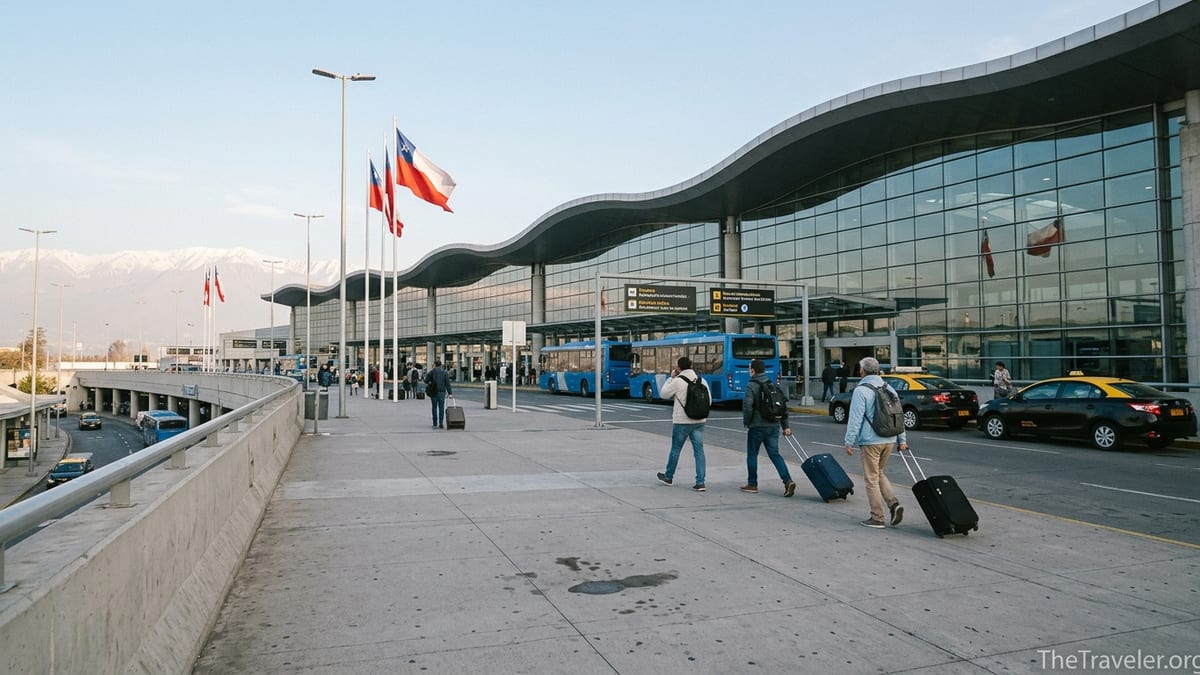
Understanding SCL: Terminals, Layout and First Impressions
Arturo Merino Benítez International Airport, better known by its code SCL, is Chile’s main gateway and the hub for LATAM, Sky Airline and JetSmart. The airport is roughly 15 to 20 kilometers from central Santiago, depending on where you are staying, and in normal traffic that translates to about 25 to 40 minutes by car. The key thing for first-time visitors to understand is that the airport now has a modern multi-terminal complex, with a dedicated international terminal and an upgraded domestic area, connected by clearly signed walkways and a centralized ground transport center between them.
Today, nearly all long-haul flights from North America and Europe use the international terminal. If you are arriving from cities like New York, Miami or Madrid you will disembark into this newer building, then follow signage for Immigration and Baggage Claim. Domestic flights within Chile use the original terminal, now focused on internal routes such as Calama, Puerto Montt or Punta Arenas. The walk between international arrivals and the domestic check-in area typically takes 5 to 10 minutes at normal walking speed, using enclosed, well-signposted corridors.
One useful orientation point is the airport’s bus and transport station located between the terminals. From either domestic or international arrivals, you will see overhead signs marked Buses, Taxis or Transporte Centro that lead you to a ground-level plaza where official airport buses (Centropuerto and TurBus), shared shuttles and authorized taxis operate from marked bays. This is where you should head if you plan to take public transport, a shared van or a pre-booked transfer, rather than walking straight out to the curb where freelance drivers often approach new arrivals.
Inside the buildings, services are what you would expect from a major South American hub. You will find ATMs, currency exchange booths, SIM card vendors and coffee shops both before and after security. As an example, a traveler arriving on a morning LATAM flight from Los Angeles can withdraw Chilean pesos from a bank ATM near baggage carousels, grab a coffee in one of the international arrival cafés, then follow signs to the bus terminal or official taxi counters without having to exit into the parking areas at all.
Arriving at SCL: Immigration, Customs and First Steps
After you leave the aircraft, you will be directed to Immigration. Queues vary a lot: early-morning long-haul arrivals can mean 30 to 60 minutes in line, while midday regional flights may clear in 10 to 20 minutes. Have your passport, completed entry form if provided on the plane, and your onward address in Chile ready. Immigration officers may ask for proof of onward travel and accommodation details, so keeping a printed hotel confirmation or a screenshot on your phone is useful, especially if your mobile data is not yet active.
Once you are stamped in, you head to baggage claim. Luggage carts are available and usually free to use. After collecting your bag, you pass through Customs. Chile is extremely strict about fresh food and agricultural products. If you are carrying items like fruit, nuts or dairy, you must declare them even if you are unsure. Officers may run your bags through an X-ray machine or use dogs to check for undeclared food. Fines for not declaring can be high, so as a first-time traveler it is safer to declare packaged snacks or simply avoid bringing fresh produce at all.
The moment you exit Customs is when many visitors feel overwhelmed, because this is where both legitimate and illegitimate transport offers appear. Inside the secure hall, you will see desks for official taxi and shuttle companies, including operators partnered with the airport concession. Their staff wear branded uniforms, have fixed-price lists displayed, and will give you a printed receipt if you book a ride to neighborhoods like Providencia, Bellavista or Las Condes. You may also be approached by individuals offering “cheap taxi” or “special price.” It is wise to ignore anyone who is not standing behind a branded, permanent counter or who suggests walking out to the parking lot to find their car.
If you prefer to use the bus, follow the overhead signs to the Transporte Centro or Bus Station between terminals. From international arrivals, for example, you exit the secure area, turn toward the main hall and descend to the ground level. You will pass cafés and seating areas, then see signs for Centropuerto and TurBus. This keeps you inside controlled airport space and avoids the confusion out on the main curb, where private drivers and unregulated offers are common.
Getting into the City: Buses, Official Taxis and Shared Shuttles
For most first-time visitors, the choice between bus, official taxi and shared shuttle comes down to budget, time of day and how much luggage you have. The two main bus companies, Centropuerto and TurBus, run modern blue or green coaches between the airport and key points in the city, such as the República or Los Héroes area and the Pajaritos transport hub. As of mid 2026, a one-way ticket on Centropuerto is typically a few thousand Chilean pesos, roughly in the 3 to 4 US dollar range. Buses usually come every 10 to 15 minutes during the day, with reduced frequency very late at night and early morning.
Using a bus in practice looks like this: a solo traveler landing at 10:00 on a weekday with one suitcase walks to the airport bus platforms, boards a Centropuerto bus marked for downtown, and buys a ticket directly from the conductor using cash or a card. About 35 minutes later, they step off at República or Pajaritos, both connected to Santiago’s Metro Line 1. From there, they can continue by metro to areas like Providencia or Ñuñoa. This is the most economical option and is generally safe in daytime, though you should keep your phone and wallet secure and bags within reach, particularly at intermediate city stops.
Official taxis are a better choice if you arrive late at night, are traveling as a pair or group with large suitcases, or are heading directly to a specific hotel or Airbnb. From inside the terminal, you can book an official taxi or transfer service at clearly identified counters that show fixed prices for different zones. A typical metered or flat fare into central Santiago might fall somewhere in the equivalent of 25 to 35 US dollars for a standard car, depending on exact neighborhood and time of day. For example, a couple landing at 23:30 and staying near Plaza de Armas can pay at a counter, receive a voucher, and be escorted to a marked official taxi bay without having to negotiate fares with a driver in Spanish.
Shared shuttle vans bridge the gap between bus and taxi. Services such as Transvip or airport-specific shuttles often offer per-person pricing to popular neighborhoods, which is attractive if you are alone but want door-to-door service. You pay at the desk in arrivals, share the van with other travelers going in the same general direction, and are dropped off one by one. In practice, a solo traveler might pay something in the low teens in US dollars to reach Bellavista or Providencia in a shared van, and the van may take 45 to 60 minutes if there are several drop-offs before yours.
Ride-hailing at SCL: Uber, Cabify and Local Realities
Ride-hailing in Chile has been evolving for years, and for first-time visitors the most important point is that not all apps operate under the same rules at the airport. In Santiago, the Cabify platform has formal agreements to provide regulated transport to and from SCL using licensed vehicles. That means Cabify-branded vans and cars can pick up passengers at clearly marked zones or through counters and kiosks, often with transparent pricing shown in the app before you confirm. In real terms, a Cabify ride from the airport to an address in Providencia or Las Condes often costs a bit less than an official street taxi booked on the spot, particularly when the app runs promotions for airport trips.
Uber also operates widely in Santiago itself, but airport pick-ups sit in a more ambiguous legal and practical space. Travelers regularly report that Uber drivers may ask you to meet them at specific points like the upper departures level or a parking area rather than the main arrival curb, to avoid potential fines or checks. It is not uncommon for drivers to ask you to sit in the front seat and to describe the ride as a trip between friends if questioned. In practice, thousands of rides happen each month without issue, but there is an element of risk for the driver and occasional confusion for first-timers trying to locate their vehicle in a multi-level parking structure.
For a first-time visitor who does not speak much Spanish, the safest and simplest options inside the airport boundary are usually, in order: a pre-booked private transfer, a ride booked at an official counter (including Cabify’s official services if you use their desk or predetermined pickup point), an official taxi hired from the airport transport area, then the public bus. Using Uber directly from arrivals is better left for visitors who already know SCL’s layout and feel comfortable following app instructions like “meet at Door 5 by the elevators, departures level.” If you do use any ride app, make sure the license plate and driver name exactly match the app before getting into the car.
Real-world examples show both sides. Travelers arriving at midnight have successfully booked Cabify vans right outside the exit, scanning a QR code inside the terminal and seeing the fare quoted in pesos before confirming. Others trying to call an Uber immediately after landing have found themselves wandering the parking lots with luggage, communicating with drivers by basic Spanish and missed calls. As a first-timer, it is worth paying a few extra dollars for clarity and predictability until you understand the airport better.
Domestic & International Connections: Navigating Transfers at SCL
Many visitors to Chile use Santiago as a gateway to further adventures in Patagonia, the Atacama Desert or wine regions, which means making domestic connections after an international arrival. When you connect, check whether your bags are tagged to your final destination. On through-tickets with LATAM, for instance, bags from a flight like Miami to Santiago to Punta Arenas may be checked all the way through. You still need to pass Immigration in Santiago, but you may be able to drop your bags right after Customs at a special transfer belt or re-check desk before proceeding to domestic security.
If you booked separate tickets, you must fully enter Chile, collect your luggage, clear Customs and then check in again at the domestic counters. Allow generous time for this. A safe rule of thumb is 3 to 4 hours between scheduled arrival and domestic departure for self-planned connections, especially in the morning arrival wave when Immigration and baggage claim can both be slow. For example, arriving from Dallas at 07:00 and booking a separate Sky Airline ticket to Calama at 09:00 is risky. If you are delayed, you absorb the cost of a missed domestic flight. A more comfortable plan might be a Calama flight around 11:00 or 12:00.
Moving between terminals is straightforward. After Customs, follow the signs to Domestic Flights if you are continuing within Chile. You will pass through the central commercial area and transport hall, then reach domestic check-in counters and security. The walking time is rarely more than 10 minutes, but queues at security can add another 15 to 30 minutes at busy times. If your layover is long, there are cafés, fast-food outlets and seating areas where you can rest. Some travelers with daytime connections into the city even leave the airport, store a large suitcase at a left-luggage facility, and take a bus into central Santiago for lunch before returning for an evening flight.
For international to international transfers, procedures depend heavily on the airlines and ticketing. If both flights are on one ticket with partner airlines, you may be able to stay airside and follow Transfer signs without fully entering Chile. However, many itineraries, especially those involving low-cost carriers or separate bookings, require entering the country and re-checking bags. As always, the more moving parts in your itinerary, the more conservative you should be about minimum transfer times.
Departures from SCL: Check-in, Security and Airport Services
When leaving Santiago, plan to arrive at the airport with enough buffer to handle traffic and potential queues. For international flights, arriving about three hours in advance is sensible in most cases. For domestic flights, 90 minutes is usually enough if you are familiar with the airport, but two hours is advisable if you are unfamiliar or traveling at peak times such as Friday evenings or the first day of school holidays. The drive from neighborhoods like Providencia or Las Condes to SCL can take 30 to 50 minutes at rush hour, so build that into your plan.
At check-in, most major airlines offer both staffed counters and self-service kiosks. LATAM and Sky Airline, for example, allow you to check in online and drop bags at dedicated bag-drop counters if you already hold a boarding pass. Domestic flights usually close check-in about 45 minutes before departure, while international flights close earlier. Be aware that security can be stricter than in some North American airports when it comes to liquids and electronics in carry-on bags, so follow the signage and instructions closely to avoid repeat scans.
Once through security, you will find a standard mix of duty-free shops, cafés, fast-food outlets and more upscale restaurants. Prices inside the airport are generally higher than in the city, so many budget-conscious travelers eat in Santiago or bring snacks bought in a supermarket before heading out. Wi-Fi coverage is available, but reliability and speed vary by area and time of day. If you need to work, some travelers choose cafés with ample seating near their gate to have access to power outlets and slightly more stable connections.
Practical details help. A couple flying from Santiago to Toronto via a European hub, for example, might arrive four hours early, check in, pass security and then spend an hour in a pay-per-use lounge to shower and recharge before a long overnight. Families with small children often appreciate the play areas scattered in some departure zones, which give kids a way to burn energy before sitting on a plane for several hours.
First-Time Chile Tips: Money, Safety and Local Etiquette
Arriving in Chile for the first time brings practical questions that go beyond the airport itself. On money matters, you will need some Chilean pesos for small purchases such as bus tickets or a coffee if your card does not work immediately. ATMs from major Chilean banks are available in both arrivals and departures, but be aware of foreign withdrawal fees. Using a major credit or debit card is common in the city, especially in hotels, restaurants and supermarkets, though small kiosks or street food stands may still prefer cash. Many first-time travelers withdraw the equivalent of 60 to 100 US dollars in pesos on arrival and then rely on cards for larger expenses.
Safety inside SCL is generally solid, but like any busy international airport you should protect your belongings against opportunistic theft. Keep your passport and phone in secure pockets, avoid leaving bags unattended while you change money or buy a SIM card, and be wary of anyone offering unsolicited help with luggage. Outside the terminal, particularly at the curb and parking areas, do not accept rides from unmarked vehicles or drivers who approach you casually while you smoke or step outside. Local police and experienced residents often recommend using official services such as Taxi Oficial, Transvip, or Cabify booked through official channels, especially late at night.
Local etiquette is straightforward. Spanish is the main language and English is spoken to varying degrees in the airport, especially at airline counters and major rental car desks. Simple phrases like “por favor,” “gracias,” and “buenos días” are appreciated. Tipping is not mandatory for taxis or ride apps, but rounding up the fare or adding a small percentage for good service is common. In restaurants in the city, a 10 percent service charge is often suggested on the bill; you can accept or adjust it based on your experience.
Weather and clothing are another consideration. Santiago’s seasons are reversed compared with the northern hemisphere. If you arrive from North America in January, you are stepping into high summer, with strong sun and potentially high smog levels. If you land in July or August, daytime temperatures can be cool and nights cold, particularly if you are heading straight to mountain destinations like Valle Nevado. Pack layers in your carry-on so you can adapt quickly when you walk out of the climate-controlled terminal into the real Chilean weather.
The Takeaway
For a first-time visitor, Santiago’s SCL airport is modern, busy and manageable once you understand its basic structure and transport options. The key decisions happen in the first hour: how you exit Customs, which transport channel you follow, and how much connection time you allow if you are continuing deeper into Chile. Buses like Centropuerto and TurBus provide an affordable link to the city and metro, official taxis and shared shuttles offer safer and simpler door-to-door service for tired travelers, and ride apps such as Cabify give tech-comfortable visitors another regulated option when used through official channels.
If you arrive with realistic expectations about queues, costs and local practices, SCL becomes less of a hurdle and more of an introduction to Chilean life. Plan for a bit of bureaucracy at Immigration and Customs, budget carefully for your chosen transport into town, and give yourself time buffers if you are making onward connections. With that preparation, your first steps out of Santiago airport can set the tone for a smooth and memorable trip through Chile’s deserts, mountains, vineyards and Pacific coast.
FAQ
Q1. How long does it take to get from Santiago airport to downtown? In normal traffic, most official taxis or ride services take about 25 to 40 minutes to central neighborhoods like Centro, Providencia or Bellavista, but rush-hour congestion or late-night roadworks can push that closer to an hour.
Q2. What is the cheapest way to reach the city from SCL? The airport buses operated by companies such as Centropuerto and TurBus are usually the lowest-cost option, with one-way fares typically equivalent to just a few US dollars and connections to Metro Line 1 at stops like República, Los Héroes or Pajaritos.
Q3. Are taxis at Santiago airport safe? Official airport taxis hired from inside the terminal or from clearly marked bays are generally reliable when you confirm the price before departure and use licensed vehicles, but you should avoid accepting rides from individuals who approach you informally in the arrivals hall or parking areas.
Q4. Can I use Uber at SCL? Uber operates widely in Santiago, but airport pick-ups can involve legal gray areas and non-standard meeting points, so first-time visitors often find it easier to use Cabify’s official airport services, official taxis, or pre-booked transfers until they are familiar with the terminal layout.
Q5. How much cash do I need on arrival? Many travelers withdraw the equivalent of 60 to 100 US dollars in Chilean pesos at airport ATMs to cover buses, small purchases and tips, then rely on credit or debit cards for hotels, restaurants and larger transactions where cards are widely accepted.
Q6. Is it safe to take the airport bus at night? The buses themselves are generally considered safe, but late at night platforms and some city stops can feel quieter and less comfortable, so many solo travelers arriving after about 22:00 prefer an official taxi, shuttle van or regulated ride service that offers direct door-to-door drop-off.
Q7. How early should I arrive at SCL before my flight? For international departures, reaching the airport around three hours before scheduled takeoff is usually adequate, while for domestic flights 90 minutes to two hours is recommended, especially during busy travel periods or if you need to check bags.
Q8. Do I need to worry about food restrictions at Chilean customs? Yes, Chile strictly controls the entry of fresh food and plant products, so you should declare any items such as fruit, nuts or dairy on arrival or simply avoid bringing them to prevent potential fines and delays during Customs inspection.
Q9. What should I do if someone offers me a taxi in the arrivals hall? It is best to politely decline and walk past anyone approaching you directly, then choose transport at official counters inside the terminal or from signed bays in the central transport area, where prices and operators are regulated and clearly displayed.
Q10. Is English widely spoken at Santiago airport? Basic English is spoken at most airline counters, major car rental desks and some shops, but not by everyone, so knowing a few Spanish phrases and having your hotel address written down can make communication smoother, especially with drivers and ground staff.