


More news on this day
Rail travel between central London and Stansted Airport was severely disrupted after multiple trackside fires near Waltham Cross led to a suspension of train movements on the busy West Anglia route.
Get the latest news straight to your inbox!
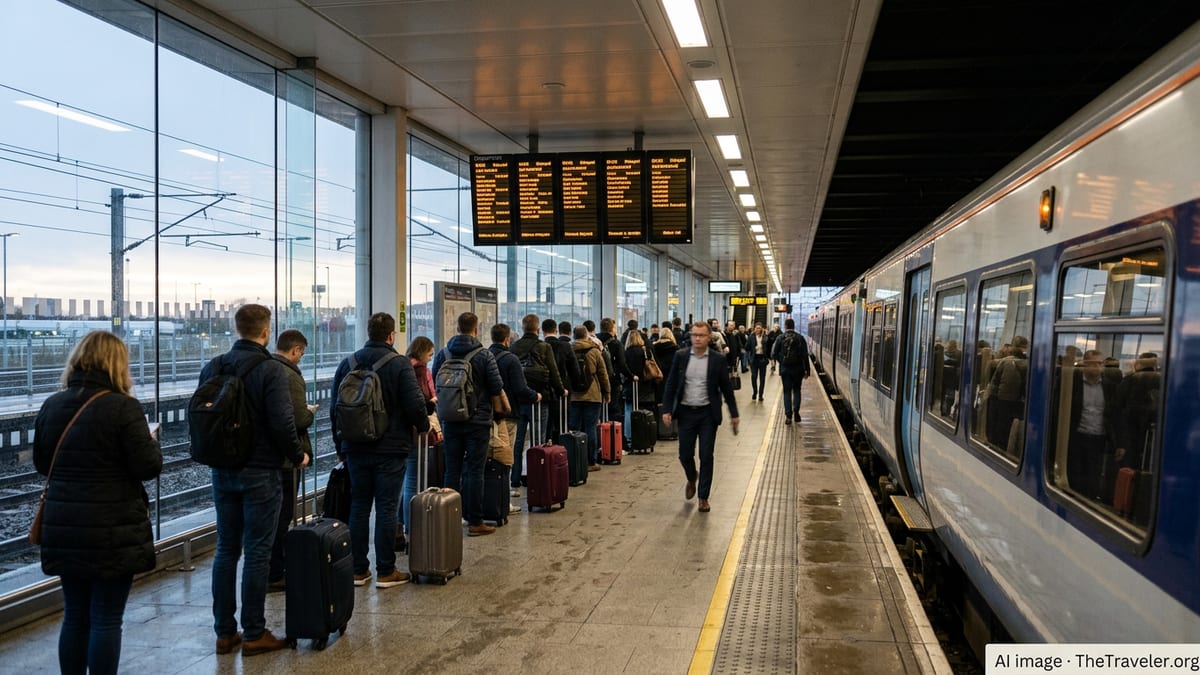
Trackside fires force emergency suspension of services
Published reports indicate that services on the London to Stansted Airport corridor were halted after a series of fires broke out close to the railway tracks near Waltham Cross in Hertfordshire. The incident affected a key stretch of the West Anglia Main Line, used both by airport-bound Stansted Express services and by commuter trains linking the capital with Hertfordshire and Essex.
According to publicly available travel updates, the fires were located beside the railway rather than on the tracks themselves, but concerns over visibility, smoke and the proximity of flames to the infrastructure led to a full stop on train movements in the area. Services were held at stations on either side of the affected section while rail staff and emergency crews assessed the situation.
The suspension quickly created knock-on delays across the network, as trains already in service were brought to a standstill and subsequent departures from London Liverpool Street and Stansted Airport were held back or cancelled. Passengers heading to and from the airport were advised to allow significantly longer journey times and to consider alternative routes where possible.
Information made public by train operators shows that disruption was expected to last for several hours while safety checks were completed and the condition of signalling and overhead power equipment was verified.
Impact on Stansted Airport passengers and flight connections
The line through Waltham Cross forms part of the primary rail link between London Liverpool Street and London Stansted Airport, meaning the fires had an immediate impact on travellers attempting to reach the airport for departing flights. Stansted Express normally offers up to four trains per hour on this corridor, providing one of the fastest connections between central London and the terminal.
With trains suspended, many passengers were left seeking alternative transport options at short notice. Public information platforms highlighted that tickets were being accepted on other operators’ services where possible, although diverted rail routes added extra time and often required additional changes across the Greater London network.
Coach operators and airport bus services also experienced increased demand as travellers switched from rail to road. Travel forums and social media posts described crowded concourses and queues for replacement buses and coaches serving Stansted, particularly for those arriving into London terminals to find their onward rail leg unavailable.
Scheduled flight departures at Stansted continued, but consumer travel guidance stressed the importance of allowing extra time to travel to the airport and checking live transport updates as conditions evolved on the rail network.
Commuter disruption across the West Anglia corridor
The incident at Waltham Cross also had a significant effect on daily commuters using the Lea Valley and West Anglia lines, which carry passengers between London, Hertfordshire, Cambridgeshire and Essex. Trains that would normally run through Waltham Cross to and from stations such as Broxbourne, Bishop’s Stortford and Cambridge were delayed, curtailed or cancelled.
Operational data published online shows that the affected section is a bottleneck on the route, so the suspension of movements quickly triggered congestion as trains queued for paths around the incident. Some services were terminated short of their usual destinations, while others were held at origin stations to prevent further crowding on platforms closer to London.
Passengers reported extended journey times, unscheduled changes and crowded alternative services as they attempted to reroute via other commuter lines into the capital. The issues were compounded for those needing onward connections on the London Underground and other mainline services, as delays accumulated throughout the afternoon and early evening peaks.
Digital journey planners were regularly updated to reflect the changing situation, but publicly shared experiences suggest that many travellers faced considerable uncertainty while awaiting confirmation of when normal running would resume.
Rail infrastructure checks and safety considerations
Fires near railways can create multiple risks for train operations, from direct damage to cabling and signalling equipment to reduced visibility for drivers and the potential for smoke to affect trains and nearby communities. Industry briefings note that even when flames appear minor, services may be stopped as a precaution until the structural integrity of tracks, sleepers and overhead line equipment is confirmed.
In the Waltham Cross incident, published coverage indicates that access was required for firefighting teams operating alongside live railway infrastructure. Stopping trains allowed response teams to move safely around the lines, deploy hoses and monitor hotspots without the added risk of passing services.
Once the fires were brought under control, inspections of the affected area were needed before any gradual reopening of the line. Routine procedure in such cases includes checks on track alignment, signalling cables, lineside equipment housings and, where applicable, the overhead electrification system, to ensure that heat or debris has not caused hidden faults.
Rail industry information emphasises that these assessments can extend disruption beyond the immediate firefighting effort, as services are reintroduced in stages to avoid overloading the route while crews continue final checks and any necessary repairs.
Travel advice and outlook for passengers
Transport advisories issued during the suspension urged passengers travelling between London and Stansted Airport to verify their journeys as close as possible to departure and to consider earlier trains, alternative London terminals or dedicated coach services when rail options were limited. Those with flexible plans were encouraged to delay non-essential travel until services stabilised.
Consumer travel organisations recommend that passengers affected by disruption of this kind retain their tickets and receipts, as they may be eligible for compensation under existing delay and cancellation policies offered by train operators. Guidance typically suggests submitting claims once final arrival times are known and operators have confirmed the scale of delays.
For future journeys on the West Anglia and Stansted Express routes, travellers are advised to monitor live updates on the day of travel, particularly during periods of hot, dry weather when lineside fires are more common. Planning additional buffer time when travelling to catch a flight can help mitigate the impact of unexpected incidents such as the Waltham Cross fires.
As services are restored after events of this nature, timetables may remain altered for some time while the network recovers. Publicly available information suggests that a cautious, phased return to normal operations is standard practice, designed to balance safety, reliability and the need to move large numbers of passengers through a busy rail corridor.