


For travelers who are used to airline websites and apps, booking a private jet flight with Nicholas Air feels very different. The company positions itself as a membership-based, high-touch operator that wants to “know its members,” which means your trip usually starts with a conversation, not a search bar. Understanding that process in detail can help you decide whether Nicholas Air is the right fit and what to expect from the moment you first reach out until you step off the aircraft at your destination.
Get the latest updates straight to your inbox!
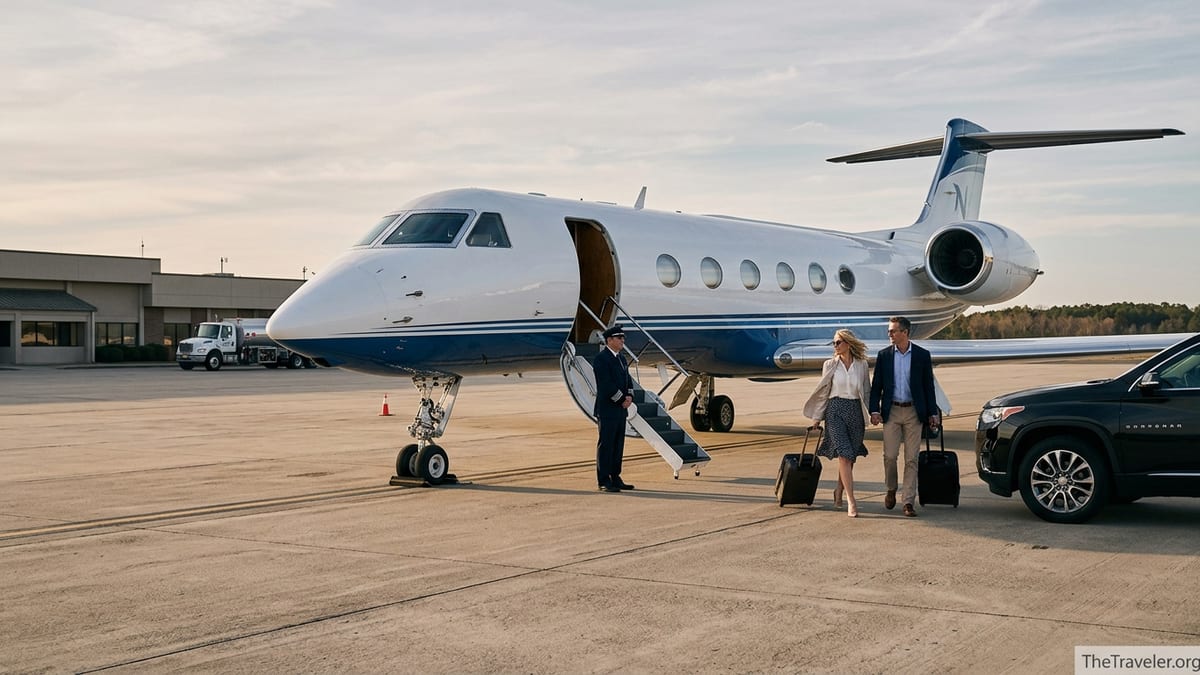
Understanding Who Nicholas Air Is and How They Operate
Nicholas Air is a U.S.-based private jet operator that runs its own fleet and sells access primarily through membership-style products rather than one-off, anonymous charters. The fleet spans from smaller jets like the Embraer Phenom 100 and the Pilatus PC-12 turboprop up to midsize and super-midsize aircraft such as the Citation Latitude, Phenom 300E, Challenger 300 and the ultra-long-range Gulfstream G600. In practice this means that when you book a Nicholas Air flight, you are usually flying on an aircraft owned or controlled by the company rather than on a brokered airplane from an unrelated operator.
Instead of simply posting hourly charter rates on a website, Nicholas Air focuses on members who commit to a certain level of flying each year. Jet card and membership programs such as the Blue Card, Rise Card, and other tiered products typically involve either pre-purchasing a block of hours on a specific aircraft type or depositing a set dollar amount, then drawing down as you fly. This is a different experience from tapping “Book” on a platform like XO or Wheels Up, but it can appeal to travelers who want predictable aircraft quality and a single operations team overseeing all details.
For a real-world example, consider a family that flies from Dallas to Aspen several times each winter plus a handful of business trips to New York. Instead of sourcing a new on-demand charter every time, they might buy 30 hours on the Phenom 300E via a Nicholas Air jet card. Once in the program, every Dallas–Aspen weekend can be booked as a simple call or email quoting the same approximate hourly structure, and they can also upgrade to a larger jet like the Challenger 300 for a longer Dallas–San Jose flight if needed, typically at a known uplift.
Nicholas Air’s model has both fans and critics, especially among aviation professionals who discuss the company candidly on pilot forums and job sites. From a traveler’s perspective, these discussions are a reminder to perform thorough due diligence: check the operator’s safety record, third-party safety ratings, and member references before committing tens or hundreds of thousands of dollars to any private aviation provider.
Getting Started: Inquiry, Fit Call, and Membership Options
The first step with Nicholas Air is rarely “Book now.” Prospective customers usually submit a short form or call a sales representative to discuss travel patterns, budget, and aircraft preferences. For example, a Houston-based business owner who expects to fly about 60 hours annually between Texas, Florida, and the Midwest might have a 30–45 minute introductory call to review options such as a Phenom 100 or Pilatus PC-12 program for shorter hops and a Phenom 300E or Citation Latitude for longer legs with more passengers.
During that conversation, Nicholas Air typically asks where you fly, how often, how many people are usually traveling, and how much notice you can give before a trip. Based on that, they might recommend a Blue Card with 30 or 60 hours on a specific jet, or a deposit-based Rise Card in the 200,000 to 350,000 dollar range if you want more flexibility across the fleet without locking into a fixed number of hours on a single model. Exact price points can fluctuate with fuel and demand, but customers often find that entry-level programs for light jets start in the low six figures, while super-midsize or long-range access requires a substantially larger commitment.
Some travelers also look at fractional ownership or lease products offered by Nicholas Air. In these cases, a client committing to around 100 hours per year on a Phenom 300E, for instance, might purchase or lease a fractional share of an aircraft and then pay ongoing monthly and occupied hourly fees. That model suits companies and families with more intensive, predictable travel patterns who want priority access to “their” aircraft category and potentially lower long-term cost per hour compared with ad hoc on-demand charter.
This early stage is also where you can request sample trip quotes to test whether the economics make sense. You might ask Nicholas Air to price, for instance, four round-trip flights from Teterboro to Miami, two from Chicago to Scottsdale, and several short hops from Atlanta to small regional airports in Alabama or Mississippi. Comparing those hypothetical totals with offers from competitors like NetJets on a smaller jet card or a local charter broker can help clarify whether Nicholas Air’s model matches your pattern and tolerance for a sizable upfront purchase.
Designing and Booking Your First Flight
Once you have chosen a membership or card product and funded it, the booking experience becomes more streamlined. Unlike commercial airline sites or some consumer-facing private jet apps, Nicholas Air generally handles flight requests via dedicated member services staff. Depending on your preference, you might email, call, or use a member portal to submit a trip request including dates, departure time window, passenger list, and any special needs such as a pet or catering.
Imagine you are a member based in Nashville planning a long weekend in Naples, Florida. On a Monday morning, you call your Nicholas Air contact and ask for a departure Friday around 3 p.m. from Nashville International with four adults, two children, and a medium-sized dog, then a return on Monday afternoon. Within a short window, the company typically confirms whether they can honor your requested times, which aircraft is assigned, and the projected flight time and cost drawdown from your card or deposit. On a popular route like Nashville to Naples you might be offered a Phenom 300E or Citation Latitude, with a flight time of roughly 1 hour 40 minutes to 2 hours each way.
Members often highlight that one advantage of a membership model is consistent access and relatively predictable pricing, even during busy periods such as winter holidays. That said, like most private aviation companies, Nicholas Air can impose peak-day surcharges, minimum flight times, or extended notice requirements on particularly popular dates. When you book your Thanksgiving or Christmas trips, it is prudent to ask explicitly about any surcharges or blackout-style constraints so that your expected hourly rate does not suddenly feel less competitive than spot charter.
Compared with on-demand brokers, another notable difference is that Nicholas Air, as an operator, usually decides which specific tail number to assign. You will be told the aircraft type, likely age range, and configuration, but not necessarily get to shop multiple operators and cabin layouts for each trip. Travelers who value simplicity and a single point of accountability may see this as a positive, while others who enjoy fine-tuning every cabin detail might still prefer a broker who can present competing aircraft options for each journey.
Preflight Logistics: Catering, Ground Transport, and Day-of Updates
After your flight times and aircraft are confirmed, Nicholas Air’s member services team or a dedicated concierge typically reviews the preflight logistics. This is when you specify any catering preferences, ground transportation at departure and arrival, and on-board details such as seating configuration or whether you need a quiet workspace in flight. Many members keep a preference profile on file covering favorite snacks, beverage brands, and whether they prefer the cabin stocked for business meetings or family travel with children.
For example, a New York law firm partner heading to a client retreat in Charleston might request light, healthy catering such as grilled chicken salads and sparkling water on a morning flight from Teterboro. On the way back, after two days of meetings, they might prefer a heartier selection: sushi platters, a specific Napa Cabernet, and espresso. Nicholas Air can often arrange this through catering partners at each airport, quoting additional charges that will be billed against your card or account. On simpler flights, some families skip formal catering and opt for a basic snack and beverage selection to keep costs modest.
Ground transportation can be booked directly through Nicholas Air or arranged independently. A Dallas-based family flying to Vail for a ski trip might ask Nicholas Air to coordinate a suburban SUV to meet them planeside in Eagle County Regional Airport and drive them to their rental home in Beaver Creek. Another traveler might prefer to use a trusted local car service or rideshare instead. Either way, the operator usually confirms tail number and estimated arrival time with the driver on the day of travel so that curbside or ramp pickup is smooth.
On the day of departure, you typically receive flight status updates confirming crew arrival time and any weather-driven schedule changes. While Nicholas Air does not provide a consumer-style smartphone app like some other providers, members often rely on direct texts or calls from their dedicated contacts. That high-touch approach works well for travelers who find it easier to coordinate logistics through people rather than dashboards, though it can feel less self-service than competitors that lean heavily on digital tools.
At the Airport and On Board: What the Flight Itself Feels Like
Most Nicholas Air flights depart from fixed-base operators at large airports or from smaller regional airports where you can drive directly to a private terminal, bypassing airline check-in and security. For instance, a traveler leaving Los Angeles might use a private terminal at Van Nuys or the FBO side of John Wayne Airport instead of the commercial terminals. Upon arrival, staff typically greet you in the lounge, check IDs, and escort you to your aircraft once the crew has completed preflight checks.
The onboard experience depends heavily on aircraft type. On a Phenom 100, you can expect a compact cabin suited for up to four passengers on shorter routes such as Atlanta to Tampa or Chicago to Nashville. Seating is usually in a club arrangement with two pairs of facing seats, and there may be limited room for walking around. On a Citation Latitude or Challenger 300, the cabin feels more spacious with taller stand-up headroom for many passengers, larger baggage capacity, and often a more substantial galley where the crew can prepare hot drinks or light meals. A Gulfstream G600, at the top end of Nicholas Air’s fleet, is designed for long-haul trips like New York to London or Los Angeles to Hawaii, offering lie-flat seating and multiple cabin zones.
In many cases, there is no dedicated flight attendant on smaller jets, so cabin service is handled directly by the pilots when safe to do so, or the passengers help themselves to snacks and beverages set up before boarding. On larger aircraft such as a Challenger 300 or G600, Nicholas Air may provide a flight attendant for longer or more complex flights, especially when there are eight or more passengers. Travelers used to business-class cabins on major airlines should be prepared for a more informal but very private atmosphere, where you can work, sleep, or hold confidential meetings without surrounding strangers.
Real-world feedback from passengers paints a mixed but generally positive picture. Some customers praise the comfort of newer aircraft, friendly crews, and the convenience of bypassing airline chaos. Others have reported frustrations when flights were delayed or schedules changed and they felt communications could have been more proactive. As with any private aviation provider, your specific crew and aircraft on the day make a significant difference, so a single flight may not fully represent the broader experience.
Reliability, Safety Perception, and How to Protect Yourself as a Traveler
Reliability and safety are top concerns for travelers considering any private jet operator, and Nicholas Air is no exception. The company emphasizes that it owns and operates its fleet, which allows it to maintain direct operational control and standardized maintenance and training. Independent industry sources have cited Nicholas Air among notable owner-operators in the jet card space, and its continued investment in new aircraft, such as additional Phenom 300E and Citation Latitude deliveries, suggests a commitment to maintaining a young fleet.
At the same time, potential members researching Nicholas Air will quickly find vigorous discussions among pilots and former employees on aviation forums and review sites. Some of these accounts praise the opportunity to log significant flight hours on modern aircraft and describe strong maintenance practices, while others raise concerns about schedule pressure, company culture, or management style. These perspectives do not necessarily predict your experience as a passenger, but they are reminders to ask direct questions about pilot duty limits, training standards, and safety audits during your due diligence.
From a traveler’s standpoint, practical steps can help manage risk. Before funding a six-figure jet card, you can request documentation about third-party safety ratings, such as ARGUS or Wyvern status, and ask whether recent safety audits have revealed any issues relevant to passengers. You might also inquire about the average experience level of captains on specific fleet types, how the company handles pilot fatigue, and what happens operationally when weather or maintenance disrupts your schedule. Reputable operators should be comfortable answering these questions in clear, non-defensive terms.
It is also wise to understand the legal and financial framework of your membership. For instance, if Nicholas Air holds your deposit or pre-purchased hours in a general corporate account rather than a separate escrow, you assume more credit risk in the unlikely event of a serious business downturn. Travelers who prioritize maximum security sometimes compare that structure with competitors that use escrow arrangements or allow shorter initial commitments. Discussing these points openly with Nicholas Air sales staff and perhaps with an aviation-focused attorney can yield a clearer sense of comfort before you sign.
Costs, Value, and When Nicholas Air Makes Sense
Unlike buying a single on-demand charter flight, committing to a Nicholas Air membership or card involves a strategic decision about how you plan to travel over several years. Financially, entry-level card products aimed at light-jet travelers might be compelling for families that routinely fly from places like Atlanta, Nashville, or Dallas to vacation markets such as Destin, Naples, or Steamboat Springs. In that scenario, replacing a mix of first-class airline tickets and occasional charters with a predictable 30-, 60-, or 100-hour jet card could offer better value per hour, particularly when you factor in savings on hotel nights and rental cars thanks to direct routes and custom timings.
For businesses, the value case often revolves around time and control. A small manufacturer with plants in secondary markets such as Tupelo, Mississippi and Greenville, South Carolina might find that scheduled airline service requires long layovers and overnight stays. With a Nicholas Air card, executives can potentially visit two or three sites in a single day and be home by evening, even when flying into smaller regional airports closer to their facilities. In those cases the hourly aircraft cost may be outweighed by saved productivity and the ability to consolidate trips.
On the other hand, travelers who only anticipate a handful of private flights per year or who are extremely price-sensitive may find Nicholas Air’s model less compelling than ad hoc charter through brokers that shop among multiple operators. If you simply need one flight from Los Angeles to Cabo and one from New York to Miami each year, paying a large deposit or buying dozens of hours in advance could tie up more capital than necessary. Competing services that allow one-off bookings on a variety of operators often provide more flexible options for low-frequency private flyers.
Because Nicholas Air does not publicly post hourly rates, it is essential to request detailed quotes that reflect all fees, including repositioning, overnights, and possible peak-day premiums. Savvy travelers often compare at least two or three scenarios: a Nicholas Air jet card on a Phenom 300E or Citation Latitude, a smaller regional operator’s hourly charter rate on similar aircraft, and a large national brand like NetJets or Flexjet. By modeling realistic annual usage over several years, you can better determine whether Nicholas Air delivers the combination of fleet quality, service style, and pricing that aligns with your expectations.
The Takeaway
Booking a Nicholas Air flight is less about tapping an app for a one-off trip and more about entering into an ongoing relationship with a single operator that manages your private flying over time. From the initial fit conversations and membership selection through tailored preflight planning and ground coordination, the experience emphasizes human interaction and a consistent fleet rather than maximum self-service. For frequent travelers who value familiarity with aircraft and crews, and who can justify a substantial upfront commitment, that approach can feel reassuring and efficient.
At the same time, Nicholas Air’s model and reputation make it especially important to ask careful questions about safety practices, pilot experience, and financial protections before you sign. Candid feedback from aviation professionals suggests both strengths and areas of concern, and your comfort level with those trade-offs should guide whether Nicholas Air is the right partner for your travel needs. Comparing its programs against at least a couple of alternative operators and brokers will give needed context on pricing and flexibility.
If you regularly fly between U.S. cities and resort destinations, especially from regions where Nicholas Air’s fleet is concentrated, a membership could offer a blend of convenience, cabin quality, and schedule control that rivals or exceeds what you would get from airlines or ad hoc charter. If you are an occasional or purely price-driven private flyer, other options may be more appropriate. Ultimately, the best way to judge Nicholas Air is to engage directly, request detailed trip scenarios, and, if you decide to proceed, pay close attention to how well the company delivers on its promises from your first flight onward.
FAQ
Q1. Do I have to be a Nicholas Air member to book a flight?
In most cases, yes. Nicholas Air is built around membership and jet card programs rather than one-off public charter bookings, so travelers typically join a program before flying regularly.
Q2. How far in advance do I need to book a Nicholas Air flight?
Standard practice is to provide at least several days’ notice, especially around weekends or holidays, though members sometimes secure flights on shorter notice when aircraft and crews are available.
Q3. Can Nicholas Air arrange international flights or is it mainly domestic?
Nicholas Air primarily serves U.S. routes but can operate to many international destinations in Canada, the Caribbean, Mexico, and beyond where regulatory conditions and aircraft range allow.
Q4. What happens if my Nicholas Air flight is delayed or canceled?
If weather, maintenance, or air traffic issues disrupt your schedule, Nicholas Air typically works to re-accommodate you on another departure or aircraft, though exact options depend on fleet availability at that time.
Q5. Are pets allowed on Nicholas Air flights?
Yes, pets are commonly accommodated, but you should notify Nicholas Air at the time of booking so they can match you with a suitable aircraft and ensure cleaning and allergy protocols are followed.
Q6. How does catering work on a Nicholas Air flight?
Basic snacks and beverages are generally included, and additional catering such as full meals, special diets, or premium wines can be arranged in advance for an added charge.
Q7. Is there Wi-Fi on Nicholas Air aircraft?
Many Nicholas Air jets, particularly midsize and larger types like the Citation Latitude and Challenger 300, are equipped with in-flight Wi-Fi, but coverage and speed can vary by aircraft and route.
Q8. Can I choose a specific aircraft every time I fly?
You usually select an aircraft category through your membership, but Nicholas Air assigns specific tail numbers based on fleet availability, maintenance, and performance needs for each trip.
Q9. How do Nicholas Air’s costs compare with other private jet options?
Exact pricing depends on aircraft type and program, but Nicholas Air typically competes with other premium operators, sometimes offering value advantages on certain routes and usage patterns while being less economical for infrequent flyers.
Q10. Is Nicholas Air a good option for first-time private flyers?
For travelers ready to commit to a structured program and who value a single operator managing all aspects of their flying, Nicholas Air can be a solid introduction to private aviation, provided they are comfortable with the membership cost and have vetted the company’s safety and service standards.