


More news on this day
Hundreds of flights across the United States remained disrupted on Friday, November 27, as airlines worked through lingering bad weather on the East Coast and residual network strain from this month’s nationwide Federal Aviation Administration ground stop, leaving early-morning travelers facing fresh delays and cancellations at major hubs including New York’s John F. Kennedy International Airport and Washington’s Ronald Reagan Washington National Airport.
Get the latest news straight to your inbox!
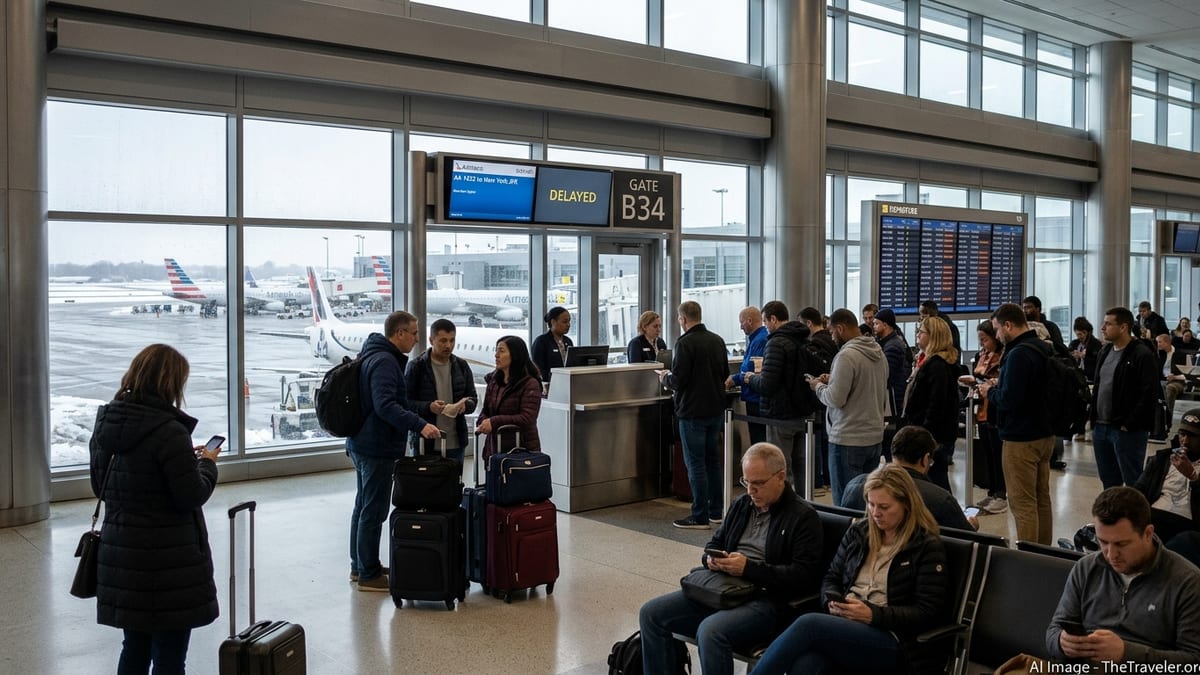
Flight delays ease from Thanksgiving peak but remain significant
By early Friday, data from flight-tracking services showed nearly 300 flights within, into or out of the United States delayed and about 80 canceled, indicating that the country’s air travel system was still not back to normal after the Thanksgiving storm period. Those figures represent a marked improvement from conditions earlier in the holiday week but still translate into thousands of affected passengers, particularly along the busy Northeast Corridor.
On Thursday, November 26, a strong coastal storm brought heavy rain, high winds and localized flooding to parts of the East Coast, complicating one of the busiest travel days of the year. FlightAware and other monitoring platforms recorded more than 2,800 delays and more than 450 cancellations involving U.S. airports on Thanksgiving Day, up from roughly 400 cancellations and about 2,200 delays earlier in the week as the system first moved in. While Friday’s totals were lower, they reflected ongoing recovery rather than a full return to normal operations.
Federal statistics show that the U.S. aviation network typically operates around 19,000 domestic flights per day in late November, meaning even a few hundred cancellations can create a complex rebooking challenge. Because many Thanksgiving departures run near full capacity, stranded passengers often have limited options to be re-accommodated on later services, especially on routes with already dense holiday bookings.
JFK and Reagan National among East Coast airports still affected
New York’s John F. Kennedy International Airport remained one of the focal points of disruption on Friday morning. Flight-tracking data cited by national broadcasters indicated that JFK had logged eight cancellations and 29 delays across arriving and departing flights by around sunrise on November 27, placing it among the hardest-hit major U.S. hubs at that hour. The cancellations affected a mix of domestic and international services, reflecting JFK’s role as a transatlantic and long-haul gateway as well as a key connection point for U.S. travelers.
Farther south, Ronald Reagan Washington National Airport, which primarily handles short- and medium-haul domestic routes serving the U.S. capital region, also reported early-morning disruption on Friday. Data summarized by multiple travel outlets showed six canceled flights and 13 delayed departures or arrivals during the same early-day window. Those numbers layer on top of a more difficult Thanksgiving Thursday for the Washington region, when a combination of high winds and earlier network issues drove elevated cancellation and delay rates at Reagan National and nearby Washington Dulles and Baltimore/Washington International.
Baltimore/Washington International Thurgood Marshall Airport saw some of the highest Thanksgiving Day cancellation totals in the country, with more than 60 flights scrubbed on Thursday according to one analysis of FlightAware data, as airlines thinned schedules in anticipation of the worst of the weather. Carriers serving the Northeast, including JetBlue, Delta, American and United, issued weather waivers for many East Coast airports, allowing travelers to change flights without standard penalties and, in some cases, without paying fare differences for rebooking within a defined date window.
Recent nationwide ground stop compounds holiday-weather pressures
This week’s weather-related turmoil hit U.S. air travel less than two weeks after a nationwide FAA ground stop on November 13, which halted departures across the National Airspace System following a major telecommunications failure initially identified near Chicago but later found to affect multiple air traffic control centers. That outage prompted the agency to order a pause on most departures countrywide while contingency procedures were implemented, leading to thousands of cancellations and delays on November 13 and lingering disruption over several subsequent days.
According to publicly available tallies summarized by national media and federal briefings, more than 11,000 flights were canceled or delayed on November 15 alone as airlines struggled to reposition aircraft and crews and clear backlogs from the ground stop. The FAA and the Department of Transportation have since acknowledged that the system failure and its aftermath created “highly unusual and unpredictable” conditions for carriers, with regulators temporarily adjusting slot and usage rules at constrained airports such as JFK and Reagan National to account for operational challenges that were outside airlines’ control.
The proximity of the nationwide outage to the Thanksgiving travel period meant that some airlines entered the holiday week with still-fragile schedules. While many carriers restored their planned frequencies and routing patterns by late November, residual misalignment of aircraft and crew resources left the system more vulnerable to weather shocks. Industry data suggest that when the national network is already under stress, storms affecting major hubs like New York and Washington can cause cascading delays, even at airports experiencing more benign local conditions, because crews and aircraft fail to arrive where they are needed on time.
How current disruptions compare with a typical Thanksgiving
Federal on-time performance statistics for recent years indicate that late November usually brings an uptick in delays across U.S. airlines, driven by a combination of heavy demand, tight connection windows and seasonal weather. In November and December 2025, nearly one quarter of U.S. flights arrived at least 15 minutes late, according to an analysis of Bureau of Transportation Statistics data, with weather and airspace congestion both significant contributors. For 2026, official month-end data are not yet available, but early indicators point to a broadly similar pattern of elevated disruption in the final weeks of the year.
However, the mix of causes is somewhat different this year. In addition to the typical late-autumn storms, the November 13 ground stop added a layer of operational complexity that will only be fully reflected once carriers file detailed cause-of-delay data with the Department of Transportation. A recently published DOT rule updating how airlines categorize delay and cancellation causes was scheduled to take effect in late 2026 but has since had its effective date pushed to February 1, 2027, meaning that airlines are still reporting under the existing framework during this Thanksgiving period.
Historic averages also show that certain airports are more prone to Thanksgiving-period issues than others. Data for Ronald Reagan Washington National, for example, indicate that over the past year only about 69 percent of flights departed on time, with roughly 4 percent canceled, compared with national on-time performance closer to 75 percent. Forecast tools built on Bureau of Transportation Statistics records projected an improvement in on-time performance at Reagan National for November 2026, but those forecasts did not fully anticipate the combination of the nationwide outage and this week’s East Coast storm system.
What travelers should check in the days ahead
With the heaviest of the Thanksgiving travel rush set to continue through the weekend, particularly on Sunday, November 29, forecasters expect weather conditions to gradually improve across much of the eastern United States. The National Weather Service has signaled that the large storm system affecting coastal states will weaken as it moves away from the Mid-Atlantic and Northeast, which should reduce the risk of additional widespread weather-related flight cancellations. Nevertheless, local pockets of rain and wind may persist, and airline operations teams are still working through the knock-on effects of earlier disruptions.
Airlines are maintaining flexible booking policies in several affected markets, particularly along the Northeast Corridor, though the exact terms vary by carrier and route and are time-limited. Travelers whose flights have not yet been disrupted are advised to monitor their reservations closely using airline apps or booking websites, as same-day schedule adjustments remain possible while carriers rebalance fleets and crews. For those already affected by cancellations, U.S. regulations generally entitle passengers to a refund if a flight is canceled and they choose not to travel, regardless of the stated cause of the disruption, though compensation beyond a refund typically depends on the airline’s own policies and whether the cause is within the carrier’s control.
In practical terms, passengers traveling through airports that saw higher disruption levels on Thursday and Friday, including JFK, Reagan National, Baltimore/Washington International and other major East Coast hubs, should allow extra time at the airport, particularly if they have checked baggage or need to clear security at peak hours. Because seat availability may be tight on later flights, those with flexible plans may wish to consider off-peak departure times or alternative airports in the same region. As airlines and regulators continue to review the impact of both the November 13 ground stop and this week’s storm system, further operational guidance and any updated consumer advisories are likely to be issued in the coming weeks ahead of the December holiday travel surge.