


More news on this day
A slow‑moving coastal storm off the Mid‑Atlantic and Northeast is disrupting U.S. air travel on Friday, November 27, 2026, with weather‑driven constraints at key East Coast hubs triggering a disproportionate wave of delays and cancellations for flights into and out of Florida during one of the busiest Thanksgiving travel days.
Get the latest news straight to your inbox!
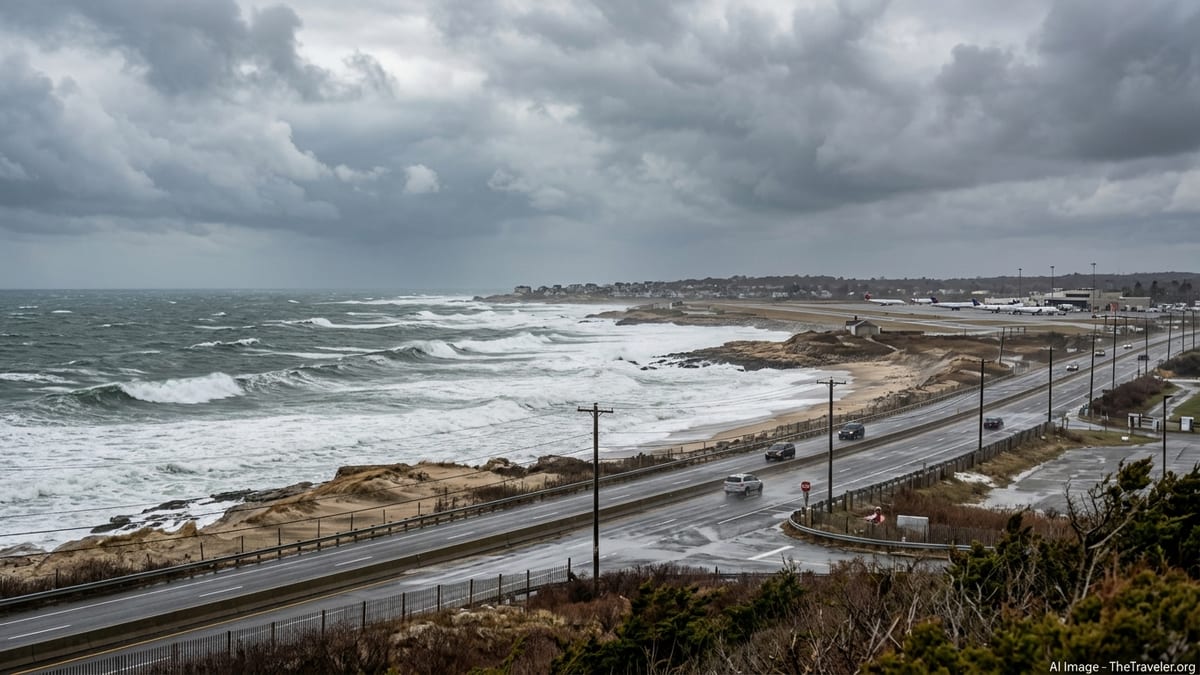
Storm conditions along the East Coast and the scale of national disruption
Forecast discussions from National Weather Service offices and federal outlooks for Friday describe a mature low pressure system centered off the Northeast coast, following a period of heavy rain, strong onshore winds and coastal flooding from Thanksgiving Day into Friday across parts of the Mid‑Atlantic and New England. Excessive rainfall outlooks issued earlier in the week had already highlighted the risk of flash flooding and coastal inundation from the Delmarva Peninsula north through the New York City area and coastal New England, prompting advance warnings that holiday travel could be affected, particularly for routes touching major East Coast hubs.
By Friday morning, surface analyses referenced in federal briefings placed the low near the northeastern seaboard, with tight pressure gradients maintaining breezy to windy conditions along portions of the Mid‑Atlantic and New England coastlines. While the heaviest rain bands had shifted offshore by early Friday, coastal flood warnings and advisories remained in effect for tens of millions of people in shoreline communities, and forecasters still expected rough seas and lingering tidal flooding during high‑tide cycles as the system gradually moved away through late Friday into Saturday.
Flight tracking data cited by multiple outlets showed that the storm’s aviation impact was noticeable but short of nationwide gridlock. By early Friday local time, several hundred flights within, into or out of the United States had been delayed and a few hundred canceled, a level of disruption higher than a typical late‑November Friday but below the most severe holiday disruption days seen in recent years. Early figures for Thanksgiving Day itself indicated that more than 2,000 flights to or from U.S. destinations were delayed and more than 400 were canceled as the storm intensified over the East Coast and airlines began proactively adjusting schedules.
How Florida’s major airports are feeling the ripple effects
Although the core of the coastal storm is anchored hundreds of miles north of Florida, its operational footprint extends deep into the state’s air travel network through aircraft rotations and crew scheduling. By late Friday morning, flight‑status aggregators and regional media reports indicated that Florida airports collectively accounted for a sizable share of the day’s cancellations in the United States, with more than 80 flights to, from or within the state scrubbed and several hundred more operating behind schedule. Those figures were part of a national tally that hovered in the mid‑400s for cancellations by midday, according to data referenced in multiple news reports that draw on FlightAware’s tracking platform.
The pattern of disruption closely follows the geography of Florida’s busiest and most interconnected gateways. Miami International, Orlando International, Fort Lauderdale–Hollywood and Tampa International were among the airports reporting the largest number of affected flights on Friday, reflecting their dense north–south schedules that tie Florida to the New York City region, Boston, Washington, Baltimore and Philadelphia. Smaller but regionally important airports, including Southwest Florida International near Fort Myers and Jacksonville International, also reported scattered cancellations and delays linked to aircraft and crews coming from or bound for the storm‑affected Northeast corridor.
Local weather at Florida’s major airports has not been the primary driver of these problems. Forecast discussions from the National Weather Service office in Miami for Friday highlighted generally dry conditions over the peninsula, with only minor coastal flooding issues during high tide and no expectation of widespread thunderstorm activity or low ceilings that would typically force significant arrival or departure restrictions. Real‑time airport status tools that compile Federal Aviation Administration data likewise showed no FAA ground stops or formal ground delay programs in effect anywhere in Florida as of late Friday morning, with only modest average departure delays at Miami and Fort Lauderdale and on‑time conditions at Orlando and Tampa.
Constraints at Northeast hubs and how they cascade into Florida schedules
The more significant constraints have been occurring hundreds of miles to the north, where the storm has intersected with some of the country’s most crowded airspace. National airspace dashboards that track FAA advisories showed that, at various points from Thanksgiving Day into early Friday, major Northeast airports experienced periods of reduced arrival rates because of low ceilings, gusty surface winds, wet runways or overall airspace congestion. At times, individual hubs such as Boston Logan International were placed under formal ground delay programs, although by midmorning Friday some of these programs had been lifted and no nationwide ground stop was in effect.
A ground delay program requires flights destined for a constrained airport to hold at their origin until an assigned departure slot, effectively spacing arrivals to match diminished airport capacity during poor weather or disadvantageous runway configurations. In more acute circumstances, the FAA can impose a ground stop that temporarily halts most departures to an airport altogether while conditions are reassessed. Even in the absence of active programs, airlines may apply their own flow restrictions or adjust schedules in anticipation of deteriorating conditions, which can have similar practical effects for passengers.
Because many aircraft flying between Florida and the Northeast operate multiple legs per day, often shuttling between several East Coast cities and Florida before returning to an overnight base, disruptions on one early‑day sector can generate a cascade of knock‑on effects. A morning flight from Miami to New York or Boston that departs late because of storm‑related spacing restrictions may arrive too far behind schedule to operate its next planned sector on time. If subsequent legs into Florida then push up against crew duty‑time limits or maintenance windows, airlines may be forced to cancel later flights rather than risk further operational complications, contributing to the elevated number of same‑day cancellations on popular Florida routes.
Thanksgiving demand, recent system stresses and Florida’s pre‑holiday weather
The timing of the coastal storm compounds its impact on Florida travelers because it coincides with one of the busiest travel periods on the U.S. calendar. Transportation outlooks released before Thanksgiving projected that tens of millions of Americans would undertake trips of 50 miles or more between Friday, November 21, and Sunday, November 30, with domestic airlines scheduling densely packed operations to meet demand. Historical federal aviation data from recent years show that the Sunday after Thanksgiving is routinely the single busiest flight day of the year by number of passengers and often posts the highest share of delayed arrivals, with the Friday after Thanksgiving, commonly known as Black Friday, also ranking among the heaviest traffic days.
The air travel system in November 2026 is also contending with residual effects from earlier disruptions that were unrelated to the current storm. In mid‑November, a nationwide ground stop following an FAA communication issue led to widespread delays and cancellations, particularly at major hubs such as Boston Logan, with some airlines warning that knock‑on consequences could linger for days as crews and aircraft were repositioned. Several large carriers also reported brief technology outages during the month that caused localized operational problems. Although airlines say they have largely recovered from those incidents, they underscored how little margin exists in a network that subsequently had to absorb a coastal storm at the height of the Thanksgiving travel period.
Closer to home, Florida itself experienced disruptive weather in the week leading up to Thanksgiving. South Florida saw episodes of heavy rain and localized flooding earlier in the week, with local authorities reporting water‑covered streets, stranded vehicles and damage to homes in low‑lying neighborhoods. Federal officials approved disaster assistance for affected counties in connection with those earlier events. By Wednesday evening, however, the primary constraints at Miami and Fort Lauderdale airports were tied to congestion and holiday volume rather than active thunderstorms, with hundreds of delayed flights but only a handful of cancellations reported as operations continued under improving local weather conditions.
What travelers to and from Florida should monitor over the coming days
Forecast products issued Friday indicate that the coastal low responsible for Thanksgiving’s rough East Coast weather will continue to drift away from the shoreline through late Friday and Saturday, with winds expected to gradually ease and coastal flooding threats diminishing along much of the Mid‑Atlantic and New England. As those weather‑related constraints relax at major northern hubs, airlines are expected to devote a significant portion of the weekend to rebalancing their operations, repositioning aircraft, rotating crews back into alignment with published schedules and working through residual passenger backlogs on heavily booked routes to and from Florida.
For travelers holding tickets on Friday afternoon, Friday evening or Saturday, the most practical step is to monitor flight status directly through airline websites or mobile apps before leaving for the airport and again after check‑in. As of midday Friday, many carriers were still adjusting departure and arrival times in response to evolving traffic management decisions and late‑arriving aircraft from the Northeast. Some airlines have issued limited travel‑flexibility policies for customers booked on itineraries most exposed to the storm’s effects, typically allowing passengers traveling on specified dates and city pairs to change to another flight within a defined window without change fees or to reroute through alternative airports in the same region, subject to seat availability.
Passengers originating in Florida on Friday or early Saturday who are scheduled to connect through New York City, Boston, Washington, Baltimore or Philadelphia may want to build additional buffer time into their plans, both at the departure airport and between connections. Travelers with flexible itineraries might be able to switch to routings through hubs less affected by the storm, such as certain Midwestern or Mountain West airports, although finding suitable alternatives during a peak holiday weekend can be challenging. Those with discretionary trips later in the Thanksgiving period may wish to check whether their carrier is offering rebooking options that would allow them to move travel to less crowded days once operations have further stabilized.
Looking ahead to the remainder of the holiday corridor, meteorological conditions across the Eastern United States are expected to improve as the coastal system weakens and accelerates away from land, but isolated delays tied to residual congestion, localized weather issues or heavy passenger volumes remain possible. The Sunday after Thanksgiving, November 29, is still projected to be the single busiest air travel day of the period, which means that even under more favorable skies, travelers can anticipate crowded terminals, longer security queues and occasional bottlenecks, particularly at Florida’s largest gateways. Staying informed about real‑time flight status, reviewing any applicable flexibility policies and allowing extra time for airport procedures will remain important steps for anyone flying into or out of Florida through the end of the Thanksgiving travel window.