


Niagara-on-the-Lake often surprises first-time visitors. On a map, it sits where the Niagara River meets Lake Ontario, about 20 kilometers north of Niagara Falls. In person, it feels more like a small Georgian-era town in England than a Canadian resort built around a famous waterfall. With tree-lined streets, 19th century brick storefronts, vineyards at the edge of town and one of Canada’s major theater festivals, it rewards a full weekend rather than a quick detour on a Falls road trip.
Get the latest updates straight to your inbox!
Understanding Niagara-on-the-Lake’s Setting and Appeal
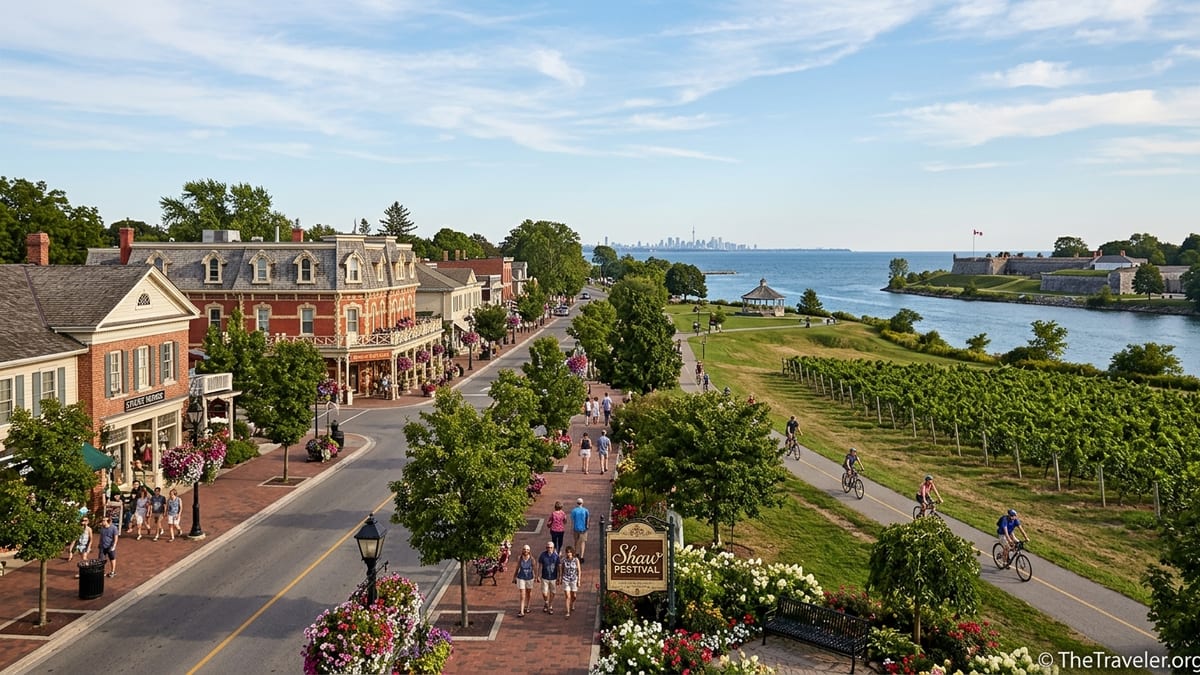
Niagara-on-the-Lake lies at the northeastern tip of the Niagara Peninsula, on the south shore of Lake Ontario and at the mouth of the Niagara River. The Old Town is compact and walkable, roughly centered on Queen Street and Queen’s Royal Park on the waterfront. From here, visitors can see across the lake to the skyline of Toronto on clear days, yet the atmosphere is distinctly village-scale, with low buildings and mature trees rather than observation towers and casinos.
This is a very different experience from Niagara Falls, which focuses on the power of the Horseshoe and American Falls, illuminated nights and high-rise hotels. Niagara Falls is loud and visually intense, with Clifton Hill arcades, skywheels and chain restaurants packed around the gorge. Niagara-on-the-Lake, by contrast, is quieter and more curated, emphasizing heritage architecture, gardens, wineries and the Shaw Festival theatres. The two destinations complement each other, but they suit different moods and travel styles.
Because Niagara-on-the-Lake’s charm comes as much from its relaxed pace as from any single attraction, an overnight stay is more satisfying than a rushed afternoon visit. Staying in town allows time for a leisurely dinner paired with local wine, a stroll along the waterfront at sunset and perhaps a play or concert in the evening. It also makes it easier to explore the surrounding wineries, orchards and cycling trails without fighting the heaviest daytime traffic into town.
For travelers deciding between a quick photo stop and a weekend base, budget is an honest consideration. Accommodation in the Old Town is often more expensive than in Niagara Falls or nearby St. Catharines, especially in summer, but what you gain is walkability, easier access to wineries and a setting that feels like a retreat rather than an entertainment strip.
Historic Old Town: Queen Street, Fort George and the Waterfront
Niagara-on-the-Lake’s Old Town clusters around Queen Street, a few blocks inland from Lake Ontario. This is where many visitors spend their first hour, wandering past restored 19th century storefronts that now hold ice cream parlors, bookstores, bakeries, cafés and boutiques. Heritage properties like the Prince of Wales Hotel and the Court House building set the tone, with flower displays and period-style facades that make the street feel more like a set for a costume drama than a modern main street.
Despite its polished appearance, Queen Street is practical for visitors. Pharmacies, small grocery stores and casual lunch spots mix with higher-end restaurants and wine bars, so it is easy to piece together a picnic or enjoy a more formal meal. Several side streets lead to bed and breakfasts in heritage homes, all within a ten-minute walk of the lakefront. The layout suits travelers who prefer to park their car once and explore on foot.
At the eastern edge of town, Fort George National Historic Site marks Niagara-on-the-Lake’s strategic importance during the War of 1812. The reconstructed wooden palisades, blockhouses and earthworks stand on a bluff above the river, where British and Canadian forces defended early Upper Canada against American attacks. Costumed staff demonstrate musket drills in peak season, and interpretive panels explain how the town, then called Newark, was burned during the conflict. The fort is a tangible reminder that this pretty town once sat on a frontline.
Between Fort George and the Old Town core, Queen’s Royal Park provides open access to the lakefront. A small gazebo, often used for weddings, overlooks the water, while walking paths and benches follow the shore. Families spread out on the grass in summer, and in autumn the park becomes a quiet place to watch migrating birds and changing leaves along the opposite shore. From the park, accessible paved pathways connect back to Queen Street, making an easy flat loop for visitors with strollers or limited mobility.
History, Heritage Streetscapes and Walkable Routes
Niagara-on-the-Lake served as the first capital of Upper Canada in the 1790s, before government functions shifted inland to York, now Toronto. Some of that early administrative history survives in buildings such as the former Court House and surrounding streets laid out on a simple grid. Plaques around town highlight figures from early Canadian political life and the town’s role in cross-border trade along the river.
The War of 1812 occupies a prominent place in local storytelling because the town was captured and largely destroyed by American forces in 1813. Today’s orderly streets and restored houses are therefore as much about 19th and early 20th century rebuilding as original colonial fabric. Many bed and breakfasts and small inns trade on that layered heritage, with names and décor that reference loyalist families, military units or ships from the era.
For visitors, this history is easiest to absorb on foot. A straightforward loop starts at Queen’s Royal Park, follows Front Street and Ricardo Street along the waterfront, then turns inland toward Queen Street and the Court House, before returning via Victoria Street. That route passes a mix of modest cottages and larger brick homes, several designated heritage properties. Sidewalks are generally in good condition, and distances are short enough that most people can complete the loop in under an hour, with time for photo stops.
Those with accessibility concerns will find that while the core is relatively flat, some older buildings have steps at the entrance, and cobblestone-style paving near certain hotels can be uneven. Fort George offers accessible washrooms and parking, and its main pathways are compacted rather than loose gravel, but some earthworks require gentle slopes. It is sensible to check individual attraction accessibility pages before travel, especially for wheelchair users.
Wine Country: Icewine, Tasting Rooms and How to Visit Responsibly
Niagara-on-the-Lake sits within the Niagara Peninsula wine region, one of Canada’s major wine-producing areas. The flat plain between the escarpment and Lake Ontario creates a microclimate that moderates winter cold and extends the growing season. This has allowed producers to develop both dry table wines and the icewine that first brought international attention, with grapes such as Riesling, Vidal and Cabernet Franc left on the vine to freeze and then pressed at very low temperatures.
Well-known estates around Niagara-on-the-Lake include Peller Estates, Trius, Ravine Vineyard Estate Winery, Inniskillin and Two Sisters Vineyards, along with smaller producers along Niagara Stone Road and the so-called winery “bench” closer to the escarpment. Many have modern tasting rooms, vineyard restaurants and outdoor terraces that function as attractions in their own right. Some, like Trius, highlight design-heavy experiences and art installations, while others emphasize farm history or family ownership.
As of late 2026, tasting fees in the Niagara-on-the-Lake area generally range from about 15 to 30 Canadian dollars per person for a flight of three or four wines, depending on the winery and whether premium or reserve selections are included. Some estates reduce or waive the fee when visitors purchase bottles above a minimum amount, while others treat tastings strictly as paid experiences, especially for seated, hosted flights. Reservations are increasingly encouraged or required for weekends, particularly for patio seating or structured tastings at popular estates.
Several wineries run their own tours, sometimes seasonal, that combine a walk in the vineyard or cellar with guided tastings, often in the 35 to 55 Canadian dollar range for roughly an hour. A number of these tours operate only from late spring to late autumn and may be limited to certain days of the week. Winter operations tend to focus on indoor tastings, and during January icewine harvest events, visitor traffic can spike even though some smaller properties reduce their hours.
Choosing Between Tours, Cycling and Independent Wine Visits
Travelers can explore the wine region in four main ways: organized bus or van tours, small-group or private car services, cycling excursions and independent self-drive or taxi-based visits. Each option differs significantly in cost, safety considerations and flexibility, which in turn affects how many wineries it is reasonable to visit in a day.
Group bus or van tours that pick up in Niagara-on-the-Lake or Niagara Falls often include visits to three or four wineries, with tastings included in the package price. Recent advertised rates for full-afternoon tours commonly fall in the 120 to 180 Canadian dollar per person range, depending on group size, whether lunch or charcuterie is included and whether premium tastings are substituted for standard flights. The convenience is significant: guests do not need to worry about reservations, routes or transport after drinking, but they have little say in the specific wineries visited and limited time at each stop.
Private tours in sedans or luxury vans cost more, sometimes starting around 400 to 500 Canadian dollars for a half day for two to four people, plus tasting fees if not included. These are best for travelers with specific winery wish lists or mobility needs. It is realistic on both group and private tours to visit three or perhaps four wineries in one day while still enjoying the experiences, particularly if one stop includes lunch. Trying to squeeze in more tastings can quickly lead to palate fatigue and raises questions about responsible consumption.
Cycling adds another dimension. The relatively flat landscape around Niagara-on-the-Lake, combined with the Niagara River Recreation Trail and signed vineyard routes, makes it possible to link two to four wineries in a leisurely day of riding and tasting. Bike rental shops in town offer hybrid and electric bicycles, often around 45 to 80 Canadian dollars per day, and some provide route maps that emphasize quieter side roads. However, cyclists are still subject to impaired riding laws, and consuming alcohol reduces reaction time even on trails. Non-drinking cyclists or those limiting themselves to one small tasting over several hours are best placed to manage this safely.
Self-driving between wineries is the least expensive transport method per person but poses the most serious safety concerns. Ontario’s impaired driving laws are strict, and roadside checks are not uncommon on weekends and during festival events. Visitors should not plan to drive after tasting, particularly if visiting more than one winery or sampling icewine, which tends to have higher alcohol and sugar content. Designated drivers should either abstain completely or confine themselves to non-alcoholic options that many wineries now provide, such as grape juice or sparkling water, and some estates offer reduced or waived tasting fees for drivers who decline alcohol.
The Shaw Festival, Culture and Balancing Theatre with Wine
The Shaw Festival gives Niagara-on-the-Lake one of the densest concentrations of professional theatre in Canada. Centered on the Festival Theatre near the lakefront, along with other venues such as the Royal George Theatre on Queen Street and Studio spaces, the festival season typically runs from April into December, with multiple productions in repertory. Schedules and exact opening and closing dates vary by year, so visitors should consult the official box office or season brochure well before planning a trip.
Ticket prices cover a wide range, from discounted rush or preview seats that can fall near 40 to 60 Canadian dollars for upper balcony or side seats, to prime weekend orchestra tickets well over 150 dollars, especially for musicals or in-demand productions. The festival also offers various passes, youth pricing and occasional deals for same-day or shoulder-season performances. Booking early is wise for Saturday evenings in July and August and for holiday-season shows in November and December.
Combining wine touring and theatre in one day is realistic if managed carefully. A common pattern is to book a matinee performance at 2 p.m., then schedule one or two winery visits in the late morning, or to tour wineries from late morning through mid-afternoon and attend an evening performance. In practice, three or four winery stops plus a full-length play is ambitious. Two tasting stops and a play, separated by a light meal in town, is more comfortable and leaves time to return to accommodation without rushing.
Non-drinkers and families can also engage with the festival, as some seasons include plays suitable for older children or teenagers, along with backstage tours or talks. However, very young children may find long performances challenging, and ticket cost can add up quickly for families of four or five. Since the theatres are in or near the Old Town core, they fit naturally into a car-light weekend focused on walking between lodging, restaurants and cultural events.
Cycling, Scenic Drives and Seasonal Farm Experiences
The Niagara River Recreation Trail is a 56 kilometer paved path that roughly parallels the Canadian side of the Niagara River between Fort Erie and Niagara-on-the-Lake. From its northern trailhead near Fort George, it offers gentle cycling and walking through parkland, with frequent views of the river, historic plaques and access points to picnic areas. The northernmost section between Niagara-on-the-Lake and Queenston is particularly popular for day rides, as it passes vineyards, viewpoints and historical sites with relatively few road crossings.
Families often choose to cycle only a short section of the trail, perhaps 5 to 15 kilometers return, building in time for snack stops and photos. Parents with younger children or those on training wheels tend to favor segments closer to town, where traffic is lighter and it is easier to turn around. While the trail is paved, riders still need to watch for occasional driveways and side roads, so this is not a fully enclosed park loop.
For those traveling by car, the Niagara Parkway roughly parallels the trail between Niagara-on-the-Lake and Niagara Falls, offering a scenic drive through orchards, vineyards and parkland with frequent pullouts. Roadside farm stands sell in-season produce such as cherries and peaches in summer, apples and pumpkins in autumn, and some orchards run pick-your-own experiences with set admission prices and time slots. These commercial activities often require advance booking on peak weekends, particularly during September and October harvest season when local and Toronto-area day trippers arrive in large numbers.
Public access, however, remains distinct from private farm operations. Visitors can stop at roadside viewpoints or parks without charge, but entering orchards, corn mazes or farm-themed attractions generally involves a fee. Some farm businesses also host weddings or events, which can limit casual visitor access to certain areas. Checking opening hours and any admission requirements ahead of time avoids disappointment, especially outside peak summer when smaller operations may open only on weekends.
Two- and Three-Day Itineraries for Different Travelers
A focused two-day weekend for wine lovers might begin on Saturday with an early arrival and a stroll along Queen Street, followed by a late-morning tasting at a nearby estate on Niagara Stone Road. After lunch at a vineyard restaurant or café, the afternoon could include two more tastings and time to relax at the accommodation. An evening play at the Shaw Festival and a post-show dessert in town would round out the day. On Sunday, a visit to Fort George, a walk along the lakefront and a final winery or farm stop on the drive out provides a gentler finish.
Couples who do not drink or prefer minimal alcohol can substitute more cycling, history and lakefront time. Day one might include renting bikes for a leisurely ride along the Niagara River Recreation Trail, stopping at historical plaques and viewpoints instead of multiple tasting rooms. A single winery visit could focus on a vineyard tour with the option of sampling non-alcoholic grape juice or local food products. Day two could prioritize Fort George, Queen Street shopping, a matinee play and coffee at a café rather than wine bars.
Families can adapt the weekend further. Younger children may appreciate green space more than formal tastings, so parents might plan a short morning visit to a family-friendly winery with outdoor seating and snacks, then use the afternoon for the trail, parks and perhaps a farm with seasonal activities. Fort George’s open spaces and demonstrations are engaging for school-age children with an interest in history. In the evening, an early dinner at a casual restaurant followed by ice cream and a waterfront stroll offers a low-pressure alternative to theatre.
A three-day version that incorporates Niagara Falls works well for those arriving from farther away. One approach is to spend the first night in Niagara Falls, focusing on the waterfalls, Hornblower or Journey Behind the Falls experiences and the illuminated gorge, then drive or shuttle along the Niagara Parkway to Niagara-on-the-Lake for the second and third nights. This sequence allows travelers to enjoy the intensity of the Falls without daily back-and-forth, then shift into a slower rhythm in the wine country and Old Town.
Getting There, Getting Around and Where to Stay
From Toronto, Niagara-on-the-Lake is roughly a 90-minute to two-hour drive in light traffic, following the Queen Elizabeth Way to St. Catharines and then regional roads toward the town. Public transit from Toronto usually involves taking GO Transit trains or buses to Niagara Falls or St. Catharines, then transferring to a regional bus or seasonal shuttle toward Niagara-on-the-Lake. These connections can be time-specific and sometimes only operate during peak tourist seasons, so travelers relying on transit should build in extra time and check current schedules carefully.
From Niagara Falls, the drive along the Niagara Parkway to Niagara-on-the-Lake usually takes around 25 to 35 minutes without heavy congestion. Taxis, rideshare services when available and some wine tour operators provide transfers between the two communities. From Buffalo and the U.S. side of the border, drivers typically cross at the Rainbow, Peace or Lewiston–Queenston bridges and connect to the parkway or regional highways. Non-drivers face more logistical complexity, as local fixed-route public transit into Niagara-on-the-Lake has been limited, and on-demand services may not cover late evenings or early morning departures.
Accommodation in Niagara-on-the-Lake falls into several clusters: heritage hotels and inns in the Old Town, motels and smaller inns along Niagara Stone Road leading toward the wineries, and rural inns or bed and breakfasts near specific vineyards. Old Town properties often command the highest rates, particularly on summer weekends, with many boutique hotels charging several hundred Canadian dollars per night even for standard rooms. What these central locations offer is the ability to walk to restaurants, theatres and the waterfront, often with on-site or valet parking, though parking fees or resort-style charges are not uncommon.
Along Niagara Stone Road and in nearby communities such as Virgil or St. Davids, rates tend to fall, with roadside motels and smaller inns sometimes undercutting Old Town prices by a noticeable margin while still leaving guests within a short drive or bike ride of both wineries and the historic center. Rural bed and breakfasts near vineyards often sit between these extremes, exchanging immediate walkability to Queen Street for quieter surroundings and parking directly at the door. Travelers who prioritize budget and do not mind driving or cycling into town may find better value outside the Old Town core.
Hidden costs merit attention in planning. Organized wine tours often exclude taxes and gratuities from listed prices, and higher-end experiences may involve surcharges for premium tastings. Parking in Old Town is metered on many central streets, with time limits, and some accommodations charge extra for on-site parking. Theatre tickets, especially for prime Shaw Festival dates, can represent a large portion of the weekend budget, so it helps to decide early whether culture or wine is the primary focus and allocate funds accordingly.
What a Weekend Costs: Sample Budgets and Seasonal Trade-Offs
Costs change frequently, but a rough weekend budget in Canadian dollars helps frame decisions. At the budget end, two nights in a modest inn or roadside motel outside the Old Town might fall in the 350 to 500 dollar range for a double room in shoulder season, rising on peak summer weekends. Adding a modest transit or shared fuel cost from Toronto, simple breakfasts, picnic-style lunches, casual dinners and one or two basic wine tastings could bring a couple’s total to around 700 to 900 dollars for the weekend without theatre tickets.
Midrange travelers staying in or close to the Old Town might spend 600 to 900 dollars for two nights in a midrange hotel or well-reviewed bed and breakfast, plus 150 to 250 dollars on restaurant meals, 150 to 250 dollars on tastings and perhaps one shared organized half-day tour. Including two decent seats for a Shaw Festival play could push a midrange couple’s weekend into the 1,200 to 1,600 dollar range, depending on season and exact choices.
Luxury weekends, centered on high-end boutique hotels in the heart of town and private wine touring, can exceed 2,000 dollars for two nights once accommodation, meals at top-end restaurants, multiple premium tastings and theatre tickets are counted. Some hotels and inns add spa services and afternoon teas that increase daily spending significantly. For some visitors, the quality of service and setting justifies this, but others may find the prices disproportionate to room size or amenities when compared with urban luxury hotels in Toronto or international wine regions.
Season plays a major role in both cost and experience. Spring brings blossoms in the orchards and fewer crowds, but some wineries and attractions may still operate on reduced hours, especially midweek. Summer offers the fullest slate of Shaw Festival performances, long evenings and open patios, but also the highest accommodation rates and dense crowds on July and August weekends. Autumn’s harvest season combines vineyard color and farm festivals with busy weekends and popular wine events. Winter quiets things considerably: some wineries cut back tasting room hours, certain tours shut down and lakeside winds can be bracing, but lower room rates and holiday-season theatre performances appeal to those seeking a cozier retreat.
Realistic Drawbacks, Comparisons and Who Should Go
Despite its beauty, Niagara-on-the-Lake presents challenges. Traffic and parking congestion build quickly on Saturday afternoons in summer and during harvest events, and sidewalks can feel crowded enough that the village atmosphere starts to resemble a theme park. Accommodation prices in the Old Town, especially at well-marketed boutique hotels, can feel steep relative to room size, and some guests report that design-forward interiors and brand-name toiletries do not always compensate for limited space or views.
For car-free travelers, moving around the region remains imperfect. While bike rentals and some seasonal shuttles help, the lack of frequent, year-round public transit between Niagara Falls, St. Catharines and Niagara-on-the-Lake limits flexibility. Many winery experiences are structured around paid tastings and flights, which can make visits feel commercialized for those used to more informal, bar-style pourings. Non-drinkers may feel sidelined on some organized tours, although more operators and wineries are beginning to offer non-alcoholic options or reduced pricing for designated drivers.
When compared with Niagara Falls, Niagara-on-the-Lake is better suited to travelers seeking heritage streets, wine and culture rather than thrill attractions and night-time light shows. Those whose priority is to see the waterfalls up close, ride boats into the mist and enjoy family-oriented amusements may be better off basing themselves in Niagara Falls and treating the town and wine country as a day trip. Conversely, visitors allergic to neon and crowds often reverse the pattern: staying in Niagara-on-the-Lake and visiting the falls once in the early morning or evening.
Compared with Prince Edward County, another Ontario wine and weekend destination on the north shore of Lake Ontario, Niagara-on-the-Lake feels more manicured and established. Prince Edward County spreads its wineries and restaurants over a larger rural area with beaches and art studios, and many visitors see it as slightly more bohemian and less formal. Niagara-on-the-Lake, with the Shaw Festival and a denser cluster of estates, suits travelers who value walkable heritage cores, structured cultural programming and a wide range of organized tours. With realistic expectations about costs, transit limitations and the commercial nature of some wine experiences, it can be an exceptionally rewarding weekend destination for couples, culture seekers, food lovers and families who enjoy history and the outdoors as much as tastings.