


Marriott Vacation Club Khao Lak Beach Resort sits on a peaceful stretch of Khuk Khak Beach, but some of Khao Lak’s most memorable experiences begin the moment you turn away from the shoreline. Within a 10 to 45 minute radius of the resort, you can wander through local markets, float under jungle canopies, visit ethical elephant and turtle projects, chase waterfalls, and explore places that tell the story of the 2004 tsunami. This guide focuses on what to do beyond the beach, with practical examples and tips tailored to travelers staying at or near this resort.
Get the latest updates straight to your inbox!
Getting Oriented: Distances, Transport and What “Near” Really Means
Marriott Vacation Club Khao Lak Beach Resort is located on Khuk Khak Beach, a few minutes north of Khao Lak’s main township. In practical terms, “nearby” usually means a 5 to 30 minute ride by taxi or songthaew, and up to 45 minutes for the more remote waterfalls and conservation centers. The resort shares the same long beachfront area as JW Marriott Khao Lak Resort & Spa, which is useful when you are describing your location to local drivers or tour operators.
Most guests rely on resort taxis, hotel-arranged transfers, or local drivers waiting outside larger hotels. Expect a short ride to Khuk Khak Fresh Market or Bang Niang Market to cost in the region of 200 to 400 baht each way, depending on negotiation and time of day. Trips to more distant spots such as Lampi Waterfall or the Sea Turtle Conservation Center are usually arranged as half-day or full-day outings, often bundled with other stops so you do not need to worry about logistics.
If you are comfortable riding in Thailand, renting a scooter can turn the area into your own open-ended playground. Daily rentals around Khao Lak town often start at roughly 250 to 350 baht for an automatic scooter, with helmets typically included. The roads north and south from the resort along Highway 4 are relatively straightforward, but you should factor in tropical heat, the possibility of sudden rain, and local driving styles before deciding that a scooter is right for you.
Because many of the best off-beach experiences are spread out, combining stops into mini itineraries is efficient. For example, you might visit Lampi Waterfall in the morning, continue to the Sea Turtle Conservation Center around midday, and stop at Thai Mueang Beach to watch the late-afternoon light before heading back to the resort in time for dinner.
Markets and Food: Everyday Life Beyond the Resort Gate
One of the easiest ways to step out of the resort bubble is to visit a local market. Khuk Khak Fresh Market, roughly 10 to 15 minutes north of the resort by road, is a working market where locals shop for daily produce rather than souvenirs. Stalls are piled high with herbs like kaffir lime leaves and holy basil, fresh fish laid out on ice, and baskets of tropical fruit ranging from dragonfruit to tiny sweet pineapples. Arriving in the late afternoon, when the heat softens and workers stop by on their way home, gives you a more atmospheric window into everyday life.
For a livelier night-time scene, Bang Niang Market near central Khao Lak is an easy evening outing. Typically open a few nights a week in high season, it combines food stalls, casual cocktail stands, clothing vendors, and small souvenir tables in one broad open-air grid. A simple plate of pad thai or fried rice usually comes in at around 70 to 120 baht, while grilled seafood, such as a whole snapper cooked in a salt crust, might run 250 to 400 baht depending on size and season. It is an informal, family-friendly place where you can graze from stall to stall instead of committing to a single restaurant.
If you want more structure than simply wandering, several local operators and cooking schools in Khao Lak offer combined market and cooking experiences. A typical half-day class might pick you up directly from Marriott Vacation Club Khao Lak Beach Resort in the late morning, walk you through choosing vegetables and spices at Khuk Khak or another local market, then take you back to an open-air kitchen to learn staples such as green curry, som tam, and tom yum. Prices vary, but you can expect something in the range of 1,500 to 2,500 baht per person, including transfers and a full meal from what you prepare.
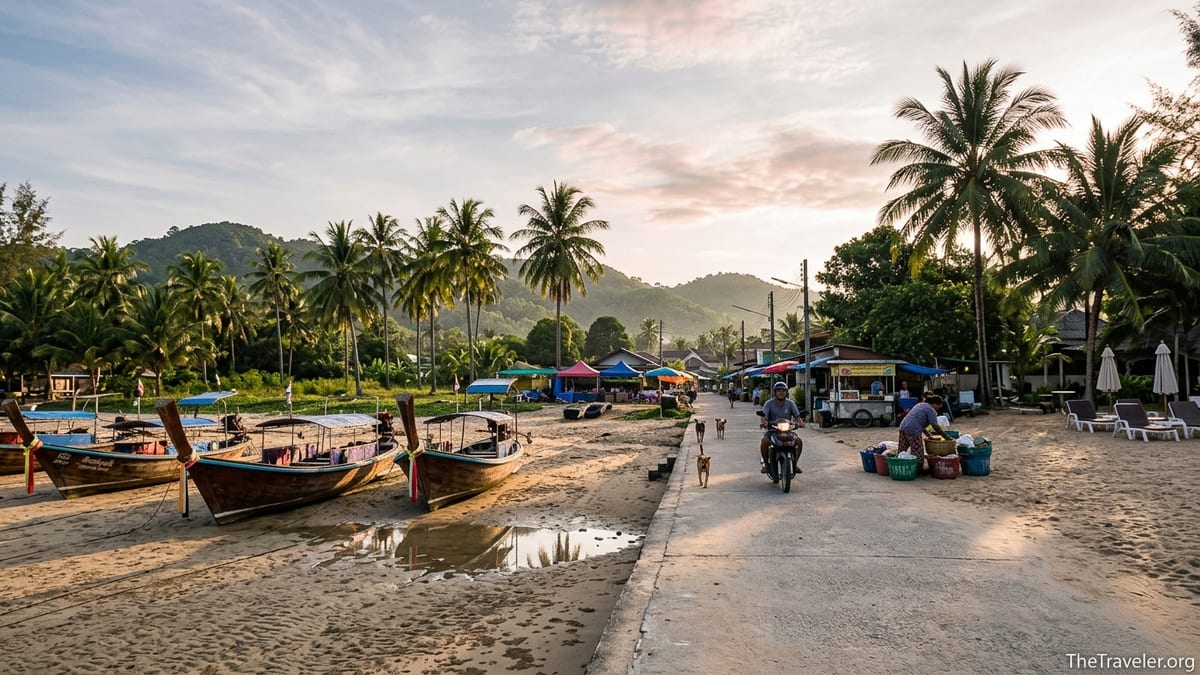
Back near the resort, a short walk or quick ride along the beach road reveals a handful of small family-run restaurants and beach shacks that feel worlds away from formal hotel dining. These spots often have simple plastic tables on the sand, serving dishes like massaman curry, grilled squid, and mango sticky rice. You will usually pay less than at the resort’s restaurants, and the open-air setting makes them ideal for sunset dinners before strolling back along the quiet shoreline.
Waterfalls and Jungle Trails: Cool Escapes from the Heat
Within an hour of the resort, several waterfalls break the coastal pattern of sand and sea with cooler air and dense green. Lampi Waterfall, about 20 kilometers south of Khao Lak on the road toward Thai Mueang, is one of the most accessible options. After a modest entrance fee paid at the national park gate, you follow a short, well-marked trail through forest to a multi-tiered cascade where locals and visitors alike cool off in the pools. It is a relaxed, family-oriented spot rather than an intense hike, but proper sandals or light hiking shoes help on the slippery rocks.
Closer to the main Khao Lak area, smaller falls such as Sai Rung and Ton Pling are popular afternoon escapes. Sai Rung, sometimes called Rainbow Waterfall, lies inland from Pakarang Cape and can be reached by taxi or scooter on a quiet rural road. The final approach takes you through rubber and palm plantations before the forest closes in, and you pay a modest local entrance fee at the parking area. On weekdays outside peak season you may find only a handful of people sharing the pool at the base of the falls, which is shallow enough in many spots for children to paddle while adults sit on warm boulders nearby.
If you prefer a more active day, several tour operators based in Khao Lak combine waterfall stops with soft adventure activities. A typical “jungle and waterfall” trip might include bamboo rafting down a gentle stretch of river, a short forest walk, and an hour or so at a waterfall for swimming and photos, with lunch at a simple riverside restaurant. Prices for organized full-day excursions usually fall somewhere between 1,500 and 2,800 baht per adult depending on group size and inclusions, with children often discounted.
Whichever waterfall you visit, pack like you are going on a short hike rather than simply to a viewpoint. Quick-drying clothing, water shoes or sandals with grip, a lightweight towel, and a drybag for your phone make it easier to enjoy the pools without worrying about slippery stones or sudden showers. Arriving earlier in the day also helps you avoid both crowds and the heaviest heat.
National Parks, Sea Turtles and Low-Key Nature Adventures
While the famous Similan and Surin Islands draw serious snorkelers and divers during the dry season, there are quieter, closer nature experiences that require far less time on a boat. Khao Lak-Lam Ru National Park stretches along this part of the coast and includes a mix of rainforest, rocky headlands, and small beaches. One popular section near Khao Lak town offers a short “jungle path” linking a small secluded beach with a hillside viewpoint. This is the sort of outing you can manage in half a day, pairing a light walk with a swim and a simple lunch of rice dishes or curries at a basic park restaurant.
To the south, the Royal Thai Navy-run Sea Turtle Conservation Center near Thai Mueang provides a close-up look at the early life stages of endangered turtles. The center usually raises hatchlings from eggs collected on nearby beaches and returns the young turtles to the ocean when they are stronger. Visitors can see tanks with turtles of different ages, along with displays that explain the threats they face from fishing nets, plastic waste, and habitat loss. Entrance fees are modest, and many tours combine this stop with Lampi Waterfall or Thai Mueang Beach so you can break up the driving time.
For a gentle adventure that still feels authentic, eco-operators around Khao Lak offer mangrove canoe or bamboo raft trips on slow-moving rivers inland from the coast. You often sit two to four people per raft or canoe while a local guide steers and paddles, letting you watch kingfishers, monitor lizards, and the shifting patterns of mangrove roots without much physical effort. Transfers from the resort, a drink or simple lunch, and national park fees are typically bundled into the price, which often runs similar to waterfall tours.
If you want to explore independently, ask resort staff or a local travel agency in Khao Lak to mark nearby national park entry points and viewpoints on an offline map app before you set out. Mobile coverage drops in some inland valleys, and having a saved map makes it easier to navigate small turn-offs through plantations and village roads.
Ethical Elephant Experiences Near the Resort
Many visitors to Khao Lak hope to see elephants, and one of the most discussed options near Marriott Vacation Club Khao Lak Beach Resort is Khaolak Elephant Sanctuary, also known as Khaolak Ethical Elephant Sanctuary. The sanctuary presents itself as a no-riding, no-shows facility that focuses on observation and gentle interaction, such as feeding and walking alongside the animals. Tours typically include round-trip transfers from hotels in the Khao Lak area, so guests at the resort are picked up directly from the lobby at prearranged times.
Half-day programs often start in the morning or early afternoon and last around three to four hours. A typical visit might begin with an introduction to the elephants’ histories, followed by time to watch them wander, eat, dust bathe, or cool off, depending on the animals’ routines and the weather. Many packages include a simple Thai meal or snacks and refreshments for visitors, as well as opportunities to ask questions about how the sanctuary cares for older or previously overworked animals.
Because “ethical” is a heavily used term in Thai tourism, it is worth researching current reviews and, if possible, the sanctuary’s own welfare policies before booking. Look for signs such as no riding platforms, limited direct touching, and staff who encourage guests to give elephants space while they move and forage at their own pace. Reputable local tour agencies in Khao Lak can also help you compare available elephant experiences and steer you away from programs that still rely on performances or forced close contact.
Tour prices can fluctuate with season and demand, but at the time of writing a half-day small-group visit to an ethical-style sanctuary in the Khao Lak region often starts from the equivalent of 2,000 to 3,000 baht per adult. When comparing options, check whether hotel pickup, photos, and meals are included, as these extras can explain significant price differences between operators advertising similar itineraries.
Tsunami Memory: Museums, Memorials and Context
Khao Lak was one of the areas hardest hit by the 2004 Indian Ocean tsunami, and traces of that day are woven into the landscape not far from the resort. Visiting at least one of the local memorials provides emotional context to the tranquil coastline you see now. In the Bang Niang area, about 15 minutes south of Marriott Vacation Club Khao Lak Beach Resort by road, a police patrol boat known as Boat 813 rests far inland from the sea where the wave carried it. The surrounding memorial park and small museum offer photos, survivor accounts, and basic information about how the tsunami formed and struck the coast.
Farther afield, around 40 to 50 minutes north of the main Khao Lak strip by car, the Ban Nam Khem Tsunami Memorial Park and nearby museum sit on a quiet stretch of shoreline facing the Andaman Sea. The park features a stark concrete wall and sculptures symbolizing the wave, while the modest museum typically houses photographs, personal stories, and exhibits about local communities before and after the disaster. It is a sobering place, but many travelers find it deepens their understanding of the region rather than casting a shadow over their holiday.
Most local taxi drivers and tour companies understand that these sites can be emotionally heavy and will give you space once you arrive. A common arrangement is to hire a driver for a half-day circuit that includes Ban Nam Khem, stops at a local temple or viewpoint, and possibly a short detour to an old town such as Takua Pa for lunch or coffee. Booking through the resort’s concierge or a reputable agency in town helps ensure your driver is familiar with the sequence of stops and waiting times.
When you visit, dress with the same respect you would show at a temple: covered shoulders and knees, quiet voices, and restraint with photography, especially if other visitors are clearly grieving or paying respects. Some small donation boxes at these sites help support maintenance or local community projects, so carrying a bit of cash is useful even if official entrance fees are low or nonexistent.
Old Towns, Temples and Everyday Culture
Beyond the resort strip and beach bars, Khao Lak is ringed by communities that predate tourism. One of the most rewarding cultural outings is a half-day visit to Takua Pa Old Town, inland to the north of Khao Lak. The streets here are lined with low Sino-Portuguese shophouses, Chinese shrines, and small family-run cafes. On certain Sundays in the high season, parts of the old quarter transform into a walking street market with food stalls, local sweets, and handmade products, though this can vary with time of year.
Even on a quiet weekday, the town is a pleasant place to stroll, photograph carved wooden doors and fading pastel facades, and sit in a traditional coffee shop sipping strong Thai-style coffee with sweetened condensed milk. A plate of simple stir-fried vegetables and rice or a bowl of noodle soup at a local eatery may cost around 60 to 100 baht, and you are unlikely to see many other tourists away from the main streets. Taxis from Khao Lak usually quote flat fees for a round-trip that includes waiting time, so ask your driver to confirm how long you can explore before needing to return.
Closer to the resort, you will find a number of Buddhist temples scattered along the main road and on side streets. While few are famous on a national scale, they provide a glimpse into local religious life. It is common to see monks collecting alms early in the morning along the main road near villages, and many temples welcome visitors to quietly observe or light incense. Shoulders and knees should be covered for both men and women, and shoes must be removed before entering main buildings or stepping onto raised temple platforms.
If you would prefer context over independent exploration, look for small-group tours that include a temple visit combined with bamboo rafting, a waterfall stop, or a rural market. Local guides often explain how Buddhist holidays and rituals shape village calendars, or how Chinese, Thai, and Malay influences overlap in this part of southern Thailand. These layered stories can be difficult to access if you are wandering alone with only a map and a phrasebook.
Active Days: Cycling, Kayaking and Soft Adventure
For guests who like to stay active, the area around Marriott Vacation Club Khao Lak Beach Resort offers a softer style of adventure that fits easily between pool sessions and relaxed dinners. Several operators rent mountain bikes or offer guided cycling tours that start from Khao Lak town and wind through rubber plantations, quiet village roads, and coastal viewpoints. A typical half-day ride might cover 20 to 30 kilometers on mostly flat terrain, suitable for reasonably fit adults and older children. Expect to pay a moderate fee that usually includes bikes, helmets, water, and a snack or fruit stop.
On the water, you can paddle through mangroves or along gentle rivers via kayak or stand-up paddleboard. Guided mangrove tours near Khao Lak typically begin with pick-up at your hotel, followed by a short drive inland where you launch in sheltered channels lined with roots and overhanging branches. Wildlife sightings vary, but you might spot mudskippers, crabs, herons, and the occasional monitor lizard sunning itself on a log. These trips are usually more about quiet observation than adrenaline, and guides are often happy to share information about local ecosystems and fishing traditions.
Families or groups looking for more of a thrill sometimes opt for whitewater or tubing excursions in the rainy season, typically in rivers inland from Khao Lak. These are usually graded as beginner to intermediate level, with safety gear and guides provided, and are best booked with companies that offer clear briefings and modern equipment. Always check age and fitness recommendations before signing up, particularly if traveling with young children or older relatives.
If your idea of activity is gentler still, simply borrowing one of the resort’s bicycles, if available, and pedaling along the quiet lanes behind the beachfront can be satisfying. These back roads loop past small houses, coconut palms, and local shops where you can stop for an iced coffee or fresh coconut before circling back in time for a swim. Even an hour or two on a bike can shift your perspective from resort guest to short-term neighbor.
The Takeaway
Staying at Marriott Vacation Club Khao Lak Beach Resort puts you within easy reach of far more than sun loungers and pool bars. In a series of short trips, you can sample the everyday flavors of local markets, swim beneath jungle waterfalls, learn how conservationists care for turtles and elephants, and stand in places that carry the memory of the 2004 tsunami. None of these experiences require heroic planning; most can be arranged through the resort or trusted agencies in Khao Lak with a day’s notice or less.
The key is to look beyond the water’s edge and treat the coastline as a base rather than a boundary. Whether you are traveling as a family, a couple, or solo, building a handful of off-beach outings into your stay will leave you with a fuller, more grounded sense of Khao Lak and the communities that call it home. When you finally return to your balcony or terrace at the end of the day, the sound of the waves may feel the same, but your understanding of the place will be much richer.
FAQ
Q1. How far is Marriott Vacation Club Khao Lak Beach Resort from Khao Lak town and Bang Niang Market?
The resort is roughly a 10 to 15 minute drive from central Khao Lak and Bang Niang Market, depending on traffic and exact drop-off point. Local taxis and hotel-arranged shuttles can cover the distance easily in the evening.
Q2. Do I need to rent a scooter to explore places beyond the beach?
No, you do not need to rent a scooter. Many nearby attractions, including markets, waterfalls, and memorials, can be reached via hotel taxis, private drivers, or organized tours. Renting a scooter offers more flexibility but is only recommended if you are confident riding in Thai traffic and comfortable with local road conditions.
Q3. What should I wear when visiting temples and tsunami memorials near Khao Lak?
Dress modestly, with shoulders and knees covered for both men and women. Lightweight long trousers or skirts and a loose shirt work well in the heat. Remove shoes before entering temple buildings or stepping onto raised platforms, and keep your voice low in both temples and memorial parks.
Q4. Are visits to elephant sanctuaries near Khao Lak suitable for children?
Most ethical-style elephant programs near Khao Lak welcome children, and many families find them a highlight of their trip. However, it is important to choose operators that prioritize animal welfare and safe viewing distances. Check age guidelines in advance, and be prepared to closely supervise younger children around large animals.
Q5. When is the best time of year to visit waterfalls around Khao Lak?
Waterfalls near Khao Lak generally look their best during or just after the rainy season, when water levels are higher. In the driest months, some cascades can shrink to gentler flows, though the pools may still be pleasant for a dip. Always check with your hotel or a local agency about current conditions before planning a visit.
Q6. Can I visit the Sea Turtle Conservation Center on my own, or do I need a tour?
You can usually visit the Sea Turtle Conservation Center independently by taxi or rented vehicle, but many travelers find it more convenient to join a half-day tour that combines the center with a waterfall or beach stop. Tours typically include transportation, which simplifies logistics and often works out cost-effective for couples or families.
Q7. Is it necessary to book market and food experiences in advance?
Casual visits to Khuk Khak Fresh Market or Bang Niang Market do not require advance booking; you can simply arrive by taxi and explore. If you want a guided food tour or a cooking class that includes a market visit, advance reservations are recommended, especially in the high season between roughly November and March.
Q8. How long should I plan for a visit to Takua Pa Old Town from the resort?
A half-day is usually enough for a relaxed visit to Takua Pa Old Town. Allow around 45 minutes each way for the drive, plus two to three hours to wander the streets, visit a temple or shrine, have a coffee or simple meal, and take photos. Hiring a driver with an agreed waiting time makes the schedule easier.
Q9. Are there easy activities for older travelers who want to see more than the beach?
Yes. Gentle options include visiting markets in the late afternoon, taking a slow mangrove canoe trip, stopping at a waterfall with only a short walk from the parking area, or hiring a driver for a circuit that includes tsunami memorials and a quiet lunch stop. Many of these outings can be tailored in length and intensity to suit different levels of mobility.
Q10. How can I avoid overcrowded tours when booking off-beach activities?
Look for small-group or private tour descriptions, and ask specifically about maximum group sizes before booking. Booking through your resort’s concierge or a reputable local agency, traveling earlier in the day, and avoiding peak public holidays can all help reduce crowding at popular spots such as waterfalls and sanctuaries.