


Wales is compact on the map but feels much larger on the ground, with mountains, surf beaches, tiny cathedral cities and an increasingly lively capital all competing for your time. If you already know you want to visit Wales but are unsure whether to focus on the castles and peaks of the north, the coastal drama of Pembrokeshire, the cities and valleys of the south, or the quieter heartlands in Mid Wales, this guide compares the main regions to help you decide where to go and how to fit them together.
Get the latest updates straight to your inbox!
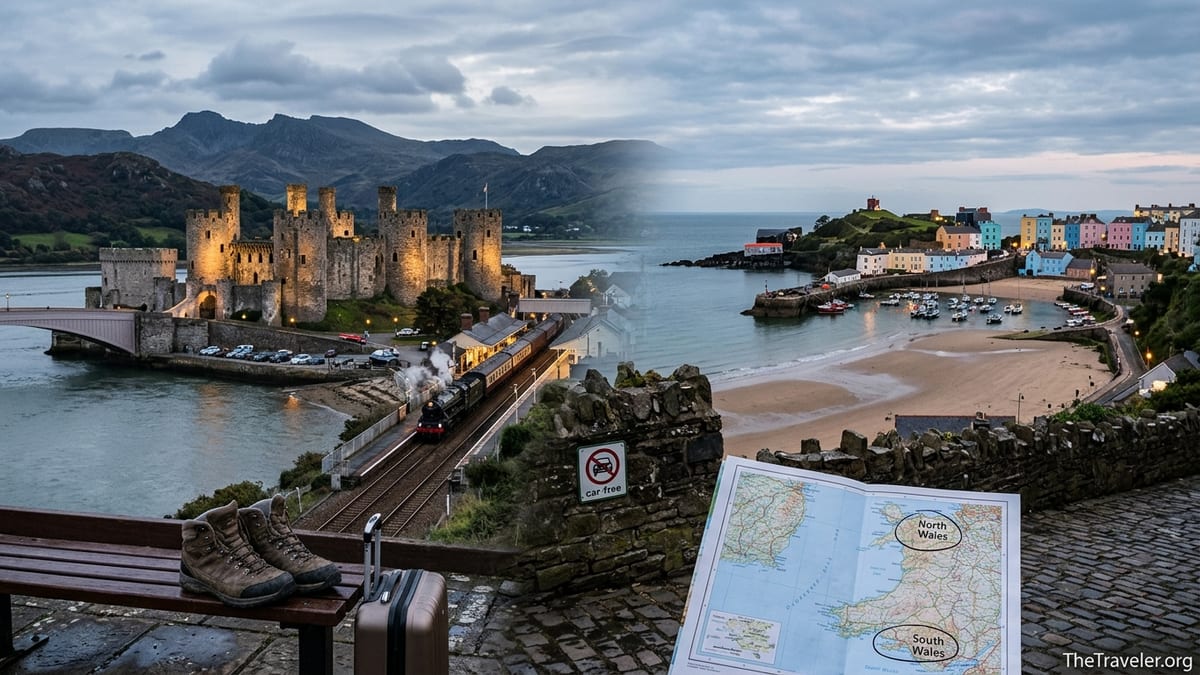
How to Choose Your Wales Bases
For orientation, official tourism bodies broadly divide the country into North Wales, Mid Wales, West Wales and South Wales, with Pembrokeshire and the wider south west often treated as a distinct coastal draw. In practical travel terms, visitors tend to choose between four broad areas: North Wales and Eryri National Park, Anglesey and the Llŷn Peninsula, the Pembrokeshire Coast, South Wales and the Valleys, and Mid Wales with the Ceredigion coast. Each area offers a different balance of castles, walking, beaches, culture and ease of getting around without a car.
For a short weekend, it is usually best to pick a single region and one base, perhaps adding one nearby day trip by public transport or short drive. With a week, two bases in different regions work well, for example Cardiff plus the Gower Peninsula, or Conwy plus Betws y Coed in the north. Two weeks allows you to combine three contrasting areas, such as a city and coast in the south, then castles and mountains in the north.
In access terms, south Wales is anchored by the main line from London to Cardiff and Swansea, with onward rail to Carmarthen and Pembrokeshire. North Wales is served by the North Wales Coast Line through Llandudno Junction, Conwy and Bangor, with trains from London Euston and northern English cities. Mid Wales and the Ceredigion coast rely more on slower scenic railways and long-distance coaches, which makes them rewarding but a little less straightforward for car-free first timers.
All journey time estimates in this article are based on train and coach information available as of November 2026. Operators regularly adjust timetables and fares, so always confirm current details with rail or coach companies before you travel.
North Wales and Eryri: Castles, Peaks and Adventure Hubs
North Wales and Eryri National Park offer classic “castles and mountains” scenery, with dramatic stone fortresses on the coast and rugged peaks inland. The medieval walled town of Conwy is one of the best all-round bases: its huge waterfront castle dominates the skyline, there is a compact historic centre, and it sits directly on the North Wales Coast rail line via Llandudno Junction. Conwy works well for 2 or 3 nights, suiting history lovers, couples and car-free travellers who want easy rail access and short bus hops into the park.
Nearby Llandudno is a bigger Victorian resort with a sweeping bay, promenade and the Great Orme headland. It is family friendly, with easy seafront walks, a traditional pier and buses to Conwy and along the coast. With a rail station at the end of a short branch from Llandudno Junction, it is one of the simplest Welsh bases without a car; stays of 2 to 4 nights work well, especially for travellers who like a classic seaside atmosphere but still want day trips into the mountains.
To get closer to Eryri’s walking trails and mountain scenery, Betws y Coed is the main inland village hub, linked to Llandudno Junction by the scenic Conwy Valley railway and a web of Sherpa bus services in season. It offers easy access to waterfalls, forest walks and moderate hill hikes, and is an excellent 2 to 3 night base for hikers and outdoor-focused families. For serious mountain walkers and scrambling, villages such as Llanberis and Beddgelert provide closer access to big routes, but they are more reliant on seasonal buses and are better with a car, especially outside peak months.
From London Euston to Llandudno Junction or Bangor, fast trains typically take around 3 to 3.5 hours with changes at Crewe or Chester, while Cardiff to Llandudno Junction is usually around 4 to 5 hours by direct or single-change services. North Wales is therefore very feasible for a long weekend by train, particularly if you focus on Conwy, Llandudno or Betws y Coed. The trade-off is crowding: popular routes in Eryri, including the paths up Yr Wyddfa, can feel very busy in fine summer weather and on spring and autumn holiday weekends, so shoulder seasons and midweek visits often feel calmer.
Anglesey and the Llŷn Peninsula: Island Pace and Quiet Coasts
Across the Menai Strait from the mainland, the island of Anglesey offers gentler walking and a slower pace than the heart of Eryri. Coastal towns such as Beaumaris combine a handsome castle with views back to the mountains, making them appealing if you want a softer, estuary-side atmosphere with heritage highlights. Anglesey also suits wildlife enthusiasts, with coastal reserves and boat trips in season. Without a car, you can reach the island by train to Bangor or Holyhead and continue by local buses, but services are spaced out enough that many visitors find a car more convenient for short stays.
On the mainland side, the Llŷn Peninsula stretches into Cardigan Bay with a mix of wide sandy beaches, surf breaks and small, characterful resorts. Pwllheli is the principal town and rail terminus for the Cambrian Coast Line, which makes it a practical base if you prefer to travel by train. It works for 2 or 3 nights, especially for couples or solo travellers who want to explore beaches and coastal paths without full immersion in mountain walking.
Resorts such as Abersoch and Criccieth have strong appeal in summer, with family friendly beaches and, in Criccieth’s case, a compact castle overlooking the bay. These spots are particularly popular with families and groups of friends, and many visitors stay 3 to 5 nights in holiday rentals. Outside school holidays, the Llŷn feels quieter and is attractive for walkers who like less crowded coastal sections compared with headline paths elsewhere.
Rail access to the Llŷn and Anglesey regions is more limited than to the North Wales Coast, though scenic lines compensate. Trains from Birmingham or Manchester to Pwllheli typically involve a change at Shrewsbury and Machynlleth, and journey times from London are usually in the 5 to 6 hour range with one or two changes. Holyhead and Bangor, by contrast, sit on the faster main line, so they are easier to reach by train, but onward exploration around the island or peninsula is still more convenient by car, particularly in the off season when coastal bus frequencies fall.
Pembrokeshire Coast: Clifftop Paths and Harbour Towns
The Pembrokeshire Coast is one of Wales’s signature regions for sea views and walking, protected as a national park that wraps around much of the county. Tenby on the south coast is the most popular base, with pastel townhouses overlooking sandy beaches and a small harbour. It is connected by rail to Swansea and Cardiff, making it one of the few coastal resort towns in Wales that works relatively well without a car. Tenby is ideal for 2 to 4 nights, suiting families and first-time visitors who want easy access to beaches, boat trips and short sections of the coastal path rather than all-day hikes.
On the western edge of the park, St Davids is the smallest city in Britain, known for its cathedral tucked into a valley and for access to striking cliff scenery. It does not have a rail station, so visitors usually take a bus from Haverfordwest or Fishguard after arriving by train, or drive directly. Despite the extra effort, St Davids is an excellent base for walkers, photographers and those seeking a quieter, small-scale place for 2 to 3 nights, with boat trips to nearby islands in season.
Between these hubs lie quieter stretches of coast and villages such as Broad Haven, Solva and Newport, each giving direct access to sections of the Pembrokeshire Coast Path. These suit travellers who prioritise walking and scenery over nightlife and dining choice, often staying 3 to 5 nights in cottages or small guesthouses. Public transport along the coast is a mix of regular services and seasonal coastal buses, so a car gives far more flexibility if you want to link trail sections or reach remote coves.
In practical terms, trains from London to Swansea via the South Wales Main Line often take about 3 hours, with onward services to Carmarthen and then west to Tenby, Pembroke Dock, Milford Haven or Fishguard. Journey times from London to Tenby are typically around 4.5 to 5.5 hours with one or two changes. Cardiff, Swansea and Carmarthen are all on the main rail network, so the section from there into Pembrokeshire is straightforward but not especially fast. Demand peaks strongly in school summer holidays and over sunny spring bank weekends, when seaside towns can feel very busy and accommodation books out early; outside those periods, many walking routes are pleasantly quiet but more weather dependent.
South Wales and the Valleys: Cardiff, Swansea and the Gower
South Wales offers the country’s best introduction for travellers who prefer cities and short excursions to full wilderness days. Cardiff, the capital, combines Cardiff Castle, a walkable centre and a waterfront area at Cardiff Bay, along with rugby and cultural events throughout the year. With direct fast trains taking around 1 hour 45 minutes from London Paddington in typical schedules, it is one of the easiest Welsh cities to reach, and an excellent 2 or 3 night base for first-time visitors, solo travellers and those without a car.
From Cardiff, the Valleys to the north offer short rail journeys into former coal communities surrounded by hills and reservoirs. This suits travellers who want to see a little of industrial and social history in context without committing to long-distance hikes. Urban rail lines serve many valley towns, but non-drivers should be aware that rural walking routes often start a bus or taxi ride away from stations, so logistics need more planning than in compact city centres.
Further west, Swansea is another major rail hub on the South Wales Main Line and acts as the gateway to the Gower Peninsula. Swansea suits travellers who like a blend of city-scale amenities with access to long sandy beaches nearby. Many visitors stay 2 or 3 nights, combining time in the city with day trips to Gower beaches or to nearby coastal towns such as Mumbles, which has a promenade and headland walks that appeal to families and casual walkers.
The Gower Peninsula itself offers some of Wales’s classic bays and surf beaches, including areas popular with walkers and surfers. Public transport is sufficient for reaching main spots such as Mumbles and some western beaches from Swansea, but services can be infrequent, so a car makes it easier to link several coves in a single day. Crowd levels vary: summer weekends bring busy beaches and car parks, while late spring and early autumn can feel notably calmer with still-pleasant walking conditions. For a long weekend focused on city and coast without driving, Cardiff plus Swansea and Mumbles make a very workable pairing.
Mid Wales and Ceredigion: Quiet Heartlands and Scenic Railways
Mid Wales offers a different experience from the coasts and cities, with rolling hills, small market towns and some of the country’s most scenic rail routes. The university and seaside town of Aberystwyth is the main hub on the Ceredigion coast, connected by rail to Shrewsbury and to the Cambrian Coast Line. With a castle ruin, prom, funicular up Constitution Hill and a choice of cafes, it works well as a 2 or 3 night base for travellers who want a small-town feel with simple rail access. It also suits car-free visitors keen to connect scenic train journeys with local bus excursions along the coast.
Further south, towns such as Aberaeron and New Quay offer smaller-scale seaside charm with colourful houses and access to coastal walking and wildlife boat trips in season. These are largely bus-served rather than rail connected, so they are better for visitors with cars or for those prepared to work around rural bus timetables. Stays of 3 to 4 nights are common for families and couples in self-catering cottages who prefer a quieter base than larger resorts in other regions.
Inland, Mid Wales is dotted with small towns like Llandrindod Wells and Builth Wells, reached by the Heart of Wales Line between Swansea and Shrewsbury. This slow, scenic route passes through remote countryside and makes the journey part of the attraction. It suits travellers who enjoy rail journeys for their own sake and who are happy with modest town amenities and a focus on walking, cycling and nature. Because services are relatively infrequent and distances between settlements are greater, this region is usually more rewarding for repeat visitors or those with longer trips rather than for a first short break.
Access to Mid Wales from London usually involves a change at Birmingham or Shrewsbury and can take around 4 to 6 hours depending on the exact route and destination. Coach services link some Mid Wales and Ceredigion towns to Cardiff, Birmingham and other English cities, often with competitive fares but longer journey times than fast trains. Seasonality here is less about crowding and more about weather: summer and early autumn offer the most comfortable conditions for walking and scenic rail trips, while winter brings short daylight hours and a quieter, more introspective feel.
Crowd Levels, Seasons and Car-Free Ease
Across Wales, crowd levels follow clear patterns. Seaside resorts such as Tenby, Llandudno and Gower beaches are busiest in late July and August, as well as bank holiday weekends in spring and early summer, when domestic family travel peaks. In these periods, accommodation prices tend to be higher and car parks and popular viewpoints can feel congested, particularly around midday. By contrast, many rural and upland areas see more even but lower visitor numbers across the main walking months from late spring to early autumn, rising on fine-weather weekends but rarely feeling as concentrated as the beaches.
For walkers, April to June and September to early October are often the sweet spots, with a good balance of daylight, fewer midges than in high summer and generally less crowded paths. Eryri’s most iconic routes and Pembrokeshire’s well-known viewpoints can still be busy in these shoulder seasons on sunny days, but you will typically find quieter alternatives within the same regions, especially if you start early or choose lesser-known trails. Winter can be rewarding for photography and storm watching along the coasts, but high-level mountain routes demand experience, equipment and flexibility around weather.
In terms of car-free ease, Cardiff, Swansea, Llandudno, Conwy, Bangor, Aberystwyth and Tenby are among the most straightforward bases, thanks to their positions on or close to main rail or long-distance coach routes. From these towns, you can link to local buses and, in some cases, seasonal coastal or park shuttles. Regions that are more car dependent include much of Anglesey, the rural Llŷn coast, remote parts of Pembrokeshire and inland Mid Wales, where bus frequencies are modest and services may not align with early-morning or late-afternoon hikes. Travellers without a car often get the most from Wales by choosing one or two of the better-connected hubs and exploring outwards in short hops.
Because timetables and funding for rural routes can change, especially in less populated areas, it is sensible to confirm current rail and bus times shortly before departure and to check whether any seasonal services are running on your chosen dates. National-level journey planners, the main rail operators and regional transport sites are the best starting points for up-to-date information and integrated ticket options.
At-a-Glance Comparison of the Main Regions
North Wales and Eryri stand out for headline castles and high mountain landscapes, centred on bases such as Conwy, Llandudno and Betws y Coed. The region is reasonably good for car-free travel when you stay near the main rail line and use buses into the park, and is best for hikers, history enthusiasts and visitors keen on a classic “castles and mountains” experience. An ideal stay length is 3 to 5 nights if this is your main focus.
Anglesey and the Llŷn Peninsula offer softer coastal landscapes and island atmosphere, with typical bases in Beaumaris, Pwllheli, Abersoch or Criccieth. Car-free access is more limited, especially beyond main railheads, so these areas suit travellers with a car or those happy to work around sparse bus services. They are best for relaxed beach time, gentler walking and small resort life, with ideal stays of 3 to 5 nights in a single coastal base.
The Pembrokeshire Coast combines cliff-top walking, harbour towns and beaches, with Tenby and St Davids the classic bases. Tenby is relatively accessible without a car thanks to its rail station, while most of the wider coastal path is easier with a vehicle or careful planning around local buses. The region is best for keen walkers, sea lovers and families who want a mix of sand and scenery, and it merits 4 to 6 nights if you want to explore both south and north sections.
South Wales and the Valleys are anchored by Cardiff and Swansea, with the Gower Peninsula adding major coastal appeal. These areas are the most straightforward for car-free trips, with mainline rail and urban networks making it easy to move between city, bay and nearby countryside. They are best for culture, nightlife, rugby and accessible coast, with 3 to 5 nights a good starting point for a combined city-and-coast stay. Mid Wales and Ceredigion, by contrast, offer quieter towns like Aberystwyth, Aberaeron and Llandrindod Wells, scenic railways and rolling countryside, are moderately challenging without a car, and are best for repeat visitors or those seeking a slower, nature-focused week.
How to Combine Regions for Different Trip Lengths
For a short weekend, the easiest choices are Cardiff, Swansea with nearby Gower beaches, Tenby on the Pembrokeshire Coast, or Conwy and Llandudno in North Wales. Each can be reached in roughly 2 to 5 hours from London or major English cities by train, making them realistic for a Friday evening arrival and Sunday afternoon departure. City-focused travellers might opt for Cardiff alone, while those prioritising walking or sea air could choose Tenby or Llandudno as single bases.
With about a week, many visitors successfully combine two complementary regions. Popular pairings include Cardiff and the Gower plus a few days in Tenby for a city-and-coast itinerary; Conwy or Llandudno plus Betws y Coed or another Eryri village for a castles-and-mountains focus; or Swansea and the Gower followed by a scenic rail trip to Aberystwyth for a coast-to-coast feel. In general, two bases keep travel days manageable while still giving a sense of contrast between urban and rural or between mountains and sea.
On longer trips of 10 days or more, you can comfortably add a third region without spending too much time in transit. A classic three-part itinerary might link Cardiff, Eryri and Pembrokeshire, or Cardiff, the Gower and the Ceredigion coast. Travellers without a car often find it easiest to move in a gentle arc using mainline rail and a few targeted coach or bus connections rather than shuttling repeatedly across the country.
Whatever your trip length, the most important decision is what you want to feel day to day: immersed in mountain landscapes, strolling through small coastal towns, exploring museums and live music in cities, or slowly moving through rural scenery on scenic railways. Once you are clear on that, choosing between North Wales and Eryri, Anglesey and the Llŷn, the Pembrokeshire Coast, South Wales and the Valleys, or Mid Wales and Ceredigion becomes less about picking a single “best” region and more about sequencing the right mix for your own Welsh adventure.