


More news on this day
Transportation Secretary Sean Duffy says preliminary government data indicate that most U.S. flight delays during the busy Thanksgiving travel period so far have been caused by weather and heavy traffic, as record or near-record numbers of passengers move through the nation’s airports.
Get the latest news straight to your inbox!
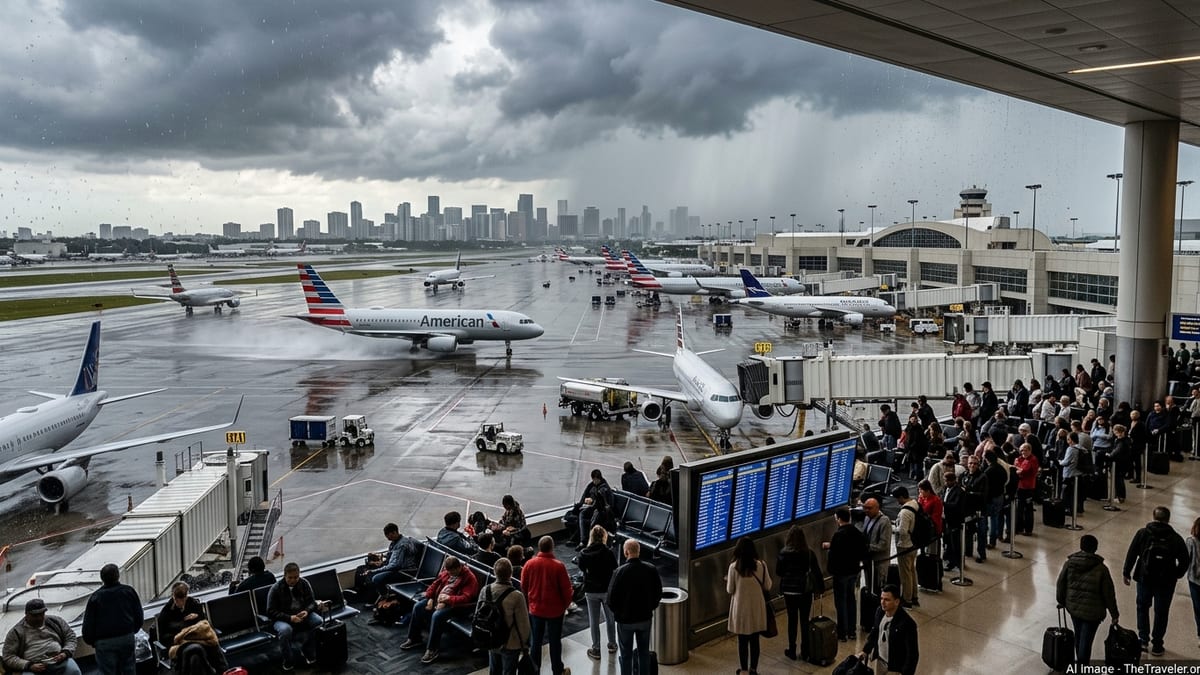
Preliminary breakdown points to storms and volume, not system failure
Duffy’s comments, made in social media posts and reiterated in interviews in the run-up to Thanksgiving Day on November 26, 2026, draw on early figures from the Federal Aviation Administration’s operations data. In a post published on Wednesday, November 25, he said that on one of the week’s heaviest travel days, about 50.5 percent of delays were attributed to inclement weather, with a further 24.1 percent linked to high flight volumes. Smaller shares were associated with air traffic control staffing and equipment issues, runway construction and other factors. While those exact percentages describe a single day’s snapshot, Duffy has since said that from Tuesday through Friday of Thanksgiving week bad weather accounted for about 45 percent of delays, with heavy traffic responsible for roughly 35 percent.
The Transportation Department has not released a full, flight-by-flight public dataset for the holiday period yet, so the figures remain preliminary. However, they are consistent with longer term patterns in federal aviation statistics, which typically show weather as the largest single cause of delays during peak travel periods, followed by general traffic volume. Duffy has emphasized that the mix so far in 2026 appears to be within the normal range, even as total numbers of flights and passengers approach or exceed recent records.
The focus on weather comes in the context of heightened public scrutiny of the department after a rare nationwide ground stop on November 13 caused more than 17,000 flight cancellations and delays when an equipment upgrade disrupted FAA communications systems. Officials have stressed that, unlike that earlier incident, this week’s disruptions are not being driven primarily by technology failures or cybersecurity problems but by a combination of storms and crowding on some of the year’s busiest travel days.
Storms, ground delays and where travelers are feeling it most
While conditions vary widely from airport to airport, several major hubs have seen weather-related slowdowns at different points in the Thanksgiving period. Early in the week, low clouds over San Francisco led to average departure delays of around an hour as controllers increased spacing between flights for safety. In Florida, Miami International Airport reported roughly half-hour departure holdups linked to thunderstorms and heavy rain. As the holiday approached, a strong storm system pushing up the East Coast brought high winds, coastal flooding and reduced visibility to parts of the Mid-Atlantic and Northeast, prompting airlines and the FAA to slow arrivals into some of the region’s busiest airports.
On Tuesday, the FAA briefly halted departures bound for Chicago O’Hare International Airport after a problem with airport surveillance equipment. The agency then shifted to a ground delay program, metering flights into O’Hare while technicians worked on the affected system. By later in the day the ground delay program was lifted and operations gradually returned closer to normal, but some passengers experienced knock-on delays as aircraft and crews were repositioned. Officials have said the O’Hare issue was unrelated to the November 13 nationwide ground stop and have treated it as a localized outage layered on top of already challenging weather patterns.
Along the Eastern Seaboard, forecasters had warned earlier in the week that a coastal storm would reach peak intensity on Thanksgiving Day itself, bringing heavy rain, strong gusts and the risk of flooding from parts of the Carolinas through New England. As the system moved inland, it led to longer taxi times and intermittent ground delay programs at large coastal airports, particularly during periods of strongest wind and lowest cloud ceilings. That in turn contributed to the national delay statistics Duffy later cited, in which weather and volume together accounted for roughly four out of five delay minutes from Tuesday through Friday.
Record traffic heightens impact but cancellations remain moderate
Thanksgiving 2026 is shaping up as one of the busiest holiday travel periods in more than a decade, with the FAA estimating around 52,000 flights on at least one peak day during the week and the Transportation Security Administration projecting more than 17 million passengers screened between Tuesday and the following Monday. In a statement published shortly before the holiday, the FAA called this year’s Thanksgiving period the busiest in roughly 16 years, echoing Duffy’s description of the week as the “Super Bowl” of U.S. air travel.
In that context, even modest percentages of delayed flights translate into large numbers of affected passengers. Flight tracking data for the middle of the week indicated that on some days more than 2,000 flights to, from or within the United States were delayed, with several hundred cancellations, as storms swept across multiple regions. At the same time, many airports reported that a majority of their scheduled departures were operating on time, particularly during morning hours when weather conditions were more favorable and aircraft and crew were in position.
Duffy has highlighted that the average delay duration so far has remained just over half an hour, at around 32 minutes on Wednesday. For most travelers this has meant longer waits at the gate or on the tarmac rather than wholesale cancellations and airport-wide shutdowns. Comparisons with some past holiday periods, including the severe operational meltdown experienced by a major U.S. carrier in 2022, suggest that while this year’s disruptions are significant, they have so far been driven more by external conditions and traffic peaks than by a breakdown of airline scheduling systems.
Lingering questions after earlier nationwide outage
Despite the government’s emphasis on weather this week, the legacy of the November 13 nationwide ground stop remains a central piece of the backdrop to Duffy’s comments. In that incident, an FAA attempt to upgrade communications infrastructure led to a malfunction that caused a new router to overwhelm older equipment with data, disrupting the system controllers use to communicate with pilots. The agency ordered a rare nationwide pause on flights while the problem was diagnosed and resolved. The Transportation Department has said that a contractor’s work on cabling and the subsequent interaction of old and new equipment were responsible, and that investigators found no evidence of a cyberattack.
The outage prompted questions in Congress and among passenger advocacy groups about the resilience of the national air traffic control system and the pace of technology modernization. Duffy has argued that the department is accelerating investments in new hardware and software and strengthening redundancy, while also pointing out that the Thanksgiving delays to date are far more typical of normal weather and volume challenges. However, the fact that one of the week’s more visible disruptions, at Chicago O’Hare, involved a separate equipment issue has kept attention on the reliability of FAA systems.
Regulators are expected to provide a more detailed technical report on the November 13 outage in the coming weeks, and lawmakers have signaled that they may hold hearings on both that episode and the broader state of air traffic control infrastructure. For now, though, the department’s public messaging around Thanksgiving travel is focused on weather preparedness, operational adjustments and traveler expectations rather than on systemic risk.
What travelers should do as the holiday rush continues
With the Sunday and Monday after Thanksgiving historically among the busiest and most delay-prone travel days of the year, officials are urging passengers returning home to treat weather and crowding as the primary risks. The FAA is recommending that travelers check their flight status repeatedly in the hours before heading to the airport and use airline apps or text alerts to stay informed of any schedule changes. Because storms and low visibility can trigger last-minute ground delay programs or require longer spacing between arrivals and departures, departure times that appear on time in the morning can slide later as conditions evolve.
Airlines and the TSA continue to stress the importance of allowing extra time at the airport, especially at major hubs and during peak morning and late afternoon periods. Passengers are being advised to arrive at least two hours before domestic flights and three hours before international departures, and in some cases earlier if they need to check bags or return rental cars. Officials say travelers should prepare for longer walks and lines if parking garages or remote lots fill up, something that has already happened at several large airports over the course of the week.
Duffy has said that while additional disruptions are possible if new storm systems develop or current ones stall over key hubs, there is no indication at this stage that the kind of nationwide ground stop seen earlier in the month will recur during the remainder of the Thanksgiving period. Once the holiday rush subsides, the Transportation Department and FAA are expected to publish more complete statistics on delays, cancellations and their causes, which will allow a fuller assessment of how much of this year’s Thanksgiving disruption can ultimately be attributed to weather, traffic and equipment issues. Until then, the most practical step for travelers is to plan around the factors officials say are driving most of the problems so far: fast-changing weather conditions and the sheer number of people flying.