


Princeton’s name immediately brings to mind ivy-covered lecture halls and Nobel laureates. Yet for travelers, this compact New Jersey town delivers a far richer experience than campus photo ops alone. Between a newly reborn world-class art museum, Revolutionary War history, a walkable downtown and quietly ambitious food scene, Princeton rewards visitors who come not just to admire its prestige but to live in it for a day or two.
Get the latest updates straight to your inbox!
More Than a Campus: A Real Town With a Walkable Heart
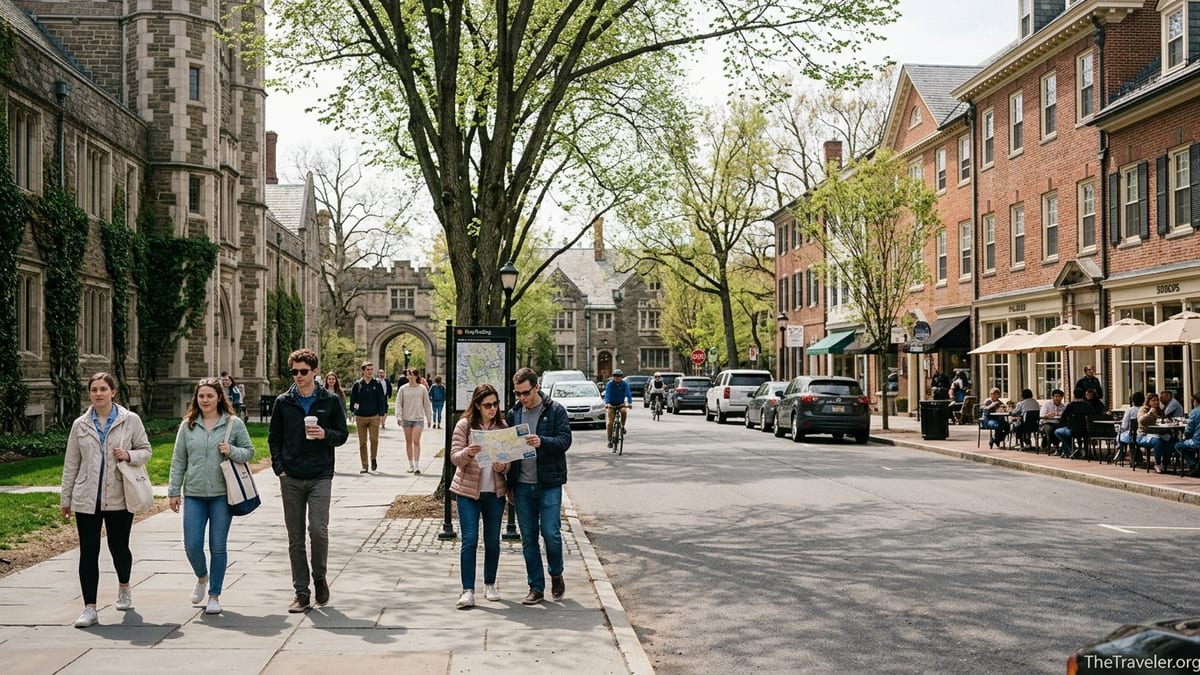
First-time visitors are often surprised by how small and walkable Princeton feels. From the NJ Transit “Dinky” shuttle train at Princeton Station, you can stroll into town in about 10 minutes, passing athletic fields and dorms before Nassau Hall comes into view. From there, almost everything a casual visitor wants to see lies within a 15-minute radius on foot, which makes Princeton feel more like a European university town than a suburban campus off the highway.
Across Nassau Street, Palmer Square functions as Princeton’s living room. The brick-fronted buildings, many in Colonial Revival style, hold independent boutiques, cafés and restaurants woven around a central green that hosts outdoor concerts and seasonal events. On a summer evening you might see families eating ice cream on the low stone walls while students line up for coffee, or in December, a towering Christmas tree glowing beside skaters on a temporary rink. The square is lively enough to feel cosmopolitan yet small enough that you will recognize faces by the end of the day.
That coexistence of town and gown is central to Princeton’s appeal. You can browse a high-end clothing shop or a local cheese counter, then cross the street into one of the most storied college campuses in the United States without ever feeling like you have left one world for another. For visitors, this means there is no “dead zone” around the university. Instead, the campus blends directly into an active, lived-in downtown that encourages wandering, coffee breaks and spontaneous discoveries.
A Reborn Art Museum With Global Reach
The single clearest symbol that Princeton is more than a postcard campus is the Princeton University Art Museum, which reopened in late 2025 after a multiyear rebuild in the center of campus. The new building, a cluster of interlocking pavilions designed by Adjaye Associates, nearly doubles the display space and turns the museum into what the university calls a “town square for the arts and humanities,” with public terraces, generous glass and multiple entrances that draw in both locals and travelers.
Admission is free, and the collection is unexpectedly global for a town of under 40,000 residents. Visitors can move from ancient Mediterranean mosaics to African sculpture, East Asian painting and contemporary American photography in a single visit. Seasonal exhibitions add to the draw. In 2026, for example, the museum is hosting a focused show on Willem de Kooning’s breakthrough years, a level of programming more commonly associated with big-city institutions in New York or Philadelphia.
Princeton has also layered visitor-friendly amenities into the museum experience. A restaurant on an upper floor, with terrace seating in good weather, gives travelers a refined but relaxed lunch spot overlooking campus rooftops. A well-stocked museum store in both the building and nearby Palmer Square turns a quick browse into an easy place to pick up distinctive gifts, from exhibition catalogues to ceramics by regional artists. For a day tripper from New York or Philadelphia, it is entirely possible to make the museum the core of a visit, then spend the rest of the afternoon walking the campus and downtown without ever getting into a car.
History You Can Walk Through, Not Just Read About
Princeton’s prestige is rooted not only in its university but in its role in early American history. The Battle of Princeton in January 1777 was a pivotal moment in the Revolutionary War, and visitors can still trace that story on foot. A short drive or extended walk from downtown brings you to Princeton Battlefield State Park, where interpretive signs explain how George Washington’s troops surprised British forces and helped shift the momentum of the war.
Back in town, the massive Princeton Battle Monument, just off Nassau Street, commemorates that victory with a stone relief that feels almost European in its scale. Nearby, the grounds of Morven Museum & Garden, a short walk from Palmer Square, tell a more domestic version of Princeton’s history. The 18th-century house was built by Richard Stockton, a signer of the Declaration of Independence, and later served as New Jersey’s governor’s mansion. Today, visitors can tour its period rooms and stroll through formal gardens that feel far removed from the bustle of the Northeast Corridor, even though major train lines sit only a few miles away.
Even the university buildings themselves carry layered histories. Nassau Hall, completed in the 1750s, briefly served as the capital of the United States when the Continental Congress met there in 1783. On a quiet afternoon, you can walk its stone paths, read the plaques and imagine delegates crossing the same courtyard where students now pass with laptops and coffee. This kind of physical continuity between the 18th century and the 21st is part of what sets Princeton apart from newer college towns.
Culture After Dark: From Indie Films to Chamber Music
While many visitors arrive for a daytime campus stroll, Princeton’s cultural life extends well into the evening. On Nassau Street, the historic Princeton Garden Theatre screens independent and international films alongside curated classics, often with guest speakers or themed series. A traveler staying overnight might catch an early dinner in town, then walk to a subtitled European drama or a restored noir film, surrounded by a mix of students, professors and local residents.
On campus, university departments and arts centers offer a steady stream of performances that are open to the public, often at modest ticket prices. Depending on the season, visitors may find a chamber concert by visiting musicians in a Gothic-style hall, a jazz combo in a modern performance space, or a student theater production experimenting with new work. Events listings change constantly, but it is common to see multiple options on a single Friday night, which makes Princeton feel more like a small city than a suburb.
Art also spills into the streets. Public sculptures dot the campus and town, from abstract metal works set in quiet quadrangles to figurative statues in high-traffic areas. A casual walk may reveal a contemporary sculpture beside ivy-covered stone, or a modern installation framed by collegiate Gothic archways. The local arts council promotes walking routes for public art, encouraging visitors to see Princeton as an open-air gallery rather than a closed academic enclave.
Food, Coffee and a Taste of Local Life
Prestige towns sometimes lean heavily on white-tablecloth dining, but Princeton’s food scene is more varied and approachable. Around Palmer Square and along Nassau Street, visitors will find a mix of long-standing institutions and newer, chef-driven spots. It is easy to spend less than the cost of a big-city restaurant while still eating very well, whether that means a bowl of handmade pasta, a plate of seasonal small plates or a carefully composed salad made with regional produce.
Cafés are a central part of the Princeton experience. Several independent coffee shops within a few blocks of Nassau Street offer serious espresso, generous seating and enough power outlets to make them de facto offices for writers, graduate students and remote workers. For a visitor, they are ideal places to pause between sights, check train schedules and soak in how locals actually use the town. Sitting at a window table on a weekday morning, you are just as likely to overhear a discussion about biotech startups as a debate over a philosophy text.
Casual food is equally appealing. Gourmet sandwich counters, noodle shops and bakeries line the main streets, making it simple to grab a quick lunch without sacrificing quality. Family-run places serve everything from dumplings to empanadas, and while exact prices fluctuate, a satisfying midday meal often costs less than a sit-down lunch in Manhattan or Center City Philadelphia. Add in seasonal farmers’ markets and occasional food festivals, and Princeton’s reputation for brainpower starts to feel inseparable from its appreciation for good food.
Nature, Neighborhoods and the Slower Side of Princeton
Beyond the iconic campus images, Princeton offers a surprisingly gentle landscape for walking and cycling. The Delaware and Raritan Canal towpath, accessible just outside town, provides miles of flat, tree-lined trail along the water, popular with joggers, dog walkers and casual cyclists. In spring, cherry blossoms and fresh green leaves turn the path into a tunnel of color; in autumn, foliage reflects in the canal, offering views that feel days away from the nearest interstate despite being a short ride from downtown.
Within the town itself, side streets lined with Victorian houses and early 20th-century homes invite aimless wandering. Visitors who venture a block or two off Nassau Street will find front porches, pocket parks and small neighborhood churches that paint a fuller picture of Princeton as a lived-in community rather than simply a destination. It is not uncommon to see professors walking children to school, students jogging past retirees tending gardens, or cyclists heading toward the campus from nearby suburbs.
Several small green spaces close to the center provide easy breathing room between museum visits or shopping. University lawns double as informal parks where anyone can sit with a book or picnic. On warm days, impromptu Frisbee games and study groups share the same quadrangles where alumni return for reunions and visitors snap photos. For travelers used to urban attractions that require constant transit hops, this dense layering of sights, shops and quiet corners can feel almost luxurious.
Princeton as a Day Trip or Short Getaway
One of Princeton’s strengths for visitors is its practicality. From New York Penn Station or Philadelphia, travelers can catch a New Jersey Transit train to Princeton Junction, then transfer to the short shuttle known as the Dinky for a five-minute ride into town. This rail link, which locals treat as part of the town’s identity, makes Princeton unusually accessible without a car. Once you arrive at Princeton Station, you can comfortably explore the core attractions by foot in a single day.
For a well-paced day trip, many visitors start with coffee and a stroll through campus, then head to the art museum for a few hours before taking lunch either on its terrace or back across Nassau Street. An afternoon might include Morven Museum & Garden or a walk through Palmer Square’s shops, followed by an early dinner and an evening film or performance. Because distances are short, there is little dead time lost to transport, and it is easy to adjust plans around weather or energy levels.
Those staying overnight gain a different dimension of Princeton. Boutique hotels in and around Palmer Square put guests within steps of the main attractions, so it is possible to wake early, walk the canal towpath at sunrise, then return for breakfast on a shaded patio. Evening strolls through a softly lit campus, when daytime crowds have thinned and lecture halls glow from within, offer a quiet counterpoint to the daytime buzz. In these off-hours, Princeton feels less like a destination and more like a community you have temporarily joined.
The Takeaway
Princeton will always be associated with Ivy League prestige, but for visitors that reputation is just the beginning. A revitalized art museum, layered Revolutionary history, active downtown and walkable streets create a destination that stands on its own, separate from admissions brochures and graduation ceremonies. This is a place where you can spend the morning with world-class art, the afternoon walking a historic battlefield and the evening watching an indie film, all without needing a car.
What makes Princeton distinct is how seamlessly those experiences blend. Campus life and town life share the same sidewalks, cafés and green spaces, giving travelers a rare chance to see a renowned university functioning as part of a broader community. Whether you arrive for a day trip from New York, add a night here to a longer East Coast itinerary or simply detour off the highway for lunch and a walk, Princeton rewards curiosity. Come for the ivy; stay for the art, history, food and small-town rhythms that reveal themselves one conversation and one side street at a time.
FAQ
Q1. Is Princeton worth visiting if I am not touring colleges?
Yes. Even if you are not interested in university admissions, Princeton offers a free world-class art museum, significant Revolutionary War sites, a lively downtown and easy walking routes that make it a rewarding cultural and historical stop on a broader New Jersey or East Coast trip.
Q2. Can I visit the Princeton University campus without a tour?
In general, yes. Visitors are usually welcome to walk through outdoor campus spaces like courtyards and paths during daylight hours. Certain buildings may have restricted access, but most iconic outdoor areas, including Nassau Hall’s surroundings and central quads, can be explored independently.
Q3. How long do I need to see the main sights in Princeton?
A well-planned day trip is enough to visit the art museum, walk through campus, explore Palmer Square and fit in either Morven Museum & Garden or a short visit to Princeton Battlefield State Park. Staying one night allows time for a performance, a longer canal walk and a more relaxed pace.
Q4. Do I need a car to visit Princeton?
No. Many visitors arrive by train, using New Jersey Transit to reach Princeton Junction and then transferring to the short Dinky shuttle into town. Once you arrive, the main attractions are close enough together that you can comfortably explore on foot, though a car is convenient for farther-flung parks.
Q5. Is the Princeton University Art Museum free?
Yes. Admission to the Princeton University Art Museum is free, which makes it especially attractive for families, students and day trippers. Some special programs or events may carry separate fees, but access to the galleries themselves does not require a ticket charge.
Q6. What is the best time of year to visit Princeton?
Spring and fall are particularly appealing, with blooming trees or colorful foliage highlighting the campus and canal paths. Summer can be quieter on campus but still pleasant, while winter offers a cozy downtown atmosphere and indoor attractions like the art museum, shops and cafés.
Q7. Are there good food options near campus?
Yes. Palmer Square and Nassau Street have a wide range of restaurants, cafés and casual spots, from bakeries and coffee bars to sit-down dining rooms. Prices vary, but many visitors find they can eat well without big-city costs, especially at lunch or in casual venues.
Q8. Can families with children enjoy Princeton?
Very much so. Children often enjoy open campus lawns, seasonal events on Palmer Square, the variety of art in the museum and simple walks along the canal towpath. Many restaurants and cafés are used to families, and the compact size of town keeps walking distances manageable for younger travelers.
Q9. How does Princeton compare to other Ivy League towns for visitors?
Compared with some larger college cities, Princeton feels more compact and village-like, with the university, shops and historic sites clustered closely together. Its combination of a newly rebuilt art museum, Revolutionary War history and easy rail access makes it especially convenient for day trips.
Q10. Is Princeton expensive to visit?
Certain costs, such as boutique hotels or fine dining, can be high, reflecting the town’s affluence. However, many core experiences, including the art museum, campus walks and battlefield sites, are low-cost or free, and visitors can manage budgets by choosing casual dining and using public transit instead of driving.