


More news on this day
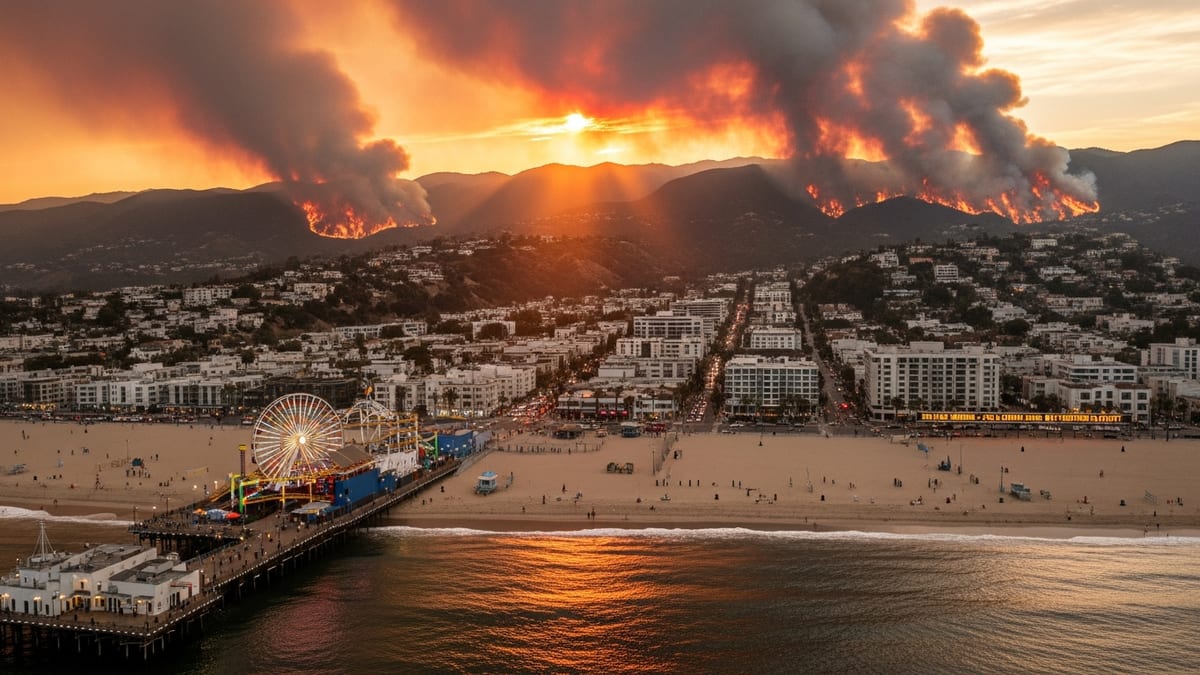
Wildfires raging across parts of Canada and the United States are casting a pall over North America’s peak travel season, with smoke, evacuations and park closures disrupting holidays, depressing cross-border trips and forcing destinations to rethink how they market themselves in an era of climate-fueled fire risk.
Get the latest news straight to your inbox!
Peak Season Trips Collide With an Intense Fire Year
The 2026 wildfire season is colliding directly with the height of the summer tourism calendar, particularly in western North America. Recent fires around Okanagan Lake in British Columbia have driven thousands of residents and visitors from lakeside communities, according to Canadian media coverage, at a time when the region normally fills with boaters, wine tourists and festivalgoers.
Across the border in the western United States, reports describe similar scenes of hurried departures from rural communities and recreation areas as flames advance through drought-stressed forests and grasslands. Evacuation alerts and road closures are interrupting road-trip itineraries, while visibility and air quality conditions are changing too quickly for many travelers to confidently plan outdoor-focused vacations.
Satellite monitoring and seasonal outlooks from fire agencies in Canada and the United States had already warned of elevated risk for large fires in parts of the continent this year. Those assessments, paired with memories of record-breaking Canadian fire seasons in 2023 and 2025, have left some travelers wary of booking long-haul trips to heavily forested regions that may later be shrouded in smoke.
The result is an uneasy peak season in which beaches, lakes and national parks remain in high demand, yet bookings are increasingly shadowed by the possibility of sudden disruption from wildfire activity hundreds of kilometers away.
Canadian Destinations Face Closures While Demand Shifts
In Canada, tourism operators in fire-prone provinces are juggling strong overall demand with highly localized losses. Industry data and provincial reports indicate that visitation to major cities and some Atlantic and Quebec destinations remains robust, buoyed by a weaker currency that continues to attract international travelers.
At the same time, communities closer to major fires are seeing waves of cancellations. In parts of British Columbia and the Prairie provinces, air quality advisories and images of smoke-darkened skies have prompted prospective visitors to move trips to later in the year, shift to coastal or urban stays, or abandon plans altogether. Hotels and campgrounds in impacted zones are accommodating evacuees alongside remaining tourists, complicating capacity planning and staffing.
Earlier analytical work on the 2025 wildfire season pointed to measurable stress on tourism in central Canada, where weeks of smoke and intermittent park closures deterred road trippers and outdoor enthusiasts. Researchers have noted that travel search data and booking patterns tend to soften quickly when fires dominate news coverage, then recover unevenly depending on how long smoke and restrictions persist.
This year, national and provincial agencies have emphasized real-time information about air quality and closures, aiming to reassure travelers that most of the country remains accessible. Yet persistent headlines about fires and smoke are reinforcing a perception that summer in Canada increasingly comes with a wildfire caveat, particularly for visitors whose main goal is hiking, camping or wildlife viewing.
US National Parks Struggle With Smoke, Staffing and Closures
In the United States, many of the country’s marquee outdoor destinations are contending with both an intense fire season and lingering staffing challenges. Publicly available information from federal land-management agencies shows that seasonal hiring remains below earlier targets, limiting the capacity of parks and forests to keep all campgrounds, trails and visitor centers open when conditions are safe.
As fire activity escalates, that shortfall is becoming more acute. Fire crews and rangers are being redirected from visitor-facing roles to support wildfire response, while some access roads, scenic drives and backcountry areas are closed pre-emptively due to smoke or the risk of fast-moving flames. Travelers are encountering last-minute changes to itineraries at popular parks in states such as Montana, Idaho, Washington and California, where summer typically brings record visitor numbers.
Reports from regional tourism organizations and local businesses indicate that smoke is also affecting destinations far from active fire lines. Hazy conditions and air quality alerts around the Great Lakes and parts of the Midwest have led to temporary closures of amusement parks, outdoor events and lakeside attractions on high-smoke days, disrupting what is usually one of the busiest stretches of the year.
Despite these challenges, domestic demand for outdoor recreation remains high. Many travelers are choosing to push ahead with trips, accepting that some views will be obscured and some activities curtailed. Others are pivoting to indoor attractions, shorter stays or last-minute destination switches as they track fire and smoke maps in real time.
Cross-Border Tourism Caught Between Boycotts and Smoke
The wildfire crisis is unfolding against a backdrop of already-shifting travel flows between Canada and the United States. Economic and political tensions in recent years have contributed to a documented decline in Canadian visits to the United States, according to academic and policy research, with knock-on effects for border communities that traditionally rely on cross-border shopping and leisure travel.
At the same time, Statistics Canada data and industry commentary suggest that Canada has been capturing greater tourism spending from both domestic travelers and visitors from overseas. Many Canadians who are reducing or postponing trips to the United States are instead exploring destinations within their own country or looking to other international options.
Layered on top of these trends, the wildfire situation is adding a new source of volatility. When smoke plumes from Canadian fires drift south into the US heartland, they can temporarily depress demand not only for outdoor activities but also for cross-border weekend trips, road tours and short-haul flights. Conversely, periods of heavy fire activity in the western US have sent some travelers north in search of clearer skies and cooler temperatures, only to encounter similar smoke conditions.
Travel analysts note that such climate-related disruptions are now interacting with exchange rates, visa policies and broader geopolitical perceptions to shape where North Americans choose to spend their vacation dollars. The result is a more fragmented tourism map in which traditional north–south corridors are less dependable than in the past.
Destinations Adapt With Flexible Policies and Climate Messaging
As fires and smoke repeatedly intrude on the peak travel calendar, tourism boards and operators across North America are experimenting with new approaches to manage risk and reassure visitors. Flexible cancellation and rebooking policies have become more common among hotels, tour companies and campgrounds in fire-prone regions, with many businesses promoting these terms as a key selling point for hesitant travelers.
Destination marketing campaigns are also evolving. Instead of focusing solely on iconic vistas that can be obscured by smoke, some regions are highlighting shoulder-season travel, lesser-known indoor attractions, and experiences in locations that are historically less exposed to large fires. There is growing emphasis on trip insurance, contingency planning and real-time communication with guests about changing conditions.
Industry associations and climate researchers increasingly frame wildfires as a structural challenge rather than a series of one-off crises. Studies of recent fire seasons in Canada and the United States link warmer temperatures, prolonged droughts and changing precipitation patterns with larger and more persistent fires, suggesting that travel planners will need to account for smoke and closures for years to come.
For now, travelers are adapting on the fly, watching weather and fire dashboards as closely as they once tracked airline fares. For destinations in both Canada and the United States, the 2026 season is underscoring that the future of tourism in North America will be shaped not only by marketing budgets and exchange rates but also by the behavior of the fires that increasingly define summer.