


Visiting the Yucatán Peninsula without renting a car is not only possible, it is often cheaper, safer and less stressful. The key is understanding how the web of ADO buses, local colectivos, taxis, ferries and tours fits together in real life. This guide walks you through realistic routes, example prices and common problems, so you can decide when public transport is enough and when paying for a car or private transfer actually becomes worth it.
Get the latest updates straight to your inbox!
Understanding How People Really Get Around the Yucatán
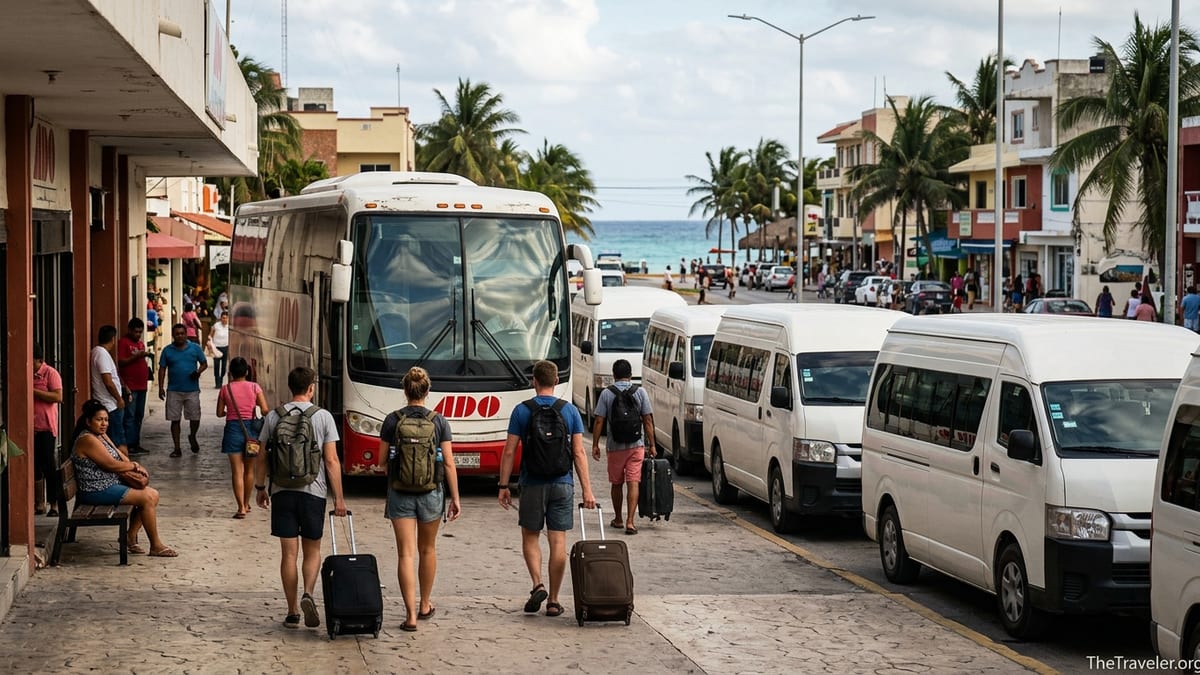
The Yucatán Peninsula is stitched together by a surprisingly dense network of buses and vans. The backbone is ADO, the main long distance bus company that connects Cancún, Tulum, Playa del Carmen, Mérida, Valladolid, Bacalar, Campeche and dozens of smaller towns. From Cancún International Airport you can ride ADO directly to downtown Cancún, Playa del Carmen, Tulum and Mérida, usually in modern coaches with air conditioning and reserved seats.
Once you step away from the big red ADO buses, you will see white passenger vans called colectivos or combis running up and down the highways, especially along the Riviera Maya corridor between Cancún, Playa del Carmen and Tulum. These are used heavily by local workers and budget travelers, with short hops along the highway typically costing the equivalent of just a few US dollars in Mexican pesos.
Inside the cities, you will mostly rely on taxis and local buses. In Cancún, buses marked R1 and R2 connect the ADO terminal downtown to the Hotel Zone along Kukulcán Boulevard, while in Mérida the remodeled Va y Ven and other local buses crisscross the city for just a handful of pesos. Meanwhile, islands like Cozumel and Holbox are reached by ferries from Playa del Carmen and Chiquilá, with easy bus connections to each port.
Understanding how these pieces interact is what makes a car-free trip realistic. A common pattern is to ride ADO between major hubs such as Cancún, Valladolid and Mérida, then use a mix of taxis, colectivos and day tours to reach ruins, cenotes and beaches that sit off the main highway.
ADO Buses: The Spine of a Car-Free Route
ADO buses are usually the most reliable and comfortable way to cover long distances in the Yucatán. From Cancún Airport, frequent buses run to Playa del Carmen and downtown Cancún roughly every 20 to 40 minutes for much of the day, with fares commonly in the range of about 200 to 300 pesos per person to Playa del Carmen and somewhat more to Tulum, depending on schedule and class.
A realistic example: after landing at Cancún Airport, you could buy an ADO ticket at the official counter in Terminal 2, 3 or 4 and ride straight to the Playa del Carmen ADO terminal on Fifth Avenue. The trip usually takes about one hour and drops you in the center of town, a short walk from many hotels and colectivos toward Tulum or local beaches. Tickets can be purchased at the airport, at ADO terminals, or online in advance, which is helpful in high season and on holiday weekends.
From the main ADO terminal in Cancún, there are direct buses to Mérida, Valladolid, Bacalar, Chetumal and Campeche. For instance, Cancún to Mérida can take around 4 to 5 hours, often with several departures throughout the day, including daytime and overnight options. On the shorter side, Playa del Carmen to Tulum is commonly about 1.5 hours by ADO, with fares that are higher than colectivos but still modest and with the benefit of assigned seating and luggage storage under the bus.
Travelers concerned about safety generally find ADO a solid choice. Buses are usually modern coaches with air conditioning, seatbelts and on-board toilets for longer routes. Routes like Mérida to Campeche, Playa del Carmen to Mérida or Cancún to Valladolid are well trodden by both locals and tourists, and station staff can help you find the right bay and check current departure times.
Colectivos, Local Buses and Taxis: Filling the Gaps
Colectivos are shared vans that run fixed routes and leave once full or nearly full. On the Riviera Maya, two of the best known services are Playa Express and Foráneos colectivos that connect Cancún, Playa del Carmen and Tulum. As an example, you might pay roughly the equivalent of 60 to 100 pesos to ride the full stretch from Playa del Carmen to Tulum, or much less for a partial hop, such as Playa del Carmen to a highway stop for a nearby cenote.
Using colectivos in practice is straightforward but can feel chaotic at first. In downtown Cancún, vans depart from informal stands just a short walk from the main ADO terminal, while in Playa del Carmen they queue near Calle 2 and Avenida 20 or in other central spots. You simply tell the driver your destination, climb in and pay in cash, usually when you get off. Bags are typically placed on your lap or near your feet, as space is limited; large checked suitcases are awkward and better suited to ADO buses or private transfers.
Inside the cities, regular city buses and taxis take over. In Cancún, the R1 bus runs from downtown to the Hotel Zone along the lagoon and main beaches, with the fare usually around the cost of a few US quarters in pesos and paid directly to the driver. In Mérida, the Va y Ven system and other local buses connect neighborhoods like Paseo de Montejo, the historic center and the new bus stations, again at very low fares. Taxis are widely available in all major towns, but pricing is often by zone rather than meter, so it helps to ask your hotel or restaurant what a reasonable fare should be before you negotiate with a driver.
Taxis and ride services become essential when staying in beach areas outside town centers, such as the Tulum beach road, remote cenotes, or boutique hotels along the Costa Mujeres north of Cancún. Expect to pay noticeably more than city fares for late-night rides or for long distances, and always confirm the price in pesos before getting in. For some travelers, repeated taxis on such routes are the first sign that renting a car might be worth considering.
Ferries, Island Connections and Airport Transfers
Ferries are a central part of a car-free route if you plan to visit Cozumel or Holbox. From Playa del Carmen, passenger ferries to Cozumel run roughly every one to two hours from early morning to late evening, with crossing times around 40 to 45 minutes. Several companies operate this route with similar pricing, and tickets are normally purchased directly at the piers on the day of travel.
For Holbox, the usual pattern is to ride an ADO or second class bus from Cancún or Playa del Carmen to the small port of Chiquilá, which typically takes about 2 to 3 hours depending on the starting point and stops. From Chiquilá, passenger ferries depart across the lagoon to Holbox town multiple times a day. Schedules can shift seasonally, but most travelers find it realistic to travel from Cancún Airport to Holbox in a single day using a mix of ADO bus and ferry, provided they arrive before late afternoon.
Airport transfers are another place where choices matter. From Cancún Airport, the ADO bus is usually the best value when heading to downtown Cancún, Playa del Carmen or Tulum, with prices per person often around or under the equivalent of 15 to 30 US dollars depending on distance and exchange rate. For groups or travelers arriving late at night, private transfers or prebooked shuttles can be cost effective since the fare is shared across several passengers and you get a direct drop off at your hotel.
In reality, many travelers combine modes. A common pattern is to land at Cancún, take an ADO bus to Playa del Carmen, then a colectivo or taxi to the hotel. On departure, families sometimes choose a private transfer back to the airport because they are traveling with more luggage, feel tired, or need to catch a very early flight. Building this flexibility into your budget and expectations makes a car-free trip feel smoother.
Realistic Point-to-Point Routes Without a Car
For a first visit, one realistic car-free loop is Cancún Airport to Playa del Carmen, on to Tulum, then inland to Valladolid and Mérida, finishing back in Cancún. On arrival, ride ADO from Cancún Airport to Playa del Carmen, stay two or three nights to visit beaches, take the ferry to Cozumel for a day and perhaps a colectivo to a nearby cenote on the highway.
From Playa del Carmen, continue by ADO or colectivo to Tulum. The bus offers more comfort and reliable luggage space, while colectivos are cheaper and more frequent during the day but cramped. In Tulum, you can use taxis or bicycles to reach the Tulum ruins just north of town and nearby cenotes. If you want to visit Sian Ka’an Biosphere Reserve, it is usually simplest to join an organized tour that includes transport, since public access deeper into the reserve is limited and road conditions fluctuate.
After Tulum, an ADO bus can take you to Valladolid in roughly two to three hours, a pleasant colonial town and useful base for Chichén Itzá and several cenotes. Without a car, you can book a small-group tour to Chichén Itzá that starts in Valladolid, or ride a local bus to the archaeological zone in the morning and return in the afternoon. From Valladolid, continue by bus to Mérida for a few days in the city, with day tours to sites like Uxmal, Celestún or nearby cenotes. When it is time to leave, an ADO bus from Mérida to Cancún or directly to Cancún Airport can return you for your flight.
If you have more time, you could extend the loop to include Holbox or Bacalar. For Holbox, work in an extra day to go from Cancún or Valladolid to Chiquilá by bus, ferry to the island, then reverse the route. For Bacalar, ADO runs south from Tulum and Playa del Carmen toward Felipe Carrillo Puerto and Bacalar, where taxis and hotels can arrange boat tours on the lagoon. All of these combinations are commonly done by independent travelers relying on buses, ferries and taxis rather than rental cars.
Luggage, Tickets and On-the-Ground Problem Solving
Traveling without a car means your luggage strategy matters. On ADO, medium and large suitcases are normally tagged and stored in the under-bus compartment, while you keep a daypack with valuables inside the cabin. This system is well established, but it is still wise to keep passports, electronics and cash with you. On colectivos and local buses there is rarely a formal luggage hold, so anything bigger than a carry-on bag quickly becomes uncomfortable.
Booking ADO tickets ahead for major jumps, such as Cancún to Mérida or Mérida to Campeche, can make sense in high season and on weekends. You can buy tickets at the station in cash or card, or online before you arrive in Mexico if your card works with local payment systems. For short hops, most travelers simply walk to the station and buy tickets for the next bus available, especially between busy destinations like Playa del Carmen and Tulum.
Schedules in the region are usually reliable, but you should always allow a buffer. Roadworks, accidents or heavy rain can add time to highway journeys. If you are making an important connection, such as arriving by bus in Cancún on the same day as a flight, plan an extra few hours of margin. For Holbox or Cozumel, remember that the combined bus plus ferry trip can be affected by sea conditions, and consider staying overnight near the port if you have a tight deadline.
When a problem does arise, such as a missed bus or a sold-out departure, there is almost always a workaround. You might switch to a second class bus, share a taxi with other stranded passengers, or use a colectivo for part of the route. Staff at ADO terminals generally have up-to-date information and can suggest alternative paths, while hotels and guesthouses in tourist areas are used to helping guests rebook transfers or tours at short notice.
When Renting a Car Actually Becomes Worth It
For many itineraries, especially along the well served Cancún to Tulum to Valladolid to Mérida corridor, public transportation and occasional tours are enough. Renting a car starts to make more sense when your plans focus on remote cenotes, quiet villages with limited bus service, or multiple short day trips from a single base. For example, a family staying in Valladolid who wants to visit several cenotes scattered on back roads over three days might spend a significant amount of money and time coordinating multiple taxis each day.
The same is true if you plan to base yourself in Tulum’s beach zone rather than in town. Repeated taxi rides along the beach road, especially at night or from remote eco-hotels, can add up quickly. In some cases, what you spend on taxis over a week could rival or exceed the cost of a modest rental car, especially when split among several travelers. That is often the tipping point at which a car becomes practical, even if you are otherwise comfortable with buses.
Car rental, however, comes with trade-offs in the Yucatán. Insurance rules, deposits and inspections can be confusing, and parking in busy areas like central Playa del Carmen or near popular ruins can be frustrating in high season. Traffic on the main highways is usually manageable, but city driving and late-night highway travel require extra caution. Many travelers choose a hybrid approach: using buses between major cities and renting a car for just a few targeted days from spots like Mérida or Playa del Carmen when they want to explore more remote corners independently.
The decision should come down to your specific route, group size and tolerance for logistics. Solo travelers and couples on linear routes often do best sticking with ADO plus occasional tours and taxis, while larger groups, photographers chasing sunrise and sunset at multiple ruins, or travelers with mobility needs may find a carefully planned rental period worthwhile.
The Takeaway
Crossing the Yucatán Peninsula without a car works because the region has been built around buses, colectivos and shared transportation. From the moment you step out of Cancún Airport, you have realistic options to reach Playa del Carmen, Tulum, Mérida, Valladolid, Cozumel, Holbox and beyond, even if you never pick up a set of car keys.
ADO buses handle the long legs in comfort, colectivos and city buses fill the gaps, ferries link the islands, and taxis plus organized tours carry you to the more remote ruins and reserves. With a bit of planning around luggage, schedules and buffers for delays, this patchwork becomes a coherent network that supports everything from a quick Riviera Maya escape to a multi-week peninsula loop.
Renting a car is best seen as a tool, not a default. It becomes worth it when you are chasing scattered cenotes and villages, staying in isolated beach or jungle properties, or traveling as a group that would otherwise spend heavily on taxis. For many travelers, though, the freedom of walking off a bus instead of searching for parking, and the savings from not paying for a vehicle to sit idle, make a car-free Yucatán not just possible but pleasantly practical.
FAQ
Q1. Is it realistic to visit the Yucatán Peninsula without renting a car?
Yes. By using ADO buses for long distances, colectivos and city buses for shorter hops, plus taxis and tours for specific sites, most popular destinations including Cancún, Playa del Carmen, Tulum, Valladolid, Mérida, Cozumel and Holbox are reachable without driving yourself.
Q2. How much does it typically cost to get from Cancún Airport to Playa del Carmen without a car?
The ADO bus from Cancún Airport to Playa del Carmen usually costs the equivalent of around 10 to 20 US dollars per person in pesos, depending on schedule and season. This is often far cheaper than a private transfer or taxi for solo travelers or couples.
Q3. Are colectivos safe and comfortable for tourists?
Colectivos are widely used by locals and budget travelers and are generally considered safe for daytime travel along main routes. They can be crowded and basic, with limited space for luggage, so they are best for short hops with small bags rather than long rides with large suitcases.
Q4. How do I get to Cozumel or Holbox using public transportation?
For Cozumel, take an ADO bus or colectivo to Playa del Carmen and then walk to the ferry pier for frequent passenger ferries to the island. For Holbox, ride a bus to the port town of Chiquilá and transfer to a passenger ferry across to Holbox town.
Q5. Do I need to book ADO bus tickets in advance?
For busy routes such as Cancún to Mérida or Mérida to Campeche, and for travel on holidays or weekends, it is wise to buy tickets in advance online or at the station. For shorter segments like Playa del Carmen to Tulum, many travelers simply buy a ticket at the terminal for the next available bus.
Q6. Can I bring large luggage on buses and colectivos?
ADO buses have under-bus luggage compartments where larger suitcases can be stored and tagged. On colectivos and many city buses, space is limited and you will usually need to keep your bag on your lap or by your feet, so large checked suitcases are not ideal on those services.
Q7. When does renting a car become more economical than using buses and taxis?
Renting a car often becomes economical for groups or families who plan many short trips from one base, such as visiting several cenotes or villages over a few days. If you find yourself budgeting for multiple long taxi rides each day, especially from remote beach or jungle hotels, the cumulative cost may rival a rental car.
Q8. How do I reach archaeological sites like Chichén Itzá and Uxmal without a car?
Chichén Itzá is reachable by ADO and other buses from cities like Valladolid, Mérida and Cancún, or via day tours that include transport and guide services. Uxmal is commonly visited as part of a tour from Mérida, though regional buses also run toward the site from the city’s bus terminals.
Q9. Is it safe to arrive late at night and still use public transport from Cancún Airport?
ADO buses from Cancún Airport run into the evening, but very late arrivals may have fewer options. If your flight lands late at night, consider prebooking a reputable private transfer to your first hotel, especially if you are unfamiliar with the region or traveling with children.
Q10. What should I do if I miss my bus or a departure is sold out?
If you miss a bus or find a departure sold out, speak with station staff about the next available service or alternative routes, such as a different class of bus or a connection through another town. In many corridors, there are second class buses, colectivos or shared taxis that can help you continue your journey the same day.