


Zadar is one of the best bases on Croatia’s Dalmatian coast, with a compact historic center, world-class sunsets, easy access to islands, and day trips to two of the country’s most famous national parks. This guide lays out practical 1, 2 and 3 day itineraries, with clear routes that combine Old Town highlights, the Sea Organ at sunset, beaches, boat trips, Nin’s shallow sands, inland waterfalls, food breaks, and airport logistics so you can land and start exploring with minimal stress.
Get the latest updates straight to your inbox!
Essential Planning: When to Visit and How Long to Stay
If you only have one full day in Zadar, focus on the walkable Old Town, the waterfront promenade, and a Sea Organ sunset. With two days, you can add island time on a boat trip or half-day beach hopping. Three days lets you combine the city and coast with one big inland day trip to Krka National Park or Plitvice Lakes National Park, both reachable in around 1.5 to 2.5 hours by car or tour bus from Zadar.
High season runs roughly from mid-June to early September, when Zadar’s Riva promenade fills with evening strollers and street performers. Expect higher accommodation prices and busy sunsets at the Sea Organ. Spring (April to early June) and autumn (mid-September to October) bring milder temperatures, fewer crowds and generally lower hotel rates, which suits travelers who plan a lot of walking in the Old Town and long days in national parks.
From a budget perspective, a midrange double room in or just outside Zadar’s Old Town typically costs less than in Split or Dubrovnik during the same period, which is why many travelers now base themselves here for a few nights and do day trips out to the islands, Nin, Krka or Plitvice. Food and drink prices in the Old Town are also relatively moderate by Croatian coastal standards; you can still find a good margherita pizza or a generous seafood risotto for a reasonable price at casual konobas just a few streets back from the waterfront.
Consider your energy levels when choosing between Krka and Plitvice for a limited stay. Plitvice offers longer walking routes with more elevation changes and is better for travelers comfortable with a full day of walking on boardwalks. Krka can be seen in a shorter loop from the Skradin boat landing, which suits families and visitors who prefer a slightly easier day.
Getting There and Airport Logistics
Zadar Airport sits about 12 to 13 kilometers east of the city, and the transfer into town is straightforward. A dedicated airport shuttle bus runs between the terminal, the main bus station, and a stop close to the Old Town, with a journey time of about 20 minutes from the airport to the center in normal traffic. Tickets are typically just a few euros per person and can be purchased from the driver or at the small ticket counter near arrivals, which makes it the simplest option if you are traveling light.
Taxi and app-based rides are widely available outside the terminal. A standard taxi from Zadar Airport to the Old Town usually takes around 15 to 20 minutes and costs noticeably more than the shuttle, but it becomes reasonable value for groups of three or four people or anyone arriving late at night when bus frequencies drop. Many local hotels and apartments can also pre-book transfers with fixed prices, so it is worth asking your host when you confirm your reservation.
If you plan to rent a car for Krka, Plitvice or Nin, you can collect it directly at the airport. Several international and Croatian rental companies have desks in the arrivals hall, and in peak season most travelers book ahead to avoid last-minute premium prices. For a short city break of one or two nights that will be focused on Old Town walking and an organized boat trip, you can postpone collecting a car until the day of your national park excursion or skip it entirely and rely on tours or buses.
For travelers arriving overland, Zadar’s main bus station connects directly to Zagreb, Split, Šibenik and many coastal and inland towns. From the main station it is a short taxi or local bus ride to the Old Town peninsula. Ferries and catamarans from nearby islands and mainland ports arrive at the city’s ferry port and marina on the edge of the center, so it is easy to step off a boat and walk straight to most accommodation in or near the Old Town.
Day 1: Classic Zadar Old Town and Sea Organ Sunset
Start your first day by entering the Old Town via one of the stone gates and orienting yourself on the main street, often referred to locally as Kalelarga. This long, pedestrianized artery cuts across the peninsula and is lined with cafes where locals linger over morning espresso. A typical breakfast stop is at a simple bakery-cafe just off Kalelarga, where you can pick up a fresh burek or a croissant with a coffee for a modest price before exploring the sights.
From there, head toward the Roman Forum and St Donatus Church, the round pre-Romanesque church that has become one of Zadar’s most recognizable landmarks. Spend some time walking around the stone remains of the Forum and, if open during your visit, step inside St Donatus to appreciate its simple interior and acoustics. Nearby, Zadar Cathedral and its bell tower offer a chance to climb for a sweeping view over the terracotta roofs and the channel; allow a bit of time for the stairs if you are including it in your route.
By midday, the sun can be strong, so slip into the shade of narrow side streets and aim for an early lunch. The streets behind the Forum and along the inner lanes of the Old Town are filled with simple konobas and more modern bistros serving grilled fish, calamari, black risotto, and pasta dishes. A sit-down lunch with a main course and a drink at a midrange spot will usually be reasonably priced, especially if you avoid the very front row of waterfront terraces, which charge a premium for the view.
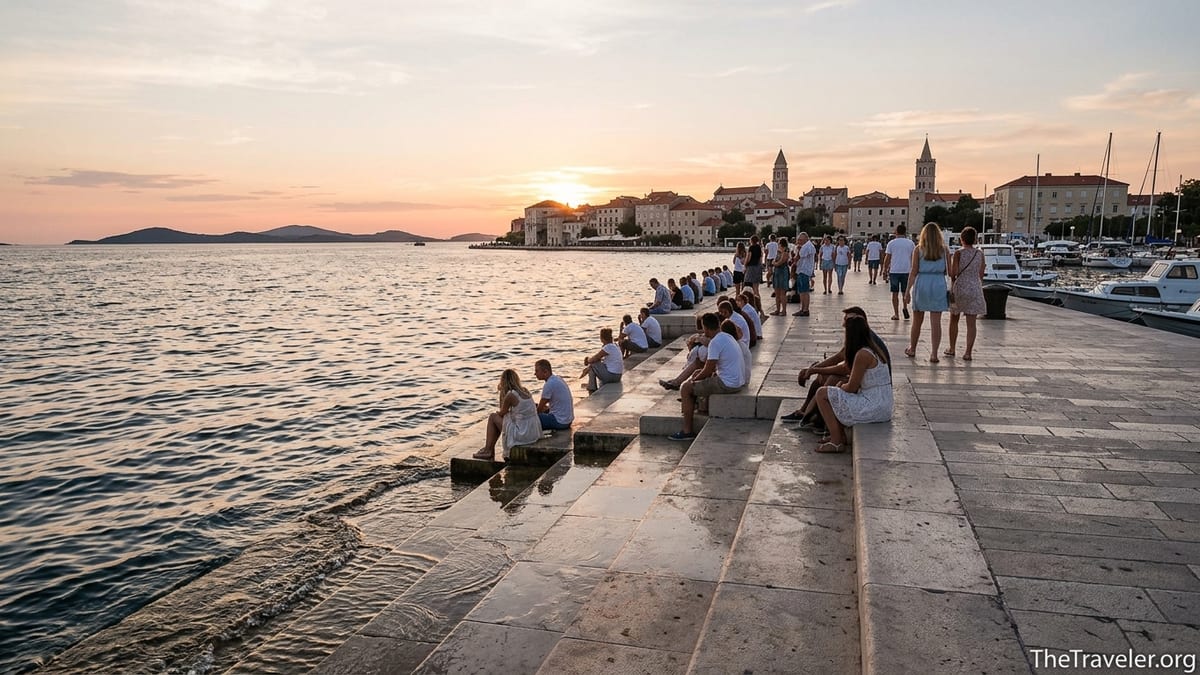
In the afternoon, walk the length of the Riva promenade. You can stop at one of the cafes overlooking the channel for a cold drink, or pause at the small swimming spots where locals slip into the sea from ladders on the rocks. Toward the western tip of the peninsula you will find the Sea Organ, an architectural sound installation built into the steps, and the circular Sun Salutation solar installation nearby. Plan to be here for sunset: locals and visitors sit on the steps, listen to the organ’s tones as waves push air through hidden pipes, and watch as the sky changes color behind the silhouettes of distant islands.
Day 2: Beaches, Boat Trips and Nin’s Shallow Sands
With a second day in Zadar, you can mix coastal relaxation with time on the water. Many visitors start with a morning boat trip from Zadar’s marina or waterfront agencies, where you can find group excursions by motorboat or speedboat to the nearby islands of Ugljan, Dugi Otok, Kornati and Telašćica. Full-day trips typically include multiple swimming stops in coves with clear water and simple on-board or island lunches, while half-day options focus on a closer island such as Ugljan for a few hours of snorkeling and sunbathing.
If organized tours are not your style, look for local skippers offering small-group outings from the marina. These often cater to eight or ten passengers and can feel more personal, with flexible stops at quiet bays depending on the wind and crowd levels that day. For a budget-friendly alternative, regular ferries link Zadar to Ugljan and Dugi Otok, where you can walk to nearby beaches or rent a bicycle or scooter to reach further coves without paying for a guided trip.
Back in Zadar, dedicate the afternoon to one of the city’s beaches or take a bus or drive up the coast to Nin. Zadar’s urban beaches are mainly pebbly or paved, so bring water shoes if you prefer more comfortable footing. Some feature beach bars renting sun loungers and umbrellas for a daily fee. Nin, about 20 kilometers away, is known for its long, shallow, sandy stretches that are especially popular with families and anyone who prefers sand to stone; in summer, you will find simple kiosks selling cold drinks, ice cream and snacks along the shore.
Round off the day with dinner back in Zadar Old Town. If your boat trip returned in the late afternoon, reserve a table at a konoba that specializes in local dishes such as grilled fish dressed in olive oil, octopus salad, or pasta with scampi. Alternatively, opt for a quick and casual meal at a pizzeria or burger place on the peninsula and save your energy for another walk along the Riva or a second sunset at the Sea Organ from a different vantage point.
Day 3: Krka vs Plitvice and How to Choose
For a third day based in Zadar, most travelers choose between Krka National Park and Plitvice Lakes National Park. Plitvice lies to the northeast and typically takes around 2 to 2.5 hours by car from Zadar, depending on the route and traffic. It is best known for its chain of turquoise lakes connected by waterfalls and wooden boardwalks. A classic day trip involves leaving Zadar early, arriving at one of the park entrances soon after opening, and spending five to seven hours walking the marked loops and taking the electric boat and shuttle bus included in the park ticket.
Krka is closer to the coast and can usually be reached in about 1.5 hours by car from Zadar, often via the town of Skradin. Many visitors park in Skradin and take the official boat along the river up to the main section of the park, which gives a scenic introduction to the landscape. The main walking loop around the waterfalls here is shorter and less strenuous than the longest Plitvice circuits, which makes Krka an appealing choice if you are traveling with young children or grandparents or if you prefer a national park experience that fits more easily into a half day.
If you do not want to drive, multiple agencies in Zadar advertise full-day excursions to both parks during the main season. These typically include bus transport from a central pick-up near the Old Town, a guide or host explaining logistics, and free time inside the park, with park entrance tickets usually paid separately. Tour prices vary but often end up costing roughly what you would pay for fuel, parking, and tolls when traveling in a small group, without the stress of navigating unfamiliar roads or finding a parking spot at park entrances during busy months.
For travelers who have already visited Plitvice on a previous trip, Krka can be a fresh alternative with a slightly more relaxed feel. Conversely, if this might be your only visit to Croatia for some time, many consider Plitvice the more unique of the two, with longer sequences of lakes and more extensive scenic walking. In either case, bring sturdy shoes, water, sun protection, and some snacks; food and drink kiosks around the main visitor hubs charge more than supermarkets in Zadar, and selection can be limited on crowded days.
Food Stops and Local Flavors Around Zadar
Food is one of the pleasures of a stay in Zadar, and planning your days around a few reliable stops can make your itinerary feel more balanced. In the mornings, cafes dotted along Kalelarga and the side streets of the Old Town serve strong Croatian coffee and simple pastries. Expect locals to stand at the bar for a quick shot of espresso before work, while travelers linger at outdoor tables with cappuccinos and sweet rolls. Prices are generally lower if you step one or two streets away from the busiest squares and waterfront.
At lunch, you can choose between sit-down konobas and quicker options like bakeries and fast-casual spots. A bakery lunch of stuffed pastry, fruit and a drink can keep costs modest and free up more of your budget for a special seafood dinner. If you prefer a hot midday meal, many restaurants offer daily menus with a soup, main dish and sometimes dessert at a set price, popular with local workers as well as visitors looking for value.
Dinner is where Zadar’s coastal location really shows on the plate. Look for daily chalkboard menus advertising freshly caught fish, or try classic Dalmatian dishes like pasticada, a slow-cooked beef dish in a rich sauce, alongside gnocchi. Many menus also feature octopus salad, risotto with cuttlefish ink, and grilled calamari, often paired with wines from nearby regions. Vegetarian travelers will find simple options like grilled vegetables, salads, and pasta in most places, though it is worth scanning menus before sitting down if you have more specific dietary needs.
Ice cream and dessert stops round out the experience. Gelato counters are common along Kalelarga and near the Riva, and locals tend to have strong opinions about which ones are best. In the evening, people stroll with a cone in hand, moving between the Riva, the main squares and the Sea Organ. If you prefer something less sweet, many bars pour local craft beers and regional wines by the glass at prices that compare favorably with other European coastal cities.
Practical Tips: Tickets, Transport and Staying Central
When mapping your Zadar days, base yourself as close to the Old Town as your budget allows. Staying inside the walls or just across the pedestrian bridge means you can walk to nearly everything in this guide, from the Roman Forum and museums to the Sea Organ, ferry port and most boat trip departure points. This saves on taxis and simplifies logistics, especially if you plan to come back to your room to shower before dinner or to rest during the hottest part of the day.
For public transport, local city buses connect the Old Town area with the main bus station, newer neighborhoods and some beaches. Tickets are inexpensive and can be bought from kiosks or on board, though carrying small change makes the process faster. Intercity buses to places like Zagreb, Split or Šibenik depart from the main station, and during the summer season there are usually several departures per day in each direction, so you can combine Zadar with other coastal bases quite easily.
Tickets for Krka and Plitvice vary by season, with higher prices in peak months and cheaper entry in the shoulder season. Because these can change, check the latest official information before you travel rather than relying on past figures. Many organized tours from Zadar deliberately separate the transport price from the park ticket so that visitors can take advantage of any off-season discounts or student rates; bring identification if you are eligible for reduced-cost admission.
For boat trips, read the details of what is included before booking. Some tours bundle lunch, drinks and snorkeling gear into the price, while others only cover the boat and skipper, with food and equipment as extras. Weather can affect departures, especially in shoulder-season months when strong winds are more common, so do not plan your most important island trip for your final day if you can help it. Schedule it earlier in your stay so that you have some flexibility to shuffle your itinerary if conditions require.
The Takeaway
Zadar works remarkably well as a flexible base, whether you are stopping for a single night between other Croatian cities or settling in for three days of mixed city, sea and nature. In one day you can absorb the compact Old Town, linger around the Roman Forum, and join the evening crowd on the Riva to hear the Sea Organ at sunset. With two days you can layer in a beach afternoon or a boat trip to nearby islands or to the sandy shallows of Nin, turning your stop into a genuine seaside break.
A three-day stay lets you experience the wider region, from the cascades and trails of Plitvice Lakes to the river scenery of Krka, without feeling rushed. Because the Old Town is small and walkable, you will quickly develop your own rhythm of morning coffees, midday swims, and late dinners under the stone facades, even on a short visit. With sensible planning around airport transfers, boat departures and national park logistics, Zadar can be both a relaxing holiday spot and a practical gateway to some of Croatia’s best-loved landscapes.
FAQ
Q1. Is one day in Zadar enough to see the main sights?
One full day is enough to walk the Old Town, visit the Roman Forum and St Donatus, explore the waterfront and experience a sunset at the Sea Organ.
Q2. Should I choose Krka or Plitvice if I only have one spare day from Zadar?
Pick Krka if you want a shorter, easier day with less walking, and choose Plitvice if you prefer a longer hike through more extensive lake and waterfall scenery.
Q3. Do I need a car to follow this Zadar itinerary?
You can see the Old Town, waterfront and Sea Organ entirely on foot and use organized tours or buses for Krka, Plitvice, Nin and most boat trips, so a car is optional.
Q4. How far is Zadar Airport from the Old Town?
Zadar Airport is around 12 to 13 kilometers from the Old Town, with a shuttle bus and taxis usually taking about 20 minutes in normal traffic.
Q5. Can I visit Nin as a half-day trip from Zadar?
Yes, Nin is close enough for a half-day or full-day visit. You can drive, take a local bus, or join an excursion and still be back in Zadar for the evening.
Q6. Are Zadar’s beaches sandy or pebbly?
Most beaches in and around Zadar are pebbly or paved, while nearby Nin is known for its shallow, sandy stretches that many families prefer.
Q7. When is the best time to take a boat trip from Zadar?
Boat trips run most frequently from late spring to early autumn. Mornings often have calmer conditions, and it is wise to avoid the very hottest midday sun in high summer.
Q8. Is it expensive to eat out in Zadar Old Town?
Prices vary, but casual konobas and pizzerias a few streets back from the waterfront still offer reasonably priced meals compared with other popular Adriatic cities.
Q9. Can I swim near the Sea Organ?
People do swim from the nearby steps and ladders along the Riva, but there are no changing facilities right at the Sea Organ, so many visitors use other city beaches instead.
Q10. How many days in Zadar are ideal for combining city, islands and a national park?
Three days is an ideal minimum if you want one full day in the Old Town, one for beaches or boat trips, and one for either Krka or Plitvice.