


More news on this day
Middle East airspace disruptions are complicating global flight paths but also nudging long-haul travelers and airlines to look harder at Southern Africa, with recent data and sector updates indicating that Zimbabwe is positioning itself as one of the region’s likely winners.
Get the latest news straight to your inbox!
Airspace Closures Reshape Long-Haul Travel
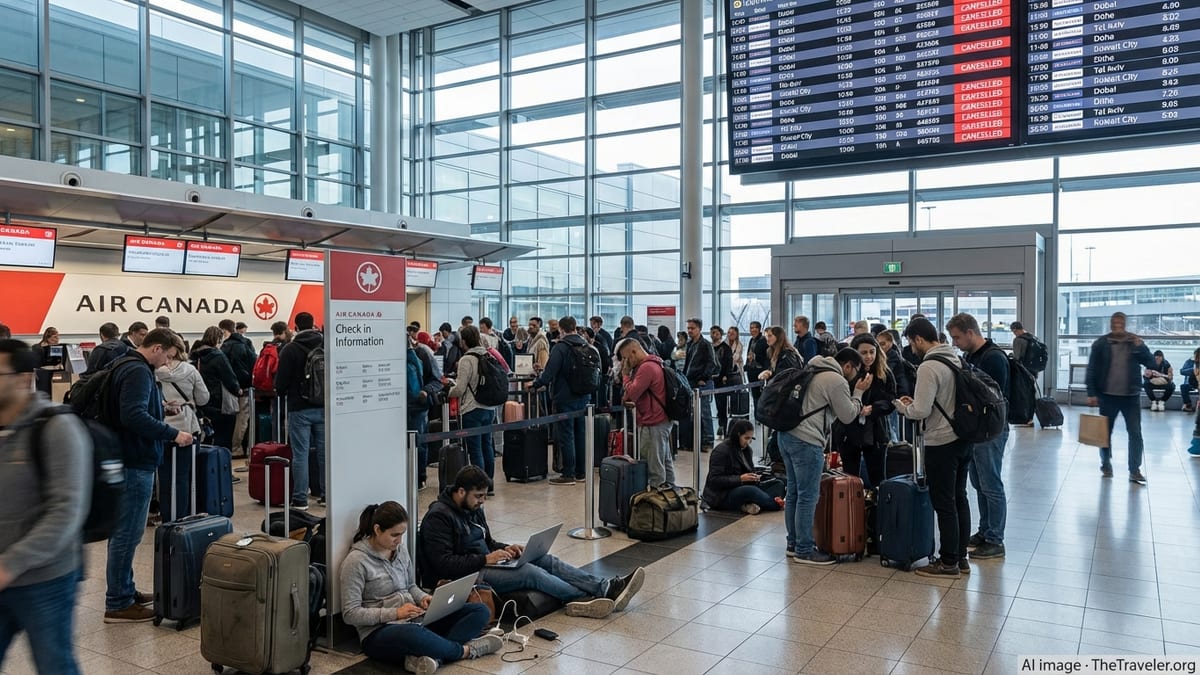
Temporary airspace closures and capacity cuts across parts of the Middle East since early 2026 have disrupted traditional East-West corridors that relied heavily on Gulf hubs for connections between Europe, Asia, Africa and Australasia. Publicly available aviation notices and travel-industry advisories describe wide regional restrictions affecting several Gulf states, leading to large-scale schedule changes, suspensions and rerouting for major carriers.
Industry analysis indicates that many long-haul flights that would typically overfly or connect through the Gulf are being reconfigured via alternative hubs. In some cases, airlines are stretching routings around contested airspace or shifting capacity to other regions altogether. These detours are increasing flying times and operating costs on certain trunk routes, but they are also encouraging airlines and travelers to consider different gateway cities and transit patterns.
Reports from traveler forums and trade bodies suggest that passengers headed to or from Africa are among those most affected. With popular one-stop options through Doha, Dubai or Abu Dhabi temporarily curtailed or subject to sudden change, more itineraries are now being built around African and European hubs, particularly for leisure travel. This structural shift is beginning to feed into how Southern African destinations, including Zimbabwe, market themselves and negotiate with carriers.
Airline network planners are expected to reassess which African routes remain viable under higher fuel costs and longer flight times. In this context, destinations that can demonstrate solid demand, a diversified source-market mix and improving infrastructure are better placed to retain or attract capacity, even while global networks remain in flux.
Southern Africa Emerges as a Strategic Alternative
Southern Africa has already been playing a larger role in global routing patterns since the Red Sea maritime crisis pushed many shipping and some aviation flows further south from late 2023 onward. Estimates compiled by multilateral institutions and aviation analysts show that rerouting around the southern tip of Africa has lengthened certain journeys but has simultaneously raised the region’s prominence as a transport corridor.
For passenger travel, this trend is now intersecting with the Middle East airspace limitations. Regional tourism and airline associations in Southern Africa have circulated advisories outlining potential route substitutions via African hubs such as Johannesburg, Addis Ababa and Nairobi. While some of these airports lie outside Southern Africa strictly defined, their connectivity into the region allows them to function as alternative gateways to destinations like Victoria Falls, Hwange and the Eastern Highlands in Zimbabwe.
Travel trade commentary indicates that some tour operators selling Southern and East African safaris are steering clients away from itineraries that depend on volatile Gulf connections and toward routings via African or European hubs. Although this can add cost or travel time, it reduces perceived risk of last-minute cancellations associated with airspace closures. Zimbabwe stands to benefit from this recalibration, particularly when packaged as part of multi-country itineraries linking it with South Africa, Botswana, Zambia or Mozambique.
At the same time, the region’s aviation landscape is continuing to evolve. African carriers that can offer reliable links from Europe and intra-African connections may find a window to expand frequencies or launch new routes to Zimbabwe’s key gateways, especially Victoria Falls and Harare, as long as demand remains resilient.
Zimbabwe’s Tourism Recovery Builds a Resilient Base
Zimbabwe enters this period of shifting global travel patterns from a position of gradual but tangible recovery. According to international tourism statistics compiled from United Nations tourism datasets and national economic reviews, inbound tourist arrivals reached roughly 1.6 million in 2024, marginally above 2023 but dramatically higher than the trough years of the pandemic.
Tourism receipts have moved in tandem. Sector data for 2024, cited in local economic and business coverage, point to receipts of about 1.2 billion US dollars and an uptick in tourism investment. The industry’s direct and indirect contribution to gross domestic product, measured by international organizations such as the World Travel and Tourism Council, has climbed back to mid-single digits as a share of the economy, highlighting tourism’s importance alongside mining and agriculture.
The recovery has not been linear. Some trade publications reported a revenue shortfall in early 2025 linked to domestic economic headwinds, high travel costs and investor caution. However, more recent figures for 2024 as a whole, combined with updates from the country’s tourism authority, suggest that international demand has been broadly resilient, supported by easing travel restrictions, new marketing campaigns and improved air access to destinations such as Victoria Falls.
Zimbabwe’s visitor base remains diversified across regional African markets, Europe, North America and, increasingly, Asia. This geographic spread may prove valuable as route networks adjust to Middle East airspace constraints, because the country is less dependent on a single intercontinental corridor or source market. As travelers search for alternative long-haul connections, Zimbabwe’s existing mix of regional and long-haul visitors provides a platform for further growth.
Air Connectivity and Route Opportunities for Zimbabwe
Air connectivity remains a central variable in how much Zimbabwe can leverage the current disruption. Over the past several years, the country has recorded incremental gains in direct and indirect access, with regional airlines adding services into Harare and Victoria Falls and using their own hubs to funnel long-haul passengers from Europe, the Middle East and Asia.
With several Gulf carriers currently constrained by airspace closures, Zimbabwe’s reliance on African and European hubs takes on new significance. Passengers who might have connected through Doha or Dubai are now more likely to route via Johannesburg, Addis Ababa, Nairobi, Kigali or European gateways such as Frankfurt, Amsterdam or London before continuing to Zimbabwe. This pattern reinforces the value of strong bilateral relationships with African carriers and consistent schedules on regional routes.
Sector analysts note that airline decisions in the coming months will depend on demonstrated demand, airport readiness and the broader risk profile in Southern Africa. Zimbabwe’s ongoing work to upgrade airports and border facilities, as reported in regional business media, and to streamline visa processes for selected markets, is therefore closely tied to the country’s ability to secure or expand air services while global networks remain unsettled.
There is also an opportunity for Zimbabwe to deepen its role in multi-destination packages. If airlines concentrate long-haul capacity into a few African hubs to compensate for lost Gulf connectivity, destinations that can be easily combined within a single itinerary are more likely to feature in tour operator programs. Zimbabwe’s proximity to major regional circuits, especially around the Zambezi and Okavango regions, positions it as a logical extension for travelers already flying into Southern Africa.
Balancing New Opportunities With Persistent Risks
Despite the positive outlook, Zimbabwe’s tourism sector still faces structural and cyclical challenges that could limit its ability to fully capitalize on shifting global routes. Industry reports frequently highlight high airfares, infrastructure gaps, inconsistent service standards and lingering negative perceptions as obstacles to faster growth. In a global environment where travel costs are already elevated by longer flight paths and higher fuel prices, additional domestic cost pressures may deter some potential visitors.
Moreover, the present boost in attention arising from Middle East airspace disruptions may prove temporary if regional tensions ease and Gulf hubs resume normal operations. Travel analysts caution that airlines are likely to restore efficient pre-crisis routings where commercially viable. To convert the current diversion of flows into durable gains, Zimbabwe will need to keep strengthening its product offering, sustainability practices and regulatory environment.
Global tourism demand also remains vulnerable to external shocks, including economic slowdowns in key source markets and currency volatility. However, projections from international tourism organizations and economic institutions still point to continued growth in African arrivals over the medium term, with nature-based and experiential travel among the fastest-expanding segments.
Within this context, Zimbabwe’s combination of iconic wildlife, increasingly recognized cultural tourism and improving air access gives it a credible claim to a stronger share of Southern Africa’s tourism pie. If the country can address cost and infrastructure constraints while global airlines reconfigure their networks, the current disruptions in Middle Eastern airspace may ultimately accelerate its emergence as a more prominent long-haul destination.