


More news on this day
As Spider-Man returns to screens and brand campaigns spotlight his hometown once again, New York’s real streets are offering fans fresh ways to experience the city like Peter Parker for a day.
Get the latest news straight to your inbox!
Queens Morning: Waking Up in Peter Parker’s Neighborhood
Any Spider-Man inspired day in New York starts in Queens, the borough long associated with Peter Parker’s modest childhood. Comic history and neighborhood reporting consistently place the Parker home in Forest Hills, a residential pocket of tree lined streets, prewar apartment buildings and single family houses that still feel far removed from Midtown’s glass towers. Walking these quiet streets in the early morning gives visitors a grounded sense of the character’s working class roots that contrasts sharply with the superheroic skyline he later swings across.
Forest Hills itself has leaned into that connection in subtle ways, with local coverage often highlighting the neighborhood’s appearance in comics and on screen while still functioning as an everyday community of commuters, families and small storefronts. For visitors, the appeal lies in this juxtaposition. Cafes and delis that serve regulars on their way to work become part of an imagined Peter Parker commute, as fans trace a route toward the subway that echoes countless scenes of the character juggling school, jobs and responsibility.
From Forest Hills, riders can head toward Long Island City, another Queens neighborhood that has become a recognizable backdrop thanks to more recent Spider-Man films and related productions. Industrial streets, new residential towers and views of the East River bridges combine into a cityscape that tech companies, filmmakers and tourism campaigns frequently use to stand in for a broader, modern New York. It is an ideal transition point in the itinerary from Peter’s home borough to his better known Manhattan adventures.
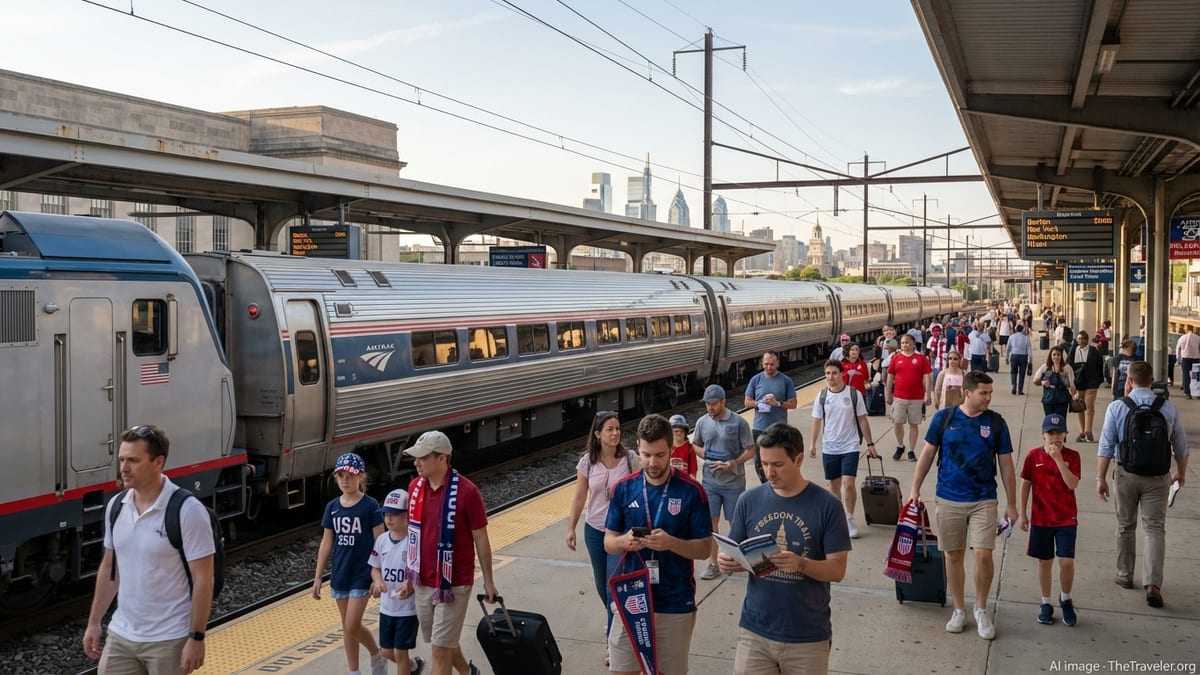
Arriving by train in the late morning, visitors effectively follow the same pattern described in comics and screen adaptations, where Spider-Man leaves his low rise neighborhood for the vertical drama of Manhattan. That shift, from brick walkups to canyons of glass and steel, is a core part of the character’s story and becomes a tangible element of this 24 hour route.
Midday in Midtown: Skyscrapers, Newsrooms and Superhero Sightlines
Midtown Manhattan has long been presented as Spider-Man’s main patrol zone, and a midday walk through the area makes clear why artists and directors continue to return to this grid of broad avenues and towering facades. From the blocks around Times Square to the cluster of offices near Bryant Park and Grand Central, visitors are surrounded by the kinds of elevations and intersections that define the character’s most famous swings between buildings in comics, films and games.
Media historians and fan guides frequently note that fictional outlets associated with Peter Parker’s photography work are inspired by real world news and publishing districts in Midtown. While exact buildings tend to vary by adaptation, the cluster of older skyscrapers with ornate crowns and rooftop water towers offers a ready made mental canvas for imagining iconic newsrooms and editorial offices. For travelers, simply looking up at these rooftops turns a standard city walk into a kind of live storyboard.
The district’s role as a film and television backdrop has only intensified in recent years as studios and streaming platforms continue to produce superhero content. Publicly available production listings and on street signage have shown Midtown intersections doubling for battle scenes, chase sequences and crowd shots, even when principal photography is staged elsewhere. That ongoing association helps keep Spider-Man present in the area’s visual identity, reinforcing the idea that this is his core territory.
For fans following a timed route, a practical way to spend the early afternoon is to move between viewpoints that highlight Midtown’s scale. Plazas near major office towers, elevated public terraces and building lobbies with open atriums all provide interior and exterior perspectives that showcase the vertical playground imagined in Spider-Man stories. The effect is less about pinpointing single filming locations and more about absorbing the broader geometry of the city that shapes his movement.
Afternoon in Hell’s Kitchen and Along the West Side
As the day moves on, the itinerary can shift from Midtown’s corporate core to the grittier textures of the West Side, particularly the blocks historically grouped under the name Hell’s Kitchen. Urban planning documents describe this district as occupying a substantial portion of the middle West Side, with a mix of tenement buildings, walkups, warehouses and performance venues that has long attracted storytellers interested in New York’s street level drama.
In the wider Marvel universe, Hell’s Kitchen is more closely associated with other vigilante characters, but Spider-Man has frequently crossed into the neighborhood in comics and screen interpretations. Public discussions among fans often frame this area as part of a shared superhero map of Manhattan, where overlapping storylines play out against the same fire escapes and side streets. Walking here in the late afternoon exposes visitors to a more intimate scale of city life that contrasts with Midtown’s broad avenues.
The neighborhood’s active filming presence reinforces its connection to on screen New York. City records and community board correspondence have documented recurring location shoots in and around Hell’s Kitchen, as production companies seek streets that still read as generically urban without the overwhelming commercial signage of Times Square. For Spider-Man enthusiasts, these blocks offer a convincing backdrop for imagining quieter patrols, stakeouts and conversations that seldom make it into major set pieces.
Continuing south or north along the West Side waterfront, travelers can thread together additional vantage points that echo the sweeping aerial shots featured in big budget superhero films. Parks built along former industrial piers and sections of elevated greenway trace the Hudson River and provide uninterrupted views of the skyline. Watching the light shift across the towers as afternoon fades into evening helps anchor the day’s more fanciful associations in a tangible sense of place.
Evening Energy: Neon, Screens and Superhero Spectacle
As night falls, the route naturally loops back toward the brightest sections of Midtown, where digital billboards and illuminated facades create an atmosphere that closely resembles the futuristic glow often used in Spider-Man marketing campaigns. Times Square in particular continues to serve as a favored site for film related promotions, with studios and brand partners frequently debuting trailers, character art and themed advertisements on its towering screens.
Recent campaigns tied to the broader Spider-Man franchise and related titles have drawn on this environment to stage immersive fan experiences, blending large scale projections, pop up installations and scavenger hunt style activations around the city. Reports indicate that electronics companies and film studios have used New York’s streets as a living backdrop for cinematic spots, presenting Spider-Man moving through a stylized version of the city while highlighting new devices and cross media storylines.
While such activations are often time limited, their imagery lingers in the public imagination and continues to influence how visitors and residents picture Spider-Man’s nocturnal New York. Standing amid the LED glow, it is easy to map those visuals onto the real traffic, crowds and steam rising from subway grates. For travelers spending only one evening in the city, this layered mix of real life movement and borrowed cinematic framing is central to the appeal.
Beyond the flagship plazas, nearby side streets offer a slightly quieter vantage point from which to observe the spectacle. Stepping a block away from the largest billboards while still within view of their shifting graphics lets visitors experience the contrast between intimate city details and the oversized imagery that defines modern superhero promotion. It is a fitting middle ground for a character whose stories routinely balance personal stakes with global scale threats.
Late Night Reflections: From Page and Screen Back to the Street
Ending the 24 hour route where it began, with a late night ride back to Queens, reinforces the cyclical rhythm that underpins many Spider-Man narratives. Public transit routes connecting Midtown to neighborhoods like Forest Hills, Astoria and Sunnyside mirror the daily back and forth that Peter Parker undertakes in various versions of the story. For visitors, that return journey offers time to compare the fictional city seen in comics, films and games with the very real geography they have just traversed.
Recent analyses of Spider-Man media, including official character summaries and fan scholarship, emphasize how central New York’s specific neighborhoods are to the hero’s identity. The tension between a humble home life in Queens and extraordinary responsibilities in Manhattan defines not only the character but also the emotional map of the city itself. Riding past darkened storefronts and residential blocks, travelers can sense how those themes emerged from real patterns of commuting, housing and urban change.
Back on the quieter streets of Queens, the city’s skyline recedes to a glow on the horizon, and the day’s collection of images resolves into a series of grounded details: worn stoops, corner bodegas, chain link fences and distant sirens. These are the textures that first shaped Peter Parker in the imagination of creators and later generations of filmmakers. Experiencing them directly, even briefly, offers a different kind of fan encounter than a studio backlot or virtual city map.
For tourism operators and local businesses, this kind of unofficial Spider-Man inspired route represents a broader trend in pop culture driven travel, where visitors seek to stitch together their own narratives from familiar references rather than follow a single scripted tour. By pairing Forest Hills mornings with Midtown afternoons, West Side walks and neon soaked nights, New York continues to prove why Spider-Man has rarely left its skyline for long.