


Buying data for an international trip has never been easier, and Airhub is one of a growing number of apps promising cheap, flexible eSIMs in more than 190 countries. But with mixed reviews and strong competition from names like Airalo, Holafly, and Nomad, many travelers are asking a simple question: is Airhub really worth using for travel data in 2026?
Get the latest updates straight to your inbox!
What Airhub Is and How It Works in 2026
Airhub is a travel eSIM provider that sells prepaid mobile data, and in many cases calls and SMS, that you can activate digitally on compatible phones. Instead of buying a plastic SIM card when you land in Rome or Bangkok, you install an eSIM profile through the Airhub app or by scanning a QR code at home before you fly. The company advertises coverage in more than 190 countries and territories, with a mix of local, regional, and global plans.
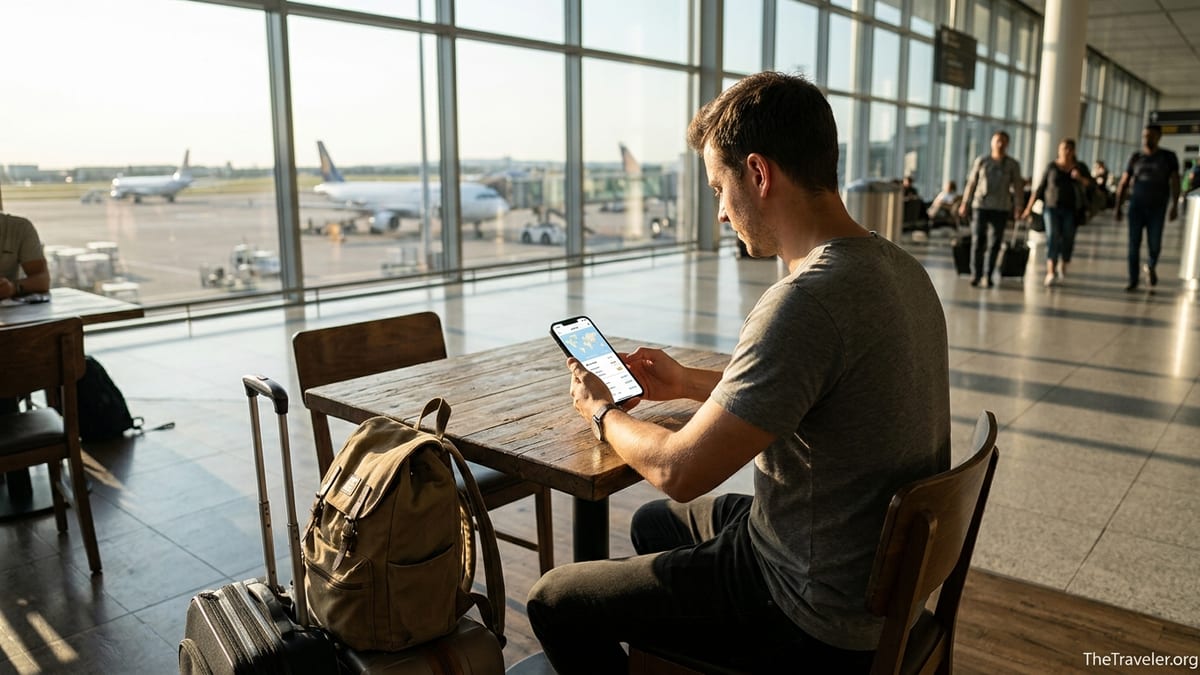
In practice, using Airhub is straightforward. A typical trip flow looks like this: a traveler from Chicago heading to Italy in August opens the Airhub app, chooses Italy, scrolls through a list of plans, pays by card or a digital wallet, and receives an eSIM profile to install under the phone’s cellular settings. Once they land at Rome Fiumicino and switch on the eSIM, data should kick in within a few minutes, letting them order a taxi or pull up a hotel confirmation without hunting for airport Wi‑Fi.
Unlike many rivals that focus on data only, Airhub emphasizes “all‑in‑one” bundles. On some destinations you can buy plans that include local minutes and SMS, and sometimes even a small allowance of international calls. For example, in several Gulf countries and parts of Asia, Airhub promotes packages that combine data with domestic voice minutes, which can be useful if you expect to call local restaurants, guesthouses, or taxi drivers who do not use WhatsApp.
Airhub’s app is available on both the Apple App Store and Google Play and, according to recent app store listings, holds ratings in the low‑to‑mid four‑star range with several thousand reviews. Travelers frequently mention having many plan options per country and appreciate being able to top up in the same interface instead of buying a new eSIM each time.
Coverage and Real‑World Pricing Examples
Airhub markets coverage in more than 190 countries, which in real terms means most destinations a leisure traveler is likely to visit. On its public plan list you will see common favorites like France, Italy, Spain, Japan, Thailand, and Mexico, along with less typical stops such as Kenya, Kazakhstan, and Jordan. For a multi‑stop trip through Europe or Southeast Asia, you can usually choose between country‑specific plans and broader regional bundles.
Pricing varies by destination and plan size, but a few recent snapshots give a sense of where Airhub sits in the market. Around late June 2026, sample entry‑level prices on Airhub’s website included roughly 1.89 US dollars for the cheapest France option, around 2.90 dollars for Spain, about 2.99 dollars for the United States, and just under 3 dollars for Australia. These low “from” prices typically buy a small amount of data for a short validity window, such as a few hundred megabytes or 1 GB for 3 to 5 days, intended for light messaging and maps rather than full‑blown streaming.
For heavier use, Airhub also offers larger packages. A traveler planning a two‑week road trip in Japan might see offers ranging from a few gigabytes for under 10 dollars to double‑digit gigabyte plans for several tens of dollars. Likewise, a backpacker heading around Western Europe can often find regional bundles that cover popular Schengen countries under a single eSIM, simplifying travel through Spain, France, Italy, and Germany without swapping profiles.
Compared to buying roaming from a US carrier, these prices are usually far cheaper. It is common for major US operators to charge 10 dollars per day for international roaming passes. Over a 10‑day trip, that can reach 100 dollars for a fairly modest data allowance. By contrast, a regional Airhub eSIM providing multiple gigabytes for 15 to 30 days can come in well below that figure, especially in parts of Europe and Asia. The real competition is not carriers but other eSIM apps, which are now packed into the same price band.
Strengths: Where Airhub Works Well for Travelers
For many itineraries, Airhub’s biggest advantage is flexibility. Some rivals limit each country to just a handful of plans, while Airhub often lists 10 or more options, combining different data caps and validity periods. This can be especially helpful if you know your usage pattern. A remote worker on a three‑week stay in Lisbon might choose a high‑data, 30‑day plan, while a city‑break visitor from Toronto flying to Paris for a four‑day weekend can select a smaller, cheaper package that better matches their needs.
Another strength is the inclusion of voice minutes and SMS in many plans. Picture a traveler flying from Dubai to Delhi who needs to call a local driver on arrival, or a family visiting rural Japan where small guesthouses prefer phone calls over messaging apps. An Airhub bundle that includes domestic calls removes the need to juggle a second local SIM or rely entirely on Wi‑Fi calling. This is a differentiator from data‑only providers like Airalo, which generally assume all calls will go through apps.
Recent independent round‑ups of the best eSIMs for international travel have started listing Airhub alongside bigger names, often highlighting the breadth of its catalog. Technology outlets evaluating the 2026 eSIM landscape note that Airhub covers more than 190 countries and, crucially, offers multiple plan variants per destination that include data, calls, and SMS. For US‑based travelers, this kind of recognition suggests that Airhub is now considered a mainstream player rather than a fringe startup.
Travelers who have had positive experiences often point to ease of use. A typical review might come from someone who installed an Airhub eSIM on an iPhone before flying from New York to London, activated it on landing, and found that speeds were adequate for ride‑hailing, maps, email, and even video calls. Others mention responsive in‑app support that solved activation questions in a matter of minutes, especially for those who are not comfortable diving into cellular settings on their own.
Weaknesses and Red Flags You Should Know About
Despite these strengths, Airhub is not without serious criticism, and any honest review needs to acknowledge it. Over the past few years, multiple threads on traveler forums and Reddit have described frustrating experiences with Airhub eSIMs that failed to activate, stopped working midway through a trip, or were difficult to get refunded. Users have complained about waiting days for email replies, struggling with in‑app chat, or being denied refunds despite the company’s “money‑back guarantee” marketing language.
One recurring theme in negative reports is activation trouble during time‑sensitive moments. A traveler might arrive in Vancouver, attempt to install a global Airhub eSIM purchased in advance, and discover that the QR code fails repeatedly. With no working data connection, they find themselves stuck at the airport relying on patchy public Wi‑Fi while swapping screenshots with support. In some cases, travelers have given up after hours of troubleshooting and bought a second eSIM from a competitor or a physical SIM from a kiosk, effectively paying twice for the same trip.
Another pattern is inconsistent network performance. Even when activation goes smoothly, some users report that speeds were dramatically lower than expected, or that coverage dropped in areas where a local SIM or rival eSIM had previously worked well. For instance, someone traveling by train across Germany or France might find that web pages stall or video calls drop, while a companion using a different eSIM provider experiences fewer issues on the same route.
Independent review platforms reflect this mixed picture. On major consumer review sites, Airhub sits in the “average” range, with a middle‑of‑the‑road aggregate score built from both enthusiastic five‑star ratings and furious one‑star warnings. Recent posts in telecom‑savvy communities often urge caution, noting that while Airhub’s prices are attractive, the volume of complaints about reliability and refunds is higher than for some competitors. None of this proves that Airhub is a scam, but it does signal that quality control and customer service consistency may lag behind the best in the field.
Airhub vs Airalo, Holafly, and Nomad
The fairest way to decide if Airhub is worth using is to compare it to its main rivals for specific trip scenarios. Airalo, Holafly, and Nomad are three of the most frequently mentioned alternatives in 2026. Each has its own strengths, and depending on your route and data needs, any one of them might be a better fit than Airhub.
Airalo is the largest and best‑known of the four, often recommended by digital nomads and long‑term travelers. It offers local, regional, and global eSIMs with competitive pricing and a reputation for solid reliability. Recent independent testing by major technology outlets notes that Airalo now serves tens of millions of customers across more than 200 countries and that for many people “it just works” with minimal hassle. Unlimited data plans have also been rolled out for popular destinations in Europe and Asia, although these typically come with fair‑use policies and potential throttling.
Holafly takes a different approach, leaning heavily on unlimited data plans sold on a per‑day basis. A two‑week unlimited eSIM for Europe or Japan might cost significantly more than a capped data plan from Airhub or Airalo, but heavy users who want to stream video, upload large photo sets, or tether a laptop all day sometimes prefer Holafly’s simplicity. The trade‑off is that speeds may be throttled after a certain threshold, and prices can add up quickly for longer trips. Holafly does not always include local voice minutes, which is an area where Airhub can have an edge.
Nomad occupies a middle ground, focusing on clear pricing and a clean app experience. Reviews published in 2026 highlight Nomad’s strong coverage in Western Europe, North America, and much of Asia, along with per‑gigabyte rates that are highly competitive, sometimes around two‑thirds of a dollar per gigabyte on certain European plans. Support is typically handled through a ticketing system and is regarded as reasonably responsive. Compared with Airhub, Nomad tends to draw fewer complaints about activation failures, though its catalog of all‑in‑one plans with voice minutes is narrower.
Against this backdrop, Airhub’s positioning looks like this: it offers more plan variants per country than some rivals and includes voice and SMS in many products, which is a real selling point. Its coverage footprint is wide, and prices are often in the same ballpark as Airalo and Nomad, and noticeably lower than Holafly’s unlimited packages. However, the reliability and support concerns documented by a segment of users mean that if your trip is mission‑critical, the safer option may still be a provider with a stronger overall reputation.
When Airhub Makes Sense and When It Does Not
All of this leads to a more nuanced answer than a simple yes or no. Airhub can make sense for specific travelers and trips, particularly when you value flexible plan options and bundled voice minutes, and when you are comfortable troubleshooting issues if they arise. It is less attractive if your highest priority is rock‑solid reliability backed by consistently strong customer support.
Consider a long weekend city break in London or Tokyo. You might only need 3 to 5 GB of data for four days, mainly for maps, restaurant searches, and messaging. If Airhub lists a small, cheap plan for those cities that undercuts rivals by a few dollars, and you are tech‑savvy enough to install an eSIM at home and double‑check settings, the risk may feel acceptable. If activation fails, you can still fall back on airport Wi‑Fi and pick up a physical SIM or a second eSIM from a different provider.
Now imagine a more complex scenario: a solo traveler landing in Nairobi late at night with no hotel transfer arranged, or a family with young children arriving in Bangkok after a long‑haul flight. In these cases, connectivity on arrival is mission‑critical. You need data to contact a ride‑hail driver, pull up booking details, and check into your accommodation with minimal stress. If you have read enough accounts of unreliable activation or slow support from Airhub, you may decide that paying a bit more for a provider with a stronger reliability record is the wiser move.
Another situation where Airhub may not be ideal is for remote work that depends on stable throughput, such as daily video conferencing from a coworking space in Lisbon or Chiang Mai. While many travelers do use Airhub successfully for these use cases, the risk of encountering throttled speeds or patchy performance could be costly if a critical client call fails. For that kind of trip, it makes sense either to choose a provider with a stronger reliability reputation or to pair an Airhub eSIM with a backup from another company.
How to Use Airhub Safely and Minimize Risk
If you decide that Airhub’s pricing and feature set are worth trying, a few precautions can significantly reduce the chance of headaches. The first is to install and test the eSIM profile before you leave home, while you still have stable Wi‑Fi and time to contact support during business hours. On most recent iPhones and high‑end Android devices, you can add the Airhub eSIM under cellular settings and verify that it is ready to activate on arrival, even if it will not connect to the foreign network until you reach your destination.
Next, keep a backup connectivity plan. This can be as simple as downloading a second eSIM from another provider, such as a 1 GB regional plan from Airalo or Nomad that you only activate if Airhub fails, or planning to buy a physical SIM from an airport kiosk as soon as you land. For example, a traveler flying from Los Angeles to Paris might install both an Airhub eSIM and a small Airalo backup, then decide which to activate once they see which one connects more reliably on arrival.
It is also sensible to take screenshots of your plan details, including the order confirmation, terms of the money‑back guarantee, and any troubleshooting instructions. If something goes wrong, having this information handy will speed up conversations with support and strengthen your case for a refund. Some travelers who ultimately obtained refunds from Airhub report that being able to document the issue and show that they followed the recommended steps made the process smoother, even if it still took several days.
Finally, adjust your expectations and usage behavior. Even on good days, travel eSIMs often do not match the speed or latency of a local postpaid SIM. Avoid relying on Airhub alone for tasks like large software updates, 4K streaming, or cloud backups. Instead, save those for hotel Wi‑Fi and use your travel data mainly for navigation, messaging, browsing, and social media. This approach not only reduces the risk of hitting any fair‑use limits but also gives you more headroom in case network quality is weaker than advertised in a particular area.
The Takeaway
So, is Airhub worth using for travel data in 2026? The answer depends on your risk tolerance, your technical comfort level, and how critical constant connectivity is to your trip. Airhub has grown into a visible player in the eSIM market, with coverage across more than 190 countries, abundant plan options per destination, and the useful ability to bundle local voice minutes and SMS with data. Its prices are broadly competitive with other eSIM providers and often significantly cheaper than roaming with a traditional carrier.
At the same time, the volume and tone of negative user reports, particularly around activation failures, poor network performance in some regions, and slow or unhelpful customer service, make it hard to recommend Airhub as a universal default. For low‑stakes trips to well‑connected destinations, or for travelers who are happy to keep a backup in their pocket, Airhub can be a reasonable, money‑saving choice. For once‑in‑a‑lifetime journeys or critical work travel, more established competitors like Airalo, Nomad, or even a local SIM purchased on arrival may offer a better balance of price and peace of mind.
In short, Airhub is not a scam and not a star performer. It is a middle‑tier option with real strengths and equally real weaknesses. If you are drawn to its flexible plans and call‑inclusive bundles, approach it with eyes open, have a fallback ready, and treat it as one tool in a broader connectivity toolkit rather than your only line of communication abroad.
FAQ
Q1. Is Airhub safe and legitimate to use for travel eSIMs?
Airhub is a real company used by many travelers, and it appears in mainstream 2026 eSIM round‑ups. However, mixed customer reviews and multiple online complaints about activation problems and refunds mean you should approach it cautiously, especially for high‑stakes trips.
Q2. How does Airhub’s pricing compare to Airalo, Holafly, and Nomad?
Airhub’s base prices are usually in the same range as Airalo and Nomad and often cheaper than Holafly’s unlimited plans. For example, sample entry prices around 2 to 3 US dollars for countries like France, Spain, and the United States are broadly competitive, though exact value depends on how much data you need and the plan’s validity.
Q3. Does Airhub include calls and SMS or just data?
Unlike many data‑only rivals, Airhub offers a significant number of plans that bundle local call minutes and SMS alongside data. This can be useful if you need to call hotels, restaurants, or drivers who do not use messaging apps, particularly in parts of Asia, the Middle East, and Eastern Europe.
Q4. What are the main problems travelers report with Airhub?
The most common complaints involve eSIMs that fail to activate or stop working during a trip, slow or unresponsive customer support, and difficulty obtaining refunds despite money‑back marketing. Some users also report slower speeds or weaker coverage than expected compared with local SIMs or competing eSIM providers.
Q5. Which trips are best suited to using Airhub?
Airhub is better suited to low‑risk trips where you have time and backup options. Short city breaks to destinations with strong airport connectivity, such as London, Paris, or Tokyo, are typical examples. In these cases you can try Airhub to save money, knowing you can fall back on a physical SIM or another eSIM if something goes wrong.
Q6. Should I rely on Airhub for remote work or essential business travel?
If your income or job performance depends on reliable connectivity, relying solely on Airhub is risky given its uneven reputation. Many remote workers instead use providers with stronger reliability records, such as Airalo or Nomad, sometimes combined with a local SIM, and treat Airhub as an optional backup rather than a primary connection.
Q7. How can I reduce the risk of problems when using Airhub?
Install and test your Airhub eSIM before departure, keep screenshots of your plan and terms, and have a backup plan like a second eSIM from another provider or a physical SIM on arrival. Also avoid scheduling mission‑critical tasks, such as major video calls, for the first few hours you rely on a new eSIM.
Q8. Is Airhub a good choice for multi‑country trips in Europe or Asia?
Airhub can work for regional trips because it offers multi‑country plans and many country‑specific options. However, competitors like Airalo and Nomad also excel in Europe and Asia and often attract fewer complaints. For a rail trip across Western Europe or a backpacking route around Southeast Asia, it is wise to compare several providers and consider keeping a backup.
Q9. Will Airhub work on my phone?
Airhub requires an eSIM‑compatible unlocked phone. Most recent iPhones and many high‑end Android devices from brands like Samsung and Google support eSIM, while some budget phones and older models do not. You can check your device settings under mobile or cellular options to confirm eSIM support before purchasing a plan.
Q10. Is Airhub worth it overall for 2026 travel?
For travelers who prioritize low cost and flexible plan options, are comfortable with basic troubleshooting, and keep a backup on hand, Airhub can be worth trying. For once‑in‑a‑lifetime trips, complex itineraries, or essential work travel where failure is not an option, a more consistently well‑reviewed provider or a local SIM is likely the better choice.