


More news on this day
Airservices Australia has begun offering triple pay to some air traffic controllers at Sydney Kingsford Smith Airport in an effort to shore up staffing and reduce mounting flight delays that have frustrated passengers through the Australian winter.
Get the latest news straight to your inbox!
Emergency incentives aimed at critical staffing gaps
Publicly available information indicates that Airservices has introduced temporary incentive payments worth up to three times standard rates for controllers who agree to cover short-notice shifts at Sydney. The measures focus on time periods where staffing gaps have been most acute and when traffic has been heaviest, with the goal of keeping all key positions in the control tower and approach control fully staffed.
The agency has faced sustained scrutiny over its ability to maintain adequate air traffic control coverage at Australia’s busiest airport. Reports over recent months describe a pattern where unfilled shifts or short-notice absences have triggered flow restrictions, forcing airlines to slow arrivals and departures even in otherwise suitable weather conditions.
In an August 10 statement, Airservices chief executive Rob Sharp acknowledged the impact of delays linked to staffing at Sydney and outlined efforts to build a larger pool of standby controllers. Publicly available information from the organisation points to increased recruitment, additional tower simulator capacity and refined rostering practices, with the new triple-pay incentives forming part of this broader program to stabilise operations.
While the enhanced payments are described as temporary, industry coverage notes that they underline how tight the labour market has become in air traffic control. As passenger numbers have climbed back toward and, in some markets, beyond pre-pandemic levels, highly specialised controller roles have been difficult to fill and retain, leaving providers such as Airservices searching for short-term fixes.
Sydney’s role as a national choke point
Sydney Kingsford Smith Airport is the primary international gateway to Australia and a critical domestic hub, handling tens of millions of passengers each year. It operates under a legislated hourly movement cap and a night curfew, which means that when traffic banks up during the day there is limited scope to recover lost time in off-peak hours.
When air traffic control staffing falls short, Airservices manages safety by reducing the rate at which aircraft can land and depart. That can quickly produce a queue of arriving flights circling in holding patterns and departing services waiting on the tarmac for clearance. The knock-on effects reach well beyond Sydney, affecting connections to Melbourne, Brisbane, Adelaide, Canberra and regional centres, as well as long-haul routes to Asia, North America and the Middle East.
Recent Australian government assessments of airline performance have identified air traffic management constraints as one contributor to delays, alongside airline rostering, airport ground handling and adverse weather. Sydney’s constrained runway and airspace configuration means that even modest reductions in flow rates can have outsized impacts during school holidays and long weekends, when flights operate near full capacity.
In this context, the triple-pay offer can be seen as an attempt to reduce the number of days when controller shortages trigger capacity cuts. By making it financially more attractive for qualified controllers to pick up extra shifts or remain available on standby, Airservices aims to keep the airport operating closer to its planned schedule and limit the cascade of missed connections for travellers around the country.
Union agreements and pressure on long-term costs
Airservices’ move comes on top of an enterprise agreement for air traffic control and supporting staff that already lifted base pay and introduced a range of allowances designed to bolster operational resilience. That agreement, endorsed several years ago following negotiations with the Civil Air union and other representatives, provided pay increases over a three-year period, a sign-on bonus and a multi-location allowance intended to support more flexible staffing across the network.
Since then, the organisation has continued to recruit and train new controllers, but public documents and industry commentary suggest that demand growth and retirements have kept the system under pressure. The need to rely on overtime and now on ad hoc, triple-rate payments in Sydney highlights the challenge of matching highly skilled labour supply with the peaks and troughs of air traffic demand.
At the same time, Airservices is engaged in a formal process with the Australian Competition and Consumer Commission regarding proposed increases to its regulated charges for enroute navigation, terminal navigation and aviation rescue and firefighting services. Documentation published by the regulator shows that the organisation has put forward average annual price rises over the period from the 2026–27 to the 2030–31 financial years to support frontline service delivery and major investment programs.
Stakeholder submissions to that process are examining whether the proposed charges, which would lift the weighted average price for core services over the next decade, are justified by the need to upgrade systems, meet safety obligations and address workforce issues. The introduction of triple-pay incentives for Sydney controllers adds a fresh dimension to that debate, as airlines and passenger advocates weigh the trade-off between higher navigation charges and the benefits of a more reliable schedule.
What travellers might notice at the terminal
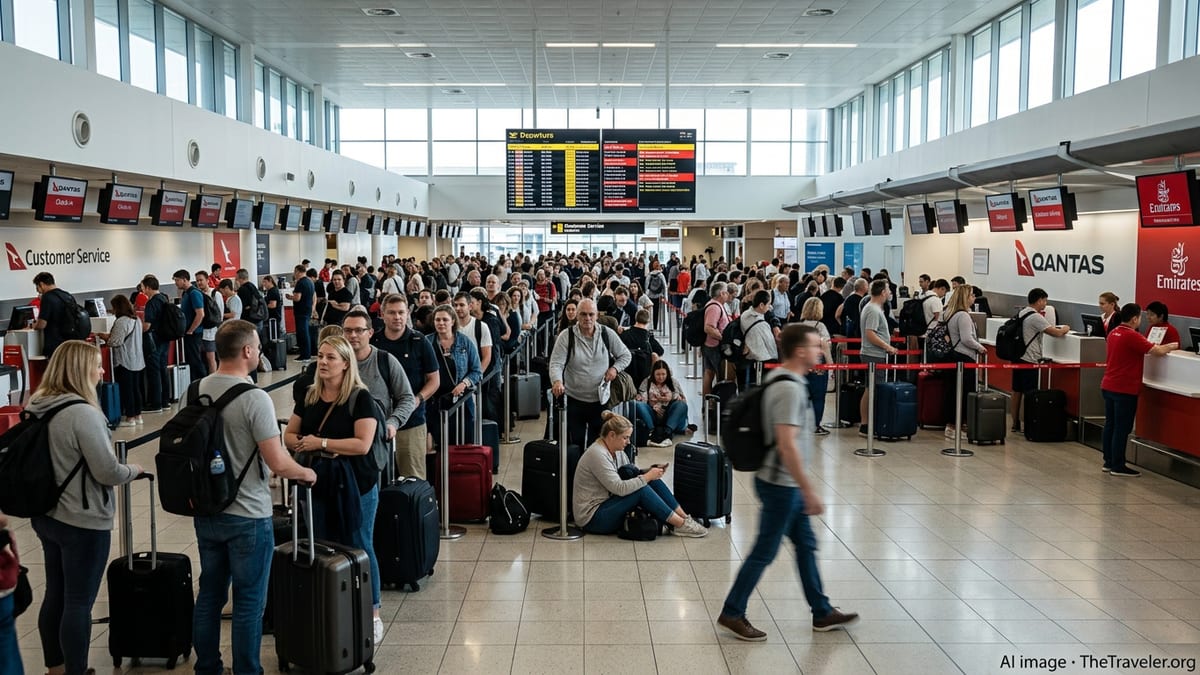
For individual passengers, the most visible effect of the new pay incentives will be whether they translate into fewer and shorter delays at Sydney during busy periods. If Airservices can reliably staff all required positions across the tower and approach services on days of strong demand, airlines are less likely to face traffic-management restrictions that force them to delay or cancel flights.
Travel industry analysts point out that the timing of the measures is particularly significant heading into peak holiday travel. When flights are heavily booked, even relatively minor disruptions can leave limited options for rebooking, with travellers sometimes waiting until the next day for an available seat. Additional controller capacity during those periods can make a noticeable difference to on-time performance and the passenger experience.
However, the effectiveness of triple pay as a tool to curb delays will depend on how long Airservices maintains the incentives and whether they succeed in attracting enough extra staff to fully cover high-demand shifts. If underlying workforce shortages persist, there is a risk that the measures could provide only partial or temporary relief, leaving airlines and travellers still facing significant disruption when multiple factors such as weather and congestion coincide.
For now, publicly available data and reports indicate that Sydney’s performance remains under close watch from both regulators and the travelling public. Passengers transiting through the airport in coming months will be looking for tangible signs that the combination of new pay incentives, recruitment and training initiatives, and proposed investment programs is starting to translate into more predictable departures and arrivals.
A test case for aviation reliability strategies
The decision to offer triple pay in Sydney positions Airservices at the centre of a broader conversation about how aviation systems should respond to post-pandemic demand and workforce challenges. Around the world, airports, airlines and navigation service providers have experimented with different approaches, from aggressive recruitment campaigns to new scheduling rules and technology upgrades, to rebuild reliability.
In Australia, the response at Sydney could serve as a test case for whether targeted financial incentives can provide a rapid boost to performance in a tightly constrained operating environment. If the measures succeed in stabilising schedules, other parts of the network experiencing similar staffing pressures may look to adapt the model, potentially with different pay multipliers or conditions.
Conversely, if delays persist despite higher pay offers, attention is likely to shift further toward structural solutions such as expanding training pipelines, accelerating automation in certain air traffic functions and reassessing demand patterns at peak times. That discussion is already occurring in parallel through the federal government’s aviation policy work, which emphasises more resilient service delivery across the system.
For now, travellers planning journeys through Sydney are being advised by airlines and booking platforms to continue allowing extra time for connections and to monitor flight information closely. The new triple-pay incentives represent one of the most visible attempts yet to shield passengers from the operational strain in Australia’s busiest air corridor, and their impact will be closely watched by the industry in the months ahead.