


More news on this day
A long-awaited runway overhaul at Alderney Airport in the Channel Islands has been pushed back to 2028, after design changes and a revised construction schedule extended an already protracted timeline for the critical infrastructure project.
Get the latest news straight to your inbox!
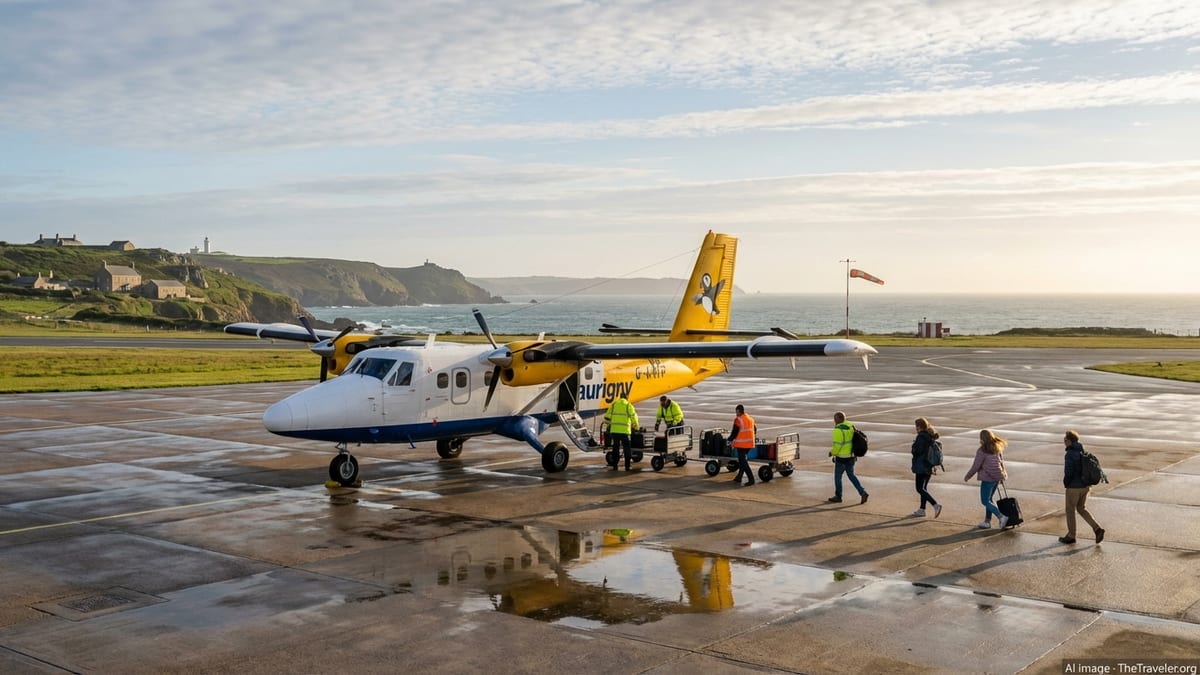
Revised plans shift construction to 2028
Recent statements from Guernsey’s States Trading Supervisory Board (STSB) and coverage in local media indicate that the Alderney runway reconstruction, previously targeted to begin in 2027, is now expected to start in spring 2028. The updated timetable follows a decision to alter the scope of works, removing an earlier requirement to widen the paved runway and prompting a new design phase that will take several months to complete.
Reports describe how the design reset has effectively pushed back all key milestones set out in a January 2026 policy letter. According to published coverage, the additional design and procurement work means that detailed plans must be drawn up again, followed by the appointment of a contractor before main construction can begin. As a result, physical works on the main runway are now anticipated in 2028 rather than 2027, extending uncertainty for an airport that is central to Alderney’s connectivity with Guernsey and the wider region.
Media summaries of the project note that the change in schedule is not a cancellation but a rescheduling of the upgrade. The project remains funded within the broader framework of Guernsey’s capital program, but the delay introduces another year in which the island will rely on an ageing runway surface that has already required substantial maintenance.
Design rethink narrows project scope but adds time
Coverage from Channel Islands news outlets explains that the latest delay is closely tied to a revised engineering brief. The current scheme focuses on resurfacing and rehabilitating the existing paved runway, without the widening previously proposed. This change is reported to reduce construction complexity and overall cost, but it also requires designers to produce new drawings, specifications and safety assessments tailored to a narrower scope.
Publicly available information shows that the authorities intend to retain Alderney’s grass runways where possible, even though they are not part of the main reconstruction contract. Project documentation referenced in recent reports indicates that plans have been adjusted so that the grass strips can be preserved for future use, provided this can be done without adding significant costs to the principal runway works.
Analysts following the project suggest that the design rethink reflects a balance between operational needs, regulatory compliance and budgetary constraints. By concentrating on resurfacing and structural renewal of the existing runway, the scheme aims to extend the airfield’s life while avoiding the higher costs associated with more extensive expansion. However, this recalibration appears to have come at the price of an extra year in the delivery timetable.
Operational continuity and safety in the interim
With construction now pushed into 2028, attention has turned to how Alderney Airport will remain operational and safe in the intervening period. Reports from regional broadcasters indicate that Guernsey authorities have committed to continued patching and maintenance of the existing tarmac to sustain safe operations until full resurfacing can occur. This interim programme is expected to focus on addressing surface defects, drainage issues and other wear associated with the island’s maritime climate.
Industry observers note that such holding strategies are common at airports facing major capital works, particularly where a full closure would severely affect residents and businesses. In Alderney’s case, scheduled air services provide vital links for medical travel, freight and tourism, so maintaining runway usability is regarded as essential even as long term improvements are postponed.
At the same time, the extended period before reconstruction begins introduces ongoing risk that unforeseen maintenance problems could arise, potentially leading to temporary restrictions or higher upkeep costs. Aviation planning documents for other airports show that runway rehabilitation projects often require careful coordination of interim works to prevent escalating repair needs while long term projects are still in the design pipeline.
Economic and connectivity impacts for the island
The runway delay carries wider implications for Alderney’s economy and connectivity. The airport is a lifeline for the island’s roughly 2,000 residents, supporting tourism, small businesses and critical services that depend on reliable air links to Guernsey and beyond. Local commentary quoted in recent articles suggests concern that prolonged uncertainty over the project timeline may unsettle airlines and investors considering future services or tourism ventures.
For the travel sector, the runway upgrade has been seen as an opportunity to improve reliability and potentially support more resilient scheduling, especially during poor weather. With the main construction phase now not expected until 2028, any operational efficiencies or capacity benefits associated with a newly rehabilitated runway will arrive later than many stakeholders had hoped.
Travel industry analysis of similar regional airport projects indicates that firm, transparent timetables can help mitigate some of these concerns. Once the revised design is complete and a contractor is appointed, clearer milestones on closure periods, diversion plans and completion dates will be important for airlines and tour operators planning schedules and marketing for the latter half of the decade.
Part of a broader pattern of airport project slippages
The Alderney delay comes against a backdrop of runway and airfield projects around the world that have faced extended timelines. Recent airport construction reports and international coverage highlight several examples where runway schemes or associated infrastructure have shifted into the late 2020s, often due to complex financing, design changes or contractor issues.
In the Caribbean, for example, published reports on a runway extension at Anguilla’s Clayton J. Lloyd International Airport describe how a delay in signing the construction contract has pushed expected completion from the end of 2028 into early 2029. In Africa, public information on Rwanda’s Bugesera International Airport notes that the opening of the new airport, including its primary runway, has also been rescheduled to 2028 after earlier target dates proved unrealistic.
These examples illustrate the challenges of delivering aviation infrastructure projects that must satisfy stringent safety standards, environmental requirements and funding conditions. In that context, Alderney’s revised 2028 construction window aligns with a global pattern in which even relatively small airports encounter scheduling pressures once projects move from initial policy commitments to detailed design and procurement.
For travelers and industry stakeholders watching Alderney’s situation, the key question now is whether the new timeline can be held. As design work advances and contracts are awarded, the runway project’s progress will remain a bellwether for how small island airports manage essential upgrades in a period of heightened financial and operational scrutiny.
Channel 103: Alderney runway resurfacing delay
The Quarry: Alderney Airport runway reconstruction delayed until 2028