


More news on this day
American Airlines is warning customers of significant disruption across parts of its international network, as new travel alerts for two major hubs coincide with severe weather, tight airspace capacity and a wave of cancellations and schedule changes affecting hundreds of overseas flights.
Get the latest news straight to your inbox!
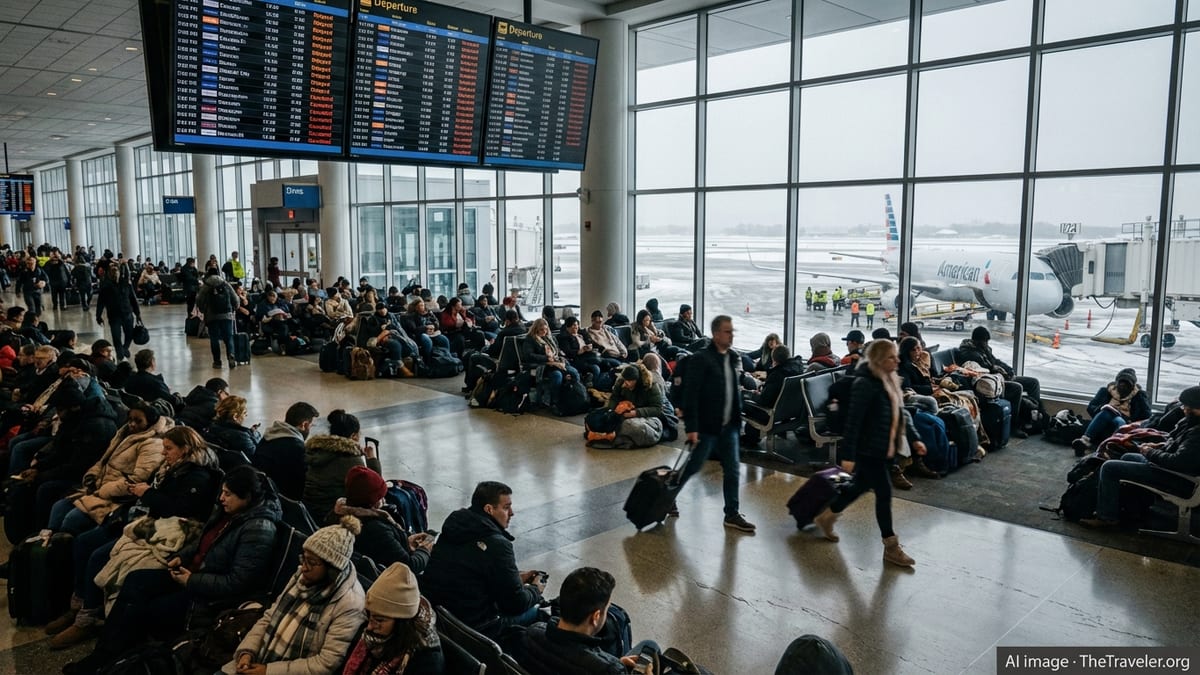
New Alerts Highlight Strain at New York JFK and Chicago O’Hare
Publicly available information on American Airlines’ travel alert pages shows that customers traveling through New York’s John F. Kennedy International Airport face elevated disruption over several days in late July. The alerts flag the potential for schedule changes, urging passengers to reconsider nonessential trips or take advantage of flexible rebooking options if their plans are affected.
Separate operational notices aimed at travel agencies indicate that Chicago O’Hare, another major international gateway for the carrier, has also seen repeated weather related disruption this year. Thunderstorms and traffic management programs in the upper Midwest have periodically forced American to trim its schedule, triggering knock on effects across its transatlantic network and onward connections to Europe and the Middle East.
Taken together, the latest alerts underscore how American’s two critical northern hubs, both busy departure points for overseas routes, are under unusual strain in what is already described in airline communications as a record breaking summer peak. While not every international service is being cut, cancellations and rolling delays at JFK and Chicago are now spilling over into long haul operations to Europe and beyond.
Consumer complaints and anecdotal reports across social media and travel forums point to a pattern in which some passengers see their flights from regional cities to these hubs cancelled or retimed, leaving them scrambling to protect onward international connections that may still be operating but are suddenly difficult to reach.
Hundreds of Overseas Flights Affected Across the Network
Operational data, flight tracking services and airport departure boards reviewed over recent weeks indicate that the cumulative impact of weather systems, air traffic control limits and earlier capacity cuts has run into the hundreds of cancelled and heavily delayed American Airlines services with an international component. While not every affected flight crosses an ocean, many either feed into or depart from overseas routes, magnifying the impact on global travelers.
At London Heathrow, a key European partner hub for American and its oneworld allies, a wave of cancellations earlier in July rippled across transatlantic schedules. Published coverage of that disruption shows that flights operated by British Airways, Virgin Atlantic and American were among those cut, with several departures to U.S. cities including New York and Chicago removed from the boards on some of the busiest days of the summer season.
Similar patterns are visible on routes linking JFK and Chicago to major European capitals and secondary leisure destinations. Adjustments already filed for the summer timetable, including one off cancellations around aircraft changes and operational constraints, are being compounded by day of travel decisions driven by storms and congested airspace. The result for passengers is an often confusing mix of flights that still appear on the schedule, others removed entirely and some delayed to the point where onward connections are no longer viable.
These rolling disruptions come against the backdrop of a global aviation system that is operating near capacity across North America and Europe. When even modest weather events or technical bottlenecks arise at hub airports, airlines have limited spare aircraft and crew to recover, so tactical cancellations on short haul and feeder routes are used to protect as many long haul departures as possible, while still cutting hundreds of flights over the course of a busy weekend.
Weather, Airspace Limits and Geopolitics Drive Volatility
The pressure on American’s hub operations is being fueled by a combination of factors rather than a single cause. Summer thunderstorms across the U.S. East Coast and Midwest have repeatedly triggered ground delay programs, restricting arrivals and departures at airports such as JFK and Chicago O’Hare and forcing carriers to pare back schedules at short notice.
At the same time, previously published travel advisories from U.S. government agencies warn that broader geopolitical tensions and regional instability continue to affect airspace availability and routings for flights heading toward parts of the Middle East and surrounding regions. Some airlines in and around those areas have postponed service resumptions or cancelled specific routes, and long detours around sensitive airspace add complexity and potential delay to already stretched long haul operations.
Industry analysis of recent summers also points to the lingering impact of staffing and infrastructure constraints at airports and air navigation providers, both in the United States and Europe. Even as airlines like American schedule record numbers of flights, key partners in the system, including ground handlers and air traffic control centers, have less margin to absorb irregular operations. When storms, equipment issues or security alerts emerge, the resulting knock on effects can extend for days and push cancellations into the hundreds.
Carriers are additionally having to swap aircraft types and rebalance fleets on short notice to account for maintenance and reliability concerns. Route filings for the current Northern Hemisphere summer show several changes to aircraft assignments on transatlantic services, and when those adjustments intersect with day of operations challenges, entire rotations may be cancelled to keep crews and aircraft in legal and safe positions.
What Travelers Through Key Hubs Can Expect This Week
For passengers booked to travel internationally with American in the coming days, especially through New York JFK or Chicago O’Hare, publicly posted airline information suggests a travel environment that remains fragile. Schedules continue to operate, and many long haul flights are departing as planned, but an elevated risk of sudden change is evident, particularly when weather systems develop along the densely trafficked East Coast corridor.
Travel alerts on American’s global websites outline flexible rebooking policies for impacted dates, usually allowing customers to move to alternative flights without change fees if they keep the same origin and destination. In past disruptions, similar alerts have allowed moves by several days in either direction, depending on the severity of the event and seat availability across the network.
Passengers connecting from smaller U.S. cities through JFK or Chicago to Europe and other overseas destinations may face the greatest uncertainty. When airlines are required to trim schedules, domestic feeder services are often among the first to be cut, as consolidating passengers onto fewer flights can free up aircraft and crew. That approach can preserve a core long haul program but still leave some travelers facing missed connections, overnight stays and complex rebookings involving partner airlines at foreign hubs.
Given the potential for additional cancellations, travelers are being urged in public guidance to monitor their flight status closely on the day of departure, arrive early at the airport and build in extra connection time at international hubs wherever possible. For those yet to book, choosing itineraries with longer layovers or more than one daily frequency on key routes may provide more options if disruption strikes.
Broader Implications for American’s Summer Reliability
The current wave of cancellations touching American’s international hubs arrives just as the carrier promotes what it describes in public communications as a record breaking summer season, with millions of customers expected to pass through its network and international capacity restored or expanded on several routes.
Performance data cited by the airline earlier this year highlighted improved on time metrics in the spring months, particularly at Chicago O’Hare, where schedule adjustments and air traffic management changes were intended to boost reliability and reduce congestion driven delays ahead of the peak season.
The recent alerts and clusters of cancellations at hubs such as JFK and Chicago suggest that even a well prepared operation can be quickly overwhelmed when weather, airspace constraints and partner airport issues align. For American, keeping its overseas schedule intact while absorbing repeated shocks on domestic and short haul routes remains a delicate balancing act, with passengers bearing the brunt when individual links in the chain fail.
As the busiest travel weeks of late July and early August continue, industry observers will be watching whether operational changes and schedule fine tuning at American’s two largest northern gateways can stabilize the situation, or whether further rounds of cancellations and rolling delays will continue to disrupt hundreds more overseas journeys.