


More news on this day
Major wildfires in France and Spain have forced hundreds of thousands of people to leave homes, campsites and coastal resorts just as the peak European holiday season gets underway, raising urgent questions for travelers with upcoming trips.
Get the latest news straight to your inbox!
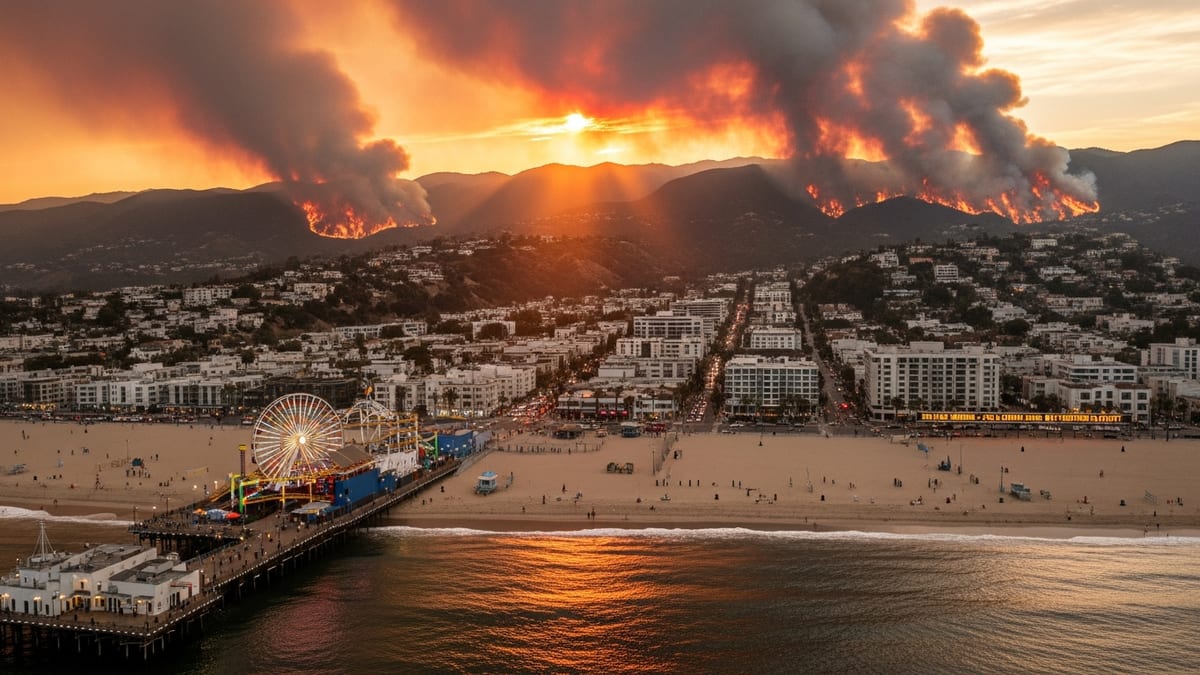
Where the wildfires are and who is most affected
In late July 2026, a cluster of large wildfires has been burning across southwestern France and central and eastern Spain, overlapping with some of the continent’s busiest holiday corridors. Reporting from international outlets indicates that France’s Gironde and Landes departments, on the Atlantic coast near Bordeaux, have seen particularly intense fires, alongside blazes in and around the Cap Ferret peninsula, a popular destination for beach holidays and campsites. South of Paris, parts of the Fontainebleau forest and other wooded areas have also been affected earlier in the month.
In Spain, published coverage points to major fires west of Madrid, in the province of Ávila, as well as in parts of Castilla-La Mancha and the Valencia region. These areas are not only home to rural villages and natural parks but also sit on important road and rail routes used by domestic and international tourists heading to the coast or crossing the country.
Across both countries, estimates from recent news reports suggest that well over 250,000 people have been evacuated since the latest wave of fires intensified, including residents and visitors. Campsites, coastal resorts and rural guesthouses have featured prominently in evacuation tallies, indicating that the disruption is not limited to remote forest zones.
For travelers, the practical impact depends heavily on itinerary and timing. City breaks in places such as Paris, Lyon, Barcelona or Seville currently face far fewer direct effects than holidays planned in Atlantic coastal resorts near Bordeaux, forested regions south of Paris, or inland destinations in central Spain. However, smoke, transport disruption and changing fire behavior can shift conditions quickly, sometimes far from the flames themselves.
Transport, evacuations and last minute changes
The most immediate travel impact from the fires has been the evacuation of holiday areas and the closure or rerouting of roads and rail lines. In France, media reports describe the complete evacuation of the Cap Ferret peninsula, with some visitors leaving by boat as the main road corridor became threatened. Regional authorities have also restricted access to certain forests and dunes and temporarily halted children’s holiday camps in high-risk zones, affecting family travel plans.
Rail and road networks are feeling the strain. Smoke and fire near key rail corridors have led to speed restrictions and occasional cancellations on routes in southwestern France and central Spain, particularly where tracks pass close to active fire fronts or dense smoke. Motorways and regional highways have at times been closed or limited to emergency traffic near Bordeaux and west of Madrid. Even short-lived closures can cause knock-on delays for long-distance holiday traffic on peak getaway weekends.
Airports in major cities remain open, but travelers may encounter indirect effects. Flights can be delayed if crews or aircraft are out of position due to earlier disruption, or if visibility drops around regional airports closer to the fires. In addition, firefighting aircraft share airspace with commercial flights, prompting occasional air-traffic management measures that slow traffic during intense operations.
For anyone due to arrive in affected regions in the coming days, flexibility is essential. Publicly available travel advisories from European governments recommend monitoring local prefecture announcements in France and regional emergency services in Spain, as well as checking with airlines and rail operators no more than 24 hours before departure, when operational decisions are clearer.
What this means for coastal, countryside and city holidays
The impact on specific types of trips varies widely. Coastal holidays on France’s Atlantic shore, especially around the Bassin d’Arcachon and Cap Ferret, have been among the hardest hit. News coverage describes campsites and holiday parks evacuated at short notice, with some facilities closed indefinitely while authorities assess damage and fire risk. Travelers booked into these areas should be prepared for mandatory cancellations, relocations to alternative accommodation, or offers to postpone trips.
Countryside and nature-focused tourism in both France and Spain is also under pressure. Hiking routes, national and regional parks, and forested recreation zones have seen partial or full closures, either because of active fires or heightened danger levels. In Spain, rural guesthouses and agritourism properties in central provinces have had guests evacuated as a precaution, while some areas that were not directly affected by flames are now dealing with heavy smoke and ash fall that can make outdoor activities unpleasant or unsafe.
By contrast, most city destinations remain open and functioning, though heat and occasional smoke haze can affect comfort. Paris and Madrid have not faced large-scale evacuations, and their core tourist landmarks, hotels and restaurants are operating. However, visitors could encounter higher demand in these cities from people who have rebooked away from fire-affected regions, tightening availability in mid-range and budget accommodations during peak dates.
Beach destinations on Spain’s Mediterranean coast, such as the Costa Blanca and Costa del Sol, have so far seen more limited direct impact from the current fires, although smoke and regional transport disruption can still affect travel days. Travelers heading to these areas should still account for the possibility of route changes if inland highways or rail links are constrained by firefighting operations.
Health, safety and insurance considerations for travelers
Even where hotels and attractions remain open, the fires raise questions about health and safety, particularly around smoke exposure and evacuation procedures. Publicly available information from meteorological and health agencies in Europe notes that wildfire smoke can aggravate respiratory and cardiovascular conditions, and can be especially problematic for older travelers, young children and people who are pregnant.
Visitors already in affected regions are being advised through local broadcasts and municipal notices to follow any evacuation orders promptly, stay indoors when smoke levels are high, and limit strenuous outdoor activity. Wearing a well-fitted particulate mask can reduce exposure to fine smoke particles, although it does not eliminate all risks. Travelers with asthma or other chronic conditions should keep medication accessible, carry written prescriptions and consult their doctor before travel if planning to visit areas where air quality is likely to deteriorate.
Insurance is another key factor. Many standard travel policies include coverage for trip interruption or cancellation when natural disasters make a destination unsafe or inaccessible, but the precise conditions vary. Travelers should review policy wording carefully to see whether wildfires are covered events and under what circumstances they can claim for unused accommodation, alternative transport or emergency evacuation costs.
Those booking new trips at a time when major fires are already widely reported should pay attention to clauses on “known events.” Some insurers may limit coverage for disruptions tied to incidents that were publicly documented before the policy purchase date. For travelers concerned about this, flexible booking options with airlines and hotels, or add-on “cancel for any reason” coverage where available, can provide an additional margin of protection.
How to plan, rebook or rethink upcoming trips
For travelers with imminent departures to France or Spain, the first step is to map planned destinations against current fire locations and evacuation zones using official national or regional information services. Government foreign travel advice pages and national wildfire monitoring platforms are providing updated maps and safety notices that can help distinguish between unaffected coastal or urban areas and zones where restrictions are likely to remain in place.
If a booked property is in or near an evacuation or exclusion area, contacting the accommodation provider is essential. Many hotels and campsites in the affected zones are proactively canceling reservations and offering refunds, vouchers or rebooking options in less-affected regions. Tour operators with larger inventories may be able to shift guests from Atlantic coastal resorts to other French or Spanish destinations that are currently operating normally.
Travelers whose plans focus on outdoor activities such as hiking, cycling or camping might consider pivoting to more urban itineraries or to regions with lower current fire risk, such as northern France or Spain’s Atlantic coast where conditions permit. Urban stays can still incorporate day trips to nearby countryside if and when local authorities declare those areas safe.
Looking slightly further ahead into August, much remains uncertain, as fire behavior depends on weather patterns, wind and the success of ongoing firefighting operations. Forecasts of continued heat and dryness suggest that the risk of renewed flare-ups will remain elevated. Building flexibility into travel plans, staying closely informed through official advisories and local news, and prioritizing safety over fixed itineraries will help travelers navigate what is shaping up to be a challenging peak season in two of Europe’s most popular destinations.