


More news on this day
An American Airlines Airbus A321 operating Flight AAL3102 from Boston to Dallas Fort Worth made an unscheduled diversion to Oklahoma City on August 7, drawing attention to how airlines handle in flight disruptions on one of the busiest domestic corridors in the United States.
Get the latest news straight to your inbox!
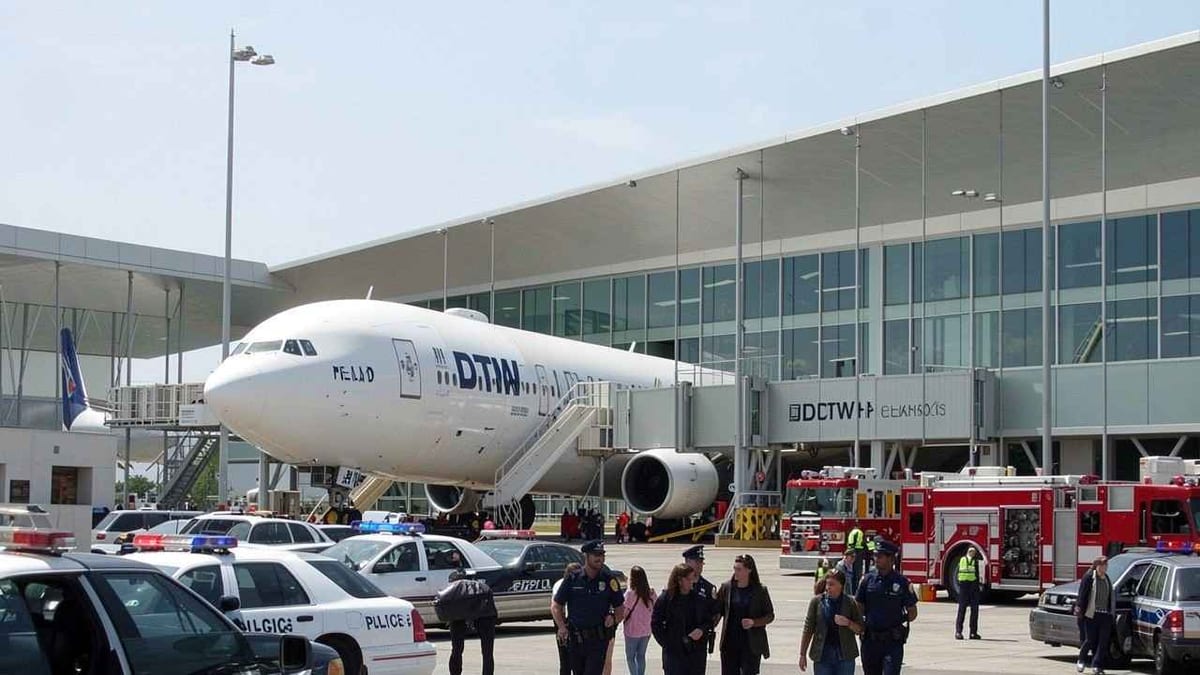
What Happened On Board AAL3102
Publicly available flight tracking data shows that American Airlines Flight AAL3102 departed Boston Logan International Airport on schedule on August 7, bound for Dallas Fort Worth International Airport. En route, the aircraft altered its planned track and headed toward Will Rogers World Airport in Oklahoma City, where it landed instead of continuing to North Texas.
Data from online flight tracking platforms indicates that the jet involved was an Airbus A321, a single aisle aircraft commonly used by American Airlines on higher demand domestic routes such as Boston to Dallas. The aircraft appeared to cruise normally before the route change, suggesting that the diversion decision was made while the flight was already in stable cruise.
As of the latest published information, no detailed technical narrative has been released through official investigative channels outlining the exact trigger for the diversion. Available coverage and operational data simply confirm that the aircraft landed safely in Oklahoma City and that passengers were later accommodated to continue to their destination.
There are no public reports indicating injuries among passengers or crew. The incident is being treated as an operational diversion rather than a major safety event, which typically aligns with standard procedures when a flight is rerouted as a precaution or due to conditions at the planned destination.
Why Flights Bound For Dallas Often Divert To Oklahoma City
Oklahoma City regularly appears in flight tracking histories as a diversion point for services heading to or from Dallas Fort Worth. Aviation analysts often point to its geographical position, runway length, and airport capacity as reasons airlines consider it a practical alternate when disruption affects North Texas operations.
Published discussions among aviation observers note that weather around Dallas Fort Worth can deteriorate quickly, affecting arrival rates and prompting air traffic management programs that hold or reroute inbound flights. When holding patterns are not feasible because of fuel constraints or wider network pressures, airlines may opt to divert to nearby airports such as Oklahoma City, Tulsa, or Austin where fuel, ground handling, and gate space are more readily available.
In addition to weather, congestion and flow control restrictions at Dallas Fort Worth can lead to extended arrival delays. In such cases, diverting to an alternate airport allows an aircraft to refuel, reset crew duty times where possible, and avoid remaining airborne for long periods while waiting for a landing slot. For passengers, this can be frustrating but is generally considered a safer and more controlled solution than prolonged holding.
Flight AAL3102 following the Boston to Dallas corridor fits into this broader pattern in which Oklahoma City is frequently used as a release valve when the large Dallas hub experiences operational strain. The August 7 diversion illustrates how a single route change can be part of a much larger network wide adjustment.
How Diversions Affect Passengers And Crew
For travelers on AAL3102, the diversion would have meant an unplanned stop, additional waiting time on the ground, and potential missed connections in Dallas. Once on the ground at an alternate airport, airlines typically work to refuel the aircraft, coordinate a new departure time, or rebook passengers through other hubs or later flights depending on aircraft and crew availability.
Publicly shared experiences from passengers on other diverted American Airlines flights show that outcomes can vary widely. Some diversions result in relatively short ground stops before the flight continues to its original destination. Others, especially when linked to severe weather or crew duty time limits, may lead to aircraft swaps, overnight stays, or reroutes through different hubs.
Crew scheduling rules also play a key role. If a diversion and subsequent delay cause pilots or cabin crew to exceed regulated duty limits, an airline may be required to keep the aircraft on the ground until replacement crew are available. That can turn what starts as a safety driven operational choice into a longer disruption for those on board.
On August 7, passengers on Flight AAL3102 faced exactly the type of uncertainty that diversions often create. While the primary objective of a diversion is to preserve safety, the onward travel arrangements, available seats on alternative flights, and local hotel capacity all shape how disruptive the experience becomes in practice.
Operational Context For American Airlines On The Boston–Dallas Route
The Boston to Dallas Fort Worth route is an important domestic link for American Airlines, connecting a major Northeast market with its largest hub in North Texas. The Airbus A321 is commonly scheduled on this sector, reflecting consistent business and leisure demand as well as significant numbers of connecting passengers heading to destinations across the United States and internationally.
Analyses of U.S. airline operations regularly highlight that hub airports such as Dallas Fort Worth are particularly sensitive to thunderstorms, low visibility, and periods of high traffic volume. When schedules are tightly packed, a single line of storms or a temporary ground stop can cause knock on effects across dozens of inbound and outbound flights, including transcontinental and international connections.
In recent years, publicly available research on airline disruption management has emphasized that carriers use complex decision support tools to weigh fuel status, crew time, passenger connections, and airport capacity when making diversion choices. A flight like AAL3102, linking two major markets and carrying a mix of connecting and local travelers, sits squarely in this high stakes operational environment.
The August 7 diversion therefore needs to be understood not as an isolated irregularity, but as one instance within a broader pattern of tactical adjustments that large carriers make every day to keep extensive networks functioning in the face of changing conditions.
What Travelers Can Take Away From The AAL3102 Diversion
For passengers planning to fly between Boston and Dallas, or through Dallas Fort Worth more broadly, the AAL3102 event underlines the value of preparing for irregular operations. Travel specialists often recommend building extra time into tight connections at large hub airports, particularly during seasons when convective weather is common in North Texas.
Public guidance from aviation consumer resources also suggests that travelers review airline policies on rebooking, accommodation, and meal vouchers in cases of diversions or extended delays. While each situation is unique and outcomes depend on factors such as weather versus mechanical causes, understanding general rules can help passengers respond more effectively when plans change suddenly.
The AAL3102 diversion further illustrates why access to real time flight tracking and airline mobile applications has become central to the modern travel experience. These tools can provide earlier awareness of diversions, updated departure estimates from alternate airports, and options for self service rebooking when available.
Ultimately, the August 7 Boston to Dallas diversion to Oklahoma City highlights both the complexity of contemporary airline operations and the importance for travelers of remaining flexible and informed. While such events can be disruptive and stressful, they are also core to the layered safety and risk management approach that underpins commercial aviation in the United States.