


More news on this day
An American Airlines Boeing 737 operating as Flight AA980 from Miami to Nashville diverted to Memphis on August 7, prompting questions from travelers about what led to the unscheduled landing and how such diversions are typically handled in the United States.
Get the latest news straight to your inbox!
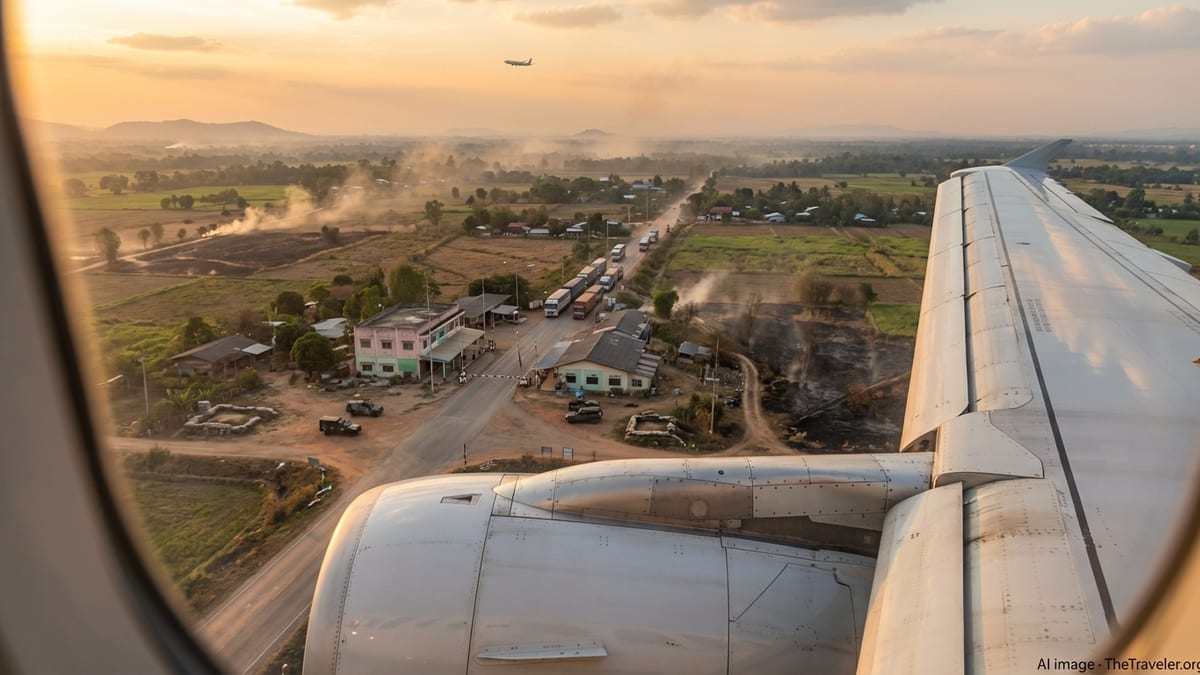
What Is Known About Flight AA980’s Diversion
Publicly available flight-tracking data indicates that American Airlines Flight AA980 departed Miami International Airport on August 7 on a scheduled domestic service to Nashville International Airport. En route, the Boeing 737 deviated from its planned course and proceeded to Memphis International Airport, where it landed without reported injuries.
Open-source information shows that the aircraft descended in a controlled manner and taxied to the gate under its own power after landing in Memphis. There are no indications in available coverage of an evacuation, onboard fire, or other dramatic emergency response, which typically suggests a precautionary or operational diversion rather than a high-severity in-flight emergency.
As of the latest reporting, no official detailed narrative of the incident has been released through widely distributed public statements. However, flight history records for AA980 on August 7 consistently show the change of destination from Nashville to Memphis, confirming that the diversion took place and that the flight terminated safely in western Tennessee.
There have been no publicly reported injuries among passengers or crew connected to this diversion, and there is no evidence at this time that the event is being treated as a major accident by national safety investigators.
Common Reasons U.S. Flights Divert Midjourney
While specific details about AA980’s diversion have not been widely disclosed, aviation data and past U.S. airline incidents point to several frequent reasons why a domestic flight may not continue to its planned destination. These include medical situations involving passengers or crew, technical or mechanical concerns detected in flight, evolving weather at the destination airport, and air-traffic management constraints.
In many cases, crews opt for a diversion out of an abundance of caution when an onboard indicator, unusual vibration, odor, or other anomaly requires closer inspection on the ground. Even if the aircraft remains fully controllable, industry practice and carrier procedures favor landing at the nearest suitable airport with appropriate facilities rather than continuing to the original destination with an unresolved issue.
Weather also plays a central role in U.S. diversions. Thunderstorms, low visibility, wind shear, or other rapidly changing conditions can temporarily exceed airport or airline operating limits, prompting inbound aircraft to hold in the air or divert to alternates. The presence of large hub airports in the region, such as Memphis, gives airlines additional flexibility to handle aircraft and passengers during such events.
Operational considerations, such as crew duty-time limits or airspace congestion, can also drive diversion decisions. If a delay en route risks a crew exceeding its regulated working hours, landing at an alternate airport with available staffing and maintenance support can be the safest and most practical outcome.
Why Memphis Is a Logical Alternate for a Miami–Nashville Route
Geographically, Memphis International Airport sits west of the direct Miami–Nashville track but within a reasonable diversion radius for flights operating in the southeastern United States. The airport serves as a significant cargo hub and maintains facilities capable of handling large numbers of commercial aircraft, including mainline Boeing 737 operations.
For an aircraft traveling from South Florida toward central Tennessee, Memphis offers long runways, around-the-clock operations, and a range of ground services. These characteristics make it a viable alternate field when Nashville or other nearby options may be affected by weather, traffic flow restrictions, or resource limitations at the time a diversion decision must be made.
From a network perspective, American Airlines and its partners can often reposition aircraft and passengers relatively efficiently from a large regional airport like Memphis. Once the aircraft is inspected, the airline can determine whether to continue the journey to Nashville, substitute a different aircraft, or rebook travelers via other connecting points based on fleet availability and scheduling constraints.
Memphis also offers practical advantages for disrupted passengers, including access to hotel accommodations, surface transportation, and connections to other U.S. cities. These logistical factors often influence an airline’s choice of diversion airport as much as the immediate technical requirements of the flight.
What Passengers Typically Experience After a Diversion
Diversions such as the one involving Flight AA980 can create considerable uncertainty for passengers, particularly when information is limited in the early stages. In typical cases across the U.S. industry, travelers are first advised that the flight will not proceed to its planned destination and that an intermediate landing is required for operational or safety reasons.
Once on the ground, the aircraft is usually met by ground personnel and, when appropriate, local emergency services as a precaution. After the aircraft is parked and cleared, passengers may be asked to remain on board while crews assess the situation or to disembark into the terminal if a longer delay is anticipated. The decision often depends on the nature of the issue, available gate space, and regulatory requirements related to tarmac delays.
Airlines commonly rebook affected travelers on later services or alternate routings to their final destinations. In some situations, especially when overnight delays are unavoidable, carriers may assist with hotel arrangements, meal vouchers, or other accommodations in line with their internal policies and any applicable consumer protections. The specific level of support can vary depending on whether the disruption is categorized as weather-related, technical, or outside the airline’s control.
For passengers, holding on to boarding passes, baggage tags, and any written notifications about the diversion can be helpful when seeking clarification or support. Monitoring the airline’s mobile app and airport displays typically provides the most up-to-date information on revised departure times and gate assignments once a recovery plan is in place.
How This Fits Within Broader U.S. Aviation Safety Trends
The diversion of American Airlines Flight AA980 fits within a longstanding pattern in which U.S. commercial crews prioritize precautionary landings whenever conditions deviate from normal expectations. Historical data on American Airlines and the broader domestic industry show that unscheduled landings and diversions occur far more frequently than serious accidents, reflecting a layered safety culture that favors conservative decision-making.
Academic studies of flight operations and delay patterns highlight that modern U.S. carriers operate tens of thousands of flights each week, with only a small fraction experiencing in-flight issues significant enough to warrant diversions. Within that subset, most incidents conclude uneventfully with safe landings, technical inspections, and, when necessary, the substitution of aircraft or crews before operations resume.
The Federal Aviation Administration and the National Transportation Safety Board track significant events, but not every diversion triggers a full public investigation or detailed reporting. Many cases are managed within airline safety and maintenance systems, which focus on data collection, internal analysis, and procedural adjustments that further reduce risk over time.
For travelers, the key takeaway from the AA980 event is that a diversion, while disruptive and sometimes unsettling, is generally a sign that standard safeguards are functioning as intended. By opting to land early at a suitable airport such as Memphis, flight crews align with established safety practices designed to manage uncertainty and protect passengers and crew alike.