


More news on this day
An American Airlines Boeing 737-823 operating as Flight AA1322 from Dallas to Denver diverted en route, prompting an unscheduled landing and drawing renewed attention to how carriers manage midair disruptions on one of the busiest domestic corridors in the United States.
Get the latest news straight to your inbox!
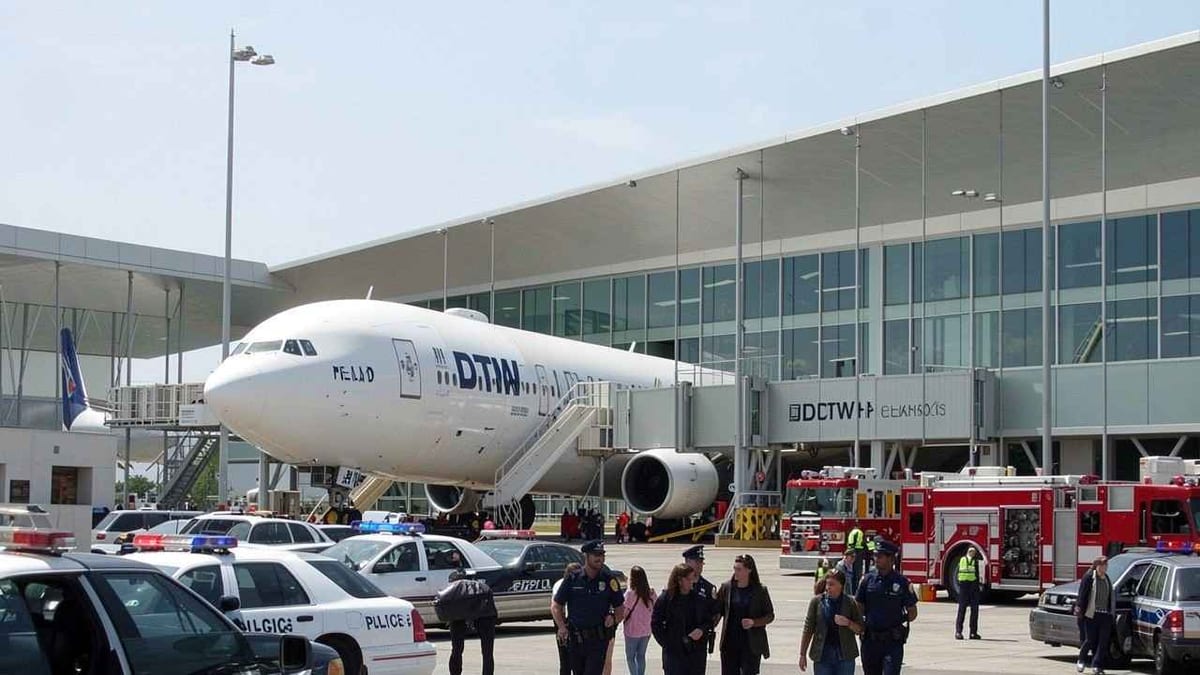
Unscheduled Diversion On A Key Domestic Route
Publicly available flight-tracking information indicates that American Airlines Flight AA1322, a Boeing 737-823 scheduled between Dallas Fort Worth International Airport and Denver International Airport, did not complete its journey as planned and instead diverted en route. The service is a core part of American’s domestic network, linking its primary hub in North Texas with one of the country’s largest connecting airports in the Rocky Mountain region.
Initial data show the aircraft departing Dallas on time for what is normally a flight of roughly 90 minutes. Instead of following a direct track toward Colorado, the aircraft altered course partway through the journey and proceeded to an alternate airport, where it landed and remained on the ground while arrangements were made for passengers and crew.
At the time of writing, detailed cause information for Flight AA1322’s diversion has not been formally published. Similar events on this route and others in American’s network have recently been linked to a mix of weather disruptions around Dallas, technical issues detected in flight and air traffic control constraints, underlining how multiple factors can converge to force a change of plan.
Available booking and operational data suggest that the flight was operating with a typical domestic load, reflecting strong demand between North Texas and Colorado. Diversions on such well-traveled routes tend to affect not only the passengers on board but also downstream connections across the airline’s schedule.
Weather, Technical Concerns And The Decision To Divert
Flight diversions on U.S. domestic services are most often driven by severe weather near the departure or arrival airports, as has been the case repeatedly around Dallas Fort Worth during recent storm systems. When convective weather stalls over North Texas, carriers have at times rerouted large numbers of flights to alternate airports to avoid extended holding patterns and tarmac delays.
In other instances, American Airlines flights have diverted after crews reported abnormal vibrations or indications from onboard systems, prompting precautionary landings. In March 2025, for example, an American Boeing 737 operating a different route diverted to Denver following reports of engine vibrations, after which the aircraft was met on the ground and passengers were evacuated as a precaution. That episode highlighted how swiftly minor inflight anomalies can escalate into operational incidents that require immediate attention.
A diversion decision typically weighs the severity of any technical indication, fuel on board, weather along the intended route and the availability of suitable alternates. Crews are trained to choose the nearest appropriate airport rather than press on to the original destination if continuing could compromise safety margins or trigger duty-time limitations that would leave passengers stranded on the aircraft.
Although specific details for Flight AA1322 remain limited, its midroute course change fits within this broader pattern of precautionary responses. Diversions often end uneventfully, with passengers deplaned at an alternate city and later rebooked, while maintenance teams examine the aircraft before it returns to service.
Passenger Impact And Recovery Efforts
For travelers, an unexpected diversion can mean missed connections, overnight stays and rapid changes in onward travel plans. Public coverage of recent Dallas related disruptions describes passengers being rebooked through alternate hubs such as Phoenix, Charlotte and Chicago, or in some cases changing to other airlines from diversion points including Denver and Austin when schedules allowed.
Standard industry practice in the United States is for airlines to focus first on safely deplaning customers at the diversion airport, then arranging new itineraries based on available seats. Some travelers may receive meal vouchers or hotel assistance when irregular operations stretch into the night, but policies vary by carrier and by the specific cause of the disruption.
Operational data and traveler reports suggest that diversions touching Dallas and Denver can be particularly complex, given both airports’ roles as major connecting hubs. When one flight such as AA1322 diverts, it can disrupt inbound and outbound connections for dozens of passengers, requiring significant manual rebooking behind the scenes.
For visitors bound for Denver, diversion scenarios can also alter vacation and business plans in Colorado, especially during peak travel seasons for skiing, outdoor recreation and major events. Some passengers choose to complete the final leg by road if the diversion point is within driving distance of their original destination.
Dallas–Denver: A Busy Corridor Under Pressure
The Dallas Fort Worth to Denver corridor is served by multiple U.S. carriers and is recognized as one of the more heavily traveled domestic routes, linking two high-altitude, weather-sensitive airports. Seasonal thunderstorms in North Texas and rapidly changing conditions along the Front Range of the Rocky Mountains regularly test operational resilience.
Analyses of U.S. flight data have shown that American Airlines, like many large network carriers, experiences recurring pressure on on-time performance across dense domestic routes. Diversions such as that experienced by Flight AA1322 represent one of the more visible manifestations of that strain, even though they represent a small fraction of overall departures.
Denver International Airport has been identified in aviation research as a critical node in the national network, both for passenger flows and as an alternative landing point for flights affected by conditions elsewhere. When flights from Dallas are disrupted, Denver can function as either the intended destination or a strategic diversion airport for other routes crossing the central United States.
In the case of a Dallas originating American Airlines flight, a diversion en route to Denver underscores how tightly connected these hubs are. Any irregularity affecting one can ripple through schedules and connections at the other, contributing to cascading delays across the broader system.
Regulatory Context And Evolving Diversion Practices
U.S. regulations govern how long passengers may remain on board during ground delays and set expectations for access to food, water and restrooms during tarmac holds. Past enforcement actions have detailed instances where carriers, including American, were penalized for allowing extended tarmac delays after diversions without offering passengers the chance to deplane in a timely manner.
In response to these cases, airlines have updated internal playbooks for handling diversions, including clearer triggers for bringing aircraft to gates, deploying buses when gates are unavailable and coordinating with airport authorities to move customers into terminals more quickly. Diversions like that involving Flight AA1322 are shaped by these evolving procedures, which aim to balance safety with customer comfort.
Industry and academic studies have increasingly focused on predicting and mitigating disruption, using large data sets to anticipate when weather, congestion or equipment issues are most likely to force route changes. For high frequency corridors such as Dallas to Denver, this research supports more proactive scheduling and the pre-positioning of crews and aircraft that can help absorb the impact when a flight diverts.
While each event has its own circumstances, Flight AA1322’s diversion illustrates how modern U.S. air travel continues to operate within tight margins. Even on routine domestic legs between major hubs, a combination of operational, technical or environmental factors can quickly turn a straightforward journey into a complex logistical exercise for airlines and a disruptive experience for passengers.