


More news on this day
American Airlines flights have resumed at Oklahoma City’s Will Rogers Airport following a widespread disruption to the carrier’s systems, but travelers are still encountering rolling delays as the operation slowly stabilizes.
Get the latest news straight to your inbox!
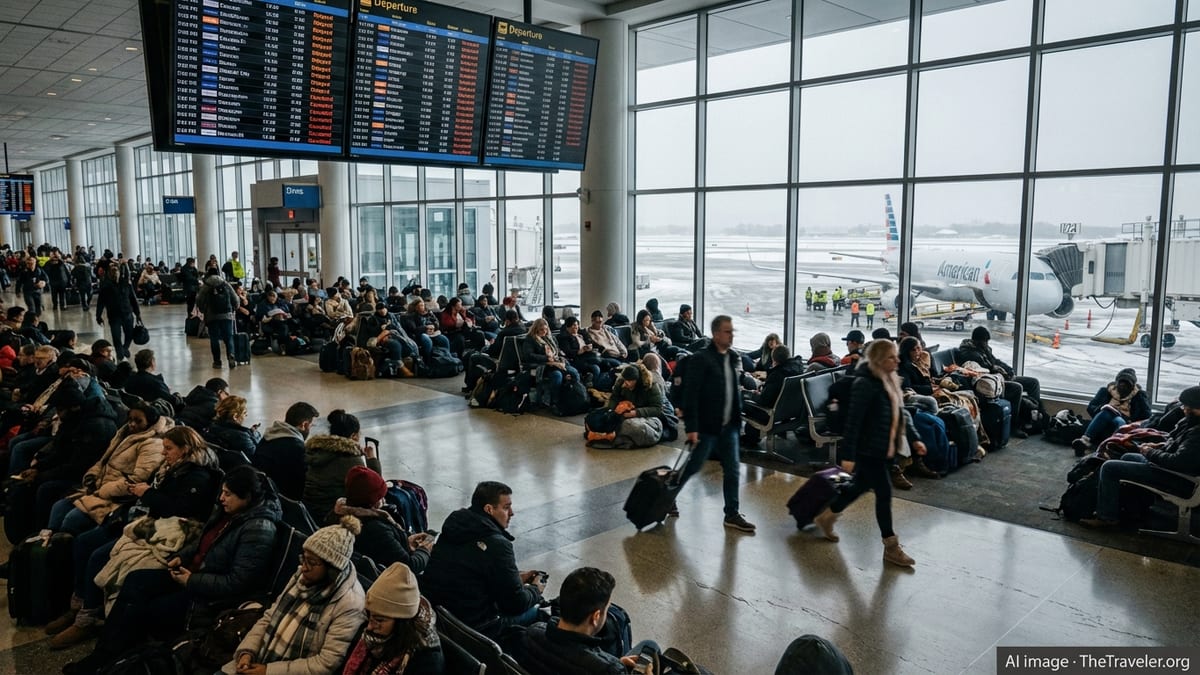
Service Restarts After Nationwide Disruption
Published flight-tracking data and airline status pages indicate that American Airlines resumed departures and arrivals at Will Rogers Airport late on July 28, one day after a systems outage triggered widespread cancellations and ground stops across the carrier’s U.S. network. Flights into Oklahoma City from major American hubs, including Dallas Fort Worth and New York area airports, began operating again Monday evening, though not all departed on time.
Historical tracking for recent American-operated services into Will Rogers, such as routes from Dallas Fort Worth and LaGuardia, shows aircraft arriving on July 27 and 28 with varying delays, suggesting a gradual restart rather than an immediate return to normal schedules. Some flights landed close to their scheduled times, while others arrived more than half an hour late, underscoring the uneven recovery of the airline’s operation.
American’s public travel alerts page notes ongoing flexibility for customers scheduled to fly on July 28, signaling that the airline expects continued disruption as it works through a backlog of displaced passengers. The advisory encourages customers to adjust travel plans without standard change fees, a typical response when large-scale operational issues ripple through the network.
The disruption coincides with an already busy summer travel period for American. The airline has projected record traffic across its system in 2026, meaning there is limited slack in the schedule to absorb a sudden nationwide outage affecting aircraft, crews and airport operations.
Lingering Delays at Will Rogers Airport
Despite the resumption of American Airlines flights at Will Rogers Airport, publicly available flight-status boards and tracking services show that delays remain common on Tuesday, July 29. Several morning and midday departures and arrivals are listed as delayed, in some cases by 30 minutes or more, as aircraft and flight crews reposition through the system.
Data for recent Oklahoma City services indicates that average departure and arrival times on some American-operated routes are still running behind historical norms. For example, flights between Dallas Fort Worth and Oklahoma City in the past 48 hours have recorded late arrivals that push well beyond the schedule’s planned block times, reflecting the downstream effects of the broader network disruption.
These operational challenges are amplified at a mid-sized airport like Will Rogers, which relies heavily on connections through larger hubs rather than a dense schedule of point-to-point flights. When hub operations are constrained, smaller stations often see limited options for re-accommodating passengers, leading to longer wait times, missed connections and extended layovers in terminals.
Airport statistics from recent years show steadily growing passenger volumes at Will Rogers, placing additional pressure on gate space, baggage systems and ground handling teams when irregular operations occur. With multiple flights vying for resources after delays, turnaround times can lengthen, further contributing to late departures.
Travelers Report Rolling Delays and Cancellations
Accounts shared on social media and travel forums over the past 24 hours describe passengers experiencing rolling 30-minute delay notices that stretch into hours, last-minute gate changes and, in some cases, repeated cancellations before a workable itinerary is found. Some travelers connecting through Dallas Fort Worth and other American hubs report being stranded overnight as they wait for available seats into regional markets such as Oklahoma City.
Posts from frequent flyers indicate that maintenance-related delays and crew timing issues are compounding the impact of the systems outage. Several travelers recount being boarded and then asked to deplane due to maintenance inspections, only to see subsequent flights delayed again as crews approach duty-time limits.
These individual experiences align with broader data showing elevated delay rates across the airline’s domestic network in recent weeks. While not unique to American, the combination of full summer flights, tight aircraft rotations and a sudden systems disruption has created a challenging environment for on-time performance, particularly at non-hub airports.
For Oklahoma City passengers, reports suggest that communication about changing departure times has improved as systems come back online, but uncertainty remains high. Many travelers are arriving at the airport several hours earlier than usual and building extra buffer time into their itineraries to account for possible last-minute schedule changes.
Guidance for Passengers Flying Through Oklahoma City
Travel industry analysts note that after a nationwide disruption of this scale, it can take days for an airline’s schedule to fully normalize, even after flights officially “resume.” Aircraft and crews remain out of position, and demand for rebooking often exceeds the number of open seats on subsequent flights.
For passengers scheduled to travel on American Airlines through Will Rogers Airport over the next several days, publicly available guidance from travel experts emphasizes several practical steps. Checking flight status frequently on the carrier’s website or app, monitoring for gate changes at the airport, and enrolling in text or email alerts can help travelers respond quickly if schedules shift.
Analysts also recommend that passengers with tight connections through hubs such as Dallas Fort Worth consider requesting earlier flights or longer layovers, when possible, to reduce the risk of misconnecting. Those with critical same-day events at their destination are encouraged to build in additional buffer days until American’s operation shows a sustained return to pre-disruption performance.
Given the high loads typical of late July, same-day reaccommodation options may be limited if a flight from Oklahoma City is significantly delayed or canceled. Travelers who experience extended disruptions are advised, according to consumer advocates, to keep thorough records of delay times and expenses, which can be useful when seeking compensation or vouchers under airline policies.
Operational Strain Highlights Broader Reliability Concerns
The ongoing delays at Will Rogers Airport highlight broader questions that have been raised about American Airlines’ reliability during peak travel seasons. Recent discussions among frequent flyers and aviation observers draw attention to a pattern of short “rolling” delay increments, where flights are repeatedly pushed back in 30-minute blocks rather than receiving a firm revised departure time.
Publicly accessible performance data for American and other major U.S. carriers show that minor schedule disruptions can escalate quickly within tightly timed networks. When summer storms, air traffic control constraints or technology outages occur, cascading delays often spread beyond the original problem airports to outstations like Oklahoma City.
For American, the latest disruption arrives as the airline promotes a record-breaking summer schedule and emphasizes efforts to improve on-time performance at key hubs. Industry watchers note that achieving those goals will require not only stable technology systems but also resilient scheduling practices that can better absorb shocks without severely impacting smaller markets.
As American’s flights continue to operate in and out of Will Rogers Airport, travelers and local businesses will be watching closely to see how quickly delay statistics improve. The coming days are expected to provide an important test of the airline’s ability to restore reliability after a nationwide disruption while managing one of its busiest travel periods of the year.