


More news on this day
Ryanair and other major airlines are warning that a sharp rise in operating costs, driven largely by jet fuel and labor, is tightening margins just as millions of travelers prepare to fly for Thanksgiving.
Get the latest news straight to your inbox!
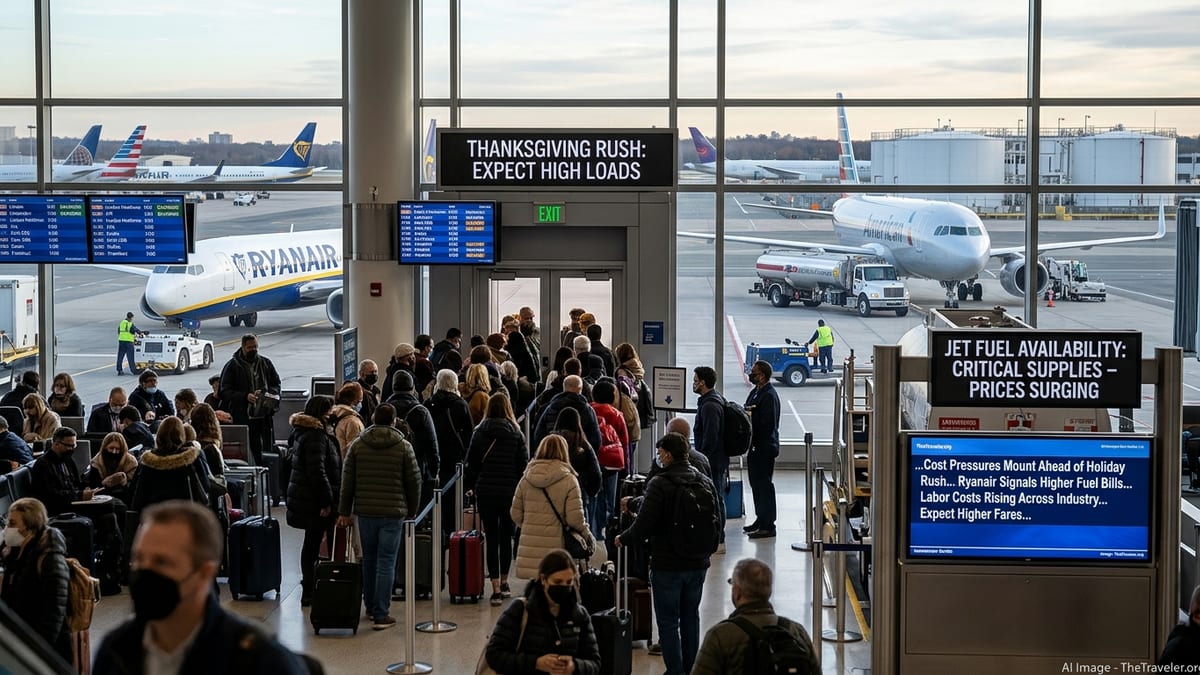
Cost Pressures Mount Ahead of the Holiday Rush
The warnings come as U.S. and European carriers brace for one of the busiest travel periods of the year. In the United States, industry group Airlines for America projects that nearly 29 million passengers will fly on U.S. carriers over the Thanksgiving travel window from November 20 to 30, a volume that is testing capacity at the same time that costs are surging.
Publicly available industry data show that jet fuel has become one of the main drivers of those higher expenses. The International Air Transport Association estimates that fuel will account for close to a third of airline operating costs this year, up from roughly a quarter in 2025, reflecting both elevated crude prices and tight supplies of refined jet fuel.
At the same time, labor has become a larger share of airline budgets. Recent analysis in IATA’s annual economic review indicates that global airline labor costs have grown faster than many other expense categories, as carriers sign new contracts, add staff and increase wages to rebuild schedules following the pandemic years.
With demand for Thanksgiving flights remaining strong and many planes operating close to full, airlines have limited room to absorb these additional costs without raising fares or trimming growth plans.
Ryanair Signals Higher Fuel Bill and Possible Cost Cuts
Europe’s largest low cost carrier, Ryanair, has been among the most vocal in outlining how rising fuel bills are reshaping its outlook. In its latest half year results for the period to September 2026, the airline reported a net profit but cautioned that its fuel expenses are set to climb sharply once existing hedging positions expire, pointing to an expected rise of around 2 billion euros in its fuel bill over the coming financial year.
According to the company’s most recent annual filings, Ryanair’s fuel and oil costs rose in absolute terms between its 2025 and 2026 financial years, even as the carrier maintained comparatively low unit costs. The airline has emphasized that while it is heavily hedged for the current year, it will face significantly higher prices on unhedged fuel heading into summer 2027 if oil and jet fuel markets remain tight.
Ryanair’s chief executive has also warned in recent public comments that European airfares could see one of the largest increases on record next year if fuel prices stay elevated. The carrier has indicated that it may need to review staffing and other overheads, including potential temporary pay freezes and efficiency drives using technology, in order to offset the impact of higher energy costs on its bottom line.
Those signals from a major budget airline are being closely watched across the industry, as Ryanair’s low cost model and aggressive pricing have often set the tone for short haul fares across Europe.
Other Airlines Adjust Capacity and Pricing
The cost squeeze is not confined to Europe. In the United States, several large carriers have flagged that higher fuel prices are influencing capacity plans and ticket pricing over the year end holidays. Recent financial updates show that American Airlines, for example, has pared back some of its holiday growth ambitions, citing escalating fuel costs and the need to protect profitability.
Research by consulting firms and airline trade groups suggests that while passenger demand has largely recovered, costs in areas such as wages, maintenance and financing are rising as quickly as or faster than revenues. A Boston Consulting Group outlook earlier this year noted that many airlines now face the prospect of unit costs outpacing revenue growth, particularly in mature North American and European markets where capacity is constrained by aircraft delivery delays and staffing limits.
For holiday travelers, those dynamics are already visible in pricing. Consumer travel coverage from outlets such as CBS News and regional broadcasters in major U.S. markets has documented a clear uptick in advertised fares for Thanksgiving and Christmas compared with last year, with analysts linking the trend directly to higher oil and jet fuel prices.
While some carriers are offering targeted promotions on off peak days to manage demand, industry projections indicate that fares around peak Thanksgiving travel dates will remain firm or higher, leaving budget conscious passengers with fewer bargains than in previous years.
Industry Data Show Structural Shift in Airline Cost Base
Behind the immediate holiday pressures lies a broader structural shift in the economics of flying. IATA’s midyear global outlook for air transport highlighted that airlines entered 2026 in their strongest financial position since the pandemic but now confront a combination of elevated energy prices, rising labor costs and geopolitical instability that is affecting fuel supplies.
The association’s analysis indicates that passenger ticket revenues are expected to grow this year, helped by higher fares, yet a significant share of that additional revenue will be absorbed by more expensive inputs. In parallel, the U.S. Federal Aviation Administration’s latest aerospace forecast notes that domestic carriers continue to wrestle with higher labor and maintenance costs, as well as supply chain constraints that have slowed aircraft deliveries and extended the life of older, less fuel efficient fleets.
For low cost airlines such as Ryanair, these trends challenge a long standing reliance on ever lower unit costs to drive growth. Recent investor presentations from the carrier point to higher spending on engine maintenance, regulatory compliance and sustainability measures, in addition to fuel and wages, all of which limit how far the airline can cut base fares without eroding margins.
Industry economists warn that if elevated fuel prices and wage inflation persist into 2027, airlines may need to reconsider network strategies, retire older aircraft more quickly where possible and seek additional ancillary revenues to sustain profitability.
What Rising Costs Mean for Thanksgiving Travelers
For travelers preparing to fly over the Thanksgiving period, the immediate impact of these operating cost pressures is most visible in ticket prices and capacity choices. Reports compiled by travel analysts suggest that average domestic economy fares for the busiest travel days around the holiday are higher than a year ago, even as some shoulder day prices remain relatively competitive.
Airlines for America’s Thanksgiving outlook points to a record or near record number of passengers over the 11 day window, but only a modest increase in available seats compared with last year. That imbalance, combined with jet fuel and wage pressures, has limited the scope for broad fare reductions at a time of intense demand.
Travel experts note that passengers may be able to mitigate some of the cost burden by flying on less popular days, choosing secondary airports or booking at unconventional times, but they also caution that the era of unusually low holiday airfares seen during the early stages of the pandemic recovery has largely passed for now.
As Ryanair and other airlines across both sides of the Atlantic continue to warn about higher operating costs, industry observers expect that pricing discipline will remain a defining feature of the market through this Thanksgiving and into 2027, even if demand remains robust and planes stay full.