


More news on this day
American Airlines is warning travelers of significant disruption at two of its largest international gateways, as hundreds of overseas flights are cancelled or rescheduled amid mounting operational pressures across the global network.
Get the latest news straight to your inbox!
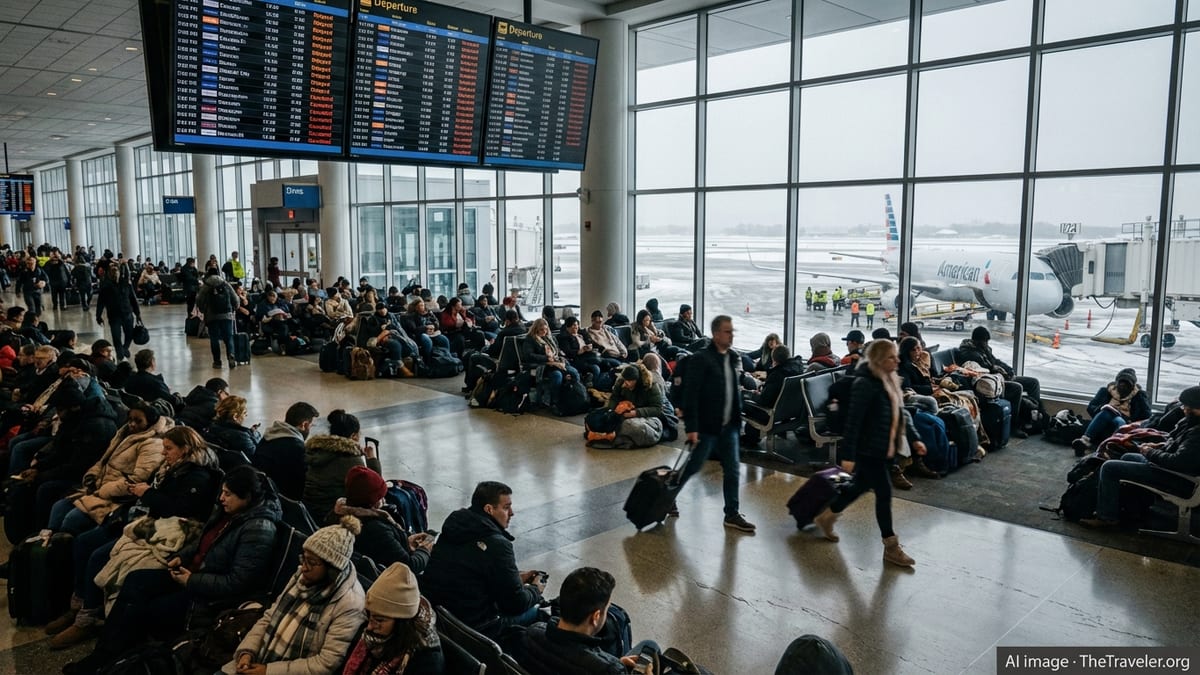
Two Major Gateways Under Strain
Recent updates to American Airlines’ travel alerts page and published industry coverage indicate that the carrier is managing widespread disruption at two of its primary international hubs, where demand for long haul travel has collided with a constrained operating environment. Publicly available schedule data and reports from major aviation outlets point to extensive cuts and retimings across transatlantic and transpacific services, resulting in hundreds of cancelled or heavily delayed overseas flights.
American, one of the world’s largest airlines by daily departures, relies on a relatively small number of global gateways to funnel traffic to Europe, Asia and Latin America. When disruptions concentrate at even one of these hubs, they ripple through connecting banks of flights, often affecting customers whose origin or final destination is thousands of miles away. With two international hubs now under acute pressure on the same operating days, the impact on overseas itineraries has escalated quickly.
Industry analysts point out that the pattern of cancellations reflects the way large carriers prioritize their networks. High yield routes and core trunk links are often protected as long as possible, while secondary long haul services and some overnight connections are more likely to be trimmed when aircraft and crews are in short supply.
In this case, the sharp reduction in overseas flying at two central hubs has left American’s global schedule thinner and more fragile than published timetables suggest, leading to a growing gap between what is printed and what actually departs.
Operational Pressures Behind the Cancellations
Reports from aviation data providers and financial media coverage trace the latest wave of cancellations to a combination of factors that have challenged major carriers throughout 2025 and into 2026. Severe weather at key U.S. airports, lingering knock-on effects of earlier storms, and tight aircraft availability following heavy maintenance cycles have all played a role in compressing American’s long haul capacity.
Previous disruptions at hubs such as Dallas Fort Worth and Charlotte during intense winter storms showed how quickly an airline’s operation can unravel when crews and aircraft are stranded out of position. Analysts now note a similar pattern re-emerging, only this time concentrated on American’s international gateways, where aircraft typically spend longer on the ground between flights and are harder to reposition on short notice.
In addition, global aviation continues to adjust to wider airspace restrictions and geopolitical tensions, particularly across parts of the Middle East and surrounding regions. Restrictions and reroutings have lengthened flight times on some corridors connecting North America with Asia, Africa and the Indian Ocean region, which in turn reduces the number of daily rotations that long haul aircraft can realistically operate without triggering crew duty time violations.
When combined, these pressures have left American with fewer spare aircraft and narrower operating margins at precisely the hubs where flexibility is most needed to protect overseas schedules. The result has been a steady stream of timetable changes, same day cancellations and last minute aircraft swaps on international services.
Impact on International Travelers
The most immediate impact for passengers has been uncertainty around departure times and routings, particularly for those booking complex itineraries that depend on a single hub connection to reach destinations in Europe, Asia or South America. Airline schedule trackers and airport departure boards at American’s major international hubs have shown clusters of cancellations and long delays for flights crossing the Atlantic and Pacific, as well as some north south routes linking the United States with Latin America.
Travelers whose flights originate at smaller regional airports are especially vulnerable to missed connections when their single daily link into a hub is delayed or cancelled. Even if the long haul segment is still scheduled to operate, a disruption on the short feeder leg can strand customers short of the gateway, filling rebooking options and putting additional strain on already busy domestic services.
Published consumer reporting has highlighted growing frustration among passengers whose overseas trips were disrupted at short notice, often after they had already cleared security or even boarded an aircraft. Rebookings that once might have been completed on the same day are now more likely to spill into subsequent days, as full long haul cabins leave fewer spare seats into which displaced travelers can be accommodated.
At the same time, travelers with flexible plans are increasingly choosing to reroute through alternative hubs in the United States or via partner airlines in Europe and beyond, a shift that could reshape traffic flows if the disruption at American’s two key gateways persists for an extended period.
Airline Response and Passenger Options
According to American’s publicly available travel alerts, affected customers are being offered a range of options when their flights are cancelled or significantly rescheduled. In many cases, the airline is waiving change fees and allowing one time rebooking within specified date windows, subject to seat availability in the same cabin. Some travelers are also being re-accommodated on alternative routings that connect through different hubs or travel on later dates when long haul capacity is projected to stabilize.
Consumer advocates note that, under existing U.S. regulations, passengers are generally entitled to a refund if an airline cancels a flight that the traveler no longer wishes to take, even when the cause is outside the carrier’s control. However, compensation for additional expenses such as hotels and meals remains less consistent, and travelers are often encouraged to review both ticket conditions and credit card travel protections before submitting claims.
Industry observers say American’s handling of the disruption will be closely watched in light of broader debates about airline accountability and passenger rights during major operational breakdowns. Previous episodes across the industry, including large scale IT outages and weather related meltdowns, have intensified scrutiny of how carriers communicate with customers and how quickly they can restore normal schedules.
For now, publicly available information suggests that American is focusing on stabilizing its core long haul routes and clearing backlogs at the most heavily affected hubs, a process that may take several days as aircraft and crews are gradually brought back into alignment with the printed timetable.
What Travelers Should Do Now
Travel experts and consumer outlets are broadly aligned on their advice for passengers holding American Airlines tickets that involve the affected hubs. The first step is to monitor the status of every segment in an itinerary, not only the long haul legs, since a delay on a short domestic feeder flight can jeopardize a carefully planned international connection.
Travelers are also being encouraged to build extra time into connections where possible, particularly on outbound journeys that cannot easily be rescheduled, such as cruises, tours or major events. In an environment where same day reaccommodation is less certain, longer layovers can serve as an important buffer against cascading disruptions.
Those with travel flexibility might consider adjusting departure dates or routing through less stressed hubs if inventory allows, especially on routes where American has multiple gateway options. Industry coverage suggests that some alternative hubs and partner airlines are still operating with relatively fewer disruptions, offering potential workarounds for travelers willing to accept indirect routings.
For passengers already on the road, experts recommend keeping boarding passes, receipts and documentation of delays or cancellations, which can be helpful when requesting refunds, travel credits or reimbursement for out of pocket costs.