


More news on this day
Severe wildfires in southwest France are threatening forested areas west of Bordeaux and disrupting travel at the height of the summer season, raising urgent questions for visitors with trips booked to the city and surrounding Gironde region.
Get the latest news straight to your inbox!
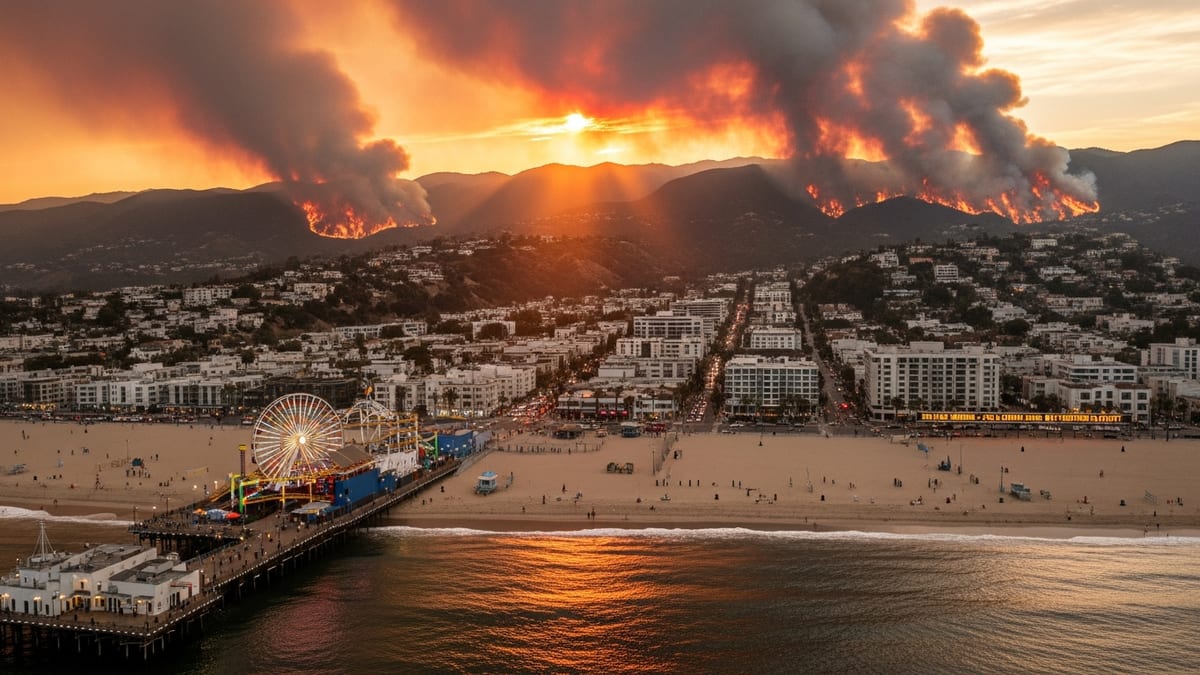
Where the fires are and how the situation is evolving
Wildfires that began on July 22 in the Gironde and neighbouring Landes departments have burned large tracts of forest around the Arcachon Basin and Atlantic coast, including areas near Lège-Cap-Ferret, Le Porge, Saumos and Lacanau, all west of Bordeaux. Published coverage describes a vast blaze affecting tens of thousands of hectares of pine forest, similar in scale to previous extreme fire seasons in the region.
Reports from French and international media on July 27 indicate that the main fire front remains concentrated in coastal and peri-urban forest zones rather than in Bordeaux’s historic centre. However, the burn area has expanded repeatedly in recent days, coming closer to outlying suburbs and prompting a rolling series of evacuations across the département.
Local authorities have described the situation as serious but evolving. Overnight assessments on July 26 to 27 suggested that fire growth had slowed compared with previous days, even as smoke continued to affect communities across southwest Gironde and, at times, parts of the Bordeaux metropolitan area.
Fire weather remains a concern, with a run of heatwaves and very dry conditions creating a high risk of flare-ups and new ignitions. Travellers should be prepared for conditions to change quickly as winds shift and response strategies are adjusted.
Impact on Bordeaux city, suburbs and air quality
Within Bordeaux itself, public information at the time of writing suggests that the historic centre, main tourist districts and most urban neighbourhoods remain physically untouched by flames. Museums, riverfront areas and city-centre hotels have generally stayed open, although some venues are adapting operations depending on staff availability and transport disruption.
The greater concern for visitors is smoke and air quality in and around the metropolitan area. Monitoring agencies tracking the fires in Gironde and Landes report periodic episodes of degraded air, with fine particles and haze drifting over Bordeaux when winds blow from the fire zones. People with respiratory or cardiovascular conditions may be particularly sensitive to these conditions.
Several suburbs to the west and south of the city have faced evacuation orders or preparedness notices as the fire perimeter has shifted. Publicly available information describes large numbers of evacuees being hosted in reception centres around the metropolis, which is placing additional pressure on local infrastructure and emergency services.
Travellers already in Bordeaux are advised in official bulletins to follow any local instructions, limit outdoor activity during periods of heavy smoke, and monitor municipal channels and weather alerts for updates. Many residents and visitors are using face coverings and keeping windows closed when air quality deteriorates.
Transport disruptions: flights, roads and rail
The wildfires are having a significant knock-on effect on transport in and out of Bordeaux. According to notices from Bordeaux’s airport operator on July 26, the hotel zone around the airport has been evacuated under prefectural decision, and some access roads have been affected by closures or diversions linked to nearby fires.
Flight operations at Bordeaux–Mérignac Airport have largely continued, but with delays, schedule changes and the potential for short-notice disruption if smoke, staff shortages or new evacuation measures affect the site. Travellers are being urged by airlines and the airport to check flight status frequently and allow extra time to reach the terminal.
On the road network, Bordeaux Métropole and regional transport platforms list temporary closures and restrictions on parts of the A63 corridor and connecting routes to the southwest, in order to prioritise emergency vehicles and protect evacuees. This can seriously lengthen journey times to and from Atlantic coastal resorts, as well as detour traffic that would normally pass through forested areas.
Rail operators serving southwest France have reported delays and partial cancellations on routes running towards Arcachon and the Landes, with some services curtailed or replaced by buses where tracks pass near active fire zones. Long-distance high-speed links into central Bordeaux remain broadly operational, but indirect disruption is possible as resources are reallocated and safety checks are carried out.
Official advice and what it means for upcoming trips
Foreign travel advisories updated in recent days highlight the wildfires near Bordeaux, urging travellers to stay informed and to follow local guidance about movement restrictions and evacuation orders. At the time of writing, there is no widespread blanket recommendation against all travel to France, but the Gironde fires are specifically noted as a hazard requiring caution.
Public statements from the Gironde prefecture and local authorities strongly request that non-essential travel into the département, and particularly leisure trips towards the affected coastal and forest zones, be postponed. This is intended to keep roads clear for emergency operations and to avoid placing additional strain on accommodation and services already hosting evacuees.
For those with imminent holidays to Bordeaux, travel rights often depend on whether a national government has formally advised against travel to a specific region. Package tour operators and airlines may review itineraries or offer flexibility where stays are planned in or near evacuation areas, but policies can vary and are typically assessed day by day as the situation develops.
Travel insurance policies commonly treat wildfires as a natural catastrophe, which may trigger certain cover for cancellation or curtailment, provided that the policy was purchased before the event became a known issue. Travellers are advised to review their policy wording carefully and to obtain written confirmation from carriers or tour providers if services are cancelled or significantly altered.
Practical guidance for travellers considering Bordeaux now
For visitors already in Bordeaux or due to arrive within the next few days, the practical picture is mixed. The urban core of the city remains accessible, with cultural attractions and hospitality businesses operating under challenging conditions. However, the wider Gironde region is in the midst of a major emergency, and the priority is the safety of residents and evacuees.
Anyone with plans focused on coastal resorts, forest campsites, rural guesthouses or outdoor activities near the Arcachon Basin should be prepared to change their itinerary. Many holiday camps and nature sites in the affected zones are closed, and further closures or evacuations are possible at short notice.
Travellers who decide to proceed with a city break in Bordeaux are encouraged to build flexibility into their plans: opt for refundable bookings where possible, track local news and municipal announcements, and stay in close contact with accommodation providers regarding air quality, transport and any new restrictions.
Ultimately, whether it is “safe” to travel to Bordeaux in late July 2026 depends not only on proximity to the fires but also on personal risk tolerance and health considerations. Current information suggests that the city itself is not under direct threat from flames, yet the scale of the regional emergency, the potential for sudden changes in wind and fire behaviour, and the pressure on local infrastructure mean that postponing non-essential leisure trips to Gironde may be the most responsible choice for many travellers at this time.