


More news on this day
Severe thunderstorms sweeping across the Midwest, combined with already strained summer flight schedules, have triggered roughly 4,444 flight disruptions across the United States, with American Airlines and regional partner SkyWest emerging as the most heavily impacted operators and Chicago’s key airports bearing the brunt of cancellations and delays.
Get the latest news straight to your inbox!
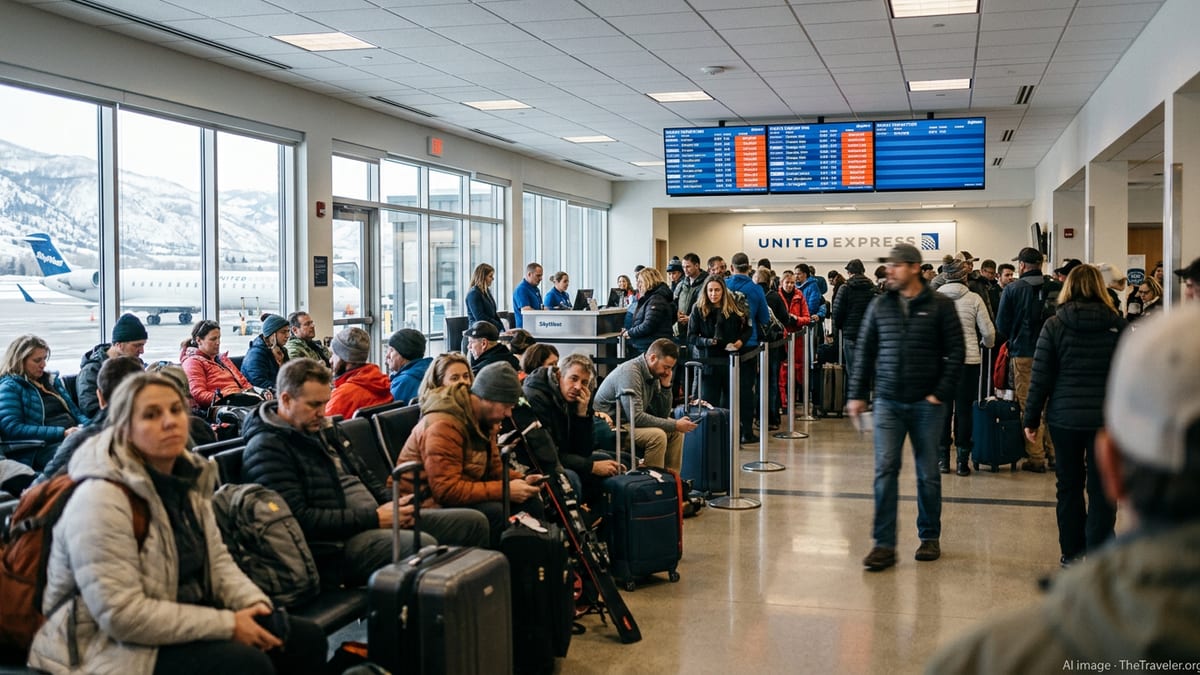
Storms, Ground Stops and a System Under Strain
In the latest blow to peak-season air travel, a new round of disruptive weather has collided with dense summer schedules at major hubs. In Chicago, a ground stop for flights bound for O’Hare International Airport on the evening of June 16 led to cascading delays as thunderstorms rolled through the region and temporarily halted arrivals. Publicly available data from the Federal Aviation Administration showed average departure delays of more than an hour at O’Hare during the height of the storms.
Those conditions fed into a broader nationwide disruption pattern that aviation trackers and airline-status dashboards indicate has now affected about 4,444 flights through a mix of cancellations and significant delays. American Airlines and its regional partner SkyWest appear repeatedly at the top of disruption tallies, reflecting their combined exposure at major hubs in Chicago, Dallas, Phoenix and other storm-prone nodes in the national network.
Reports from airline schedule analysts suggest that the situation in Chicago is especially sensitive this summer. The FAA has already imposed temporary scheduling limits at O’Hare for the May 17 to October 24 season, reducing peak published operations and effectively narrowing the margin for recovery when weather, crew constraints or air traffic control issues strike. When thunderstorms forced Tuesday’s ground stop, that limited flexibility magnified the impact for both airlines and passengers.
Travelers connecting through Chicago in recent days have described extended waits, missed onward flights and repeated rebookings, underscoring how one evening’s storms can ripple through multiple days of flying. Some itineraries that were scheduled to pass through O’Hare only briefly have instead turned into overnight odysseys, especially for those without nonstop alternatives.
American Airlines and SkyWest Bear the Brunt
Operational data and passenger reports indicate that American Airlines and SkyWest are carrying a disproportionate share of the current disruption burden. American’s heavy reliance on O’Hare as a connecting hub, coupled with its large presence at other congested airports facing storm activity, leaves it exposed when weather systems stall over the central United States.
SkyWest, a regional carrier operating flights for several major airlines including American, has also faced mounting challenges. The company’s own financial filings highlight how concentrated operations at major hubs make regional networks vulnerable to any significant interruption, whether from storms, air traffic restrictions or shortages of available crews. When a hub like Chicago slows down, regional feeders operated by SkyWest quickly experience knock-on effects, with aircraft and crew rotations pushed out of alignment.
Recent days have also seen individual American and American Eagle flights into and out of Chicago cancelled or heavily delayed for a mix of reasons, ranging from storms to crew availability. Public tracking sites show multiple itineraries returning to gates, diverting, or holding for extended periods before departure as airlines juggle staffing limits and shifting weather patterns.
For passengers, the distinction between mainline and regional operations is largely invisible, yet it can be pivotal for recovery. When a SkyWest-operated leg cancels late in the day, rebooking options are often constrained by aircraft size, limited frequencies on smaller markets, and the knock-on impact of earlier disruptions on crew duty-time limits.
Chicago’s Role in a Nationwide Logjam
Chicago’s aviation system sits at the heart of the current turmoil. O’Hare is one of the country’s busiest hubs, serving as a connecting crossroads for American, United and their regional partners, while nearby Midway handles heavy traffic for Southwest and other carriers. When storms stall over northern Illinois, the entire structure of US domestic connectivity can wobble.
The FAA’s recent decision to cap scheduled daily operations at O’Hare for the 2026 summer season was designed to ease chronic congestion and improve on-time performance. However, by trimming peak operations from previously published schedules, the new limits also reduce slack in the system. Airlines are operating closer to the edge, with fewer spare slots to absorb late-arriving aircraft or to add recovery flights after waves of cancellations.
In practice, this means that even a moderate weather event can trigger outsized consequences. A single evening of ground stops and arrival metering can strand aircraft in the wrong cities, drain crews of remaining duty time and clog key taxiways the following morning as airlines attempt to reposition fleets. Chicago’s central geographic position ensures that disruptions there send shockwaves to both coasts, affecting travelers who may never physically set foot in the city.
Airlines have published travel waivers in recent days to give affected passengers more flexibility to change plans without penalties, particularly for itineraries touching the Midwest. Yet capacity on alternative routes is tight in the busy June period, limiting the practical value of such waivers for travelers who still need to arrive on specific days.
Passengers Face Long Lines and Uncertain Itineraries
Across social platforms and passenger forums, accounts from travelers paint a picture of crowded gate areas, long customer-service queues and a pervasive sense of uncertainty. Some passengers describe sitting through multiple rolling delay announcements before flights are ultimately cancelled, while others recount last-minute aircraft changes and rapid rebookings onto indirect routings that add many hours to journeys.
At Chicago’s O’Hare, where security lines and gate areas were already under pressure at peak times this summer, the wave of disruptions appears to have intensified congestion. Travelers have reported missing flights despite arriving far in advance, with tight connections especially vulnerable to even short delays upstream in the network.
Families and international travelers have been particularly affected when overnight stays become unavoidable. With popular airport hotels filling quickly during major disruption events, some travelers are being forced to look farther afield for accommodation or to spend extended hours waiting inside terminals while airlines work through backlogs.
Consumer advocates note that the current turmoil highlights ongoing concerns about communication and contingency planning, especially during complex, weather-linked disruptions that span multiple days and regions. While many passengers report helpful interactions with individual staff members, there is frustration at inconsistent information between mobile apps, gate announcements and call-center agents.
Outlook for the Days Ahead
Looking ahead to the remainder of the week, forecasters expect additional storm cells to pass through parts of the Midwest and Great Lakes, though the precise impact on Chicago’s airports will depend on timing and intensity. Airlines are closely monitoring forecasts and adjusting schedules at the margin, but the accumulated disruption of recent days suggests that recovery may be uneven.
Industry observers point out that June and July are historically challenging months for US aviation, as intense travel demand intersects with a peak in convective weather and limited spare capacity across fleets. With many airlines still operating tight schedules and facing ongoing staffing constraints in key operational roles, the resilience of the system remains under scrutiny.
For now, publicly available tools from airports, airlines and third-party trackers indicate that American Airlines and SkyWest will remain closely watched as travelers and analysts gauge whether the current wave of disruptions begins to ease or continues to reverberate through the network. The scale of the 4,444 affected flights is a reminder of how quickly a modern aviation system can seize up when weather, congestion and resource limits collide.