


More news on this day
Pegasus Airlines has opened a new daily route between London Gatwick and Istanbul Sabiha Gökçen, positioning its latest UK service as a timely alternative for travelers seeking to sidestep mounting disruption, delays and cancellations affecting Europe’s busiest legacy hubs this summer.
Get the latest news straight to your inbox!
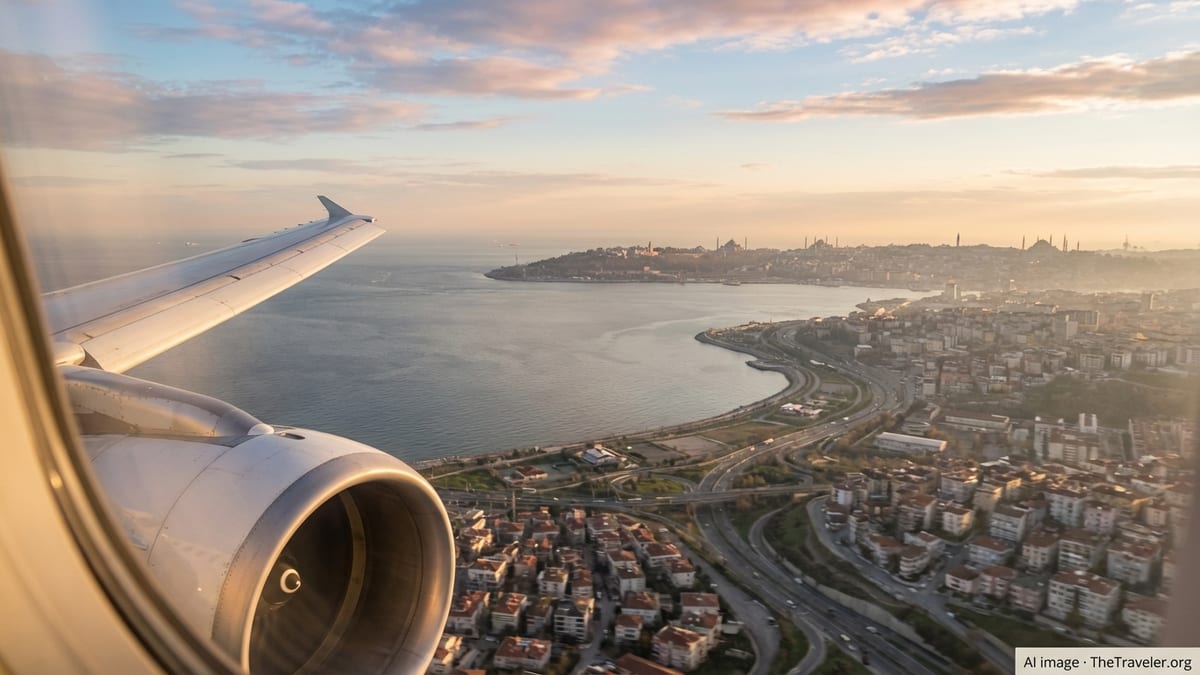
New Daily Gatwick Link Strengthens Pegasus UK Network
The Turkish low cost carrier began operating the London Gatwick to Istanbul Sabiha Gökçen route on 15 June 2026, according to Pegasus’ latest network updates and company announcements. The service runs daily for the summer season, expanding the airline’s UK footprint beyond its established London Stansted operation and increasing options for travelers in London and the South East.
Industry route trackers indicate that flight schedules are structured to offer early afternoon departures from Gatwick and late evening returns from Istanbul, designed to appeal to both short leisure breaks and longer holidays. Aviation data providers list the route as operating into Istanbul’s Sabiha Gökçen International Airport, Pegasus’ primary hub on the Asian side of the city, where the airline offers extensive onward connectivity across Türkiye, Europe, the Middle East and parts of Asia and Africa.
Travel trade publications describe the Gatwick launch as part of a broader push by Pegasus to deepen its presence in key European origin markets. Investor material circulated earlier in 2026 highlighted London Gatwick among a cluster of new international additions to the carrier’s network over the last 12 months, underscoring how strategically important the UK has become for the airline’s growth plans.
Gatwick Airport communications show that Pegasus is one of several new or returning carriers joining the airport’s summer 2026 schedule, contributing to a diverse line up of airlines and destinations as the airport recovers capacity lost during the pandemic and subsequent operational resets.
Bypassing Strained Legacy Hubs and Summer Flight Cancellations
The launch comes as UK and European travelers face another unsettled summer of aviation disruption. Publicly available data compiled by independent travel platforms in spring 2026 point to repeated peaks in delays and cancellations at major legacy hubs such as London Heathrow, Paris Charles de Gaulle and Frankfurt, driven by staff shortages, air traffic control constraints and knock on effects from regional geopolitical tensions.
During the Easter period, British Airways, Pegasus and other carriers recorded notable spikes in cancellations and late running services on popular routes linking the UK with Türkiye and other holiday markets, according to coverage by specialist travel media. That turbulence prompted consumer advocates and travel advisers to call on passengers to diversify their choice of departure airports and carriers where possible in order to limit exposure to any single congested hub.
Against that backdrop, a new point to point link from Gatwick to Istanbul’s secondary airport offers an additional escape valve for UK based travelers. Instead of funneling through Istanbul’s newer mega hub or relying exclusively on Heathrow based full service airlines, passengers now have the option of departing from London’s second largest airport and connecting through Sabiha Gökçen, which tends to handle a higher proportion of low cost and regional traffic.
Operational performance reports for early 2026 show that Pegasus itself has not been immune to disruption, with periods of delays and selected route cancellations recorded at Sabiha Gökçen during the spring shoulder season. However, analysts note that spreading demand across multiple London airports and across a mix of legacy and low cost carriers may give travelers more flexibility to rebook in the event of last minute schedule changes.
Strategic Timing for UK Holidaymakers and VFR Traffic
Travel industry observers highlight the timing of the Gatwick launch, which lands just as UK schools approach the peak summer holiday period. Demand forecasts from tour operators and online travel agencies suggest robust appetite for Türkiye in 2026, particularly for coastal resorts and city stays in Istanbul, as travelers continue to seek relatively affordable destinations outside the eurozone.
The new Gatwick service also targets the sizeable visiting friends and relatives segment between the UK and Türkiye. Statistics from previous years indicate that a substantial proportion of UK Türkiye traffic consists of diaspora and family travel, for whom fare level, schedule convenience and the ability to access secondary airports closer to home on both ends of the journey can be more important than premium onboard services.
By pairing Gatwick with Sabiha Gökçen, Pegasus is positioning itself to capture demand from passengers living south of the Thames and along the south coast, who may find Gatwick more accessible than Stansted or Heathrow. At the same time, the Istanbul schedule is structured to allow same day connections to domestic destinations such as Izmir, Antalya and Bodrum, which remain magnets for British sun seekers.
Aviation analysts commenting on the route’s launch note that the daily frequency provides a useful level of redundancy for travelers. Should a particular rotation be affected by operational issues, having a once per day service in each direction still gives the airline scope to re accommodate passengers within a 24 hour window, particularly outside the most compressed peak days of late July and August.
Low Cost Model Meets Intensifying Competition on UK–Türkiye Corridor
Pegasus’ Gatwick move unfolds within a fiercely competitive UK to Türkiye market where Turkish Airlines, SunExpress, Wizz Air and several charter brands already vie for passengers. Scheduled capacity filings for summer 2026 show that low cost operators are increasing their share of seats on these routes, responding to price sensitive demand and a consumer preference for unbundled fares in the face of broader cost of living pressures.
The Pegasus product on the Gatwick route follows the airline’s standard low cost model, with a base fare that covers the seat and a small personal item, while additional services such as checked luggage, seat selection and onboard meals are sold à la carte. For travelers primarily concerned with reaching Istanbul or onward Turkish destinations at the lowest possible fare, this structure can be attractive, especially when booked well in advance.
However, passenger experience reports and consumer forums illustrate that the no frills model can expose travelers to a higher level of inconvenience when things go wrong. Cases of long delays, missed connections and complex refund processes have been documented by customers across social platforms and advice communities, where contributors stress the importance of understanding fare rules, minimum connection times and compensation rights under UK and EU style regulations.
In that environment, Pegasus’ expansion into Gatwick heightens pressure on competitors but also underlines a broader shift in how UK based travelers approach trip planning. More passengers are blending low cost and full service segments, prioritising direct routings from secondary airports, and paying closer attention to operational track records, not just headline fares.
What the New Route Means for UK Travelers Looking Ahead
For UK passengers planning trips between London and Istanbul this summer, the addition of Pegasus flights from Gatwick provides another lever to manage risk in a volatile travel landscape. Travelers now have at least three principal London departure points to choose from on various carriers serving the Turkish metropolis, increasing the chances of finding workable alternatives if a particular airport or airline experiences acute disruption.
According to schedule databases, the Gatwick to Sabiha Gökçen flight operates as a non stop sector of around four hours, broadly comparable with existing London to Istanbul options. Connecting opportunities beyond Istanbul are particularly relevant for travelers heading to regional Turkish cities that may lack nonstop links from the UK, as well as for those using Istanbul as a springboard to the Gulf, Caucasus or Central Asia.
Consumer advocates continue to advise that, regardless of carrier, travelers should monitor flight status closely, build in longer connection buffers where possible and consider travel insurance that explicitly covers airline disruptions. The Gatwick route’s daily pattern, combined with the relative agility of a low cost operator, may offer additional resilience, but it does not fully insulate passengers from systemic strains across European airspace or sudden geopolitical developments.
Even so, industry commentary suggests that the symbolic impact of a new UK route launch from Pegasus in mid 2026 is significant. After several years dominated by capacity cuts and operational retrenchment, the opening of additional London to Istanbul capacity sends a signal that airlines still see strong long term demand on this corridor. For many UK travelers weighing their options amid ongoing uncertainty, the presence of another daily link from Gatwick could prove to be a welcome safety valve in a crowded and occasionally chaotic summer sky.