


More news on this day
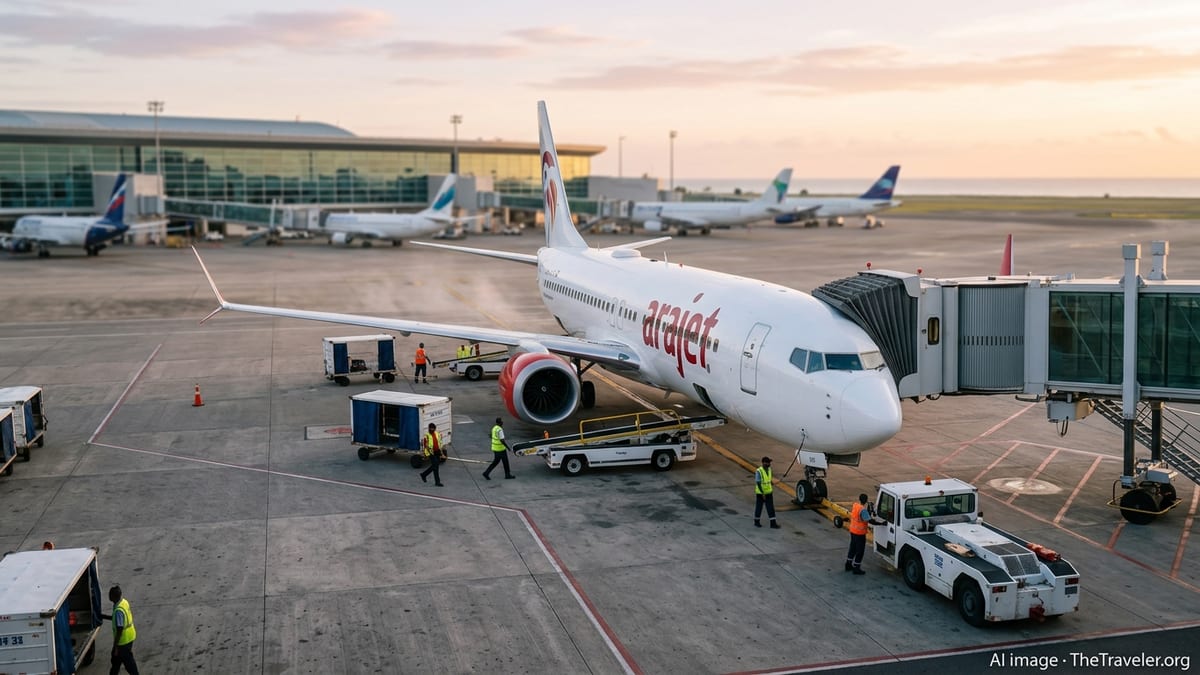
Dominican low cost carrier Arajet is emerging as a rare bright spot in a turbulent regional aviation landscape, with publicly available data and media coverage indicating record passenger growth just as United States flight cancellations and Caribbean airport disruptions continue to snarl travel plans.
Get the latest news straight to your inbox!
Record-Breaking Growth for a New Caribbean Player
Arajet, based in Santo Domingo, has rapidly expanded since its launch in 2022, positioning itself as a low cost bridge between North America, the Caribbean and Latin America. Statistics from the Dominican Republic’s aviation authorities for 2024 show that Arajet moved hundreds of thousands of passengers on regional routes, with particularly strong flows to Colombia, Mexico and key US gateways such as Miami and New York. These volumes point to a carrier that is growing faster than many legacy competitors serving the Caribbean.
Reports from regional aviation bulletins indicate that in several peak months of 2024 Arajet surpassed earlier internal traffic projections, effectively absorbing demand from travelers seeking alternatives to higher fares and often disrupted itineraries via major US hubs. Industry observers note that, while exact month-by-month breakdowns vary, Arajet’s total annual traffic now places it among the most significant foreign airlines serving the Dominican Republic’s main international airport.
This growth has come as overall air travel in the Americas continues to climb. US and international monitoring bodies have documented year-on-year increases in total passenger volumes, even as airlines struggle with staffing constraints, congested airspace and infrastructure limitations. Within that broader surge, Arajet’s expansion has given Caribbean travelers additional nonstop options at a time when many are actively looking to avoid complex connections through disruption-prone airports.
While promotional materials highlight low base fares, analysts point out that Arajet’s network strategy has been just as important as pricing. By focusing on point-to-point links among secondary and leisure-focused cities in the Americas, the carrier has been able to capture passengers who might otherwise have routed through overstretched US hubs or through traditional Caribbean connection points facing capacity strain.
US Flight Cancellations Put Pressure on Regional Connectivity
At the same time Arajet has been scaling up, US aviation has been grappling with persistent disruption. Data compiled by passenger rights organizations for 2024 and 2025 show that more than one in five travelers departing US airports experienced some form of delay, and a notable share faced outright cancellations. Studies released in 2025 report that well over 200 million passengers in the United States were affected by delays or cancellations in the previous year, even though total flight numbers grew only modestly.
Government and industry reports attribute these disruptions to a combination of factors, including air traffic control staffing challenges, severe weather, infrastructure constraints at major hubs and operational issues at individual airlines. In peak travel periods, large US airports regularly appear on rankings of the most disrupted facilities, with some hubs seeing more than a quarter of scheduled flights delayed or canceled on busy days.
These patterns have particularly serious implications for Caribbean-bound travelers relying on US connections. When a US domestic leg is canceled or significantly delayed, passengers may miss onward flights to island destinations and face limited rebooking options, especially during holiday and school vacation peaks. Consumer watchdog analyses describe millions of lost passenger hours and highlight the knock-on effects on tourism-dependent economies across the region.
Against this backdrop, carriers that can offer reliable point-to-point service between Latin America, the Caribbean and select US cities are in a position to shield at least a portion of travelers from the worst of the chaos. Arajet’s growing network, which often bypasses the most congested US hubs, is being viewed by market commentators as one example of how new entrants can help disperse demand and reduce vulnerability to systemic bottlenecks.
Caribbean Airports Confront Capacity and Weather Shocks
Beyond the United States, airports around the Caribbean have also faced their own operational pressures. Publicly available disruption trackers and regional media coverage describe a mix of capacity constraints, expansion works and seasonal weather events that periodically limit airport throughput. In some cases, runway or terminal upgrades have forced temporary reductions in movements, while in others, tropical storms and heavy rainfall have caused short-notice closures or diversions.
These local issues compound the risks created by US cancellations. A traveler whose US-origin flight arrives late into a Caribbean gateway may find that overnight curfews, limited ground staff or slot restrictions make same-day recovery impossible. Analysts focusing on regional tourism note that even small percentages of disrupted flights can have outsized economic impacts when they affect visitors on short leisure stays or cruise connections.
Airports and governments around the region have been racing to respond. Official statistics and planning documents from several Caribbean states highlight investments in terminal expansions, runway works and upgraded air traffic management systems. However, construction itself can lead to interim bottlenecks before long-term capacity gains are realized, leaving airlines and passengers to navigate a period of heightened operational risk.
In this environment, carriers with flexible fleets and point-to-point networks may be better placed to adjust schedules, reroute aircraft and open new city pairs that relieve pressure on specific hubs. Arajet’s model of linking multiple mid-size cities, rather than relying exclusively on a single megahub, fits into this broader shift toward more distributed regional connectivity.
Arajet’s Role in Mitigating Regional Travel Chaos
While numbers such as “183,000 passengers shielded from disruptions” reflect analytical estimates rather than official tallies, available data support the idea that Arajet’s growth has tangibly reduced exposure to US cancellation patterns for a significant cohort of travelers. By carrying hundreds of thousands of passengers annually on routes that either avoid the most disruption-prone US hubs or connect Latin American cities directly to the Caribbean, the airline has effectively created a parallel network alongside traditional northbound corridors.
Aviation market analyses suggest that travelers who choose nonstop or single-connection itineraries on newer regional carriers face fewer cascading risks from distant weather or staffing events. If a large US hub suffers a wave of cancellations, passengers already airborne on a direct Arajet flight between two non-US airports, for example, are largely insulated from those disruptions. Industry models regularly used in route planning indicate that each additional connection point increases the probability of a missed flight or schedule change, underscoring the value of direct services.
Furthermore, regional passenger statistics from the Dominican Republic show that Arajet has become a key contributor to the country’s position as an emerging transit point in its own right. By positioning Santo Domingo as a connecting hub between South and North America, the airline participates in a broader trend in which Caribbean and Latin American airports seek to capture transfer traffic that once flowed almost exclusively through US and European gateways.
Observers caution that no carrier is immune to operational challenges, and publicly shared passenger accounts reflect a mix of positive experiences and frustrations with Arajet’s service. Even so, the airline’s rapid growth, network design and ability to accommodate rising demand during a period of widespread disruption indicate that its impact on regional travel patterns is substantial. As US flight cancellations and Caribbean airport constraints continue to generate uncertainty, Arajet’s record traffic suggests that many travelers are willing to bet on new routing options to keep their journeys on track.