


Paying for airport lounge access has become one of the most heavily marketed “travel upgrades” in recent years, yet many travelers still wonder whether it genuinely saves money or simply adds cost to already expensive trips. For people who fly only one to six times a year, the answer depends on where and how you buy access, how you actually use airports and what you would otherwise spend on food and comfort in the terminal.
Get the latest updates straight to your inbox!
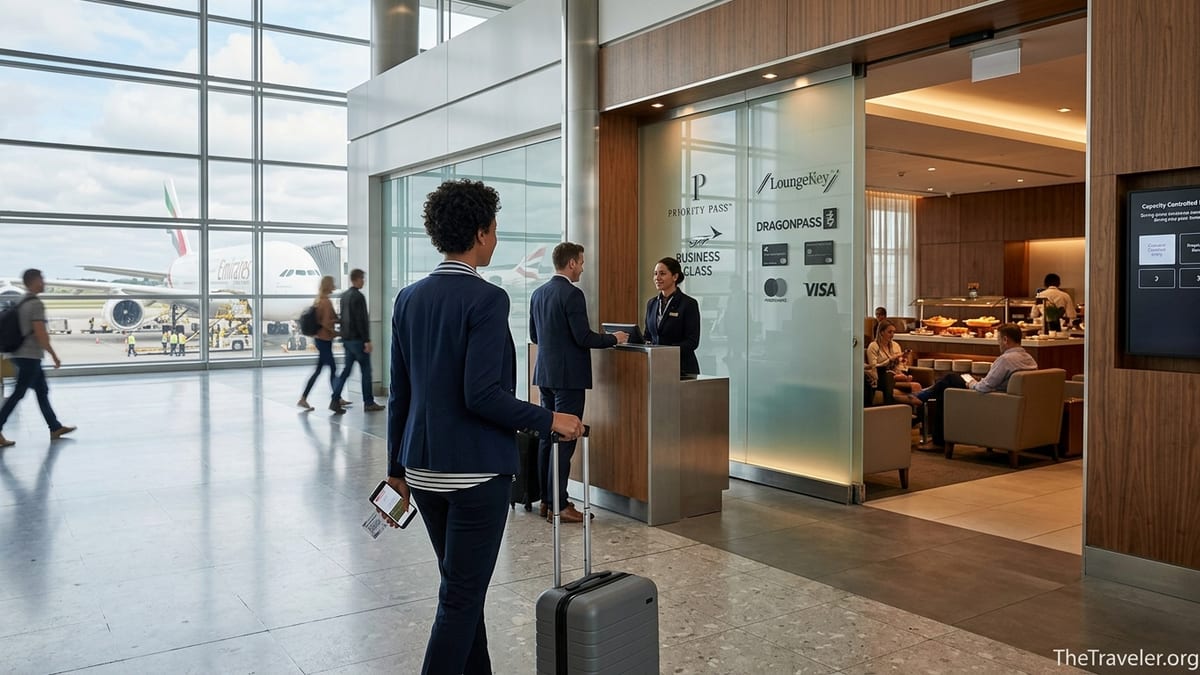
Ways to Buy Lounge Access: Passes, Memberships, Cards and Tickets
There are four main routes into most airport lounges: buying a one-off entry, purchasing an annual lounge membership, receiving access as a benefit of a premium credit card and entering through an airline’s own premium cabin ticket or frequent flyer status. Each has very different economics for occasional travelers.
One-off entries are usually sold either directly by the lounge or as part of a third-party platform. At London Heathrow, for example, recent publicly advertised prices on operator and airport sites in late 2026 start around 34 to 40 pounds for independent lounges such as No1 Lounges and Plaza Premium, with some premium spaces charging higher fees for longer stays or more exclusive service. Similar day passes at other major airports typically cost the equivalent of about 35 to 70 US dollars for a three-hour window, depending on the city and lounge brand.
Annual memberships such as Priority Pass or DragonPass offer access to large global networks for a yearly fee plus, in some tiers, a charge per visit. Credit card lounge access uses many of the same physical lounges but is billed very differently: you pay the card’s annual fee and visits are then either included or discounted, often with guest charges. Finally, airline business and first class tickets or mid and high-tier elite status on carriers such as Delta, United, American, British Airways or Emirates grant lounge access tied to the flight, which can be extremely valuable but is not something an occasional leisure traveler will usually buy just for lounge access.
For someone flying no more than half a dozen times a year, the realistic choice is usually between occasional day passes, a lower tier membership, or a credit card that incidentally includes lounge benefits they will use a few times. The business class route is appealing in theory but almost never cost effective if lounge time is the only goal.
Priority Pass, LoungeKey and DragonPass: What You Actually Get
Priority Pass remains the best known paid lounge network. In the US market in late 2026, its directly sold annual plans are advertised at three price points. The Standard plan charges 99 dollars per year, with each member visit costing an additional 35 dollars. The Standard Plus plan costs 329 dollars per year and includes ten member visits, with further visits priced at 35 dollars. The Prestige plan, at 469 dollars per year, offers unlimited member visits, though guest visits still attract a per-person fee that is broadly similar to the 35 dollar member visit charge. Official materials suggest that pricing can vary slightly by country of residence and currency, so travelers based outside the United States will see different figures even for the same tier.
LoungeKey looks similar to Priority Pass from the traveler’s point of view but is distributed almost entirely via payment cards, not by direct retail sale. When a card offers “LoungeKey access,” visits are processed through the LoungeKey platform and charged according to the rules of that specific card program. Some cards provide a fixed number of free visits each membership year, others unlimited access with a guest fee around the low thirty dollars, and some require a fee per visit from the first use. Terms of use clarify that access is conditional on space being available and that participating lounges can decline entry at busy times.
DragonPass runs another large global network that mixes lounge access, dining credits and fast track security in some airports. Its current standalone membership pricing in US dollars includes a Solo Travel plan at 79 dollars per year with two included “passes” for lounge or related services, a Better Travel plan at around 309 dollars with eight passes and the Travel Together plan at about 449 dollars with twelve passes and broader guest sharing. Additional passes are sold in the high-thirty dollar range. These plans are also sold in pounds and euros with roughly aligned price points, reinforcing that regional pricing can differ while offering broadly comparable value.
Although all three brands often appear interchangeable in casual discussion, their networks and rules are not identical. A lounge at Dubai or Amsterdam may accept Priority Pass but not DragonPass, or vice versa. Dining credits, such as a roughly 30 dollar allowance at certain airport restaurants instead of lounge access, are more common with Priority Pass and DragonPass than with LoungeKey cards from banks in North America. Travelers should always check the specific app or program website for the departure airport and terminal rather than assuming that “any lounge pass” will work.
Walk In Prices and Real World Access at Major Hubs
To judge whether paying 30 to 40 dollars for a lounge visit makes sense, it helps to compare with walk in prices at big hub airports. At London Heathrow, recent airport and operator data show independent lounges typically pricing prebooked three hour stays from roughly 34 to 41 pounds, with higher rates for six hour access or more premium brands. One example is a Plaza Premium lounge in Terminal 5 priced around the mid 30 pound mark for three hours, with some travelers reporting higher fees closer to 60 or 70 pounds when booking six hour blocks through third-party agents or at busier times.
In continental Europe, Amsterdam Schiphol and Rome Fiumicino display similar levels. Recent surveys of operator sites report day pass prices broadly in the range of 35 to 60 euros for independent lounges that are part of the major networks, with a standard stay limit of three hours and occasional higher tariffs for longer or more exclusive spaces. Frankfurt, another common connecting point, has quoted prices of roughly 69 euros for certain Priority-branded lounges for three hours, illustrating that Europe’s busiest hubs often charge a premium for walk in users.
In New York, the picture is more fragmented. Independent reporting in late 2026 notes that John F. Kennedy International Airport’s main lounges are often tied to specific airlines or card issuers, and at present there are very few, if any, true public day passes available for purchase in most terminals. Instead, travelers generally need a same day business or first class ticket, airline club membership, bank card access or a lounge network membership such as Priority Pass that partners with specific lounges or airline facilities during off peak hours.
At Dubai International, one of the world’s busiest connecting hubs, multiple independent lounges sell access on a pay in basis to economy class travelers, frequently in the 50 to 80 US dollar equivalent range for four to six hours, depending on the lounge and whether the booking is made in advance. Emirates’ own lounges, which serve most long haul traffic, do not generally sell cheap day passes but instead bundle access into business and first class fares or offer paid upgrades for eligible economy or premium economy passengers at substantially higher prices.
Rules, Restrictions and the Risk of Being Turned Away
All major lounge programs include a common caveat in their terms and app listings: entry is subject to capacity. At busy times, particularly early morning and evening departure peaks, lounges often restrict entry for membership programs such as Priority Pass, LoungeKey and DragonPass, preferring to keep space for airline business class guests and top tier elites. Travelers report that at some North American hubs, Priority Pass cardholders are regularly turned away at several lounges in a row during peak evening hours, while the same lounges are relatively easy to access around midday.
Stay limits are another important restriction. Many contract lounges state a maximum stay of around three hours, sometimes extended to six hours on higher priced day passes. At Heathrow, travelers with long layovers report that staff may politely ask guests to leave after their time allocation in busy periods. Fast growing hubs such as Dubai and Doha also enforce time windows, though check in staff often note that enforcement is stricter when all seats are full. Programs such as DragonPass sell defined “passes” that generally cover a single visit rather than the entire day.
Membership source also matters for access rules. A Priority Pass membership bought directly from the company may allow you to prebook specific lounges for an extra fee, which can reduce the risk of being turned away but adds to the effective cost of each visit. Credit card issued Priority Pass, LoungeKey or DragonPass benefits may not include prebookings at all, or may charge a separate reservation fee on top of the visit charge. Some cards have quietly removed restaurant credits from their version of Priority Pass even while standalone memberships still list participating restaurants in the app.
Finally, travelers should note the distinction between departure and arrival access. Most lounges are located airside after security and immigration, and policies usually focus on departing passengers. Some airports, especially in Asia and the Middle East, allow arriving passengers to use airside lounges before clearing immigration, but in many European and North American airports, there is no practical way to access a landside lounge on arrival without exiting the secure area. This limits the usefulness of passes for someone whose main goal is a shower after landing rather than comfort before departure.
Valuing Lounge Amenities Versus Buying Food in the Terminal
The core financial question is simple: are you getting more value than you pay for? Most independent lounges promise a package of buffet food, complimentary alcoholic and soft drinks, Wi Fi, reasonably comfortable seating, quiet workspaces and, in some cases, showers. In practice, the quality of food and drink ranges from basic sandwiches and house wine to near restaurant level hot dishes and decent barista coffee, depending on the lounge and airport.
To compare this with terminal prices, consider an average European or North American hub airport. A modest sit down meal and non alcoholic drink can easily reach 18 to 25 dollars or euros. Add a glass of wine or beer and a coffee and the bill can climb to 30 dollars or more per person, especially in high cost airports such as Heathrow, JFK or Zurich. Buying separate Wi Fi is less common now that most major airports offer free access, but power outlets and quiet seating can still be scarce at peak times.
If a lounge day pass costs the equivalent of 40 to 50 dollars, it only makes clear financial sense if you would otherwise have spent something reasonably close to that on food and drink and you value the quiet, workspace or shower strongly enough to justify the difference. For instance, a traveler who usually grabs just a 12 dollar sandwich and bottle of water before a short domestic flight is unlikely to come out ahead on a 35 dollar lounge visit, even if snacks and drinks in the lounge feel more plentiful. By contrast, a traveler facing a six hour layover at Heathrow who expects to buy a full meal, several drinks and perhaps pay for a shower could find a 60 to 70 pound long stay lounge booking good value compared with multiple restaurant visits.
A further nuance is what is included and what is not. Many lounges charge extra for premium alcoholic drinks, champagne, spa treatments or private nap rooms. For families, some lounges offer discounted child rates, while others charge full adult pricing for older children. Travelers relying on lounge access to feed two adults and two children should check whether the lounge charges per person or per family group, since four individual passes at 40 dollars each is a very different proposition from a bundled family entry.
Break Even Calculations for Occasional and Frequent Travelers
Using the current US Priority Pass prices as a benchmark, it is possible to sketch realistic break even points for different traveler types. Consider a solo traveler who expects to make two lounge visits in a year. Buying the Standard membership at 99 dollars plus two visits at 35 dollars each yields a total annual cost of 169 dollars, or 84.50 dollars per visit. If comparable walk in access at their usual airports runs at 50 dollars per visit, the membership is not a financial win unless they value the ability to access a wider network or prebook at busy times far above the cash difference.
For a couple making four combined visits, perhaps two trips with lounge access in each direction, the math is similarly delicate. On the Standard plan, both travelers need to be added as members or one traveler must register the other as a guest at a similar 35 dollar fee. If one membership covers both through guest fees, four visits at 35 dollars plus the 99 dollar annual fee total 239 dollars. That works out to just under 60 dollars per person per visit. Compared with walk in prices in the 40 to 50 dollar range, this only starts to look compelling if they consistently use lounges at more expensive airports or they plan to increase their trip count in the following year.
The numbers improve as usage rises. A traveler expecting ten lounge visits in a year could compare the Standard Plus membership at 329 dollars, which includes ten member visits, with paying per visit. At full utilization, the effective cost is 32.90 dollars per visit before any guest fees, which can undercut many walk in prices at major hubs. Priority Pass’s own comparative materials suggest that the Prestige plan becomes cheaper than Standard Plus once a traveler hits roughly fifteen visits per year, since the 469 dollar unlimited plan drives the per visit cost toward 31 dollars or less with heavy usage.
For occasional travelers, the most telling comparison is often with what they would otherwise spend. If an airport lounge visit costs them 35 dollars and they would otherwise spend only 12 dollars on a coffee and snack, they are effectively paying an extra 23 dollars for quieter seating, Wi Fi, and perhaps beer or wine. That premium might be worth it on a long day of travel or when needing to work productively, but not on a short hop where they would barely have time to sit down. For a family of four, the gap is even wider, since four passes at 35 to 50 dollars each quickly exceed the cost of a generous restaurant meal in the terminal.
Security, Terminals, Children and Long Layovers
Airport layouts and security rules can make or break the value of lounge passes. Most lounges sit after security, and some are in specific terminals that are only reachable if your airline departs from that side of the airport or if you have time to clear additional security between terminals. At New York JFK, for example, a Priority Pass card may grant access to a lounge in Terminal 4, but a passenger flying out of Terminal 7 may face long walks and additional security checks to get there and back in time. At Frankfurt, connecting passengers sometimes have to ask security staff to override automated gate checks to enter a terminal simply to visit a lounge during a layover.
Domestic and international terminals can have very different lounge offerings. In the United States, large domestic hubs may have lounges limited to airline club members and premium credit cards in certain terminals, while international terminals feature more contract lounges that accept the big networks. In many Asian and Middle Eastern airports, the distinction is less strict, but entry requirements and visa rules still matter for arrival use.
Policies for children, accessibility and maximum stay should all be considered before buying access. Some lounges offer discounted entry for children under a certain age, others charge adult rates, and a few exclude very young children entirely from quieter premium zones. Accessibility standards vary, although newer lounges typically offer step free access, accessible restrooms and wider seating areas. Long layovers are where lounge access can shine: a six hour wait in a crowded terminal can be transformed by a lounge that offers decent hot food, showers and reclining chairs, especially on overnight itineraries or one way stopovers that cross multiple time zones.
On the other hand, many lounges enforce three hour limits quite strictly, which may not align with a long connection unless you carefully time your entry. Paying for multiple back to back sessions usually costs more than simply booking a nearby airport hotel for day use, which can provide a proper bed and private bathroom at a similar or slightly higher price than two long lounge visits.
Transparent Cost Comparison and Practical Recommendations
For transparency, consider four simplified example scenarios based on current published US and European pricing. A solo traveler taking two international trips per year might choose to buy two individual day passes online at 50 dollars each for their outbound flights, totaling 100 dollars. If they instead bought a Priority Pass Standard membership for 99 dollars and paid for two visits at 35 dollars each, their annual cost would be 169 dollars, noticeably higher. Unless they expect at least four or five visits, the standalone membership does not pay off in pure cash terms.
A couple taking two trips per year with lounge access both ways and paying around 45 dollars per visit per person would spend about 360 dollars annually on walk in or prebooked access. Buying one Priority Pass Standard Plus membership for 329 dollars and having only one person as the member would give them ten visits for that individual but still leave the second traveler needing guest access at an extra fee. A DragonPass family oriented plan at around 449 dollars for twelve passes that can be shared might be a better fit if they coordinate usage carefully on a few big trips, but for only four to six combined visits each year, even that can be overkill.
Frequent travelers expecting ten or more visits annually have a stronger case for network memberships. The Standard Plus tier at 329 dollars essentially prices visits at just under 33 dollars if all ten are used, and the Prestige tier begins to look sensible for road warriors who visit lounges more than fifteen times per year. Many such travelers, however, may be better off with a premium credit card that includes lounge access, especially if they already value other card perks such as travel credits, insurance and points accumulation.
For families and groups, individual day passes bought directly from the lounge or via an airport website often remain the simplest and clearest option. You see the inclusive amenities, time limits and child pricing in advance and avoid the complexity of guest fees and per visit billing across different programs. Travelers with complimentary credit card lounge benefits should still do the math by comparing the card’s annual fee with what they would have paid on a pay per visit basis, but for people who already hold such cards for other reasons, using the lounge access a few times a year often represents genuine extra value.
Overall, occasional travelers who fly only one to six times per year rarely benefit from paying for a standalone annual lounge membership unless they have unusually long or stressful connections on every trip. Occasional day passes, carefully chosen airports with reasonable walk in prices, and selective use of credit card included access generally provide better value. Business travelers who fly often in economy and value predictable workspace can justify higher tier memberships. Families should focus on clear total costs, including child pricing and time limits, and view lounge access as a comfort upgrade rather than an automatic money saver.