


More news on this day
Travelers flying to, from or within Argentina this week are being urged to check their itineraries, as a 48-hour airport protest planned for Thursday and Friday is expected to disrupt operations at almost 30 airports across the country.
Get the latest news straight to your inbox!
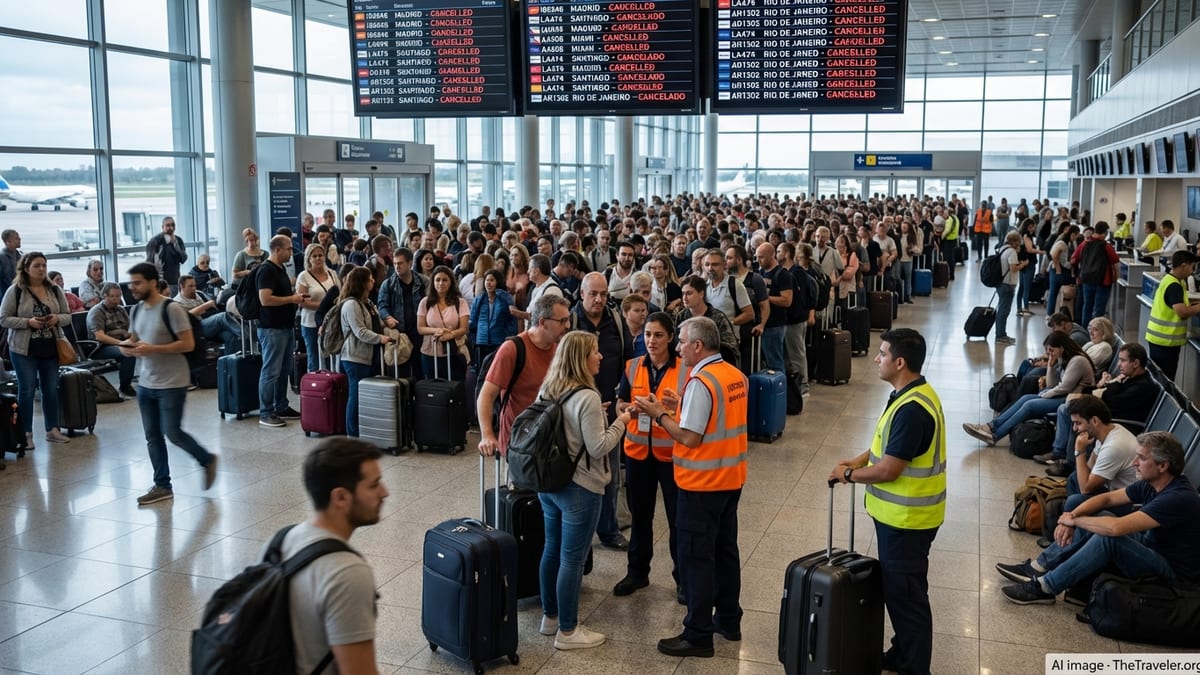
Two-day airport action targets peak travel hours
Publicly available information shows that workers from Argentina’s National Civil Aviation Administration (ANAC), grouped in the State Workers Association (ATE), will stage a coordinated protest on Thursday 3 and Friday 4 September. The measures are set to affect at least 27 commercial airports, including the country’s main international gateways, Ezeiza International Airport and Buenos Aires’ Aeroparque Jorge Newbery.
Reports indicate that the work stoppages will be concentrated in two peak travel windows each day: from 9:00 to 12:00 and from 18:00 to 21:00. Outside these time blocks, airport operations are expected to continue under more regular schedules, although knock-on delays are still possible as airlines recover from earlier disruptions.
During the affected periods, ground operations, safety and inspection tasks, and various administrative services linked to ANAC are due to pause or run at significantly reduced capacity. Multiple outlets in Argentina note that only limited categories of flights, such as medical, humanitarian, organ transport and official services, are expected to receive full operational guarantees during the protest windows.
Because the action is time-bounded rather than a full-day shutdown, domestic and international travelers may find that early-morning, mid-afternoon or late-night flights are less directly exposed. However, the clustered nature of the stoppages in busy morning and evening periods means that even flights scheduled outside those hours could be affected by aircraft and crew being out of position.
Where travelers can expect the greatest disruption
According to published coverage, the 48-hour protest has a federal scope, spanning nearly 30 terminals around Argentina. These include key hubs such as Ezeiza and Aeroparque in the Buenos Aires metropolitan area, as well as airports in major provincial cities including Córdoba, Mendoza, Rosario, Salta and Santa Fe’s Sauce Viejo, among others.
National and regional media reports underline that the impact is likely to be most visible at the busiest hubs that handle the majority of the country’s domestic and long-haul international traffic. Ezeiza is Argentina’s principal international gateway, while Aeroparque is a critical node for domestic and regional South American routes, so any slowdown in ground handling or safety checks at these airports can quickly ripple across wider airline networks.
Local coverage notes that, in addition to potential delays and re-timings, some airlines may opt to consolidate services, bring forward or push back departures, or in certain cases cancel flights within the affected windows. Travelers connecting through Argentina on multi-leg itineraries could be particularly exposed if one disrupted segment causes missed onward connections.
Airports that serve as regional links for Patagonia and the northwest and northeast of the country also appear on the list of affected terminals, which may complicate access to popular destinations such as Bariloche, Iguazú and Salta for both domestic and international visitors.
Labor dispute centers on pay, conditions and staffing
The protest arises from a broader labor dispute involving ANAC workers, who are calling attention to wage arrears, erosion of purchasing power, and funding concerns in critical operational areas. Public statements cited in local reports describe frustration over stalled or incomplete implementation of salary agreements and the perceived under-resourcing of safety and inspection functions.
Media outlets in Argentina highlight that the announced measures are part of a wider “plan of struggle” by ATE, with workers signaling that they are seeking concrete progress on pay, working conditions and infrastructure before reconsidering further actions. The focus on high-visibility airport operations reflects the central role that ANAC staff play in maintaining the country’s aviation system, from firefighting and emergency response to runway inspections and administrative oversight.
While the current stoppage does not formally include airline pilots, flight attendants or private ground-handling companies, the withdrawal or slowdown of ANAC services in the defined time slots can still have a substantial operational effect, since many flight movements depend on clearances and services that fall under the civil aviation authority’s remit.
Some analyses point out that the protest also serves as a warning about longer-term risks to aviation safety and reliability if structural funding and staffing concerns are not addressed, even though the immediate emphasis from travel stakeholders remains on managing short-term disruption for this week’s operations.
How passengers can navigate the disruption
Travel media and local news outlets advise passengers with flights to, from or within Argentina on Thursday and Friday to monitor their booking channels closely and stay in direct contact with airlines. Many carriers are expected to publish updated schedules, offer free rebooking options, or provide travel alerts through their websites and apps as the protest period approaches.
For those who must travel during the affected days, choosing flights scheduled outside the 9:00 to 12:00 and 18:00 to 21:00 windows may reduce but not entirely eliminate the risk of disruption. Even if a departure is timed before or after those periods, aircraft rotation patterns mean that earlier delays at one airport can cascade into later legs elsewhere in the network.
Travelers connecting through Buenos Aires, especially those changing between international and domestic terminals, may want to allow extra time between flights or consider adjusting plans to overnight in the city if connection times are tight. Passengers should also be prepared for longer queues at check-in and security if staff numbers are reduced or if rescheduled flights create temporary peaks in demand.
Industry observers note that, despite the uncertainty, the early announcement of the measures gives airlines and airports some scope to plan mitigation strategies, such as rescheduling flights, reallocating resources to unaffected time bands, and prioritizing essential traffic. Travelers who proactively check flight status, register for alerts, and remain flexible with their plans will likely be best positioned to adapt to any last-minute changes.
Key background and further information for travelers
Argentina has experienced recurring labor actions in the transport sector in recent years, particularly during periods of economic volatility and high inflation. The current two-day airport protest fits into that wider pattern, with organized labor using targeted stoppages in strategic infrastructure to press for renewed negotiations and improved pay.
For international visitors, the timing at the start of September coincides with the tail end of the southern hemisphere winter season. While this is generally a less intense travel period than peak summer, domestic tourism, business travel and regional connections still generate significant traffic volumes, especially through the Buenos Aires airports.
Travelers seeking further details on the scope of the protest, the list of affected airports and any last-minute changes are encouraged to consult airline communications, airport information channels and reputable local news outlets in the days leading up to Thursday and Friday. Given the dynamic nature of labor disputes, published timetables and advisories may evolve as negotiations and operational planning continue.
Up-to-date overviews of the planned measures, including the time windows, types of flights that will be prioritized and general expectations about delays or cancellations, are being regularly updated by major Argentine news organizations and regional outlets that specialize in transport and public services coverage.
Buenos Aires Herald – Airport strike in Argentina could disrupt flights on Thursday and Friday
La Nación – ATE anunció un plan de 48 horas de protestas en los aeropuertos
ANDigital – Paro en los aeropuertos este jueves y viernes
Norte Bonaerense – Paro en aeropuertos: medidas para jueves y viernes