


More news on this day
A Southwest Airlines Boeing 737 MAX 8 operating as Flight SWA4837 from Philadelphia to Chicago made an unplanned diversion to Detroit, drawing attention from aviation watchers and passengers curious about the reasons behind the unexpected stop in Michigan.
Get the latest news straight to your inbox!
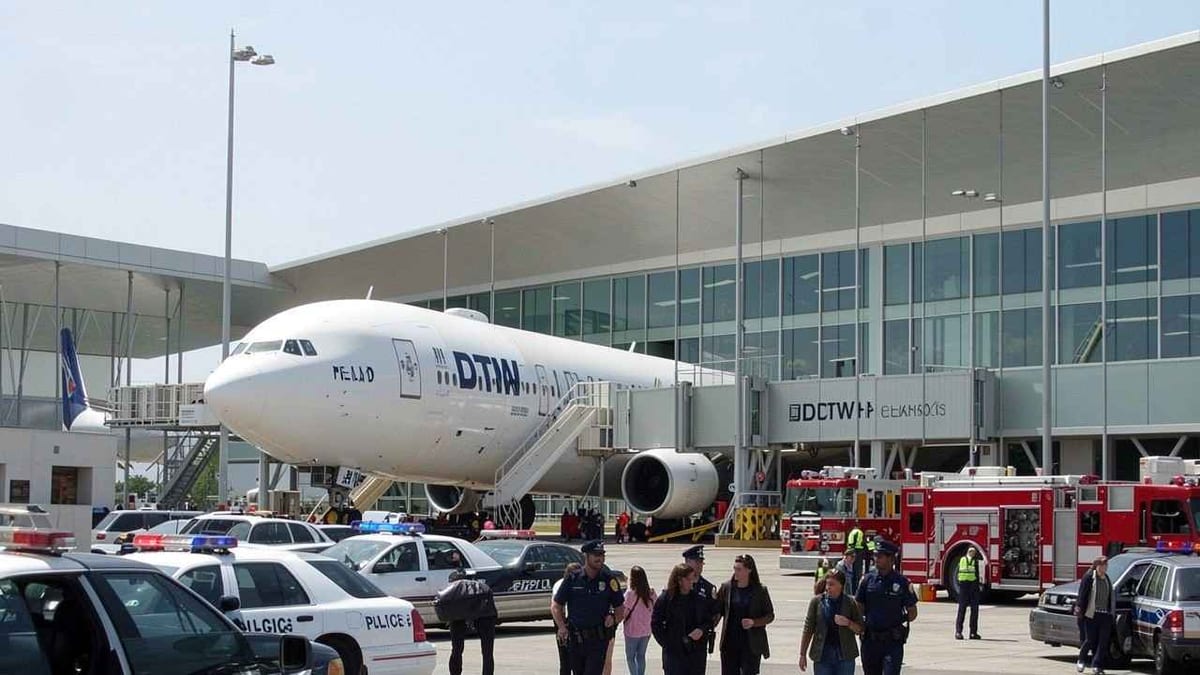
Unplanned Stop Interrupts Busy Northeast–Midwest Corridor
Publicly available flight-tracking information shows that Southwest Flight 4837 departed Philadelphia International Airport on its scheduled route toward Chicago before altering course and heading northwest to Detroit Metropolitan Wayne County Airport. The aircraft, a Boeing 737 MAX 8, is part of Southwest’s newer narrowbody fleet serving high-demand domestic routes between major U.S. cities.
The Philadelphia to Chicago corridor is among the most heavily traveled domestic city pairs, with multiple daily departures on several carriers. A diversion along this route tends to draw quick attention from frequent flyers and aviation enthusiasts monitoring live flight data, particularly when it involves a recently scrutinized aircraft type such as the 737 MAX 8.
Initial data from tracking services indicates that the flight proceeded normally through climb and cruise before the change in routing toward Detroit. The aircraft landed there without public indication of an emergency response on the airfield, a detail that suggests a controlled and orderly arrival rather than a high-intensity incident.
As of the latest tracking updates, the flight’s itinerary listed Detroit as the arrival point, with no immediate public record of the aircraft continuing on to Chicago under the same flight number. That pattern is consistent with a typical operational diversion in which the original flight is terminated and subsequent segments are handled under new scheduling.
What Typically Triggers a Midjourney Diversion
While airline representatives had not issued a detailed, incident-specific narrative at the time of writing, industry practice and historic patterns provide clues to the most likely explanations. Diversions of domestic flights are commonly linked to a combination of weather, air traffic control constraints, technical irregularities, medical situations on board, or crew duty-time limitations.
Weather and congestion in the Chicago region regularly influence arrivals, especially during peak travel times and during periods of low visibility or storms. In such conditions, rerouting aircraft to nearby airports such as Detroit, Milwaukee, or Indianapolis can ease pressure on the local airspace and provide a place to refuel, re-plan, or wait for conditions to improve.
Technical concerns that do not rise to the level of a declared emergency may also prompt a captain to divert to the nearest suitable airport with robust maintenance support and runway infrastructure. Detroit, as a large Midwestern hub with extensive facilities, is a logical option for a Southwest Boeing 737 MAX 8 needing precautionary attention while en route to Chicago.
Medical situations among passengers or crew are another driver of unplanned landings. In those cases, flight crews commonly request priority handling to reach an airfield where medical personnel can meet the aircraft. Publicly visible ground activity in Detroit appeared routine for this flight, which has led some observers to focus more heavily on operational or technical factors as the likely cause.
Spotlight on the Boeing 737 MAX 8 Platform
The aircraft involved, a Boeing 737 MAX 8, operates within an environment of heightened public interest in the type’s reliability and oversight. The MAX family has been under intense scrutiny since its grounding several years ago and its phased return to service under updated certification standards. Since that return, the MAX 8 has accumulated extensive flight hours across U.S. carriers, including Southwest, which relies heavily on a single-fleet strategy built around the 737.
Recent public statements from Southwest and other carriers emphasize ongoing collaboration with regulators and manufacturers to monitor the MAX 8’s performance and to implement additional inspections and software updates when required. In that context, any diversion involving a MAX aircraft tends to prompt close review from observers, even when the available facts point toward routine operational decision-making rather than a serious safety event.
Aviation industry analyses note that diversions are often a sign of conservative risk management. Crews are trained to choose a precautionary landing when any parameter falls outside normal expectations, whether due to a system alert, performance trend, or external factor. As a result, a diversion by itself does not necessarily indicate structural issues with the aircraft type or an acute emergency on board.
For travelers, however, the combination of an unplanned landing and the MAX label can heighten concern until more detail emerges. Many passengers first learn of diversions not from formal announcements but from flight-tracking apps and social media posts, which can amplify speculation before operational explanations become widely known.
Impact on Passengers and Subsequent Travel Plans
The immediate consequence for passengers on Flight SWA4837 was the disruption of their direct journey between Philadelphia and Chicago. Data from airline schedule aggregators shows that Southwest operates frequent service into Chicago’s Midway Airport, providing multiple daily options for rebooking. When a diversion like this occurs, standard practice is to accommodate affected passengers on later flights or alternate routings, often via the diversion point itself.
Travelers on board would likely have experienced a revised arrival time into Chicago, additional airport time in Detroit, and potentially missed connections, particularly for those relying on onward itineraries within the Midwest and beyond. For some passengers, the diversion may have required overnight arrangements and new bookings, especially if subsequent flights into Chicago were already heavily booked.
Regular users of this route are familiar with disruptions related to weather around Chicago, which can rapidly cascade across airline networks. Industry reporting in recent months has highlighted congestion pressures at major hubs and the need for carriers to build in more schedule resilience. An event such as the diversion of Flight 4837 fits into that broader pattern of operational adjustments that ripple through the domestic network on busy travel days.
From a customer-experience perspective, diversions often test communication systems, mobile notifications, and in-person support at gates. Observers frequently focus on how quickly rebooking options are displayed in airline apps and how effectively staff can provide updated information about revised arrival times, baggage handling, and hotel or meal considerations.
Broader Context for Southwest’s Chicago and Detroit Operations
Southwest maintains a significant presence in both Philadelphia and Chicago, using Chicago Midway as a principal node in its point-to-point network. Detroit, while smaller in the airline’s system than Midway, functions as a useful alternate for east–west and north–south itineraries that intersect over the Great Lakes region. That structure makes Detroit a practical and strategically placed diversion option for flights crossing the corridor between the East Coast and the upper Midwest.
Network-planning reports in 2025 and 2026 have described how Southwest is refining its route map, adding capacity on selected leisure and business routes while trimming or reshaping its presence at certain airports. Within that shifting environment, irregular operations such as diversions can have an outsized effect on same-day connectivity, especially when they occur during already busy travel periods.
Aviation analysts tracking the 737 MAX 8’s deployment note that carriers, including Southwest, are assigning the type to routes where its fuel efficiency and seating capacity can offset higher operating costs across the system. This often places the aircraft on dense, time-sensitive city pairs like Philadelphia to Chicago, where a diversion can draw more attention simply because more travelers and more frequent flyers are affected.
As information about Flight SWA4837’s diversion continues to circulate among travelers and aviation enthusiasts, it is being viewed less as an isolated shock event and more as a visible example of how U.S. airlines balance safety margins, operational constraints, and customer disruption on a daily basis. For many passengers, the core takeaway is that an uneventful landing in Detroit, even when unplanned, is a reminder of the aviation industry’s preference for caution when conditions depart from the routine.