


More news on this day
Flight data platforms are showing significant disruption across Asia on September 2, with Beijing, Dubai and 19 other major airports together cancelling at least 281 flights and delaying more than 3,300, creating a knock-on effect for passengers across multiple continents.
Get the latest news straight to your inbox!
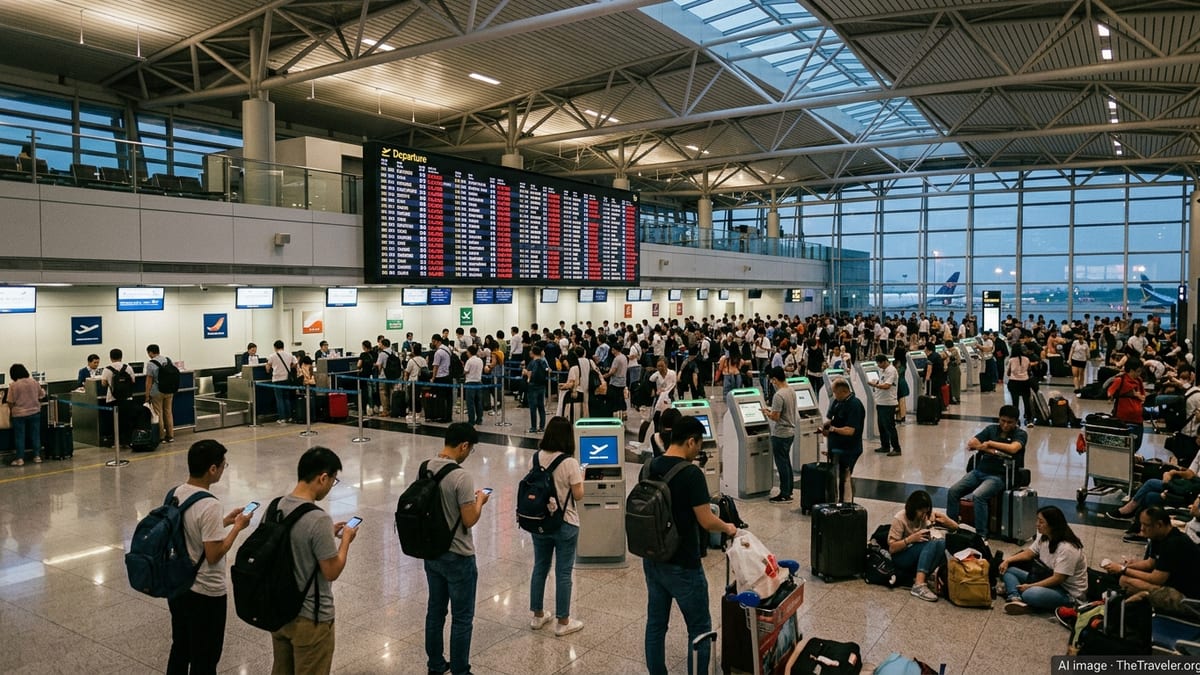
Disruptions Concentrated at Asia’s Busiest Gateways
Publicly available disruption dashboards indicate that cancellations and delays are concentrated at some of Asia’s largest hubs, including Beijing Capital International Airport and Dubai International Airport, alongside key airports in mainland China, the Gulf and Southeast Asia. Aggregate figures across these hubs point to 281 cancelled flights and 3,375 delayed services, affecting both arrivals and departures.
Live airport disruption mapping for Asia shows elevated levels of operational stress at several Chinese airports, with Guangzhou Baiyun and Shenzhen Bao’an each reporting several dozen delayed movements and more than 20 cancellations on the day. Beijing Capital, one of the primary international gateways for northern China, is also listed among the more affected airports, with dozens of delays recorded. These patterns suggest a network effect, as congestion at major hubs reverberates through domestic and regional routes.
Dubai International Airport, consistently ranked among the busiest airports in Asia and the Middle East by passenger volume, is also showing heightened disruption, with dozens of delayed flights and a smaller number of cancellations compared with some Chinese hubs. As a central connecting point for traffic between Europe, Asia, Africa and Australasia, operational issues in Dubai can quickly propagate to long haul networks operated by multiple carriers.
Data from recent traffic rankings underlines why disruptions at these locations have such an outsized impact. Beijing Capital and Dubai International both sit near the top of Asia’s busiest airport lists by annual passengers, handling tens of millions of travelers each year. When even a modest percentage of daily movements are delayed, large numbers of passengers can experience missed connections and extended layovers.
Geopolitical Tensions and Weather Add to Operational Strain
Recent regional tensions have added a layer of complexity to air traffic flows in the Middle East, contributing to delays and schedule changes at hubs such as Dubai and Abu Dhabi. Coverage from regional outlets on September 1 and 2 describes rolling adjustments by Gulf carriers as they reroute or reschedule services in response to evolving security assessments and temporary airspace constraints in parts of the region.
Reports from the United Arab Emirates on September 2 highlight that services at both Dubai International and Abu Dhabi’s Zayed International Airport were running behind schedule in the morning local time, with multiple airlines warning that departure and arrival times could change at short notice. Cancellations on certain regional routes, including flights from neighboring countries such as Iraq and Jordan, have been documented, indicating that the disruption is not limited to point to point services but also affects wider regional connectivity.
In parallel, flight updates compiled by Gulf-based media on September 2 point to a broader patchwork of cancellations and diversions across Middle Eastern and Asian routes as carriers respond to a combination of geopolitical developments and operational bottlenecks. While airspace in several Gulf states remains open, the need for route adjustments and extended flight times appears to be contributing to schedule compression and reduced turnaround flexibility at major hubs.
Weather and seasonal traffic patterns are also likely playing a role. Late summer thunderstorms and typhoons periodically affect East and Southeast Asia, and even when individual storms do not trigger large scale airport closures, they can cause clusters of delays that ripple through already busy schedules. Combined with high load factors at the tail end of the summer travel period, these factors reduce airlines’ ability to recover quickly from irregular operations.
Beijing and Dubai Highlight the Global Reach of Local Disruptions
The situation at Beijing and Dubai illustrates how local disruptions at major hubs can quickly assume global dimensions. Beijing Capital, serving as the busier of the Chinese capital’s two international airports, handles a large share of the country’s international and domestic traffic. Any sustained increase in delays or cancellations there can affect connections to cities across Asia, Europe and North America.
Dubai International functions as a primary transfer point for long haul connections between Asia, Europe and Africa. According to recent passenger statistics, it is one of the world’s leading international hubs by total traffic. Delays at Dubai therefore have implications for onward journeys well beyond the Middle East, impacting passengers traveling between, for example, Asian cities and destinations in Europe or the Americas on single ticket itineraries.
Indicative schedule data for routes such as Beijing to Dubai show that there are currently around 21 weekly nonstop flights operated by major carriers, reflecting the importance of this corridor in linking East Asia with the Gulf. When hub airports at both ends of these trunk routes experience operational disruption at the same time, the probability of missed connections and rolling delays increases, particularly for passengers relying on tight transfer windows.
Because these hubs are deeply embedded in alliance and codeshare networks, disruptions can also affect travelers booked on partner airlines who may not realize their itinerary passes through an affected airport until close to departure. That interconnectedness magnifies the impact of what might otherwise be localized operational issues.
Passenger Options Amid Widespread Cancellations and Delays
With airports across Asia reporting elevated cancellation and delay rates, publicly accessible advisories consistently recommend that travelers monitor airline communications and flight status tools closely. Several major carriers operating through Dubai and Abu Dhabi have published real time updates on their websites and social channels, outlining which routes are currently suspended or experiencing significant schedule changes.
Travel advisories cited in regional coverage urge passengers not to proceed to the airport unless they have confirmed that their flight is operating, emphasizing that schedules may change at short notice. In some cases, airlines are offering rebooking options or waivers for change fees on affected routes, although the exact policies vary by carrier and destination.
Experts generally advise that travelers with imminent departures through the most affected hubs build in extra time for connections, consider alternative routings that avoid the most disrupted airports where feasible, and maintain flexible accommodation and ground transport arrangements. For those with nonessential travel, postponing or rerouting trips may reduce the risk of extended airport waits or unexpected overnight stays.
As operations evolve throughout the day, the balance between cancellations and delays is likely to shift. Real time airport disruption dashboards and official airline status pages remain the most direct way for passengers to verify whether their specific flights are impacted by the wider wave of disruptions moving through the Asian and Middle Eastern aviation network.
Asia airport disruption map - Flightradar24
UAE travel advisory on Dubai and Abu Dhabi delays - The National
Gulf carriers flight update - Gulf News