


More news on this day
Bangkok is set to join Delhi, Phuket, Mumbai and Kolkata at the center of a deeper partnership between Air India and Thai Airways in 2026, as the two flag carriers prepare expanded cooperation aimed at capturing rising tourism flows between India and Thailand.
Get the latest news straight to your inbox!
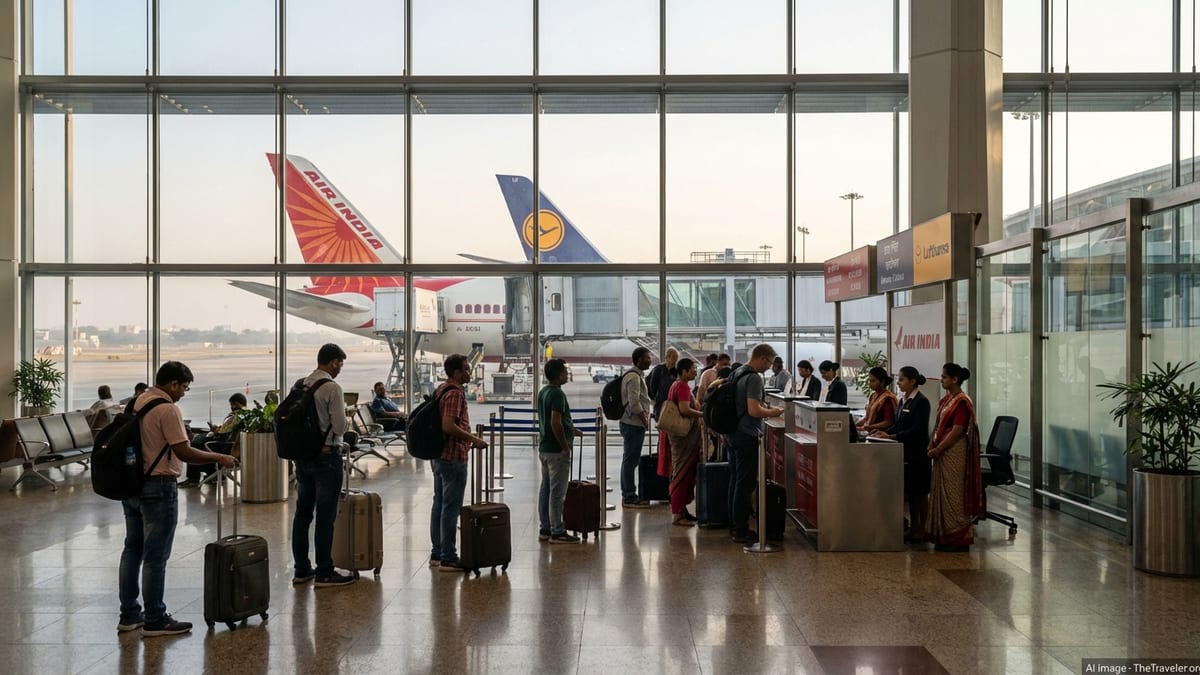
MoU Lays Groundwork for 2026 Codeshare Expansion
According to a recent memorandum of understanding published by Air India, the airline and Thai Airways intend to move beyond their existing interline partnership and enter into a broader codeshare arrangement in 2026, subject to regulatory approvals. The framework is designed to link their networks more tightly, offering travelers additional frequencies and new one-stop options across India, Thailand and onward international markets.
Publicly available information on the agreement indicates that both carriers plan to leverage Bangkok and Indian metros such as Delhi and Mumbai as primary gateways. The intention is to place each airline’s code on select routes operated by the partner, streamlining itineraries that today often require multiple separate tickets and less convenient connections.
The planned 2026 implementation would build on a relationship that has already included interline and sector-specific cooperation. An Air India partner overview issued in late 2025, for example, listed Thai Airways among the carrier’s key alliance and codeshare collaborators, reflecting a strategic focus on Southeast Asia and the broader Asia Pacific region.
Industry analysts note that the move comes as Air India accelerates its wider partnership strategy with global airlines and as Thai Airways reshapes its network and fleet to reinforce Bangkok as a super-connector for the region. The new India–Thailand emphasis fits into both airlines’ post-restructuring growth plans.
Bangkok’s Role Grows Alongside Delhi, Phuket, Mumbai and Kolkata
Bangkok is already one of the busiest international gateways for Indian travelers, and the planned partnership expansion is expected to strengthen that position. Air India schedules show multiple daily flights between Bangkok and Delhi, with the airline promoting up to 10 daily options on certain dates in 2026 when including connections. This provides a dense trunk corridor that can feed both carriers’ onward networks.
Thai Airways’ own network data highlights India as its largest international market by number of destinations, with services to cities including Delhi, Mumbai, Kolkata and several southern Indian hubs from its Bangkok base. Published plans point to increased frequencies on routes such as Delhi and Mumbai, supported by new aircraft deliveries, reinforcing the capital’s role as a primary connection point for Indian visitors heading into Thailand.
Phuket has emerged as a complementary Thai gateway in this evolving structure. Tourism and airline schedule reports show that Air India and other Indian carriers have steadily ramped up non-stop and seasonal capacity between Indian metros and Phuket, while Thai Airways and its subsidiaries feed the island from Bangkok and regional points. Integrating Phuket more fully into a joint network would allow Indian travelers to route via either Bangkok or direct services, with through-ticket convenience provided by the partnership.
Mumbai and Kolkata are also positioned as key feeders on the Indian side. Thai Airways offers non-stop services from both cities to Bangkok, while Air India’s domestic and regional network can bring passengers from secondary Indian markets into these hubs for same-day connections. Under a deeper codeshare, travelers originating in smaller Indian cities could book a single itinerary connecting through Mumbai or Kolkata to Bangkok, then onward to beach destinations such as Phuket or to other Southeast Asian cities.
Tourism Surge Drives India–Thailand Capacity Push
Tourism data from Thai government and industry publications show that India has rapidly become one of Thailand’s most important source markets. In 2025, India delivered well over two million visitor arrivals, generating tens of billions of baht in tourism receipts and placing it among the top contributors to the Thai visitor economy. Policy initiatives such as periodic visa-fee waivers and targeted promotions have further stimulated demand.
Thailand’s tourism authorities have underlined India as a strategic growth focus through 2026, pursuing an “airline focus” strategy that encourages carriers to add new routes and seats into destinations including Bangkok and Phuket. Local media coverage reports that more than 80 new international routes to Thailand were launched in late 2025 across multiple airlines, with South Asia identified as a key contributor to the surge.
For Indian travelers, Thailand’s proximity, established cultural links and competitive pricing have made it an attractive short-haul getaway. Low-cost carriers have driven much of the traffic, but full-service airlines are now reinforcing their presence with enhanced connectivity, improved cabin products and integrated loyalty benefits. A strengthened Air India–Thai Airways partnership positions the two carriers to compete more effectively for higher-yield leisure and business travelers.
Industry observers suggest that, by synchronizing schedules and aligning their sales strategies, Air India and Thai Airways could capture more of the growing segment of Indian travelers seeking curated itineraries that combine Bangkok’s urban experiences with resort stays in Phuket and other Thai regions. Additional feeder traffic from Europe, North America and the Middle East into India and onward to Thailand via the two partners could further support year-round load factors.
Fleet and Network Investments Underpin Connectivity Plans
The upcoming partnership expansion is being underpinned by parallel investments in fleet and network upgrades. Thai Airways has been modernizing its aircraft mix, including the introduction of new-generation narrowbodies and refreshed widebody cabins. Fleet information released in 2025 notes delivery of Airbus A321neo aircraft, with initial deployment on short regional services and expectations that India routes such as Delhi may benefit as more units enter service.
On the Indian side, Air India has embarked on a multi-year transformation program that includes large-scale fleet renewal, cabin refurbishment and enhanced digital services. Previous airline communications have highlighted plans to utilize retrofitted A320neo aircraft on select high-demand regional routes, including services between Delhi and Bangkok, to balance capacity and operating efficiency while offering upgraded onboard products.
As both carriers introduce new aircraft and refine schedules, the 2026 partnership is expected to enable more finely tuned connectivity. Coordinated timings at Bangkok and Indian hubs would aim to reduce connection times to key leisure destinations, while joint inventory management could open access to more fare options on busy travel dates, especially around Indian school holidays and major Thai festivals.
Travel industry commentary points out that alliances of this type can also support secondary tourism development. With stronger air links, destinations beyond Bangkok and Phuket, such as Chiang Mai, Krabi or emerging Indian coastal cities, may see increased visitor flows via single-stop itineraries marketed jointly by the airlines and tourism boards.
Implications for Travelers and Regional Competition
For travelers, the most tangible impact of the deepening Air India–Thai Airways cooperation is likely to be increased choice and smoother journeys. A codeshare arrangement typically allows passengers to check in once, have bags tagged through to final destination and earn or redeem loyalty points across a wider pool of flights, even when sectors are operated by different airlines within the partnership.
As Bangkok joins Delhi, Phuket, Mumbai and Kolkata as focal points of the collaboration, itineraries could become more flexible. A traveler might, for example, fly from Kolkata to Bangkok on Thai Airways, connect to Phuket on a partner flight and return to India via Delhi on Air India, all under a single booking. This type of multi-city routing becomes easier to plan and price when carriers coordinate schedules and fare structures.
The expanded partnership also shifts the competitive landscape in a market already served by numerous low-cost and full-service operators. Carriers from the Gulf, as well as regional competitors, have historically captured a substantial portion of India–Thailand and beyond traffic through their own hubs. By tightening cooperation across the Bangkok and Indian hub system, Air India and Thai Airways are positioning themselves as a more integrated alternative for passengers who prefer to remain on a single airline family throughout their journey.
Looking ahead to 2026 and beyond, industry watchers will be monitoring how regulators respond to the proposed codeshare and how quickly both airlines can align their operational, commercial and digital platforms. If executed effectively, the move is expected to reinforce tourism flows between India and Thailand and underline Bangkok’s status as a key South and Southeast Asia gateway alongside Delhi, Phuket, Mumbai and Kolkata.