


More news on this day
As widespread airspace restrictions and periodic airline disruptions reshape travel patterns across China in 2026, Beijing is leaning on its fast-growing high-speed rail network and new eco-tourism products to keep people and money flowing into the capital and surrounding regions.
Get the latest news straight to your inbox!
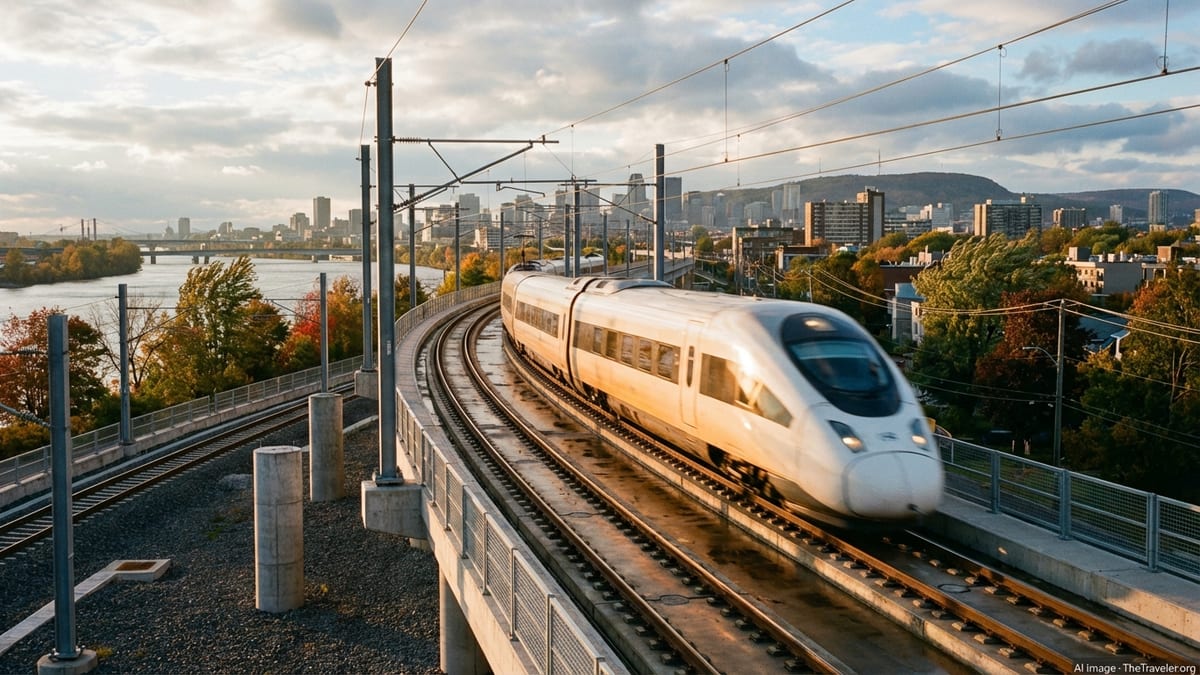
Air Travel Headwinds Push Travelers Toward the Rails
Notices affecting airspace over parts of eastern China in spring 2026, together with recurring schedule changes and cancellations reported by travelers on major routes, have prompted many domestic and inbound visitors to look for alternatives to flying. Publicly available travel advisories and online traveler reports describe multiweek windows of congestion and uncertainty for flights serving hubs such as Beijing and Shanghai, with knock-on effects for connections across the country.
At the same time, data from civil aviation regulators indicates that overall passenger volumes remain high, particularly around the Spring Festival travel period. Official statistics for the 2026 holiday season show record passenger totals, even as capacity constraints and weather-related disruptions contributed to uneven service quality. The combination of strong demand and periodic disruption has strengthened the appeal of high-speed rail as a more predictable option for medium haul journeys.
China’s dense high-speed rail grid already offers several-hour journeys between many of the country’s largest cities, and Beijing sits at the center of multiple north south and east west corridors. With confidence in domestic aviation fluctuating, industry observers note that travelers are increasingly choosing rail for trips in the 300 to 1,200 kilometer range, where total door to door journey times can be competitive with flying when airport transfers and security checks are included.
For tourism, these shifts are beginning to change how visitors structure their itineraries. Travel planners and tour companies are highlighting rail itineraries that link major cities with nearby mountain areas, coastal wetlands and historical sites, often marketed as lower stress alternatives when compared with flying during peak vacation periods.
New High-Speed Loops and Suburban Links Reshape Access Around Beijing
Beijing’s rail authorities and national planners are using 2026 to consolidate the capital’s position as a high-speed rail hub for the wider Beijing Tianjin Hebei region. A new high-speed loop connecting key cities in the region entered operation with the latest national timetable adjustment, with information released by municipal outlets highlighting shorter intervals between trains on core corridors and denser schedules from Beijing South Railway Station.
Local government bulletins describe the loop as a way to make commuting between Beijing, Tianjin and surrounding Hebei cities easier while also supporting multi destination leisure trips. The minimum headway on the busy Beijing Shanghai high speed line has been cut to just a few minutes at peak times, strengthening the capital’s role as both an origin and a transfer point for long distance journeys.
Within the municipality, Beijing is pursuing a 2026 rail transit construction program that advances nine new or upgraded urban and suburban rail segments. Official planning documents list projects including capacity enhancements on existing metro corridors, new branches and the continued build out of suburban railway services that link the core city with outer districts.
One of the most recent milestones is the opening of an upgraded western section of the Sub Center Line, a suburban railway that now connects Beijing West station with outlying communities in Fengtai, Shijingshan and Fangshan districts. According to information released by the city’s development and reform authorities, the improvement project stretches more than 30 kilometers and has raised the number of daily train pairs linking the southwest new town of Liangxiang with central Beijing from just a handful to more than a dozen, with higher frequencies during rush hours.
Tourist Trains and Themed Services Target Eco-Tourism Demand
Alongside core commuting routes, Beijing and neighboring regions are experimenting with tourism oriented rail products that tap growing interest in greener, slower travel. Municipal cultural and tourism agencies report that inbound visitor numbers to Beijing reached multi year highs in 2025, and operators are positioning rail based experiences as a way to disperse tourists more evenly and highlight less visited natural and cultural sites.
On the Beijing Tianjin corridor, a themed tourist train branded as the Tianjin Fantasy Express is scheduled to operate between Tianjin North and Beijing stations on weekends and public holidays beginning in 2026. Information from the China Railway Beijing Group and local media describes the service as an immersive cultural tourism train that combines traditional performances, design elements and interactive experiences on board. While primarily a cultural showcase, the route also gives passengers a low carbon option for short leisure trips between the two cities.
National level policy is pushing in a similar direction. A notice issued in June 2026 by a group of central ministries, including departments responsible for commerce, tourism and railways, sets out measures to deepen the integration of railway infrastructure with tourism services. The guidance calls for upgraded station areas with better visitor facilities, and encourages local governments to design itineraries that link rail lines with scenic spots, accommodation and outdoor activities.
Industry announcements and regional initiatives show this approach being tested on long distance routes as well. In the Yangtze River Delta, a new multi day luxury tourist train marketed as the Yangtze River Delta Star is beginning operations in 2026, connecting Shanghai with destinations as far as Xinjiang. The train’s route includes stops in historical towns and remote landscapes, and its launch is being closely watched as an indicator of market appetite for premium, rail based eco and cultural tourism products.
Rail as a Backbone for Low-Carbon Nature Tourism
Beyond themed services, Beijing’s growing rail map is starting to reshape how travelers reach natural areas and protected landscapes across northern China. With the capital connected by high speed lines to mountain regions in Shanxi and Shaanxi provinces, as well as to coastal wetlands in Hebei and Liaoning, tour operators are bundling rail tickets with hiking, birdwatching and cultural homestay packages.
Travel industry commentary notes that high speed links from Beijing West station to cities such as Yan’an in Shaanxi have seen journey times cut significantly in recent timetable updates, making weekend and short break itineraries more feasible. From these high speed nodes, local buses and smaller regional railways carry visitors on to national forest parks, revolutionary heritage sites and rural bed and breakfasts that promote farm to table dining and low impact outdoor activities.
The national park system, which now includes large scale reserves dedicated to species such as tigers and leopards in the northeast, is also being gradually tied into this rail based tourism strategy. While many of these parks remain several hours from Beijing even by fast train, regional planners are prioritizing connecting cities that serve as gateways to protected areas, with an eye on encouraging longer stays focused on hiking, wildlife watching and environmental education.
For policymakers, positioning rail as the default mode for reaching sensitive natural areas is seen as a way to limit the growth of short haul flights and private car traffic that would otherwise increase the environmental footprint of tourism. Publicly available policy documents on tourism and transport stress that new rail tourism products should be designed to distribute visitors across wider regions, reduce pressure on a handful of famous sites and support rural employment.
What Travelers Can Expect for the Rest of 2026
Looking ahead to the second half of 2026, analysts and travel advisers expect the tension between strong demand and occasional airspace related disruption to continue. Flight schedules may stabilize at times, but recent experience suggests that weather events and evolving operational constraints can still lead to last minute changes on key domestic and regional routes.
In this environment, Beijing’s more frequent high speed connections, expanded suburban services and growing menu of tourism focused trains are likely to feature more prominently in both domestic and international travel planning. Itineraries that once relied on multiple short flights are being rewritten around rail hubs, with Beijing acting as an anchor for loops that combine urban culture with surrounding mountains, coasts and historic towns.
Travelers considering trips to China in late 2026 are being advised by many tour operators and online communities to build in flexibility, avoid the busiest national holiday periods and take advantage of the rail network’s resilience. With new lines and services coming online in and around Beijing, the capital is positioning itself as a test bed for how high speed rail and eco tourism can work together when skies are crowded and travelers are looking for lower carbon, more reliable ways to explore the country.