


More news on this day
A new Shuttle Selatan commuter rail service has begun operating in Johor Bahru, creating a faster rail link between key residential, industrial and commercial hubs in Malaysia’s southernmost state.
Get the latest news straight to your inbox!
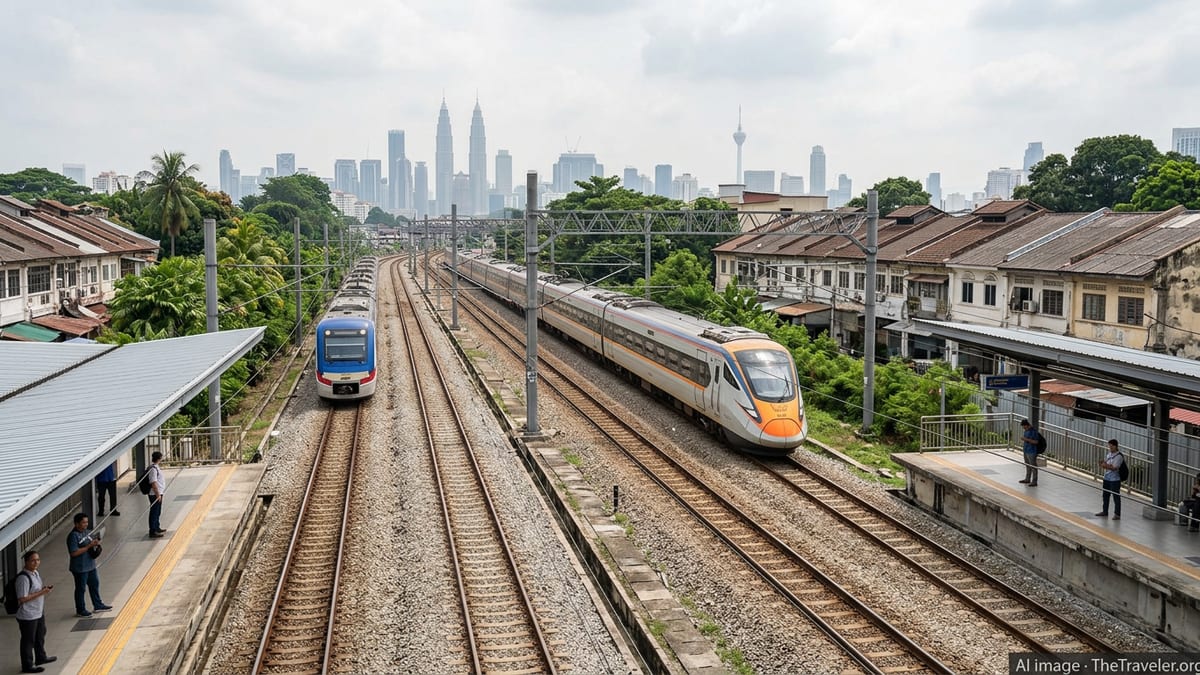
New links across Johor’s growing urban corridor
The Shuttle Selatan service, operated by Keretapi Tanah Melayu Berhad (KTMB), entered service on 16 June 2026 following completion of major rail upgrades on the southern network. Publicly available information shows that the new commuter trains run on two primary routes, connecting Kulai to JB Sentral and Kempas Baru to Pasir Gudang, with Johor Bahru Sentral acting as the main gateway for the corridor.
Reports indicate that journey times between Kulai and JB Sentral are around 40 minutes, while trips between Kempas Baru and Pasir Gudang take roughly 40 to 45 minutes. This represents a significant improvement on typical peak road travel, which is often slowed by congestion around Johor Bahru’s expanding suburbs and industrial estates.
The new service is designed as a high-frequency commuter operation, complementing long distance Electric Train Service operations introduced to Johor in late 2025. The Shuttle Selatan offers multiple daily departures in each direction, providing a rail-based alternative to the private car and strengthening local connections to JB Sentral’s intercity and cross-border services.
According to government fact sheets and media coverage, the initiative is expected to benefit hundreds of thousands of people living and working along the corridor, including major communities in Johor Bahru, Kulai and Pasir Gudang. The line also serves strategic industrial areas, positioning the service as a key part of Johor’s push to support manufacturing and logistics growth with more reliable public transport.
Timetables, fares and what passengers can expect
Early timetable information indicates that Shuttle Selatan trains operate throughout the day with a commuter-style pattern rather than a limited intercity schedule. Services are currently being run using existing diesel-based trainsets adapted for the new commuter role, with rail planners highlighting a focus on regular frequency and consistent journey times.
Fare information published by independent timetable aggregators shows that ticket prices have been set at a level intended to compete with express bus and private car travel. The structure follows KTMB’s usual zonal approach, with relatively modest point-to-point fares between stations such as Kulai, JB Sentral, Kempas Baru and Pasir Gudang.
Trains are configured with standard-class seating and standing areas typical of Malaysian commuter stock, rather than long-distance configurations. For regular commuters, this allows for higher capacity at peak periods, while still offering air-conditioned comfort for the 40 to 45 minute rides that many passengers will undertake.
Passenger information efforts have included updated station signage and journey-planning tools that incorporate the new services. Third party mobility platforms have begun promoting the Shuttle Selatan as a new option for residents who wish to park at suburban stations and continue their journeys by rail into the city centre or towards cross-border connections.
Supporting cross-border flows and future RTS Link
The introduction of Shuttle Selatan is widely viewed as part of a broader reconfiguration of southern Johor’s rail network ahead of the Johor Bahru Singapore Rapid Transit System Link. JB Sentral is already a key terminus for the Shuttle Tebrau cross-border shuttle to Woodlands in Singapore, and future RTS Link services are expected to add substantial passenger volumes.
Publicly available planning documents describe an intention to knit together ETS, Shuttle Selatan, bus rapid transit and future autonomous rapid transit systems into an integrated network around JB Sentral and other key hubs. By increasing rail capacity into the city from Kulai and the Pasir Gudang industrial zone, the new commuter service is expected to help disperse traffic and reduce pressure on roads feeding the Causeway area.
Tourism and retail sectors in central Johor Bahru may also benefit. Easier rail access from surrounding towns shortens journey times for domestic visitors heading into the city for shopping, entertainment or onward trips to Singapore. For international travellers staying in Johor Bahru, the new service offers an additional option for day trips to industrial heritage sites, coastal areas and town centres on the northern and eastern edges of the metropolitan area.
Transport analysts note that the new commuter lines arrive at a time when cross-border commuting between Johor and Singapore is expected to rise further. The Shuttle Selatan provides another rail-based option for residents who prefer to live farther from the city centre while still maintaining predictable access to JB Sentral and its international links.
Investment, rolling stock and long term expansion plans
According to published media coverage, the federal government has committed to acquiring 10 new commuter trainsets for the southern sector as part of a long term enhancement plan valued at more than 200 million ringgit. These trainsets are expected to be introduced in phases, increasing capacity and allowing for higher frequencies on the Shuttle Selatan routes.
In the short term, KTMB is deploying two existing trainsets to operate the initial services while new rolling stock is procured and delivered. The move allows the operator to begin building ridership and refining operations soon after completion of the southern electrification and double tracking project that prepared the corridor for both ETS and commuter services.
Government statements and local coverage describe Shuttle Selatan as a core element in repositioning rail as a primary mode of daily transport in southern Johor. The investment in new trains sits alongside plans to upgrade station facilities, enhance park and ride capacity, and improve accessibility features at platforms along the routes.
Longer term, planners have signalled potential extensions and frequency increases as demand grows. There has also been discussion of further integrating the commuter network with regional bus services and future urban rail projects, including elevated autonomous rapid transit lines serving other parts of Johor Bahru’s metropolitan region.
Implications for commuters and visitors to Johor Bahru
For local commuters, the most immediate impact of Shuttle Selatan is a more predictable alternative to road travel on key corridors that are frequently congested. Office workers, students and industrial employees can now plan journeys around a fixed timetable rather than fluctuating traffic conditions, potentially saving time and reducing travel stress.
Residents of Kulai and other communities north of Johor Bahru gain a direct rail link to the city centre, which may influence housing and employment patterns over time. The Kempas Baru to Pasir Gudang route, meanwhile, directly serves industrial zones that generate substantial freight and commuter traffic, offering employers a more sustainable option for staff movements.
For visitors, particularly those combining trips to Johor Bahru with cross-border excursions to Singapore, the new service increases flexibility in planning multi stop itineraries. Tourists can base themselves near JB Sentral and use the commuter rail to reach secondary town centres or coastal areas without relying solely on taxis or private hire vehicles.
Local media reports suggest that state and federal authorities view the Shuttle Selatan as an early building block in a more extensive, climate conscious transport strategy for southern Johor. As ridership data accumulates and future rail and bus projects come online, the new commuter service is expected to play a central role in reshaping how residents and visitors move around the rapidly growing Johor Bahru region.