

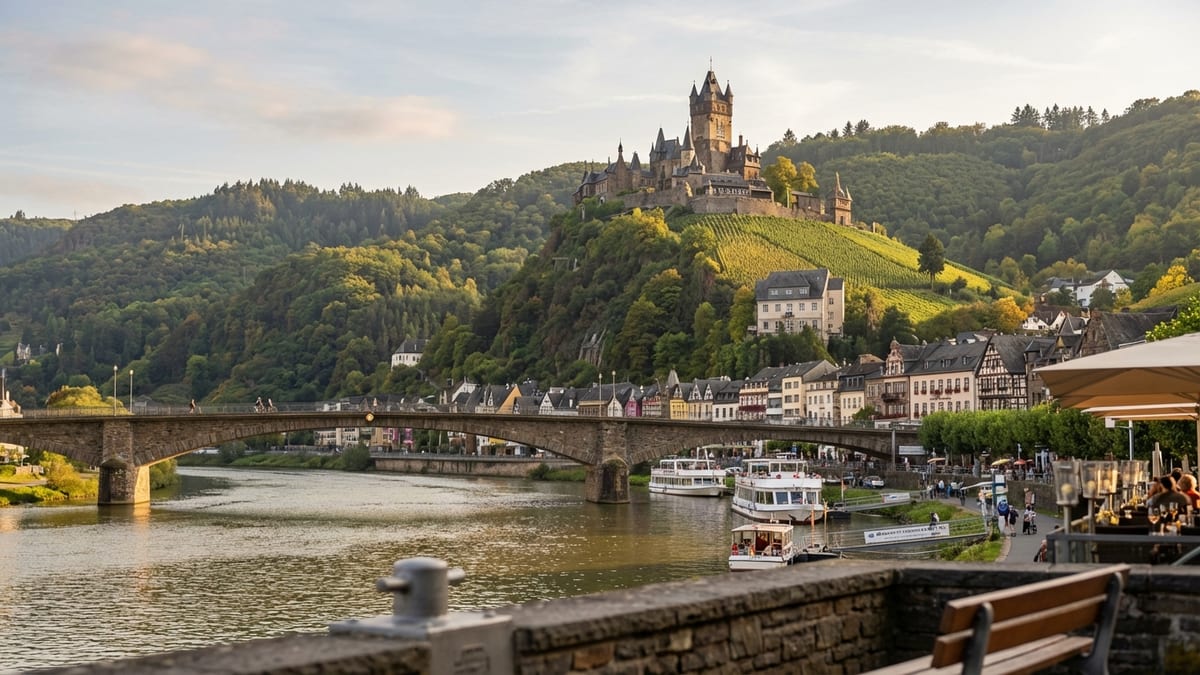
Cochem looks like a storybook sketch that somehow came to life: a riverside town wrapped in vineyards, crowned by a hilltop castle and threaded with cobbled lanes and half‑timbered houses.
Yet for all its medieval charm, it is also one of the most popular stops in the Mosel Valley, which means that some experiences are magical while others feel overcrowded or underwhelming. This guide highlights the best things to do in Cochem, what is truly worth your time and money, and what you can confidently skip or downgrade to a “maybe” on your itinerary.
Getting Oriented in Cochem
Before diving into specific experiences, it helps to understand how compact Cochem is and how its main sights fit together. The town sits in a tight bend of the Mosel River, with the Old Town on one bank and the Cond district on the opposite side. Travelers short on time often compare Cochem vs Bernkastel-Kues before finalizing plans.
Above everything rises Reichsburg Cochem, the castle that dominates nearly every postcard and skyline view. Virtually all key attractions are within walking distance, with boats, buses, a chairlift and local trains providing easy access to viewpoints and nearby villages.
Because the town is small, you do not need a long list of “must‑see” checkboxes. A well‑planned 1 to 3 days can mix castles, wine, river views and short hikes without feeling rushed. That is also why choosing what to skip matters. Spending hours in a mediocre museum or queuing for a crowded tour means missing the quieter experiences that make Cochem feel special. Knowing where attractions are located helps when choosing among the best hotels in Cochem.
Old Town and Market Square
Cochem’s Altstadt is compact but full of atmosphere, with half‑timbered facades, steep gables and flower‑boxed windows clustered around Marktplatz and its baroque town hall. This is where many visitors fall in love with the town at first glance, and wandering here with no agenda is one of the essential Cochem experiences.
Shops lean heavily toward souvenirs and wine, but look up rather than just into display windows. The architectural details, small alleyways and sudden glimpses of the castle overhead are what justify the crowds. Early morning or later evening are best if you want to enjoy the square before day‑trip groups arrive or after they have boarded their buses.
Moselle Promenade
The Moselle Promenade is the riverside boulevard that fronts the Old Town and continues toward the castle. It is lined with hotels, terraces, ice‑cream stands and benches facing the water. Several river cruise operators depart from here, but even if you never step onto a boat, an unhurried stroll along the promenade delivers some of the best easy views in town.
This is worth doing at least twice if you stay overnight: once in daylight to see the vineyards, and once at dusk when Reichsburg Cochem lights up above the town and the reflections shimmer on the river.
Enderttor and the Town Walls
Cochem once had a complete girdle of walls and gates; fragments remain, with Enderttor the most impressive surviving gate. Dating to the 14th century, it guarded the northern approach and later served as a prison. Today it frames a particularly picturesque stretch of street, with cafés just outside the archway.
For history‑minded travelers, it is a brief but worthwhile stop on an Old Town wander. For those with limited time who are less interested in fortified architecture, it can be appreciated in a few minutes on the way to more compelling sights.
Unmissable Cochem Highlights
Some Cochem experiences really do live up to the photographs and online raves. These are the core “best things to do” that most visitors should prioritize, whether on a short day trip or a longer stay. They combine scenery, history and a strong sense of place that you will remember long after your trip. If you are unsure what to prioritize, this breakdown of Cochem worth visiting provides context.
Reichsburg Cochem (Cochem Castle)
Reichsburg Cochem is the defining landmark of the town, perched high above the rooftops with its towers and turrets almost theatrically poised over the Mosel. Although the original medieval fortress was destroyed in the 17th century, the 19th‑century reconstruction has plenty of romantic atmosphere and serves up the most iconic views of the valley.
Access is either by a fairly steep 15 to 20‑minute walk from the Old Town or by shuttle bus that runs regularly in high season. Inside, visits are by guided tour only, with regular departures in German and at scheduled times in English. Tours take roughly 40 minutes and lead through richly furnished rooms, including a knights’ hall, dining room and weapons displays.
The castle is very much worth doing, especially if you appreciate historic interiors and panoramas. To avoid the thickest crowds, aim for the first tours of the morning or late afternoon, particularly in July and August. If you only care about the view, you can also enjoy excellent perspectives from the paths and terraces near the entrance without joining a tour, but the interiors add welcome context to the town’s history.
Pinnerkreuz Viewpoint and Cochemer Sesselbahn Chairlift
For a sweeping perspective on Cochem, the Mosel’s broad curve and the vineyards marching up the slopes, the Pinnerkreuz viewpoint is unrivaled. You can hike up in about 30 to 45 minutes from town or take the Cochemer Sesselbahn chairlift, which runs seasonally and carries you gently above the treetops and vines.
The chairlift is a highlight in itself for many visitors, combining a relaxed ride with continually shifting views of Reichsburg Cochem and the river. At the top station, a short walk leads to the Pinnerkreuz cross and viewing platform, and there is usually a café or restaurant open in the main season, making this an easy half‑day outing.
Although the ticket price is not negligible, this is one attraction that feels worth the cost: you see the landscape from a completely different angle and can linger at the top as long as you like. Hikers who enjoy a steeper workout can ride up and walk down through the vineyards, or do the reverse to save their knees.
Mosel River Cruises
One of the most pleasant ways to experience Cochem and the surrounding valley is from the water. Several operators run sightseeing cruises from the town’s landing stages, typically from spring through late autumn, with options ranging from one‑hour loops to half‑day and full‑day journeys up or downriver.
Short cruises are ideal for day‑trippers: they offer continuous views of vineyards, small villages and occasional castles without demanding much effort. Longer trips allow you to disembark at charming towns such as Beilstein or Zell and then return by boat or train. Evening cruises, sometimes marketed as panoramic or dinner cruises, are particularly atmospheric as the lights come on along the riverbanks.
Cruises are a “do” rather than a “skip,” especially if this is your first visit to the Mosel. They are not a substitute for walking through the Old Town, but they complement it beautifully and help you grasp the geography of the valley. Some sights are best experienced through well-chosen Cochem boat tours.
Wine Tasting and Local Weinstuben
The Mosel region is synonymous with Riesling, and Cochem is one of the easiest places to explore that tradition. Family‑run wineries and wine bars line the streets and promenade, while neighboring villages host some of the most acclaimed vineyards in Germany.
In Cochem itself, you will find cozy weinstuben where you can sample dry, off‑dry and sweet styles by the glass or as part of a guided tasting. Many producers offer cellar tours that explain the challenges of cultivating vines on such steep slopes and how that shapes the character of the wine.
Even if you are not a wine expert, dedicating an evening to tasting local Rieslings is strongly recommended. Look for smaller, less tourist‑oriented bars away from the busiest riverfront stretch if you want a calmer atmosphere. For drivers, keep in mind strict German drink‑driving laws and consider staying within walking distance of your accommodation.
Night Watchman Tours and Evening Walks
Several operators and local guides offer night watchman tours, in which a cloaked guide carrying a lantern leads visitors through Cochem’s alleys while recounting legends, crime stories and snippets of medieval life. These tours, typically in German with occasional English dates, add an entertaining theatrical element to your visit.
Whether or not you join an organized walk, an evening stroll through the Old Town and along the riverfront is highly recommended. The day‑tripper crowds thin noticeably, locals emerge in greater numbers and the castle glows above the rooftops. If your schedule allows only a few hours in Cochem, arranging to be there after dark is one of the most rewarding choices you can make.
Worthwhile Hidden Gems and Side Trips
Beyond the core postcard sights, Cochem and its surroundings hold smaller, more unusual attractions that reward curious travelers. Some reveal layers of history that do not appear in the standard romantic narrative, while others offer glimpses into everyday regional culture. These are especially appealing for repeat visitors or those staying two nights or more.
Bundesbank Bunker Cochem
Concealed in a residential neighborhood above Cochem is the Bundesbank bunker, a Cold War relic that once held billions of Deutsche Marks in emergency currency. Built in the 1960s and kept secret for decades, it has been opened to visitors on guided tours that lead through blast doors, control rooms and storage chambers.
The tours typically run only in German and must be booked in advance or via the local tourism office, but even if you do not understand every detail, the stark atmosphere and preserved machinery are striking. It is a very different side to Cochem, one that contrasts sharply with the fairytale image of the castle and vineyards.
For history enthusiasts or anyone interested in the Cold War, this is a strong “do.” For time‑pressed visitors focused mainly on scenery and wine, it is a valuable but optional addition rather than an essential stop.
Historic Mustard Mill (Historische Senfmühle)
Cochem’s historic mustard mill is a small but characterful attraction in the Cond district, just across the bridge from the Old Town. The mill uses traditional techniques and old machinery to produce a range of artisan mustards, from classic recipes dating back centuries to more contemporary blends.
Short guided tours demonstrate the milling process and explain how mustard has been made and used in the region, usually followed by tastings and the chance to buy jars to take home. The experience is compact, affordable and very local in flavor.
This is a “do” if you appreciate food history, enjoy trying regional specialties or are looking for high‑quality edible souvenirs. For visitors with a packed schedule, it pairs well with a riverside walk on the Cond side, which offers fine views back toward the castle.
Moselland Museum in Ernst
About five kilometers upriver from Cochem, the Moselland Museum in the village of Ernst focuses on rural life and tourism in the Mosel Valley during the mid‑20th century. Housed in a former inn, it displays vintage vehicles, household objects, shop interiors and farm equipment, all arranged to evoke the atmosphere of the 1950s and 1960s.
It is not a grand museum, but it is thoughtfully curated and can be surprisingly evocative, particularly for visitors with memories of similar interiors or those fascinated by social history. Combine a visit with a walk along the riverbank or a wine tasting in Ernst for a relaxed half‑day away from Cochem’s crowds.
Short Hikes to Winneburg Ruins and Vineyard Trails
The steep hills that frame Cochem are threaded with hiking trails, some signed as part of long‑distance routes and others as shorter loops. One of the most accessible outings leads to the ruins of Winneburg Castle, a partially tumbled fortress hidden in the forest above a valley northwest of town.
The walk to Winneburg is moderately steep but not technical, and the payoff is a moody cluster of stone walls and towers far quieter than the main castle. Alternatively, vineyard trails on both sides of the Mosel offer shorter strolls with constant views of the river and town.
These walks are highly recommended if you enjoy light to moderate hiking and want to escape the tourist bustle. For non‑hikers or travelers with mobility limitations, the chairlift to Pinnerkreuz and riverside promenades provide gentler ways to access scenery.
Nearby Villages: Beilstein and Beyond
Several of the Mosel’s prettiest villages lie within easy reach of Cochem by boat, bus, or car. Beilstein, often called the “Sleeping Beauty of the Mosel,” is a particular standout, with tightly packed half‑timbered houses, a tranquil riverside setting and the ruins of Burg Metternich perched above.
A half‑day trip to Beilstein, combined with a climb to the castle ruins for panoramic views, is an excellent use of time for anyone staying at least two nights in Cochem. Other worthwhile stops include romantic Burg Thurant near Alken and the wine villages around Hatzenport and Moselkern.
These side trips are “do if you have time” options that can elevate a Mosel stay from pleasant to unforgettable. If your schedule is very short, prioritize Cochem itself, but keep these nearby gems in mind for a future visit or a return journey.
Seasonal Experiences and Festivals
When you visit Cochem shapes the kind of experiences available. The town’s peak period stretches from late spring through early autumn, but events and festivals punctuate the calendar and can either enrich your stay or make the town feel uncomfortably crowded. Understanding what happens when will help you decide whether to seek out or avoid certain dates.
Wine Festivals and Federweisser Season
Cochem hosts several notable wine‑related events, including a major wine festival around late August or early September and smaller vineyard celebrations earlier in the summer. Expect stalls offering regional wines, live music, local food and, in the case of the main festival, large crowds and a lively, sometimes boisterous atmosphere.
In November, the town celebrates Federweisser, the cloudy “new wine” from the latest harvest, typically accompanied by traditional onion tart. These weekends are less internationally famous but feel very local and convivial, with fewer foreign visitors and more residents out enjoying the season.
If you enjoy crowds and vibrant street scenes, visiting during a wine festival can be a highlight and is a strong “do.” If you prefer quiet streets and easy restaurant reservations, consider avoiding major festival weekends or staying across the river where things are a little calmer.
Christmas Markets and Winter Atmosphere
In the run‑up to Christmas, Cochem decorates its Old Town with lights and hosts a small but atmospheric Christmas market that clusters around the market square and riverside. Stalls sell crafts, seasonal treats and mugs of mulled wine, while special events take place at the castle on selected Advent weekends.
Compared with large city markets, Cochem’s Christmas season is intimate rather than spectacular, but the combination of historic architecture, hillside vineyards and twinkling lights is undeniably charming. The castle’s themed Advent and Christmas programs add a theatrical flourish for visitors who time their trips for those weekends.
This is a “do” for travelers who like slower winter travel and are happy with a quieter, small‑town take on Christmas markets. It may be a “skip” for those seeking a full‑scale, high‑energy market scene better found in larger cities.
Shoulder Seasons vs Peak Summer
Spring and autumn are arguably the best times to visit Cochem. Vineyards are either vividly green or turning golden, temperatures are pleasant, and while the town is still busy, it is generally less saturated with tour buses than in high summer. River cruises and chairlifts typically operate on full schedules during these months, and hiking conditions are excellent.
July and August bring the warmest weather and the longest daylight, but also the densest crowds, higher accommodation prices and more limited restaurant availability without reservations. That does not mean you should skip Cochem in summer, but it does mean you should book early and expect a more commercialized feel in the most central streets.
Winter outside the Christmas period is quiet, with some attractions on limited hours or seasonal closure and reduced river traffic. For some travelers, that peace is a feature rather than a drawback; for others, it can feel like the town is half asleep. Consider your priorities before opting for an off‑season stay.
What to Skip, Downgrade, or Approach Carefully
Not every well‑promoted activity in Cochem delivers the same value. Some are fine if you have ample time, while others are easiest to enjoy if you adjust your expectations. The following suggestions are not hard bans, but they indicate where you might want to trim your itinerary or your budget.
Overpriced Souvenir Shops in the Old Town
Cochem’s Old Town is filled with souvenir outlets selling generic items that could just as easily appear in any tourist town in Europe. Many are priced for day‑trippers and emphasize novelty over quality. If you are short on time or space in your luggage, it makes sense to walk past most of these.
Instead, focus on:
- Local wine purchased directly from a winery or specialized wine shop
- Artisan foods such as mustard from the historic mill or regional jams and honey
- Smaller, independent boutiques that feature regional crafts rather than mass‑produced trinkets
This approach will leave you with souvenirs that genuinely reflect the place rather than plastic clutter.
Rushing Through Cochem as a Pure Day Trip
Many Mosel itineraries treat Cochem as a quick stop between larger cities. It is possible to see the Old Town and take a brief look at the castle in a few hours, particularly for travelers arriving on organized bus tours, but doing so flattens the town into a checklist and misses its real appeal.
If at all possible, stay at least one night. Evening and early morning transform the atmosphere: the light is softer, the crowds lower, and the castle looks even more dramatic. Even adding a single overnight stop allows you to combine the castle, a river cruise, a viewpoint and an unhurried dinner, which is far more satisfying than a breathless dash.
Expecting a Large Museum Scene
Aside from the Bundesbank bunker, the mustard mill and a handful of small exhibits in the region, Cochem is not a major museum destination. Travelers used to spending days inside galleries and large cultural institutions may find the selection limited.
Rather than trying to string together marginal attractions, embrace Cochem as an outdoor and atmospheric destination. Its strength lies in its landscape, historic streets and living wine culture, not in grand museum halls. If extensive museum visits are important to you, pair Cochem with a larger nearby city on the same trip.
Driving Right into the Old Town Without Preparation
Narrow streets, limited parking and pedestrian zones can make driving into central Cochem stressful, especially at peak times or for those unused to old European town centers. While it is not impossible, it is rarely pleasant, and circling for a parking spot can waste valuable sightseeing time.
Unless you are staying at a hotel that provides clear guidance on where to park, it is more sensible to use the larger parking areas on the town’s edge or across the river and walk in. Once in Cochem, you will not need a car for the main sights. If you plan side trips to more rural spots, consider using the car only for those legs and keeping it parked otherwise.
Checking Boxes at the Expense of Simple Moments
It is tempting to try to do everything: castle tour, chairlift, river cruise, bunker, mustard mill, museums and multiple side trips. In a compact town like Cochem, however, some of the most memorable experiences come from unstructured time: sitting on a bench with a slice of cake, watching vineyard workers on the slopes or wandering a back lane with no particular destination.
Skip at least one structured activity in favor of such unscripted moments. You will likely remember the feel of the evening air on the riverfront more vividly than the details of a crowded group tour.
The Takeaway
Cochem succeeds so well as a destination because it compresses so many quintessential Mosel elements into a walkable, photogenic package. Reichsburg Cochem, the Moselle Promenade, the chairlift to Pinnerkreuz and a river cruise form the backbone of a classic visit, enriched by wine tastings, evening walks and perhaps a foray into Cold War history in the Bundesbank bunker.
At the same time, its popularity brings tourist traps, congested streets and the risk of feeling rushed if you attempt too much in too little time. By focusing on a handful of high‑value experiences, giving yourself at least one night, and being selective about shops and structured attractions, you can experience the best of Cochem while sidestepping its more forgettable corners.
In the end, the most rewarding Cochem trips balance the dramatic with the simple: a towering castle and a quiet glass of Riesling, a panoramic viewpoint and a stroll along the river as the lights come on. Plan with intention, resist the urge to overprogram, and Cochem will more than justify its place among Germany’s most beloved small towns.
FAQ
Q1: How many days do I need in Cochem?
For most travelers, 1 to 2 full days is ideal. One day lets you see the Old Town, tour Reichsburg Cochem and take a short river cruise, while a second day allows time for the chairlift to Pinnerkreuz, a wine tasting and possibly a side trip to a nearby village such as Beilstein.
Q2: Is Cochem suitable as a day trip from major cities?
Cochem can be visited as a day trip from cities such as Koblenz or Trier by train or car, but you will only scratch the surface. If a day trip is your only option, focus on the Old Town, castle exteriors and a promenade walk, and consider saving the full castle tour or a river cruise for a future overnight stay.
Q3: When is the best time of year to visit Cochem?
Late April to June and September to early October are generally the most pleasant, with mild temperatures, active vineyards and fewer peak‑season crowds. July and August offer long days but are busier and more expensive, while November and December appeal to those seeking wine festivals, new wine celebrations or Christmas markets.
Q4: Do I need to book tours and tickets in advance?
For popular activities such as the castle’s special themed tours, some evening river cruises and guided visits to the Bundesbank bunker, advance booking is advisable, especially on weekends and during festivals. Standard castle tours and regular short cruises can often be joined on the day, but arriving early helps avoid long waits.
Q5: Is Cochem a good base for exploring the Mosel Valley?
Yes. Cochem sits roughly in the middle of a particularly scenic stretch of the Mosel and has frequent train and boat connections as well as good road access. It makes an excellent base for day trips to villages such as Beilstein, Zell, Alken or Traben‑Trarbach, and to nearby castles and hiking routes.
Q6: Can I visit Cochem without a car?
Absolutely. Cochem is well served by regional trains, and once you arrive, the town is small enough to explore entirely on foot. River boats, local buses, taxis and occasional shuttle services cover most common excursions. A car is helpful for more remote hikes or rural wineries, but not essential for the main sights.
Q7: Is Cochem family‑friendly?
Cochem works well for families, with a castle that appeals to children, river cruises that require little walking, a chairlift ride that feels like an adventure and nearby wildlife and adventure parks. Many restaurants are used to families, and easy promenades along the river are suitable for strollers.
Q8: What should I pack for a trip to Cochem?
Bring comfortable walking shoes for cobbled streets and vineyard paths, a light waterproof jacket, and layers for changeable weather along the river. In summer, a hat and sunscreen are important for open‑air boat decks and hilltop walks, while in cooler months you will want a warm coat, gloves and scarf, especially for evening promenades.
Q9: Is Cochem very crowded?
At peak times in high season and during major festivals, Cochem can feel very busy, particularly around Marktplatz, the promenade and the castle. Early mornings, later evenings and shoulder‑season visits are noticeably quieter. Staying overnight allows you to experience the town at its calmest outside day‑trip hours.
Q10: Are there good options for travelers who do not drink alcohol?
Yes. While wine is central to the region, non‑drinkers can enjoy river cruises, castle tours, hikes, chairlift rides, the Bundesbank bunker, the mustard mill, museums and simple café culture. Many restaurants and wine bars offer non‑alcoholic beverages, grape juices and regional dishes that showcase local flavors without relying on wine.