


San Cristóbal is often the first or last stop in the Galápagos, but it rewards travelers who stay a few days with excellent wildlife, swimmable beaches and some of the archipelago’s best day trips. This guide focuses on what to actually do once you are here, especially around Puerto Baquerizo Moreno, in the cooler, greener highlands, and out on the water at sites such as Kicker Rock and Española.
Get the latest updates straight to your inbox!
Understanding Seasons, Conditions and Park Rules
The Galápagos lie on the equator, but sea and air conditions on San Cristóbal change noticeably through the year. Roughly June to December is the cool, dry “garúa” period, when the Humboldt Current brings colder water, richer nutrients and better chances of seeing big marine life such as rays and sharks. Sea temperatures can drop to the high teens Celsius during these months, and the ocean is often choppier, which matters for small-boat excursions. From about January to May the climate is warmer and more humid, the seas tend to be calmer, and snorkeling is generally more comfortable for beginners, though plankton blooms can affect visibility at times.
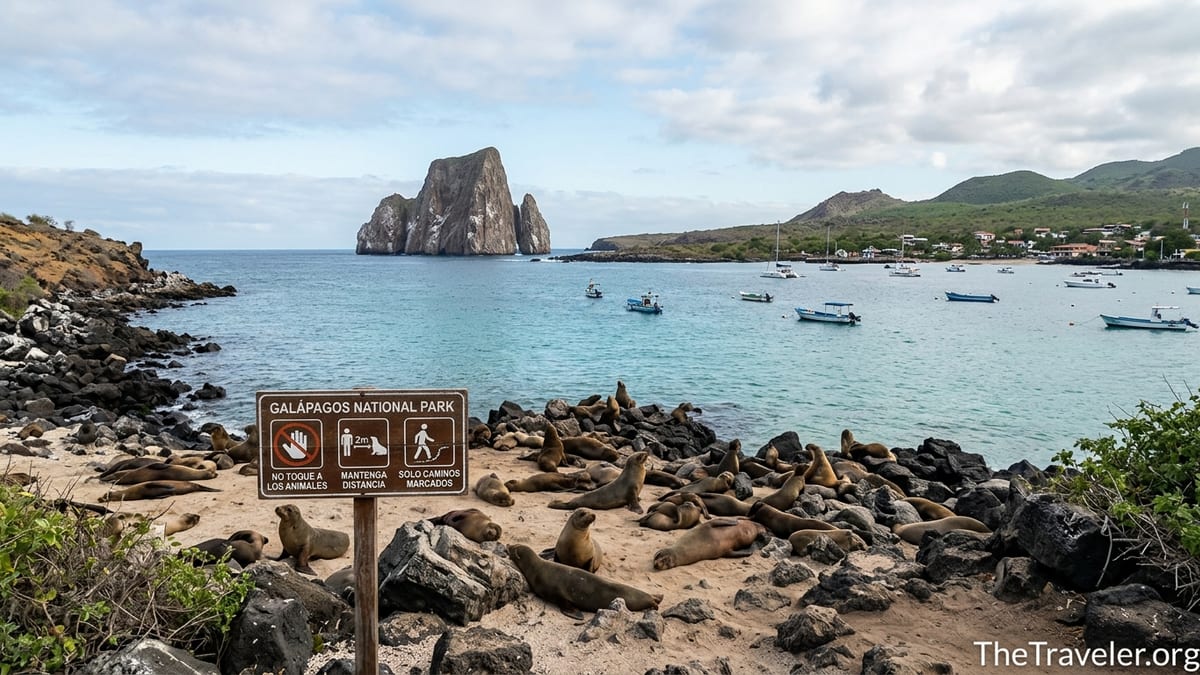
All visitor activities on San Cristóbal operate under Galápagos National Park regulations that are updated periodically. At the time of writing, rules include staying at least around two meters from wildlife, not feeding or touching animals, and using only marked trails and official visitor sites. Some areas that were occasionally closed in recent years, such as La Lobería and Punta Carola, have reopened, but access can change after storms, high surf or conservation work, so it is important to confirm current status locally just before you visit.
Many sites described here can be explored independently, while others require you to be accompanied by a certified naturalist guide and use a licensed boat operator. Where rules, prices or opening hours vary, this article gives broad, recent ranges and explains what to check on the ground. Treat this as a planning overview rather than a substitute for live information from your hotel, tour agency or the park office in Puerto Baquerizo Moreno.
Malecón, Urban Beaches and Everyday Wildlife in Town
Puerto Baquerizo Moreno’s waterfront malecón is one of the most memorable “attractions” on San Cristóbal, simply because you share it with large numbers of Galápagos sea lions. Recent visitor accounts describe animals sprawled across benches, steps and even playgrounds, particularly around the main pier and Playa de los Marinos, the urban beach beside it. You can walk the length of the seafront in well under an hour, stopping to watch sea lions socializing, marine iguanas basking, and pelicans and frigatebirds scanning the shallows. This is an easy, free activity suitable for all ages, and it works especially well at sunrise or in the early evening when the light is soft and sea lions are more active.
Playa de los Marinos functions as both town beach and sea lion colony. At night there can be hundreds of animals sleeping on the sand, while during the day you may see pups nursing and adults coming and going with the tide. Swimming here is sometimes limited by park rules to reduce disturbance, and water quality can be variable because of boat traffic, so it is best treated as a viewing and photography spot rather than a main swimming beach. Always give animals space and be prepared to change your route if a bull sea lion blocks the way; you are the visitor in their home.
Playa Mann, a short walk or quick taxi ride west of the center, is the most popular accessible swimming beach near town. It has relatively easy entry, some shade and frequent sea lion encounters right offshore. Families and first-time snorkelers often use Playa Mann as an introduction to Galápagos waters. Expect to spend an hour or two here, longer if you add a sunset picnic, and keep in mind that weekend afternoons can get busy with locals. As conditions and erosion patterns have shifted after heavy seasonal rains, ask locally which beach is currently preferred for calmer, clearer water if swimming is your top priority.
Free and Low-Cost Coastal Walks: Interpretation Center, Cerro Tijeretas and La Lobería
Just north of town, the San Cristóbal Interpretation Center combines a small but informative museum with access to some of the island’s best free walking and snorkeling. Exhibits explain the geologic origins of the islands, their unique wildlife and the human history of settlement and conservation. Entry has typically been free or low cost, but check opening hours locally, as they can shift between mornings and afternoons. Many travelers spend 45 to 90 minutes inside before continuing along the signed trails outside.
From the Interpretation Center, a network of paths runs through arid coastal vegetation toward Cerro Tijeretas. Along the way you pass several viewpoints over the north coast and Kicker Rock on the horizon, and you may see lava lizards, finches and, in season, nesting frigatebirds. The main lookout above Tijeretas Bay offers wide ocean views and is a good place to watch for sea turtles surfacing. Allow at least two to three hours for a leisurely loop that includes the center, viewpoints and time at the water.
Below the viewpoint, a stairway leads to a small platform and ladder for entering Tijeretas Bay, a protected cove known as one of the best shore-access snorkeling spots on San Cristóbal. Recent visitors report frequent sightings of sea turtles, playful sea lions, rays and schools of reef fish here, especially when the sea is calm and the tide is right. Visibility can range from excellent to quite murky depending on swell and plankton, so go in with realistic expectations. The entry and exit are via a fixed ladder into deep water, which can feel daunting; this site suits confident swimmers and snorkelers more than nervous beginners or very young children.
On the opposite side of town, La Lobería is another highlight reachable without a tour. A short taxi ride, often around the cost of a few US dollars from the center, brings you to a marked trail across lava rocks to a long, wild beach that doubles as a sea lion hangout. Snorkeling here at suitable tides can reveal multiple turtles, a variety of fish and occasional rays, but currents and surf are stronger than in sheltered coves. Plan a half-day to walk in, relax on the sand, follow the path toward volcanic cliffs with nesting seabirds, and snorkel if conditions are safe. This outing is best for reasonably fit walkers and swimmers who are comfortable on uneven terrain and can read waves and currents conservatively.
Exploring the Highlands: El Junco, Tortoise Reserve and Puerto Chino
San Cristóbal’s highlands are cooler and greener than the coast and are where you find the island’s main giant tortoise breeding and semi-wild reserve, as well as the freshwater lake of El Junco. The most practical way for independent travelers to visit is to hire a local taxi in Puerto Baquerizo Moreno for a half-day loop that typically includes El Junco, the David Rodríguez tortoise breeding center at Cerro Colorado, and Puerto Chino beach. Recent reports mention prices in the approximate range of 50 to 60 US dollars per vehicle for this circuit, with the driver waiting at each stop; exact costs depend on negotiation, fuel and how long you stay at each site.
El Junco, reached by a paved road and then a short but steep walk, is one of the few permanent freshwater lakes in the Galápagos. On clear days you can see frigatebirds and other seabirds dipping into the water to clean their salt-soaked feathers, and you get broad views over the highlands from the crater rim. In the garúa season the area may be misty and muddy underfoot, and visibility is sometimes limited to the lake itself. Allow roughly an hour including the walk up and time at the top. This is a straightforward hike for most travelers with moderate fitness, but the stairs and altitude compared to sea level can make it tiring for some.
Further along the main road, the tortoise breeding center at Cerro Colorado houses a population of San Cristóbal giant tortoises in semi-wild enclosures among native vegetation. Paths lead through fenced areas where you can observe tortoises of different ages, learn about captive breeding efforts and see how juveniles are reared before release to the wild. Access rules can change with conservation needs, but in recent years this has generally been a self-guided site with informational signage, although some organized tours include a naturalist guide. Plan 60 to 90 minutes here, more if you are keen on photography or traveling with children who want to watch tortoises feeding and moving at close range.
Many taxi circuits finish at Puerto Chino, a beautiful crescent of pale sand set between dark lava headlands on the south coast. A short, mostly flat trail leads from the road to the beach, where sea lions often rest and blue-footed boobies and other seabirds feed just offshore. Swimming and relaxed beach time are the main activities, though sun exposure can be intense and there is little shade, so bring water, hats and sun protection. This stop works well for families and casual swimmers, but you should still be cautious of currents and surf. Roads to the highlands and south coast are mostly paved or solidly surfaced, so standard taxis can make the journey in about 40 minutes from town to El Junco, with additional short hops between each site.
Boat-Based Highlights: Kicker Rock as Snorkel and Dive Destination
Kicker Rock, known locally as León Dormido, is San Cristóbal’s signature marine site: a sheer volcanic tuff cone split into two towering walls that rise dramatically from the open ocean. The channel between the rocks acts as a natural funnel for currents and nutrients, which in turn attract schooling fish, sea turtles, rays and several species of sharks. Recent dive and snorkel reports describe regular encounters with Galápagos and whitetip reef sharks, eagle rays, and large groups of fish, with seasonal sightings of hammerhead sharks that are possible but never guaranteed. The vertical rock faces covered in sponges and invertebrates add to the sense of drifting alongside an underwater cliff.
Most Kicker Rock trips from Puerto Baquerizo Moreno follow a similar full-day pattern. Boats generally leave in the morning after a briefing and equipment fitting either that day or the previous afternoon, which some operators now require to ensure wetsuits and masks fit correctly. The ride out usually takes around 45 to 60 minutes, depending on sea conditions. Snorkeling itineraries commonly include two in-water sessions of roughly 40 to 50 minutes each, often one through or near the central channel and another along the outer walls. Many tours add a stop at a quiet beach on the San Cristóbal coast for lunch, swimming or a short walk before returning to town by mid to late afternoon.
Recent price examples from established operators place Kicker Rock snorkeling day trips in the ballpark of 160 to 190 US dollars per person, and two-dive day trips around 230 to 250 dollars, including guide, boat transport, basic equipment and lunch. Precise rates vary by agency, season and any park fee arrangements, so it is worth comparing a few agencies in town or via your accommodation. Group sizes on licensed day boats are typically capped at around 10 to 12 passengers, but you should confirm the maximum group and guide-to-guest ratio, as a smaller group can make a big difference to comfort both on deck and in the water.
Conditions at Kicker Rock can be demanding. The ocean here is deep and fully exposed, with currents and waves that can be challenging for inexperienced swimmers, especially in the cool season when water is colder and visibility more variable. Snorkel trips usually accept fit beginners who are comfortable in the sea, but you should be honest with operators about your experience level and ask whether the day’s conditions are suitable. For diving, agencies generally require at least an open water certification and a minimum number of logged dives, and many prefer or insist on recent experience due to the possibility of strong currents and mid-water descents. Seasickness is a real consideration on small boats, so motion-sickness medication, hydration and light meals before departure are recommended for those prone to nausea.
Other Regulated Boat Excursions from San Cristóbal
Beyond Kicker Rock, Puerto Baquerizo Moreno is the departure point for several other Galápagos National Park regulated day trips by boat. Commonly offered options include visits to Española Island, known for its large waved albatross colony in season and photogenic blowhole; Punta Pitt at the northeastern tip of San Cristóbal, one of the few places where you might see three species of boobies; and coastal excursions to beaches like Cerro Brujo and Bahia Rosa Blanca that combine short hikes, snorkeling and quiet coves. Exact itineraries change over time with park zoning decisions, seasonal wildlife patterns and operator permits, so what is on sale in town in a given month is the most accurate guide.
These excursions tend to be more tightly controlled than local shore sites. Landings on Española and specific coastal visitor sites are only allowed with a certified naturalist guide, on designated paths, and often within fixed time windows. Some landing sites are wet landings where you step from the panga into shallow water, while others are dry, but in all cases you must be prepared for uneven terrain, lava rocks and strong sun. Because places like Española are among the most sought-after trips in the Galápagos, seats on permitted boats in peak holiday periods and during the albatross breeding season can sell out well in advance. If seeing a particular island or species is a priority, planning and booking early through a reputable agency or your hotel is strongly advised.
Prices for these regulated boat day trips generally fall higher than local coastal tours and can be similar to or above Kicker Rock rates, reflecting longer distances, guide requirements and limited visitor quotas. While specific figures shift with fuel and operating costs, travelers should budget at least into the mid hundreds of US dollars per person for long-range days such as Española, including lunch and guiding but not necessarily equipment rental. In all cases, evaluate operators on more than price: look for properly maintained boats with safety equipment, clear briefings, lifejackets used in pangas where appropriate, and guides who explain both wildlife and rules in detail.
Choosing the Right Activities for Your Travel Style
San Cristóbal works well for a wide range of travelers, from those content with slow days around town to keen divers and hikers looking for more demanding outings. Families with younger children or anyone who prefers gentle days can focus on the malecón, Playa Mann, the Interpretation Center and perhaps a carefully timed visit to La Lobería when surf is low. These sites offer frequent wildlife sightings with relatively short walks and flexible timing. Bringing your own mask and snorkel improves comfort and hygiene, though many local shops and tours also rent gear by the day.
Travelers eager for more walking and scenery can add the full Cerro Tijeretas loop and spend time at El Junco and the highland tortoise reserve, both of which involve moderate effort but reward you with different habitats and perspectives on the island. Footwear with good grip is particularly important for lava and wet stone steps, and a light rain layer helps in the misty highlands even in months when town feels dry. For photographers, mornings and late afternoons on the trails and around the urban beaches give the best chances of balanced light and active animals.
Snorkelers and divers will likely prioritize Kicker Rock and, if budget and time allow, a second boat day to Española or a coastal itinerary that includes several snorkel sites. Given how strongly conditions and wildlife sightings depend on currents, tides and season, it helps to keep expectations flexible: think in terms of spending time in rich water rather than ticking off a fixed list of species. Building at least one rest or buffer day between big boat excursions is wise, both for energy and to allow some flexibility if trips are rescheduled due to weather.
Sample One-, Two- and Three-Day Itineraries
With one full day on San Cristóbal, most visitors will be happiest choosing between a land-focused or boat-focused plan. A relaxed land day might combine a morning at the Interpretation Center and Cerro Tijeretas, with time for snorkeling in the cove if conditions permit, followed by a late lunch and sea lion watching along the malecón and Playa de los Marinos. Alternatively, strong swimmers and snorkelers could devote their single day to a Kicker Rock trip, returning in time for a final stroll along the waterfront and dinner in town.
With two days, you can balance highlands, coast and sea. One good structure is to spend the first day on land, hiring a taxi for the El Junco, Cerro Colorado tortoise center and Puerto Chino loop, with a quieter sunset at Playa Mann on your return. The second day can then be dedicated to Kicker Rock, leaving your evenings free to enjoy the harbor atmosphere and local restaurants. This combination works for couples, families with older children and solo travelers who want to see both tortoises and rich marine life without over-scheduling.
In three days, you can slow the pace and add more variety. A sample itinerary could start with a coastal walking day: Interpretation Center, Cerro Tijeretas and beach time at Playa Mann or La Lobería, adjusting to your fitness and the weather. The second day becomes your main boat day to Kicker Rock, with an early night afterward. On the third day, take the highland taxi loop to El Junco, the tortoise breeding center and Puerto Chino, or, if budget allows and availability aligns, a second regulated boat excursion such as Española or a coastal circuit to Punta Pitt or Cerro Brujo. Whichever mix you choose, leaving at least part of one afternoon open for unhurried time on the malecón, watching sea lions and seabirds as the light fades, is often what travelers remember most vividly about San Cristóbal.