


Boston Logan International Airport is New England’s busiest air hub, and departures here can feel intense at peak times. With four main terminals, multiple security checkpoints, a growing network of lounges and an ongoing stream of morning business travelers and evening transatlantic departures, knowing how the airport works will dramatically reduce stress. This guide walks you through check-in timing, security, terminal layout, food and shopping, lounges, and exactly how early you should plan to arrive in 2026.
Get the latest updates straight to your inbox!
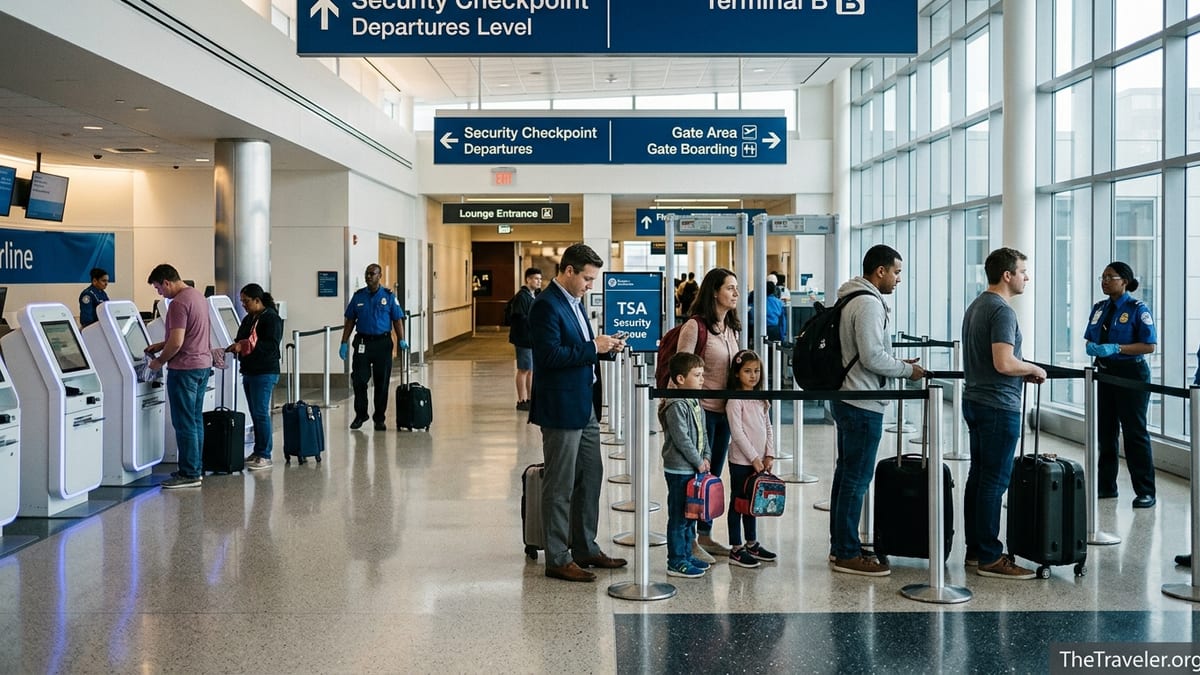
Understanding Boston Logan’s Terminals and Layout
Boston Logan (airport code BOS) has four passenger terminals: A, B, C and E. There is no Terminal D. Terminals A, B and C handle mostly domestic and Canada flights, while Terminal E is the international terminal, home to airlines such as British Airways, Lufthansa, Emirates and many seasonal European carriers. All terminals connect to the central parking garage and are linked landside by enclosed walkways and free Massport shuttle buses, so moving between them is straightforward if you allow time.
Terminal A is dominated by Delta, with most of its domestic flights there and some additional operations in Terminal E. Terminal B is split into two concourses and serves American, United, Southwest, Air Canada and several others. Terminal C is JetBlue’s main base in Boston, with additional gates for airlines like Aer Lingus and some regional carriers. Terminal E handles virtually all non-precleared international departures, from Iceland to Tel Aviv, along with customs and immigration for arriving international passengers.
It is possible to walk airside between some concourses after security, which matters if you are aiming for a particular lounge. At the time of writing, there is an airside connector between parts of Terminals B and C and access from the Chase Sapphire Lounge in Terminal B toward certain gates in C and E. However, you should not count on walking between every terminal after security, especially from Terminal A. If you are changing airlines or terminals, it is safer to budget enough time to exit, use the walkways or shuttle, and clear security again in the correct terminal.
Signage at Logan is generally clear. When you arrive by car, taxi or rideshare, digital signs at the airport entrance list airlines by terminal. For example, if you are flying JetBlue to Fort Lauderdale, you would follow the signs for Terminal C departures; if you are flying American to Chicago, you would be dropped at Terminal B. Double-check your airline’s terminal on your confirmation or app before leaving home, as Logan occasionally reassigns flights or moves carriers between concourses during construction and peak travel periods.
How Early to Arrive for Departing Flights
For most travelers, the biggest question is how early to arrive at Logan. Airlines serving Boston typically recommend arriving at least two hours before scheduled departure for domestic flights and three hours for international flights. These are good baselines, but real-world experience at Logan suggests you should adjust based on time of day, day of week and whether you have checked baggage.
For early-morning domestic flights between about 5:30 a.m. and 8:00 a.m., security checkpoints in Terminals A, B and C can see heavy lines as business travelers and first-wave leisure departures all converge. If you are checking bags on a 7:00 a.m. Delta flight from Terminal A, aim to be dropped off around 5:00 a.m. That gives you roughly 30 minutes for bag drop, 20 to 30 minutes for security and a buffer in case a checkpoint is short-staffed. Passengers with TSA PreCheck or CLEAR often clear security much faster, but at peak times even these lanes can back up, so a 90-minute minimum is still wise.
For international departures out of Terminal E, especially evening transatlantic flights between about 5:00 p.m. and 9:00 p.m., three hours is a realistic recommendation. A family on a 6:30 p.m. British Airways flight to London, for instance, should aim to arrive around 3:30 p.m., allowing for bag drop, potential lines at airline check-in, security and time to reach the gate and possibly visit a lounge. During busy summer travel peaks or school vacation weeks, you may want an extra 30 minutes, since multiple large wide-body flights can check in at the same time.
Midday and late-evening departures tend to be calmer, especially for domestic flights without checked bags. If you are flying JetBlue to Washington National at 2:00 p.m. on a weekday and you have only a carry-on plus PreCheck, arriving 75 to 90 minutes ahead can be sufficient in most cases. That said, winter storms, construction and holiday surges can quickly change the picture, so when in doubt, choose the earlier arrival. Missing a flight at Logan because of a long security line is far more expensive than spending an extra 30 minutes with a coffee near your gate.
Check-In, Bag Drop and Boarding Procedures
Most major airlines at Logan encourage online check-in, either through their apps or websites, starting 24 hours before departure. In practice, this can save you a significant amount of time. For example, a JetBlue passenger with only a carry-on who checks in on the app can often bypass the main check-in queues in Terminal C and head directly to security. If you are checking a bag, online check-in still helps, since you usually join a shorter “bag drop” line where agents verify documents and tag your luggage.
At busy times, airline agents at Logan often open dedicated bag drop lanes for elite-status travelers and those in premium cabins. At Terminal A, Delta’s Sky Priority counters can shave time off the check-in process for Medallion members and Delta One passengers. In Terminal B, American and United likewise have priority counters. These benefits are most noticeable during early-morning and evening peaks, when standard economy queues may spill into the terminal aisles.
Boarding at Logan is usually by group number or zone printed on your boarding pass. Many gates, especially in Terminals B and C, use multiple boarding lanes separated by stanchions, so listen for announcements and check overhead signs. If you are traveling with small children or need extra time, most airlines boarding at Logan still offer pre-boarding. For a concrete example, Southwest flights from Terminal B will call pre-boarding for travelers needing assistance, then board in A, B and C group order exactly as they do in other airports, with passengers lining up at numbered posts.
If you are flying internationally from Terminal E, be prepared for document checks at the gate. Agents for carriers such as Lufthansa, Emirates and TAP Air Portugal may re-verify passports and visas before boarding begins. This can create small lines just outside the gate door. If you have spent time in a lounge, leave early enough to be at the gate at or before the boarding time shown in your app, not just the departure time.
Security, TSA PreCheck, CLEAR and Passport Control
Logan has multiple security checkpoints across its terminals. Terminals A, B and E each have two checkpoints, while Terminal C has one primary checkpoint that feeds most JetBlue and partner flights. Wait times fluctuate significantly throughout the day. Early mornings often see the longest lines, while mid-afternoons can be quieter. Many passengers check live security wait estimates in airline apps or on the airport’s information screens to decide whether to head toward an alternative checkpoint within their terminal.
TSA PreCheck is widely available at Boston Logan and is especially useful in Terminals A and C, where business and leisure traffic can spike at the same time. With PreCheck, you typically keep your laptop in your bag and your shoes on, which speeds the line. For example, a PreCheck traveler in Terminal C at 7:00 a.m. might spend 10 to 15 minutes in line versus 25 to 35 minutes in the standard lane. However, this is not guaranteed, and equipment issues or unusual surges can temporarily erase the advantage, so build a buffer into your schedule even if you hold trusted traveler status.
CLEAR, which uses biometric identity verification, has been expanding across major U.S. airports and is present at Boston Logan security checkpoints serving key domestic terminals. CLEAR members at Logan can typically move into a dedicated lane where an ambassador escorts them toward physical screening, after which they pass through either a PreCheck or standard x-ray lane depending on their boarding pass. For a Delta frequent flyer connecting in Boston with CLEAR, this can make tight domestic connections more manageable, but it is not a substitute for arriving late to the airport for your first departure of the day.
Passport control at Logan is primarily an issue for arriving passengers, since departing international travelers normally clear exit immigration in their destination country instead. However, you may encounter a separate document screening area near the gate in Terminal E if you are flying to destinations with strict entry requirements, such as Israel or certain Latin American countries. Additionally, some international flights from Logan may check advance passenger information at check-in desks, which can modestly extend the time you spend at the counter compared with a standard domestic bag drop.
Lounges and Quiet Spaces Before Departure
Boston Logan has an unusually rich lounge scene for an airport its size, spread across all four terminals. In Terminal A, Delta operates a Sky Club that serves its domestic and some transatlantic passengers. It typically opens early in the morning to match Delta’s first departures, with amenities like complimentary snacks, a full bar, Wi-Fi and a mix of work and relaxation zones. A business traveler on a 6:00 a.m. flight to Atlanta, for example, might check in, clear security and spend 30 minutes in the Sky Club with a light breakfast before boarding.
Terminal B hosts multiple lounges, including an American Airlines Admirals Club, a United Club and, crucially for many credit card holders, the Chase Sapphire Lounge by The Club. The Chase lounge, located near the B to C connector, has become a favorite among frequent flyers because it admits passengers flying almost any airline with appropriate card access, along with a limited number of guests. Typical amenities include made-to-order or high-quality buffet food, premium coffee, showers and quiet workspaces. Because it sits near the connector, it is used by travelers departing from both B and C, and in some cases those walking to Terminal E gates after clearing security on the B side.
In Terminal C, you’ll find The Lounge used by carriers such as Aer Lingus and Emirates for eligible passengers, along with access for some Priority Pass members depending on the latest arrangements. This space often fills up before transatlantic departures, so access can be restricted when it reaches capacity. JetBlue does not currently run its own branded lounge at Logan, so many of its customers instead rely on the Chase Sapphire Lounge if departing from nearby gates or simply use the public seating and dining options around the concourse.
Terminal E is home to several airline-operated lounges, including spaces for British Airways, Lufthansa, Delta’s international premium products and Emirates. These lounges generally serve business-class and first-class travelers, as well as eligible elite-status members, and offer full meals, showers and quieter spaces away from the main hall. A passenger flying business class to Frankfurt from Terminal E, for instance, might enjoy a hot dinner and shower in an airline lounge before boarding a late-evening overnight flight, effectively maximizing rest time on board.
Food, Shopping and Last-Minute Essentials
Food and shopping options at Boston Logan have improved significantly in recent years. Across the terminals, you’ll find a mix of national chains and local New England brands. Coffee is easy to find, with multiple Dunkin locations spread throughout the airport and other outlets such as Starbucks and Peet’s in select terminals. A traveler rushing through Terminal B on a morning American flight, for example, can usually grab a breakfast sandwich and coffee within sight of their gate, even if they skipped the main food court.
Each terminal offers a variety of fast-casual and sit-down dining options. In Terminal C, JetBlue’s home base, travelers can expect everything from quick pizza and burgers to seafood and healthy bowls, reflecting Boston’s broader dining scene. Terminal E leans into international flavors, with restaurants serving Italian, Asian and Mediterranean dishes that cater to long-haul travelers craving a proper meal before boarding. During busy periods, lines at popular spots can grow, so if you see something appealing on the way to your gate, it can be smart to stop then rather than assuming there will be a better option later.
Shopping at Logan focuses on travel essentials and souvenirs. Hudson-branded newsstands and convenience stores are common in every terminal, selling magazines, snacks, phone chargers and neck pillows. There are also duty-free shops in Terminal E for international passengers, offering liquor, cosmetics and local items like New England maple products. A typical scenario might be a traveler picking up a small box of Boston-themed chocolates as a gift while waiting to board a flight to Europe.
If you forgot a key travel item such as a universal adapter, noise-canceling headphones or a lightweight jacket, electronics and apparel retailers in terminals B, C and E can often fill the gap, albeit at airport prices. Pharmacies and kiosks provide over-the-counter medications, travel-sized toiletries and masks, which is helpful during cold and flu season. While prices can be higher than off-airport stores, the convenience of grabbing what you need minutes before departure often outweighs the premium.
Ground Transport and Timing Your Arrival at the Curb
How you get to Logan has a big influence on when you should leave home. Public transit options include the MBTA Blue Line to Airport station with a free Massport shuttle to the terminals, and the Silver Line bus service from South Station that runs directly to all terminals. The Silver Line from Logan toward downtown is currently free, while inbound riders from the city pay standard MBTA fares. For many travelers staying in central Boston, taking the subway or Silver Line during rush hour can be both more predictable and often faster than driving through the tunnels.
Logan Express buses run from suburban locations such as Back Bay, Braintree, Framingham, Peabody and Woburn, offering direct service to the terminals with luggage storage on board. A traveler from Framingham catching a 5:00 p.m. international departure might book a mid-afternoon Logan Express bus, arriving at the airport terminals without having to navigate city traffic or pay for long-term parking. These services can be especially convenient during winter when snow or freezing rain makes driving less appealing.
If you are arriving by car, taxi or rideshare, factor in downtown Boston’s frequent congestion and the tunnels leading to the airport. On a clear Sunday morning, you might cover the distance from Boston Common to Logan in 15 to 20 minutes. On a rainy weekday at 4:30 p.m., that same trip can stretch to 40 minutes or more, particularly when an incident in the Sumner or Ted Williams Tunnel slows traffic. Building an extra 30 minutes into your trip to the airport is prudent, especially if you are checking bags or lack trusted traveler screening.
Parking at Logan includes central and economy garages, as well as terminal-specific lots that can fill up during peak holiday periods. A family driving from New Hampshire for a school vacation week departure, for example, may find the economy lot nearing capacity by mid-morning. If you plan to park, check current conditions as you approach and allow extra time to follow signage, find a space and ride or walk to your terminal. Off-airport parking lots with shuttles are another option, though you must budget for shuttle wait times and transit.
The Takeaway
Departing from Boston Logan can be smooth and predictable if you understand how the airport is organized and give yourself enough time. The four-terminal layout, rich lounge offerings and wide range of dining and shopping options mean that once you clear security, the experience is generally comfortable, especially if you plan ahead. Arrive two hours early for most domestic flights and three for international, adding more during peak periods and if you are checking bags or lack PreCheck or CLEAR.
Real-world examples at Logan show the value of conservative timing. A 7:00 a.m. domestic departure from Terminal C with checked luggage and no trusted traveler status is far less stressful if you are standing in the check-in line at 5:00 a.m. rather than rushing through security at 6:20 a.m. Likewise, evening international departures from Terminal E are easier when you have enough time to check in, clear security and perhaps enjoy a lounge meal before boarding a long overnight flight.
By combining realistic arrival times, smart use of online check-in and security programs, awareness of your terminal’s layout and an eye on ground transportation, you can treat Boston Logan as a manageable gateway rather than a stressful obstacle. Whether you are commuting to New York, flying home to the West Coast or starting a long-haul journey to Europe or the Middle East, a bit of planning turns Logan from a bottleneck into the first, well-managed stage of your trip.
FAQ
Q1. How early should I get to Boston Logan for a domestic flight?
For most domestic departures, plan to arrive at Logan about two hours before your scheduled departure time. If you are traveling at peak times, such as early weekday mornings or Sunday evenings, or if you are checking bags and do not have TSA PreCheck, add another 30 minutes to be safe.
Q2. How early should I arrive for an international flight from Terminal E?
For international flights from Terminal E, aim to arrive about three hours before departure. During busy summer periods, school vacations or holiday weekends, consider arriving three and a half hours early, especially if you are traveling with family or expect longer check-in and security lines.
Q3. Which airlines use which terminals at Boston Logan?
Delta primarily uses Terminal A for domestic flights and some operations in Terminal E. Terminal B is home to American, United, Southwest, Air Canada and others. JetBlue is centered in Terminal C, while Terminal E handles most non-precleared international carriers such as British Airways, Lufthansa, Emirates and many seasonal European airlines.
Q4. Is TSA PreCheck available at all terminals in Logan?
TSA PreCheck is available at the main checkpoints in all major terminals at Logan, though specific lanes can open and close based on staffing and time of day. At busy periods, PreCheck lines are generally shorter than standard lanes, but they can still see waits, so you should not rely on PreCheck to justify a late arrival.
Q5. Does Boston Logan have CLEAR, and how does it help?
CLEAR is available at key security checkpoints at Logan, mainly in heavily used domestic terminals. CLEAR members use biometric verification in a separate lane, then proceed into either PreCheck or standard screening. It can speed up the identity check portion of security but does not eliminate the need to pass through x-ray and metal detectors.
Q6. What lounges can I use if I have a premium travel credit card?
Travelers with certain premium credit cards may access the Chase Sapphire Lounge by The Club in Terminal B, which can be used regardless of airline with the right card enrollment. Depending on current agreements, some cards and Priority Pass memberships also grant access to The Lounge in Terminal C and selected airline lounges in Terminal E, subject to capacity and eligibility rules.
Q7. Can I walk between terminals after security at Logan?
There are some airside connections, particularly between parts of Terminals B and C and from the area near the Chase Sapphire Lounge, but not every terminal is linked behind security. You generally cannot count on walking from Terminal A to other terminals airside, so if your airline or gate changes, you may need to exit, use walkways or shuttles, and re-clear security in the new terminal.
Q8. What are the best public transit options to reach Boston Logan?
The MBTA Blue Line to Airport station with a free Massport shuttle to the terminals is a common choice, as is the Silver Line from South Station that runs directly to all terminals. Logan Express buses from locations such as Back Bay, Braintree, Framingham, Peabody and Woburn provide direct, luggage-friendly service for many suburban travelers.
Q9. Are there good food options once I get through security?
Yes. Each terminal at Logan offers a range of food choices, from quick grab-and-go snacks and coffee to sit-down restaurants and bars. Terminal C has a strong selection near JetBlue gates, while Terminal E features more international options. It is wise to eat or pick up snacks when you see something suitable rather than assuming there will be better choices near your gate.
Q10. What should I do if I arrive very early and want a quiet place to work or relax?
If you have lounge access through your airline ticket, elite status or a premium credit card, heading to a lounge is usually the best option for a quiet environment with Wi-Fi and refreshments. If you do not have access, look for less crowded seating areas at the ends of concourses, near unused gates or around business centers that often have power outlets and relatively calm surroundings.