


Boston Logan International Airport can feel busy and a little confusing on your first visit, especially if you are rushing to make a connection or find your way into downtown. With four terminals spread around Boston Harbor and several different transportation options, it pays to know the basics before you land. This guide walks you through how Boston Logan works in 2026, from terminals and airlines to transport, parking, nearby hotels, lounges, and smart first-timer strategies.
Get the latest updates straight to your inbox!
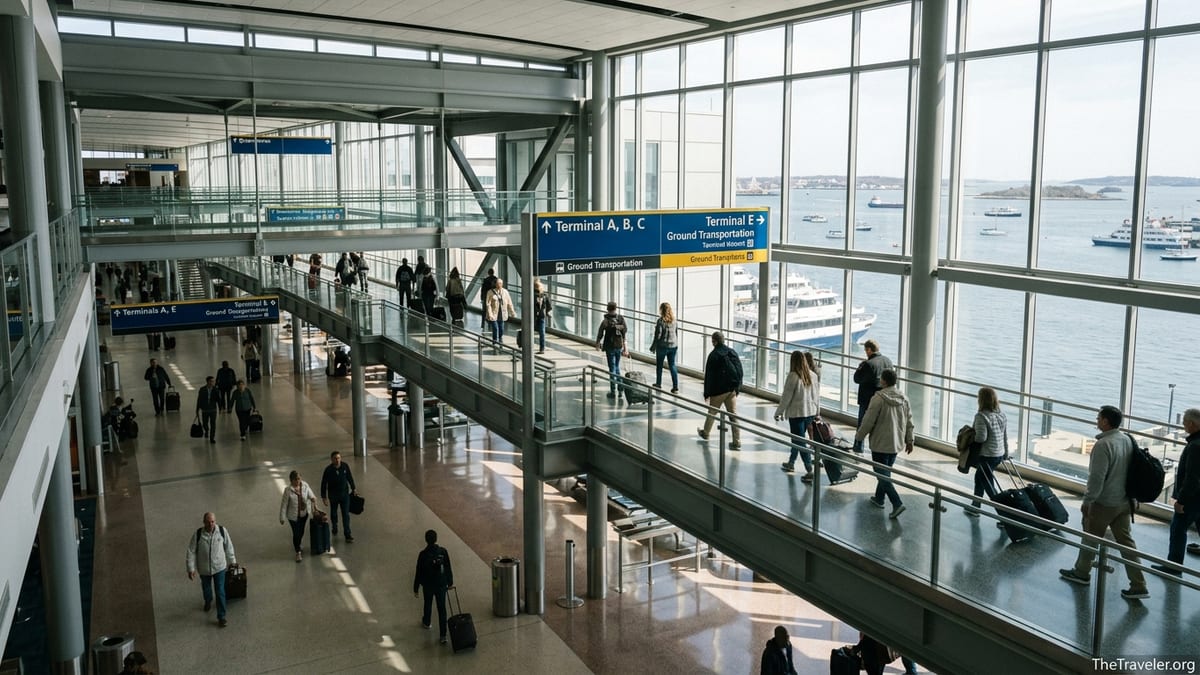
Understanding Boston Logan’s Terminals and Layout
Boston Logan International Airport has four main passenger terminals: A, B, C, and E. There is no Terminal D, which sometimes surprises first-time visitors. Each terminal serves a different mix of airlines and destinations, but all are linked by free Massport shuttle buses and walkways. Moving walkways in the central parking and pedestrian bridges make it possible to walk between several terminals without going outdoors, though you will usually need to re-clear security if you change terminals for a connection.
Terminal A primarily serves Delta Air Lines, including most of its domestic flights, and a few other carriers on specific routes. Terminal B is split into two sides and handles a large share of domestic traffic, including American Airlines, United Airlines, and carriers such as Southwest. Terminal C is home base for JetBlue, which has a strong presence at Logan and operates many flights around the United States and to the Caribbean, as well as some transatlantic routes. Terminal E is the international terminal, handling most non‑US carriers and many overseas departures and arrivals, while also hosting some domestic flights for airlines like Delta during peak periods.
For a real-world example, a traveler flying from Chicago to Boston on United will arrive at Terminal B, while another passenger arriving the same afternoon on JetBlue from Fort Lauderdale will come into Terminal C. A third traveler landing from London Heathrow on British Airways will arrive at Terminal E, clear US immigration and customs there, and then either exit straight to the curb or transfer to a domestic terminal for a connecting flight. Knowing your airline and terminal ahead of time reduces stress, especially if someone is picking you up by car and needs to go to the correct arrivals roadway.
Connections between terminals require some planning because security checkpoints are not unified across the airport. If you land in Terminal E on an international flight and have a domestic connection on JetBlue in Terminal C, you will follow signs to baggage claim and customs in E, then use the free Massport shuttle bus to reach Terminal C and re-clear security. This process can easily take 45 to 75 minutes depending on lines at immigration and security, so first-time travelers should schedule longer connection times when switching both airlines and terminals.
Airlines, Check-in, and Security for First Timers
Most major US carriers and many international airlines operate at Logan. JetBlue dominates Terminal C, while Delta focuses on Terminal A and also uses space in Terminal E for some domestic departures during busy times. American and United both run sizeable operations out of Terminal B, including transcontinental services to West Coast cities. The international lineup in Terminal E typically includes airlines such as British Airways, Lufthansa, Air France, Aer Lingus, Air Canada, and several carriers serving Latin America and the Caribbean. Before you fly, check your airline’s app or confirmation email to confirm which terminal you will use in Boston, since some carriers occasionally shift check-in locations or operate from more than one terminal.
Security wait times at Logan fluctuate by time of day and season. Early mornings from around 5:30 to 8:30 a.m. and late afternoons from roughly 3 to 7 p.m. are usually the busiest, reflecting heavy business and commuter traffic. For a domestic flight at those times, a first-time traveler should plan to arrive at the airport about two hours before departure; for international departures from Terminal E, two and a half to three hours is a safer buffer. For instance, if you are flying JetBlue to Orlando at 7 a.m. on a school vacation week, arriving at Terminal C by 5 a.m. will give you a more relaxed experience than cutting it close at 6 a.m.
Many terminals at Logan now have separate queues for TSA PreCheck and airline priority customers, which can significantly reduce waiting. If you have PreCheck on your boarding pass from Delta, American, JetBlue, or another participating carrier, follow the green signs at the checkpoint. First-time travelers without PreCheck should be prepared for standard screening rules, including removing laptops from bags and taking off shoes, unless otherwise notified by security officers. Using organized packing, such as a dedicated laptop sleeve and easily removable liquids bag, will speed up your experience and is especially helpful if you are traveling with children.
Boarding procedures vary slightly by airline but generally start 30 to 45 minutes before departure for domestic flights and earlier for international routes. Logan’s gates can be quite busy at peak times, particularly around midday at Terminal C and late afternoon at Terminal E, so make a habit of checking gate information regularly on airport monitors or airline apps. Gates sometimes change, and in a terminal like B, walking from one end to the other can take 10 to 15 minutes if the concourses are crowded.
Arriving at BOS: From Plane to Curb
Once your flight arrives at Boston Logan, deplaning is usually straightforward. Jet bridges bring you into the concourse, where you follow clear overhead signs for Baggage Claim, Ground Transportation, and connections. If you are arriving domestically into Terminals A, B, or C with only carry-on luggage, you can typically reach the curb in 10 to 20 minutes. If you have checked bags, allow extra time; during a busy evening bank of flights, it can take around 20 to 40 minutes from touchdown to seeing your luggage on the carousel.
International arrivals at Terminal E involve an additional step: US Customs and Border Protection. After disembarking, you join the line for passport control, then collect your luggage from the baggage hall, proceed through customs, and either exit into the public arrivals area or follow signs for connecting flights. At peak times, such as late afternoon when multiple transatlantic flights arrive close together, it can take 45 minutes or longer to clear this process. Travelers with Global Entry can often complete passport control in just a few minutes, which is particularly valuable if you have a tight domestic connection.
At baggage claim in each terminal, you will find car rental counters or courtesy phones, information desks, and signage pointing toward the free Massport shuttle buses, taxis, ride app pickups, and the MBTA. For example, in Terminal C’s arrivals level, signs direct you outside to a shelter where shuttles arrive every few minutes to carry passengers to the Rental Car Center, Economy Parking, or the Airport Station on the subway’s Blue Line. If you plan to use Uber or Lyft, note that pickups are typically consolidated in designated areas rather than directly at every curb door; first-time visitors should follow the airport’s overhead “App Ride” or “Ride Service” signs rather than requesting a car immediately at the exit.
If someone is meeting you by car, they need to know your terminal and airline. Arrivals roads curve around the airport, and the driver will see large overhead signs indicating Terminals A, B, C, and E, each with specific airline names underneath. A practical example: if you land on Alaska Airlines from Seattle in Terminal B, your friend should follow roadway signs for “Terminal B Arrivals” and then watch the curbside signs for “Baggage Claim 1–3” or similar to spot you. To avoid circling, Boston Logan also offers cell phone waiting lots where drivers can park for free for a short period until you call to say you are ready at the curb.
Getting To and From Downtown Boston
For most first-time travelers, the two main public transit options from Logan to downtown Boston are the MBTA Silver Line bus (SL1) and the Blue Line subway via Airport Station. The Silver Line SL1 is especially convenient for visitors with luggage because it provides curbside service: buses stop right outside each terminal and run to South Station in downtown Boston. Service typically runs every few minutes during the day, and travel time to South Station is commonly around 20 to 30 minutes depending on traffic. The ride from Logan into the city on the SL1 is currently free, and at South Station you can transfer to the Red Line subway or to Amtrak and MBTA commuter rail trains without leaving the building.
The Blue Line subway offers another strong option, especially if your destination is in downtown or near the North End. To use it, you take a free Massport shuttle bus from your terminal to Airport Station on the Blue Line. From there, you can ride inbound to Aquarium, State, or Government Center, which are central Boston stops, and connect to other subway lines such as the Orange and Green Lines. A traveler staying at a hotel near Government Center might ride the shuttle to Airport Station, take the Blue Line inbound two or three stops, and walk a few minutes to their accommodation, often in less time than a taxi in rush hour traffic.
Taxi and ride-hail services remain popular for those with heavy luggage or traveling in groups. A metered taxi from Logan to downtown Boston typically runs within a moderate price range plus tolls and tip, varying with traffic and exact destination. Ride-hail prices on Uber or Lyft fluctuate based on demand; for example, a midafternoon ride from Terminal C to a Back Bay hotel might cost less than a late-night surge-priced ride to Cambridge. When comparing options, remember that public transit from Logan into the city is often appreciably cheaper than a private car, especially for solo travelers or couples, and avoids the uncertainty of tunnel congestion during busy periods.
For travelers heading beyond Boston, Logan offers direct connections to regional buses and trains. The Silver Line SL1 delivers you to South Station, which is the hub for Amtrak services to New York and beyond and for MBTA commuter rail trains to suburbs such as Providence, Worcester, and the South Shore. A practical example: a traveler landing at Terminal E from Dublin might ride the free Silver Line to South Station and then board an evening Amtrak train to Providence, completing the airport-to-train transfer with a single public transit ride and one easy platform change.
Parking, Rental Cars, and Nearby Hotels
Drivers will find several parking options at Boston Logan, including a large Central Parking Garage and terminal-specific garages. Central Parking is connected to Terminals A, B, and C via elevated walkways and moving sidewalks, allowing you to park once and walk indoors to your airline. This option is convenient if you value proximity to your gate and are staying only a day or two. For longer trips, Economy Parking, located a short distance from the terminals, usually offers lower daily rates and is linked to all terminals by frequent free shuttle buses. Travelers leaving Boston for a week-long vacation often choose economy parking to balance cost and convenience.
Car rentals at Logan are consolidated at a multi-level Rental Car Center. After arriving and collecting bags, you follow signs to the designated curb area, where free Massport shuttle buses run from every terminal to the Rental Car Center. Major companies such as Enterprise, Hertz, Avis, Budget, National, and Alamo operate there. For example, a family flying in from Atlanta could land in Terminal A, pick up their luggage, ride the Rental Car Center shuttle for around 5 to 10 minutes, and collect a pre-booked SUV for a road trip to Cape Cod or New Hampshire.
If you have an early morning departure or a long layover, staying at a nearby hotel can make your experience smoother. Several properties are located very close to the terminals and offer dedicated shuttle service, such as full-service hotels attached by skybridge or located within a mile of the airport. Others, including chain hotels in neighboring East Boston, Chelsea, and the Seaport District, run complimentary shuttles that pick up and drop off guests at designated airport locations. A typical use case is a traveler arriving late from the West Coast who books a nearby hotel with a free shuttle, sleeps overnight, and then takes the shuttle back to the terminal for an early connection to Europe the next day.
Some hotels around Logan participate in “park and fly” or “park, sleep, and fly” packages. These deals often include one night’s accommodation plus parking for several days and round-trip shuttle service to the terminals. For a family driving from New Hampshire for a one-week vacation to Florida, it may be cost-effective to stay one night near the airport, leave the car in the hotel’s lot during the trip, and rely on the shuttle instead of paying the airport’s on-site parking rates for the full week.
Lounges, Food, and Amenities in the Terminals
Boston Logan offers a mix of airline lounges and independent spaces that can provide a quiet place to work, rest, or have a snack before your flight. Delta Sky Club has a significant lounge presence in Terminal A, serving Delta customers and eligible SkyTeam and partner airline passengers. American Airlines and United each operate lounges in Terminal B for their premium customers, while several international carriers such as British Airways and Lufthansa maintain lounges in Terminal E for business-class travelers and frequent flyers. An independent network lounge in Terminal C offers access through memberships or day passes, handy for JetBlue passengers seeking a calm environment away from crowded gate areas.
Food and drink options vary by terminal but generally include a mix of local New England flavors and national brands. In Terminal C, for instance, you may find a seafood-focused restaurant serving clam chowder and lobster rolls alongside well-known coffee chains where you can grab a latte and a breakfast sandwich before an early departure. Terminal B offers quick-service spots for burgers, salads, and pizza, as well as sit-down bars where travelers can watch sports while waiting to board. Terminal E, catering to international passengers, often features a broader selection of sit-down restaurants, duty-free shops, and cafés where you can stock up on snacks for a long-haul flight.
Logan’s amenities extend beyond food and lounges. Throughout the terminals, you will see charging points for phones and laptops, including power outlets and USB ports at many gate seating areas. Free Wi‑Fi is typically available airport-wide, allowing you to check maps, confirm hotel reservations, or message your ride. Families can look for play areas in some terminals, and nursing rooms or family restrooms are available for those traveling with infants. Public art installations and views of Boston Harbor are another highlight: for example, some seating areas in Terminal C and the walkways near Central Parking offer striking views across the water toward the city skyline, especially around sunset.
Shopping at Logan ranges from newsstands and travel essentials stores to higher-end boutiques and electronics shops. If you have forgotten a phone charger, neck pillow, or toiletries, you can usually find replacements within a few minutes’ walk of your gate in any major terminal. Travelers departing from Terminal E can also browse duty-free outlets selling cosmetics, liquor, and regional souvenirs like maple candies or Boston-branded apparel before heading to their boarding gate.
Smart Tips for First-Time BOS Travelers
A few practical habits can make your first experience at Boston Logan smoother. First, always confirm your terminal and gate on the day of travel using your airline’s app or the airport’s flight information displays. At an airport where several airlines span more than one terminal or move gates frequently, relying only on what is printed on a boarding pass issued days in advance can lead you to the wrong location. For example, Delta sometimes departs from both Terminal A and E, so checking the app before heading to security will save you a potentially long walk and second screening.
Second, build in extra time for weather and traffic, particularly in winter or during summer thunderstorms. Logan sits directly on Boston Harbor, and coastal weather can change quickly. A January snowstorm may slow down both flights and road traffic through the harbor tunnels, while a summer thunderstorm can temporarily halt departures and lead to longer queues at customer service desks. If you are heading to the airport during rush hour from suburbs north or west of Boston, surface roads and tunnels often back up; leaving even 30 minutes earlier than you think you need can be the difference between rushing and having time for a coffee before security.
Third, think through your baggage strategy. If you are staying in central Boston and can walk or take transit, traveling with one rolling carry-on and a backpack is usually easier than checking multiple large bags, especially when boarding the Silver Line or navigating subway stairs. For example, a couple arriving for a weekend in the North End might each bring a small roller and share one checked bag; that way, they can wheel their luggage easily onto the SL1 bus and walk a few blocks from State Station without needing a taxi.
Finally, familiarize yourself with alternative routes in and out of the city. If the Silver Line is experiencing delays or you see a long crowd at the bus stop, you could instead take a Massport shuttle to Airport Station and ride the Blue Line into downtown, then transfer to other subway lines as needed. Similarly, if tunnels are heavily congested and you are staying along the waterfront, the seasonal water ferry connecting Logan to downtown or to nearby harbor communities can offer a scenic and sometimes faster option, with views that many first-time visitors remember as one of the highlights of their arrival.
The Takeaway
Boston Logan International Airport is a busy New England hub, but once you understand its layout and options, it becomes much more manageable. Knowing which terminal your airline uses, how to connect between terminals, and how much time to budget for check-in and security will keep your stress levels down on departure. On arrival, clear signage to baggage claim, public transit, and shuttle buses makes it easier to find your way, especially if you have already chosen whether you will take the Silver Line, Blue Line, taxi, or rideshare into the city.
Parking choices, rental cars, and a variety of nearby hotels give you flexibility, whether you are catching a dawn flight, planning a long vacation, or connecting to a regional road trip. Inside the terminals, lounges, restaurants, shops, and harbor views turn waiting time into an opportunity to eat, recharge devices, and relax. With a little preparation and a few smart choices, your first visit to BOS can set a positive tone for the rest of your trip, whether Boston is your final destination or simply a memorable stop along the way.
FAQ
Q1. Which terminal do most international flights use at Boston Logan?
Most international flights arrive and depart from Terminal E, which serves as Logan’s primary international terminal. Some airlines may also use other terminals for select routes, so always confirm with your carrier.
Q2. How early should I arrive at BOS before my flight?
For most domestic flights, arriving about two hours before departure is usually sufficient, especially at busy times. For international flights, plan on arriving two and a half to three hours before departure to allow for check-in, security, and potential lines at immigration on the outbound side.
Q3. What is the easiest way to get from Logan Airport to downtown Boston without a car?
The Silver Line SL1 bus is one of the easiest options, offering free rides from the airport to South Station with stops at every terminal. From South Station you can connect to the Red Line subway, Amtrak, and commuter rail, or walk or taxi to many downtown destinations.
Q4. Is public transportation from the airport free?
Rides on the Silver Line SL1 from Logan Airport into downtown Boston are currently free. The Massport shuttle buses to Airport Station, the Rental Car Center, and Economy Parking are also free. Standard MBTA subway fares apply once you transfer to the Blue Line or other subway lines.
Q5. Where should I meet my rideshare or taxi at BOS?
Each terminal has clearly marked areas for taxis and app-based ride services. After collecting your bags, follow signs for “Taxis” or “App Ride” or similar wording. These zones are often in structured pickup areas or designated curbs separate from private car pickups to help manage congestion.
Q6. Are there hotels within walking distance of the airport?
There are hotels located very close to Logan, including properties connected or adjacent to the terminals and others within about a mile that provide free shuttle service. While most travelers use the hotel shuttles, some hotels are reachable on foot via sidewalks or walkways depending on the route and weather.
Q7. Does Boston Logan have airport lounges and can I buy a day pass?
Yes, Boston Logan has several airline lounges in Terminals A, B, C, and E, plus at least one independent lounge. Access is typically available to premium cabin passengers, certain credit card holders, and lounge members. Some independent lounges and airline lounges offer day passes when space allows, which can be purchased at the door or through membership programs.
Q8. What is the best parking option for a week-long trip?
For a week-long trip, Economy Parking is often the most cost-effective on-airport option, with free shuttle buses connecting to all terminals. Some travelers also compare “park and fly” hotel packages near the airport, which combine one night’s stay with several days of parking and shuttle service.
Q9. How do I transfer between terminals for a connecting flight?
To transfer between terminals, you can use the free Massport shuttle buses that loop around the airport, or walk via the Central Parking walkways where available. If your connection requires changing terminals, you will almost always need to exit the secure area and re-clear security at your new terminal, so allow plenty of time.
Q10. Is Logan Airport easy to navigate for first-time visitors?
While Logan is busy and spread out, it is generally straightforward to navigate thanks to clear signage, color-coded terminal markers, and frequent shuttle buses. First-time visitors who know their terminal in advance, follow signs carefully, and give themselves extra time usually find the experience manageable and often easier than expected.