


Boston Logan International Airport sits just across the harbor from downtown, which means reaching the city center is usually quick and relatively inexpensive. The challenge is choosing the right option for your budget, schedule and luggage. This guide walks through each major way to get from Logan to central Boston, with up to date information on the Silver Line, Blue Line shuttle, taxis, Uber and Lyft, water taxis and Logan Express, plus real world examples of when each option makes the most sense.
Get the latest updates straight to your inbox!
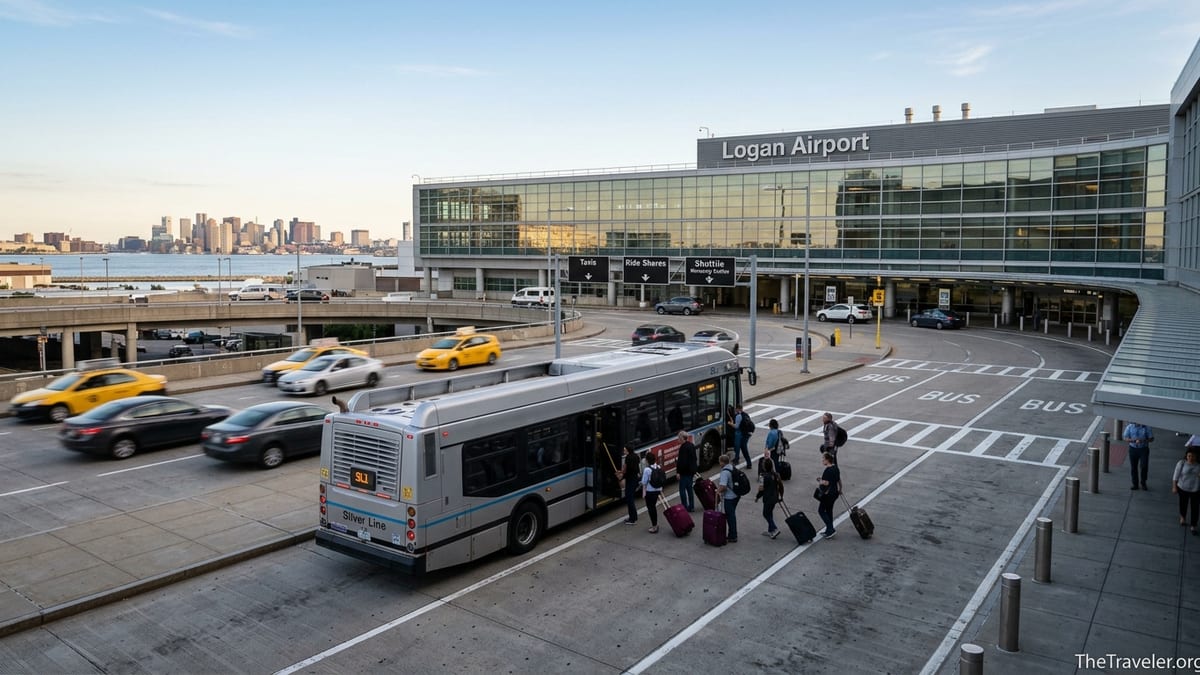
Understanding Logan’s Layout and Where You Are Headed
Logan Airport is spread across four main terminals (A, B, C and E) on a loop road, with a central garage in the middle and the harbor on one side. All public transport into the city starts from outside these terminals, but you will not walk into a train station inside the terminal itself. Instead, you either board a bus right outside the door, or take a short, free shuttle bus ride to the Blue Line station or the water transportation dock.
When locals say “downtown” or “city centre” in Boston, they typically mean the cluster of neighborhoods around South Station, the Financial District, Government Center, Back Bay and the Seaport. For a business traveler staying near South Station or the Financial District, the Silver Line is usually the most direct. For a tourist whose hotel is near Faneuil Hall, Government Center or the North End, the Blue Line plus a short Green or Orange Line ride can be more convenient. Knowing your exact destination helps you choose the right mode and avoid unnecessary transfers.
Massport, the airport authority, runs its own free shuttle buses around the airport. These connect all terminals with the Airport Station on the Blue Line, the rental car center and the water transportation dock. That means every option in this guide is reachable without paying anything inside the airport itself. The decision point comes when you choose which free shuttle or bus to board.
The MBTA Silver Line: Fast, Free and Best Overall Value
For most visitors heading to central Boston, the MBTA Silver Line SL1 is the best all around option. It is a bus rapid transit line that runs from every Logan terminal directly to South Station in downtown. At the time of writing, rides on the SL1 from Logan Airport into the city are free, and transfers onto the Red Line at South Station are also free if you stay inside the station’s fare gates. In practice, this means you can travel from the airport to many downtown and Cambridge locations without paying a fare at all.
From the curb outside baggage claim, you follow signs for “Silver Line / SL1 to South Station.” Buses typically run every 8 to 15 minutes during the day and early evening. The ride to South Station usually takes 20 to 30 minutes, depending on traffic through the harbor tunnel and the South Boston waterfront. In off peak times you might cover it in closer to 18 minutes; in the late afternoon peak it can push toward 30 minutes.
One advantage of the SL1 for air travelers is luggage space. The vehicles are low floor buses with wide doors and dedicated interior space for suitcases. A couple arriving on an afternoon flight with two large checked bags and two carry ons can usually find room to stand with their luggage near the center of the bus, without needing to squeeze through narrow aisles. Because boarding at Logan is free, you simply walk on at any door. Once at South Station, you exit directly into the underground concourse and can follow signs to the Red Line platforms or the main station hall.
As a real world example, a solo traveler staying near Park Street in the downtown core could take the free SL1 to South Station, walk through the internal passage to the Red Line and ride one stop to Park Street, all without paying a fare. Total travel time is often 30 to 35 minutes from terminal door to hotel. A similar taxi ride in light traffic might be 15 to 20 minutes, but cost in the range of 30 to 40 dollars before tip, so the Silver Line is hard to beat on value.
The Blue Line and Airport Shuttle: Straight Shot to Central Downtown
The other key public transit option is the MBTA Blue Line, which skirts the harbor between East Boston and downtown. There is no train station inside Logan itself. Instead, Massport runs a free, frequent shuttle from all terminals to Airport Station on the Blue Line. Signs in each terminal point to “Free Shuttle to Airport Station.” The shuttle ride usually takes 5 to 10 minutes, depending on which terminal you start from and how busy the loop road is.
From Airport Station, Blue Line trains run across the harbor toward downtown, stopping at Aquarium (for the waterfront and Financial District), State (where you can change to the Orange Line) and Government Center (for the Green Line and City Hall area). A traveler headed to a hotel near Faneuil Hall, for example, might ride the Blue Line from Airport to Government Center, then either walk 5 to 10 minutes or transfer to the Green Line for a one stop ride to Park Street or Haymarket.
The precise fare structure can change as the MBTA adjusts its system, but in recent years, the shuttle between Logan and Airport Station has been free and the subway fare has been in the low single digits. You can typically tap a contactless bank card, mobile wallet or MBTA fare card at the station gates. For a couple traveling light with backpacks and one rolling suitcase each, this option is inexpensive and often slightly faster into the heart of downtown than going via South Station, especially outside rush hour.
That said, passengers with very large or multiple suitcases will find the Silver Line easier. The Blue Line trains are standard subway cars with limited open floor space, and Airport Station requires navigating platforms and, in most cases, stairs or elevators. The combination of the shuttle bus plus subway transfer can feel cumbersome after a long flight if you are juggling children and heavy luggage.
Taxis: Door to Door Convenience at a Premium
Official airport taxis line up at marked ranks outside each terminal. Uniformed dispatchers manage the queues, so you simply follow signs to “Taxi,” wait in line and are assigned the next available cab. For many visitors, especially those arriving late at night or in poor weather, a taxi is the simplest option. You give the driver your hotel address and are dropped at the door with no transfers or walks through stations.
Fares from Logan to downtown vary with traffic and exact destination, but typical meter totals to central areas such as the Financial District, Back Bay or near Boston Common often fall in the range of roughly 25 to 40 dollars before tip. During heavy congestion, such as a weekday evening rush or a major event night, the meter can climb higher. Some hotels and conventions still quote a broad estimate of 20 to 45 dollars to reach most central locations, which is a useful planning range for two to three passengers sharing a cab.
For example, a family of three landing around 10 p.m. and staying at a Back Bay hotel might see a 30 to 35 dollar taxi fare plus 5 to 7 dollars in tip, totaling around 35 to 42 dollars to arrive in 20 to 25 minutes. If the same group took the Silver Line to South Station and then the Orange Line to Back Bay, they could likely spend almost nothing on fares inbound from the airport, but would face train transfers with luggage and a short walk from the station to their hotel. For some, the time and effort saved outweigh the cost difference, particularly after a long transatlantic flight.
The main downsides of taxis are price variability and occasional waits. At busy times, you might queue 10 to 20 minutes at the taxi rank. Very late at night, the line may be shorter but travel time into the city might be faster thanks to light traffic. If you are traveling alone on a tight budget and your destination is reasonably close to a subway stop, you will generally save a significant amount by using the Silver or Blue Line instead.
Uber and Lyft: Flexible but Watch Airport Surcharges
Ride hail services such as Uber and Lyft are well established in Boston, and Logan Airport has dedicated pickup zones. After collecting your bags, you follow signs for “App Ride” or “Ride Share,” which usually lead to a designated area in the central parking garage or near specific curbs, depending on the terminal. The apps will guide you to the correct pickup location once you set Logan as your starting point.
Pricing for Uber and Lyft fluctuates with demand, time of day and your chosen service level. In moderate conditions, a typical app based ride from Logan to a central downtown hotel near Boston Common might display an estimate in the 25 to 45 dollar range before tip. During peak travel times or in bad weather, surge pricing can push this higher. On top of that, Massport applies an airport fee per ride, which the apps include in the quoted fare, making Logan trips more expensive than equivalent distances away from the airport.
One common strategy among budget conscious locals is to use the free Silver Line or the Blue Line shuttle to leave the airport property, then order a ride from South Station, the Seaport or another nearby neighborhood. For instance, a traveler might board the free SL1 to the Seaport, step off at Silver Line Way or Courthouse and then request a rideshare from there. This often avoids the airport surcharge and can shave 5 to 10 dollars off the total cost, though it adds a short bus ride and a bit of walking with luggage.
Ride hail is particularly useful for destinations not well served by rapid transit, such as certain residential areas in South Boston, Dorchester or Brookline that would otherwise require multiple subway or bus changes. A couple with two carry on bags heading to a friend’s apartment in Jamaica Plain, for example, might find it worth paying for an Uber or Lyft rather than navigating a Silver Line to Red Line to Orange Line combination late at night.
Logan Water Taxi: Scenic Route Across the Harbor
For travelers who like the idea of arriving by boat, the water taxi from Logan’s water transportation dock to downtown is a memorable alternative. A free Massport shuttle links each terminal to the dock in a few minutes. From there, private operators run small boats across the harbor to various piers along the waterfront, including areas near the North End, Seaport and downtown. Boston Water Taxi is one of the better known services, and it typically runs daily, weather permitting.
Fares for the water taxi are higher than land based transit. Recent one way prices per person with luggage storage included have been around 30 dollars, with discounted round trip options in the ballpark of 45 dollars per person. Without luggage storage, simple point to point fares may be lower, but the boat is still a premium choice compared with the free Silver Line or a relatively low cost subway ride.
Travel time from dock to dock is usually 10 to 15 minutes on the water, plus the shuttle time on the airport side and a short walk on the city side. On a clear afternoon, the ride offers excellent views of the Boston skyline, Logan’s runways and the harbor islands. For a visitor staying at a waterfront hotel near the Aquarium or Rowes Wharf, taking the water taxi can turn a basic transfer into a small harbor cruise.
However, this option is weather dependent and less attractive in heavy rain, high winds or winter cold. Boats may also run less frequently outside peak hours, so travelers should build in extra time and check same day operating details. For most budget focused visitors, the water taxi is best viewed as a scenic splurge rather than the default way into town.
Logan Express and Other Bus Options
Logan Express is a network of Massport operated coach style buses that link the airport with several suburban park and ride lots, plus an urban route serving Boston’s Back Bay. The Back Bay Logan Express in particular can be useful for travelers whose hotels cluster around Copley Square, the Prudential Center or the Hynes Convention Center. These buses use larger, more comfortable vehicles than city buses and include underfloor luggage storage, which is a plus for passengers with bigger suitcases.
At various times, Massport has offered promotional fares on Logan Express, including free trips in one direction or reduced fares in the other. In recent years, rides from Logan to Back Bay have often been free, while trips from Back Bay back to the airport have carried a modest charge in the single digit dollar range. Schedules typically feature departures every 20 to 30 minutes during most of the day, with some late evening service.
As an example, a business traveler staying at a hotel right next to Back Bay Station could board the Back Bay Logan Express at the airport, ride directly to the station in roughly 25 to 35 minutes and then walk a few minutes to the hotel lobby. With luggage stored under the bus, there is no need to haul bags on and off subway cars or up stairways. This can be more comfortable than taking the Silver Line to South Station and then changing to the Orange Line with a suitcase in tow.
In addition to Logan Express, several private shuttles and regional coach services connect Logan with cities like Worcester, Providence and parts of New Hampshire and Maine. Many of these pick up at the airport’s ground transportation center or at specified curbs by terminal. For someone whose final destination is not Boston itself, it is often better to stay on an intercity bus or train from Logan rather than going into downtown first and back out again.
Comparing Cost, Time and Luggage Handling
When weighing your options, it helps to think in terms of three main criteria: cost, door to door time and how easy each mode makes handling your luggage. Public transit options like the Silver Line and Blue Line are the clear winners on price. The inbound SL1 from Logan is currently free into South Station, and the connection onto the Red Line can also be free if you remain within the station. The Blue Line requires only a modest subway fare, and the shuttle from the terminals to Airport Station does not cost extra.
On time, taxis and rideshares tend to be slightly faster than public transit for most central destinations, particularly outside the heaviest rush hours. A ride from Terminal C to a hotel near the Omni Parker House, for example, might take 15 to 20 minutes by taxi on a quiet Sunday evening, versus 30 to 35 minutes by Silver Line plus a brief walk or transfer. During weekday rush hours, though, the difference narrows or even reverses as buses benefit from some dedicated lanes and trains avoid surface traffic entirely.
Luggage handling is where the various modes really diverge. The Silver Line buses have the best combination of cost and space, with wide aisles and designated room for bags. Logan Express coaches offer the most comfortable experience for heavy luggage thanks to underfloor storage, but serve more limited city destinations. Taxis and rideshares are ideal for families with strollers, older travelers or anyone who simply does not want to drag suitcases through stations. The Blue Line and other subways work best when you can travel with one rolling case and a carry on or backpack per person.
For a concrete comparison, consider two adults arriving at 5 p.m. on a weekday with one large suitcase each and a hotel near South Station. The Silver Line will cost nothing inbound, take around 25 minutes to reach South Station and require only a short walk through the station to the street. A taxi might cost 30 to 40 dollars, take 20 to 30 minutes in traffic and drop them directly at the hotel door. An Uber or Lyft could display an estimate similar to the taxi or somewhat higher during surge periods, depending on demand. In this scenario, many travelers choose the Silver Line unless they particularly value door to door service.
Choosing the Best Option for Your Situation
There is no single “best” way from Logan to Boston city centre for every traveler. The right choice depends on where you are staying, what time you arrive, how much you are carrying and your budget. For most first time visitors whose hotel is within walking distance of South Station, Downtown Crossing, the Financial District or Cambridge via the Red Line, the Silver Line is the best starting point. It offers a straightforward route, good luggage space and unbeatable price.
If your hotel is closer to the waterfront, Faneuil Hall, Government Center or the North End, the Blue Line from Airport Station plus a short walk or Green Line transfer may be more direct. Travelers staying in Back Bay or the Prudential area can weigh a free or low cost Logan Express ride to Back Bay Station against a taxi or rideshare, factoring in whether they mind a short walk from the bus stop to their hotel.
Families with small children, travelers arriving after midnight or anyone with mobility challenges may find that taxis or app based rides are worth the premium for door to door convenience. Likewise, business travelers who need to be at an early morning meeting in the Seaport or Financial District might prefer to simply book a car in advance and avoid the uncertainties of public transit during peak hours.
For those wanting a memorable arrival, the water taxi provides a scenic introduction to Boston’s skyline and harbor, especially on a clear summer evening. It works best if your hotel is near a waterfront pier and you are comfortable paying a higher fare for the experience. If you are traveling on a strict budget, it is usually better to enjoy a separate harbor cruise later in your trip and use the free Silver Line or low cost subway for the airport transfer.
The Takeaway
Boston is one of the few major U.S. cities where you can reach the city centre from the airport quickly and, in many cases, for free. The MBTA Silver Line SL1 from Logan to South Station stands out as the smartest default choice for most visitors thanks to its free inbound fare, direct routing and luggage friendly buses. The Blue Line via Airport Station offers a fast, inexpensive path to the central waterfront and Government Center, while Logan Express and regional buses cater to specific neighborhoods and outlying cities.
Taxis and ride hail services like Uber and Lyft provide flexibility and door to door comfort, at a price that is still reasonable by big city standards, especially when split between two or three passengers. The harbor water taxi, meanwhile, turns your transfer into a short boat trip with skyline views, appealing to travelers who prioritize experience over strict economy.
Before you land at Logan, take a few minutes to look up your hotel on a map, note the nearest major station or neighborhood and decide how much you want to spend, how quickly you need to arrive and how much effort you are willing to invest in transfers. With that information in hand, you can step out of the terminal and head straight for the mode that fits you best, whether that is the free Silver Line, a taxi rank, a rideshare pickup, a Logan Express coach or a boat across the harbor.
FAQ
Q1. What is the cheapest way to get from Logan Airport to downtown Boston?
The cheapest common option is the MBTA Silver Line SL1, which is currently free inbound from Logan to South Station, with free transfers to the Red Line when you stay inside the station. The Blue Line via the free airport shuttle is also very low cost, but usually not completely free.
Q2. How long does it take to get to downtown on the Silver Line?
In normal conditions, the Silver Line SL1 takes about 20 to 30 minutes from the terminals to South Station. During light traffic late at night it can be a bit faster, while in peak rush hour or bad weather it may take closer to 30 minutes.
Q3. Is it easy to take the Silver Line with luggage?
Yes. Silver Line buses are designed with airport travelers in mind and have low floors, wide doors and open spaces where you can stand with suitcases. Most passengers manage fine with one large suitcase and a smaller bag each, though very bulky or multiple large items can still feel awkward at busy times.
Q4. When is a taxi from Logan better than public transit?
A taxi makes sense if you are arriving very late or very early, traveling with small children or someone with mobility issues, or staying at a location far from a subway station. It is also attractive in bad weather when you want to minimize time outdoors and transfers, even though it costs more than the Silver or Blue Line.
Q5. How much does an Uber or Lyft from Logan to downtown usually cost?
Typical app based rides from Logan to central downtown areas often show estimates in roughly the 25 to 45 dollar range before tip, depending on demand, time of day and the service level you choose. During high demand periods, surge pricing can push this higher.
Q6. Is the Blue Line from Logan a good option for tourists?
Yes, especially if you are staying near the waterfront, Aquarium, Government Center or the North End. You take a free shuttle from your terminal to Airport Station, then ride the Blue Line downtown. It is inexpensive and reasonably quick, but a bit less convenient with heavy luggage compared with the Silver Line.
Q7. What is Logan Express and who should use it?
Logan Express is a Massport operated coach bus service linking the airport with suburban terminals and Boston’s Back Bay. It is best for travelers whose hotels or destinations are near Back Bay Station or in the suburbs served by these routes, and for those who value a comfortable coach with underfloor luggage storage.
Q8. Is the water taxi from Logan practical or just a tourist experience?
The water taxi is both a practical and scenic option for certain travelers, particularly those whose hotels are near waterfront piers. It is more expensive than buses and subways, but offers a short, direct and memorable ride across the harbor with skyline views, especially appealing in good weather.
Q9. Can I pay for Boston public transit directly with a credit card?
On most MBTA subway lines and at major stations, including Airport and South Station, you can usually tap a contactless bank card or mobile wallet at the gates rather than buying a separate fare card. Systems and fares do evolve, so it is wise to check current payment options close to your travel date.
Q10. What should I do if my flight arrives very late at night?
If you arrive after midnight, check in advance whether the Silver Line and Blue Line are still running at the time you expect to leave the terminal. If service is limited or you are exhausted after a long flight, a taxi or rideshare directly from the airport is often the simplest and safest choice, even at a higher cost.