


Brisbane Airport (BNE) is the main gateway to Queensland and a key hub for flights across Australia and the Asia-Pacific. For first-time travelers, its two separate terminals, premium-priced Airtrain, mix of rideshare and taxi options, and sprawling parking and hotel precincts can feel confusing. This guide walks you through the airport step by step, using up-to-date information and real examples so you know exactly what to expect when you land in Brisbane for the first time.
Get the latest updates straight to your inbox!
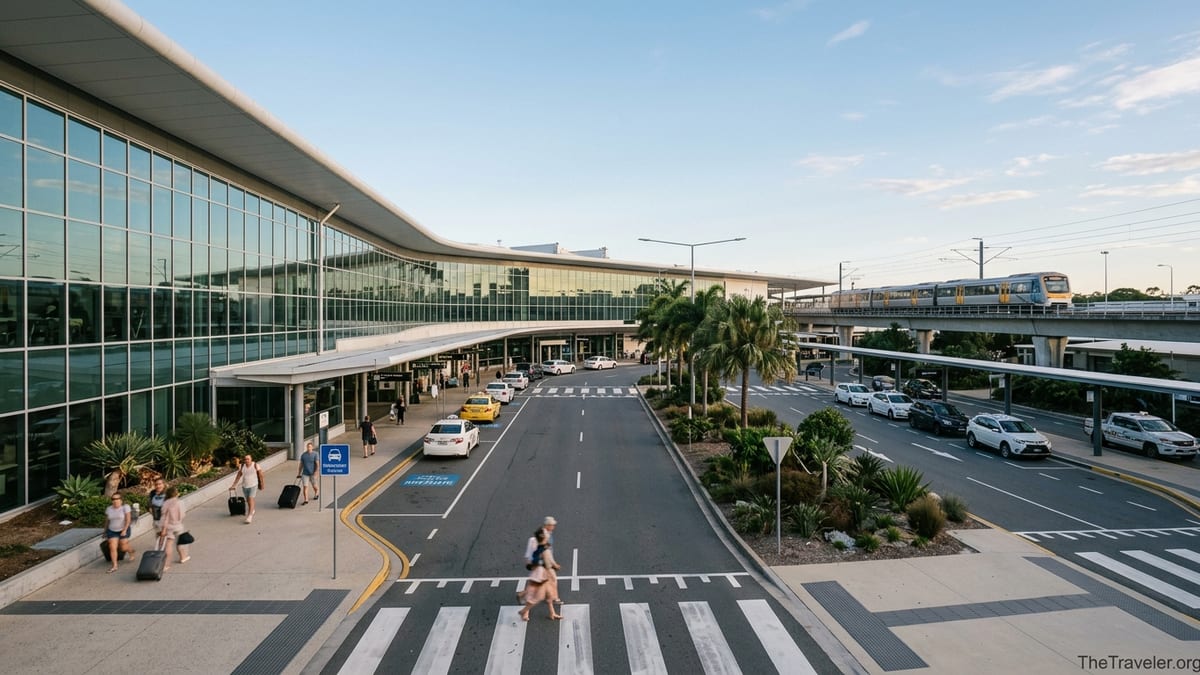
Understanding Brisbane Airport: Layout and Terminals
Brisbane only has one airport, but it has two distinct terminals located about 4 kilometers apart: the Domestic Terminal (often shown as T2 or D) and the International Terminal (shown as T1 or I). Most Australian flights use the Domestic Terminal, while overseas services use the International Terminal. If you are connecting between a domestic flight on, for example, Virgin Australia or Qantas and an international flight on carriers such as Singapore Airlines, Emirates or Air New Zealand, you will almost certainly need to switch terminals.
The terminals are not linked by an internal walkway, so you cannot simply walk between them with your luggage. Instead, Brisbane Airport runs a dedicated free transfer bus between the Domestic and International terminals, with a travel time of about 10 minutes in normal traffic. The bus also connects to the nearby Skygate precinct and DFO outlet shopping area, where you will find the Novotel Brisbane Airport hotel, a large Woolworths supermarket and several casual dining options.
Both terminals are modern and relatively compact by global standards. The International Terminal has departures on upper levels and arrivals on lower levels, connected by escalators and lifts, with the Airtrain station reached via a covered elevated walkway. The Domestic Terminal is a long linear building with Qantas and Jetstar predominantly at one end and Virgin Australia and other carriers at the other. Signage is clear throughout, but first-time visitors should allow extra time to follow signs to baggage claim, ground transport or transfer buses, especially at busy morning and evening peaks.
For passengers with reduced mobility, Brisbane Airport provides step-free routes, lifts and accessible bathrooms throughout both terminals. If you need wheelchair assistance or extra time to board or disembark, arrange this in advance with your airline so staff can meet you at the aircraft door or at check-in and guide you through the terminal and any transfer to the other building.
Getting Between Domestic and International: Transfer Options
The simplest way to move between Brisbane’s Domestic and International terminals is the free Terminal Transfer Bus operated by the airport. At the Domestic Terminal, you board near the Qantas end of the building at clearly marked orange “Terminal Transfer” bus stops outside the arrivals area. At the International Terminal, the bus departs from a stop outside Level 2. The ride usually takes around 10 minutes and buses run frequently during the main operating hours, typically from very early morning to after midnight.
If you prefer rail, the privately run Airtrain connects the Domestic and International stations in just a few minutes. A one-way ticket between terminals costs around 5 Australian dollars and trains usually run every 15 minutes in the daytime and every 30 minutes off-peak. This can be handy if you already plan to continue by train into the city and wish to complete the terminal transfer on the same ticket, but for most passengers the free bus is perfectly adequate.
Some travelers choose to transfer by taxi or rideshare between terminals, especially if they are tight on time or have a lot of luggage. A taxi between terminals typically costs in the region of 15 to 25 Australian dollars depending on waiting time and access fees. In heavy rain or at peak periods when the bus is crowded, a taxi can be a stress reducer. For example, a traveler landing from Mount Isa with only 90 minutes to connect to an international flight may prefer a taxi rather than waiting for the next bus.
When planning a domestic to international connection with checked baggage, most regular travelers through BNE recommend allowing at least 90 minutes on a single ticket and a full two hours or more if you are on separate bookings. This gives you time to collect bags, clear any queues, transfer terminals, check in again if needed, pass passport control and security, and walk to your gate. For very early morning departures, it can be worth flying into Brisbane the evening before and staying at an airport hotel rather than risking a tight same-day connection.
Airtrain and Other Public Transport into Brisbane
The Airtrain is the main rail link between Brisbane Airport and the city. It stops at both the Domestic and International stations and runs directly to key inner city stations such as Eagle Junction, Fortitude Valley, Central and Roma Street, with many services continuing to the Gold Coast line. Trains typically operate from just after 5 am on weekdays and slightly later on weekends, with the last services departing the airport around 10 pm.
Airtrain fares are higher than standard suburban train fares because the service is privately operated. As a rough guide in 2026, a one-way adult fare from the airport to Brisbane Central station often falls in the mid-20 Australian dollar range when purchased at the station or online, with small discounts available for return tickets, online purchase, or off-peak specials that appear from time to time. Families can sometimes benefit from promotional “kids travel free with a paying adult” offers, so it is worth checking current deals before you travel.
When comparing options for a couple or small group staying downtown, consider the total cost. For example, two adults taking the Airtrain to Central might spend around 40 to 50 Australian dollars combined, versus a rideshare or taxi to a central hotel such as the Sofitel Brisbane Central or Hilton Brisbane that might cost in the 45 to 70 dollar range depending on time of day and traffic. Solo travelers or those staying right beside a city rail station often find Airtrain cost effective, while groups of three or four may find door to door car transport better value.
Beyond Airtrain, local public buses serve the broader Brisbane Airport precinct, particularly the Skygate shopping area, but they are not generally the most convenient option for first-time arrivals with luggage. If you are planning to work in the airport business park or stay in staff-oriented accommodation nearby, local bus routes can be useful, but for most leisure and business visitors the main choices are Airtrain, taxi or rideshare.
Uber, Taxis and Transfers at BNE
Brisbane Airport has clearly signed, separate zones for taxis and rideshare services such as Uber, DiDi and Ola. At the Domestic Terminal, taxi ranks are directly outside the terminal building in the arrivals area. Rideshare pickups happen in a designated Pre-Booked Express and Ride Booking zone, slightly away from the main kerbside. You will follow signs marked “Ride Booking” or “Pre-booked Express” and then use your app to confirm the exact meeting point letter or bay number once your driver is allocated.
At the International Terminal, taxis again line up outside the arrivals level, while rideshare pickups use a buses and coaches style zone that may involve going up or down a level depending on the current traffic system. The rideshare apps will give turn by turn instructions as you walk, and airport signage supplements this. First-time visitors should factor in 5 to 10 minutes of walking time from baggage claim to the pickup zones, especially when traveling with children or heavy luggage.
Taxis from the airport into central Brisbane usually fall in a broad range of about 55 to 80 Australian dollars depending on traffic conditions, toll roads and time of day. An early afternoon weekday trip to a central hotel might be close to the middle of that range, while a late-night ride after the Airtrain has stopped often costs more. Rideshare fares can be cheaper in off-peak times but may surge significantly during busy periods, such as Friday evenings, large events at Suncorp Stadium, or late-night banked arrivals when many flights land close together.
Private shuttle transfers are another option, particularly for travelers heading to the Sunshine Coast, Byron Bay or Gold Coast hinterland. Several companies operate pre-booked door to door minibuses and coaches from both terminals, often bundling surfboard carriage or child seats. For example, a pre-booked shared shuttle to Noosa might cost less per person than a private transfer, but will take longer due to multiple stops. For families or groups of four or more, a private transfer may be more comfortable and worthwhile financially, especially for late-night arrivals when public options are limited.
Parking and Car Rental at Brisbane Airport
Brisbane Airport offers a range of on-site parking products that can be reserved online in advance. Close to each terminal you will find multi-level car parks branded ParkShort and ParkLong. ParkShort is aimed at stays of a few hours, such as picking up or dropping off passengers, while ParkLong suits day trips or longer journeys. For example, a weekend ParkLong deal at the Domestic Terminal has recently been advertised at a flat price for Friday to Sunday parking when booked ahead online, making it attractive for short getaways.
For longer trips, many locals choose AIRPARK, an open air or partially undercover long-term car park located a short shuttle ride from the terminals. AIRPARK rates are generally lower per day than the multi-level car parks directly beside the terminals, although travel time is longer. A typical scenario might see a family leaving their car in AIRPARK for a two-week holiday and using the free shuttle bus, which runs every 10 to 15 minutes in busy periods, rather than paying premium covered parking fees next to the terminal doors.
Off-airport private car parks around the broader Brisbane Airport precinct also operate frequent shuttles and can sometimes undercut official parking prices, especially for trips longer than a week. For instance, a traveler heading overseas for three weeks might compare the total cost of official ParkLong booked online against third-party parking that includes a 24-hour shuttle. However, for very early morning check-ins or late-night returns, many passengers value the simplicity and perceived security of on-site parking despite the higher price.
Car rental desks for major brands including Avis, Budget, Hertz, Europcar and Thrifty are located at both terminals. At the Domestic Terminal, counters sit near the arrivals exit, with cars in nearby parking structures. At the International Terminal, rental counters are just past customs and quarantine in the arrivals hall. Pre-booking is strongly recommended in peak seasons such as Christmas, Easter and major events in Brisbane or on the Gold Coast, as same-day walk-up rates can be significantly higher, and vehicle types like SUVs or people movers may sell out.
Airport Hotels and Where to Stay Near BNE
Brisbane Airport has three main hotels in its immediate orbit that are particularly convenient for first-time travelers. Near the Domestic Terminal, the Pullman Brisbane Airport and ibis Brisbane Airport sit within walking distance of the terminal via signed paths and short shuttle rides, making them ideal for early morning flights or late-night arrivals. The Pullman targets business and premium leisure guests with full-service facilities, while the ibis offers more budget-friendly rooms in the same precinct.
Closer to the Skygate and DFO shopping area, the Novotel Brisbane Airport provides another airport-focused accommodation option, connected to the terminals by the free airport transfer and Skygate bus services. Staying here can be practical if you have a long daytime layover and want access to a supermarket, factory outlet shopping and casual dining without traveling into the city. Many airline crews and frequent flyers also favor this area for its balance between convenience and slightly quieter surroundings away from the immediate terminal frontage.
For travelers with a full day or more in Brisbane, staying in the city center can be more rewarding. Popular central neighborhoods for first-time visitors include the CBD around Queen Street Mall, the riverside precinct of South Bank, and the bar and dining areas of Fortitude Valley and New Farm. A guest arriving on a late evening international flight might choose to spend their first night at the Pullman Brisbane Airport and then move to a riverfront hotel such as the Crystalbrook Vincent or the W Brisbane the next day, combining easy arrival logistics with more atmospheric city stays.
If you are connecting to a cruise departing from the Port of Brisbane, it may make sense to stay at a hotel roughly midway between the airport and the cruise terminal, such as in Hamilton or Ascot. These suburbs have a mix of serviced apartments, boutique hotels and easy access to both the airport and port by taxi or rideshare, reducing transfer times on embarkation day.
First-Time International Arrival: What to Expect at BNE
When you land on an international flight at Brisbane Airport, you will disembark either directly into the terminal or via an airbridge-connected corridor, then follow signs to passport control. Australian passport holders can usually use SmartGate e-passport gates, while many foreign passport holders with e-passports and eligible visas can also use automated processing. Others will join staffed immigration queues. Queue times vary by time of day, but morning peaks when multiple flights from Asia and the Pacific arrive can be busy, so it is wise not to schedule tight onward connections.
After clearing passport control, you will collect your checked luggage from the baggage carousel area. Trolleys are available and luggage carousels are clearly numbered on screens. From baggage claim you proceed through Australian biosecurity and customs, where you may have your bags screened or inspected, especially if you are carrying food, plant material or outdoor equipment. Australia has strict quarantine rules, so declare anything that might be of concern. Many first-time visitors are surprised by the level of scrutiny, but declaring items honestly generally makes the process run more smoothly.
Once you exit into the public arrivals area, you will find currency exchange counters, ATMs, mobile phone SIM card kiosks and information desks. If you need time to regroup, there are seating areas and cafes on this level where you can repack bags or access airport Wi-Fi before heading to ground transport. It is a good idea to check your hotel’s exact address and confirm whether check-in is 24 hours or limited to certain times, especially if you are arriving after 10 pm.
For those connecting straight to a domestic flight, follow the signs for “Domestic Transfers” or “Terminal Transfers” and confirm with your airline whether your baggage is checked through to your final domestic destination. On separate tickets, you will usually need to collect your bags and re-check them at the Domestic Terminal. Allow extra time if you need to purchase a local SIM card, withdraw cash or refresh in the arrivals facilities before boarding the transfer bus or train.
The Takeaway
Brisbane Airport is a modern, two-terminal hub that is straightforward to navigate once you understand its basic layout and transport options. The key for first-time visitors is to plan a few essentials in advance: how you will get between terminals if you have a connection, whether Airtrain, taxi or rideshare best suits your schedule and budget, and whether on-site parking, a car rental or an airport hotel makes sense for your itinerary.
For many travelers, the free terminal transfer bus, an Airtrain ride into the CBD and a first night in a central Brisbane hotel provide a smooth and relatively stress-free arrival. Others will value the convenience of staying at the Pullman, ibis or Novotel airport hotels before continuing to destinations such as the Gold Coast, Sunshine Coast or inland Queensland the next day. Whichever path you choose, building in reasonable connection times, keeping some flexibility in your plans and being aware of Australia’s strict biosecurity rules will help turn your first arrival at BNE into the start of an enjoyable Queensland journey.
FAQ
Q1. How long does it take to transfer between the Domestic and International terminals at Brisbane Airport?
The free terminal transfer bus usually takes about 10 minutes between terminals, but you should allow at least 30 minutes door to door to include waiting, walking and any delays.
Q2. Is the Airtrain from Brisbane Airport to the city worth it?
For solo travelers or couples staying near a central station, Airtrain is convenient and time efficient. For groups of three or more or very late arrivals, a taxi or rideshare can sometimes be better value.
Q3. Can I walk between the Domestic and International terminals at BNE?
No. The terminals are about 4 kilometers apart and not connected by a pedestrian pathway suited to travelers with luggage. Use the free transfer bus, Airtrain, taxi or rideshare instead.
Q4. Where do Uber and other rideshares pick up at Brisbane Airport?
Rideshares use signed Ride Booking and Pre-Booked Express zones at both terminals. Follow airport signs for ride booking, then confirm the exact bay location in your app.
Q5. How much is a taxi from Brisbane Airport to the city center?
Typical fares to central Brisbane are in the broad range of about 55 to 80 Australian dollars, depending on time of day, traffic, toll roads and waiting time in the pickup zone.
Q6. What are the best parking options for a week-long trip from BNE?
For a week or more, many locals compare official ParkLong or AIRPARK rates booked online with off-airport car parks that include shuttle transfers, then choose based on total cost and convenience.
Q7. Are there hotels within walking distance of Brisbane Airport terminals?
Yes. The Pullman Brisbane Airport and ibis Brisbane Airport are close to the Domestic Terminal, while the Novotel Brisbane Airport is near the Skygate precinct and reached by airport transfer buses.
Q8. How early should I arrive at BNE for an international flight?
Most airlines recommend arriving at least three hours before international departures. In busy holiday periods or if checking in bags for a complex itinerary, allow extra time.
Q9. Can I store luggage at Brisbane Airport if I have a long layover?
Yes. Both terminals and the Skygate Centre have paid luggage storage lockers, which can be useful if you want to explore the city or shop at DFO during a long connection.
Q10. Is Brisbane Airport easy to use for first-time international visitors?
Yes. The terminals are compact, signage is clear and staff are generally helpful. As long as you plan your transfer and ground transport in advance, most first-time visitors find BNE manageable.