


More news on this day
British Airways is continuing to withhold Tel Aviv from sale into 2025 while maintaining most of its London Heathrow services to the wider Middle East, underscoring how heightened regional security risks are reshaping the airline’s Israel operation without triggering a broader shutdown of its Gulf and regional network.
Get the latest news straight to your inbox!
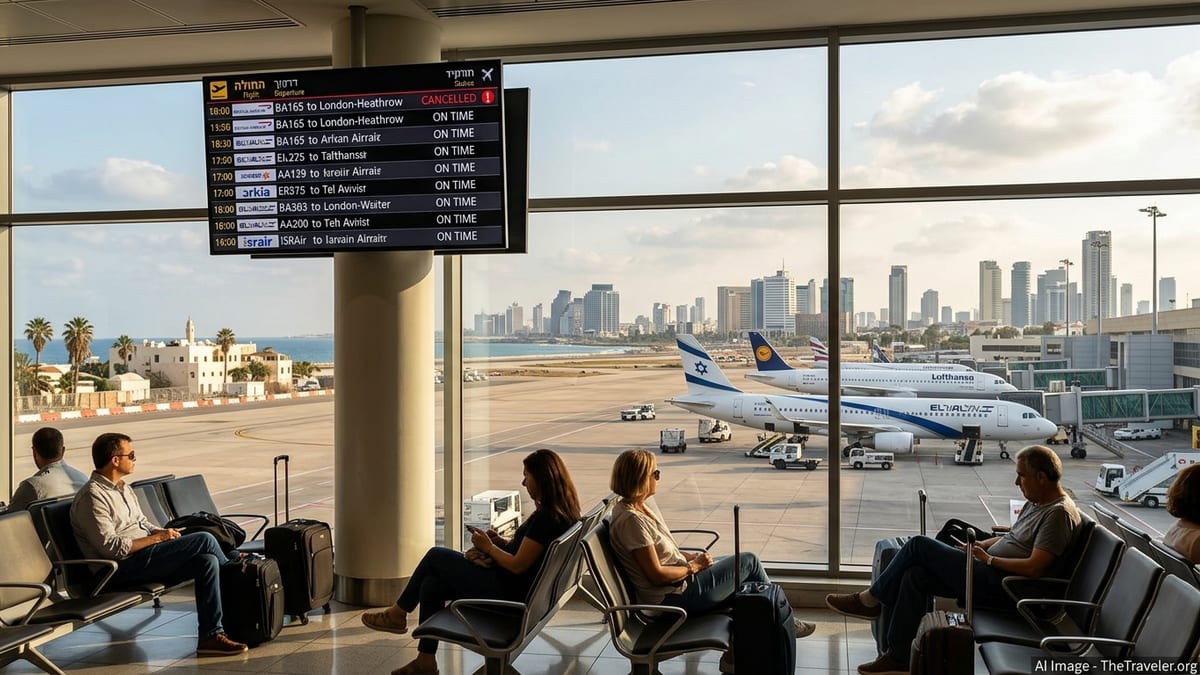
Tel Aviv suspension extended while Ben Gurion stays open
British Airways first halted London Heathrow to Tel Aviv flights in October 2023 following the outbreak of the Israel–Hamas war, diverting an in‑bound flight and then suspending the route on security grounds. Subsequent schedule filings and booking‑engine checks in late 2024 showed the carrier repeatedly extending that pause, most recently pushing any restart into at least March 2025, meaning the route will have been off the timetable for well over a year if it does return on that timeframe.
Importantly for travelers, Israel’s Ben Gurion Airport and the country’s airspace remain open, with the Civil Aviation Authority of Israel stating in 2026 updates that the airport is fully operational subject to tactical limitations. Other foreign airlines and all major Israeli carriers continue to operate from Tel Aviv, so British Airways’ absence reflects its own risk assessment rather than a closure of the airport or a blanket ban on flying to Israel.
As of the latest checks, British Airways is not selling seats on Tel Aviv services for travel in early 2025, even as it continues to offer connections from Heathrow into neighboring hubs such as Amman, Doha and Dubai when those flights are operating. Passengers looking to fly between the UK and Israel are instead being routed via third‑country gateways on partner or rival airlines, or onto Israeli carriers that still link Tel Aviv with London airports.
Original restart plans and repeated deferrals
After the initial suspension in October 2023, British Airways had signalled an intention to return to Tel Aviv on a limited basis. In February 2024, timetables loaded a modest restart from April, with around four weekly rotations between Heathrow and Ben Gurion rather than the previous daily schedule. Those plans were subsequently removed from sale, with the provisional resumption date pushed back several times as the regional security picture failed to stabilise.
By mid‑2024, public reporting in Israeli and UK media indicated that the airline had quietly deferred the route’s restart to at least 25 October 2024, aligning any comeback with the start of the northern winter season. Later in 2024, however, industry presentations and market briefings referenced British Airways cancelling Israel flights into March 2025, and current booking tools show no seats being marketed on the route across the 2024–25 winter.
These rolling adjustments underline that British Airways’ Tel Aviv timetable remains a set of announced plans rather than firm commitments. The carrier has consistently framed any potential restart as contingent on its ongoing risk reviews, leaving customers to watch for schedule updates rather than relying on prior target dates that have already slipped more than once.
Foreign Office warnings reshape demand and airline risk reviews
The UK Foreign, Commonwealth & Development Office continues to warn about security risks in Israel and across parts of the wider Middle East, including missile and drone attacks, cross‑border tensions with Lebanon and periodic airspace disruption. Its Israel travel advice highlights the possibility of shrapnel and disruption at Ben Gurion Airport, and urges British nationals transiting the region to be prepared for sudden flight cancellations or route changes.
Although this advice is not a legal ban on travel, it strongly discourages trips to specific high‑risk areas and can affect travel insurance coverage for those who choose to go regardless. The combination of official warnings and intermittent regional flare‑ups has prompted governments to organise assisted‑departure or evacuation flights at various points since late 2023, particularly when commercial schedules have been thinned out by carriers’ own safety assessments.
For airlines, including British Airways, these advisories form part of a broader security matrix that feeds into decisions about crew layovers, aircraft routing and the viability of serving certain destinations. Tel Aviv has emerged as one of the most sensitive points in that matrix, showing how a single route can be suspended for an extended period even while nearby hubs remain connected.
Heathrow’s wider Middle East network holds up
In contrast to the long‑running Tel Aviv halt, British Airways’ wider Middle East network from Heathrow has largely remained in place, albeit with short‑notice adjustments when tensions spike. Routes such as Bahrain, Doha and Dubai have seen brief suspensions or frequency cuts during specific security incidents, but the airline has repeatedly stressed that it aims to keep these links open and continues to sell seats on them in normal periods.
Heathrow itself has not experienced systemic disruption related to Middle East security beyond the ripple effects of individual flight cancellations and reroutings. The airport’s role as a connection point for Gulf and South Asia traffic has meant that British Airways and other carriers have tried to protect core schedules even when detours around sensitive airspace or temporary curbs are required.
One side effect for travelers is that fares on remaining non‑stop routes between London and certain Gulf or Levantine cities have risen during peak holiday seasons, particularly when capacity into the region tightens. Exact prices are highly date‑specific and should be checked at the time of booking, but the pattern reflects a concentration of demand onto the services that are still operating normally.
What travelers should check next
Anyone planning a trip between the UK and Israel into 2025 should not assume that British Airways’ Tel Aviv service will resume on any previously mentioned date. Instead, they should verify closer to departure whether the airline has loaded flights back into its reservation systems, and compare those options with Israeli and other foreign carriers that are already flying to Ben Gurion.
Before committing to tickets anywhere in the region, travelers should review the latest UK Foreign Office advisories for Israel, Lebanon and neighboring countries, paying close attention to which areas are under warnings against all travel or all but essential travel and how that might affect their insurance. They should also monitor airline communications for any newly chartered government flights or schedule changes if the security outlook worsens.
Key details that remain fluid and will need reconfirmation on deadline include British Airways’ next published target date for a Tel Aviv restart, any fresh adjustments to its broader Middle East timetable from Heathrow, and any significant updates to Foreign Office guidance. Until those elements become clearer, the airline’s Tel Aviv suspension stands out as a focused, long‑running exception within an otherwise functioning Middle East network.