


Many visa‑exempt travelers planning trips to Europe have heard that a new pre‑travel screening called ETIAS is coming, and are understandably asking whether they can or should apply early. If you are from the United States, Canada, the United Kingdom, Australia or another visa‑exempt country, you may have seen websites hinting that you can already "reserve" an ETIAS or get on a priority list. As of late 2026, those suggestions are misleading. ETIAS is not yet in operation, applications are not open, and there is no official start date. What you can do now is understand how ETIAS fits into Europe’s border systems, how it relates to the Schengen Area and Cyprus, and how to prepare sensibly for trips in the coming one to two years.
Get the latest updates straight to your inbox!
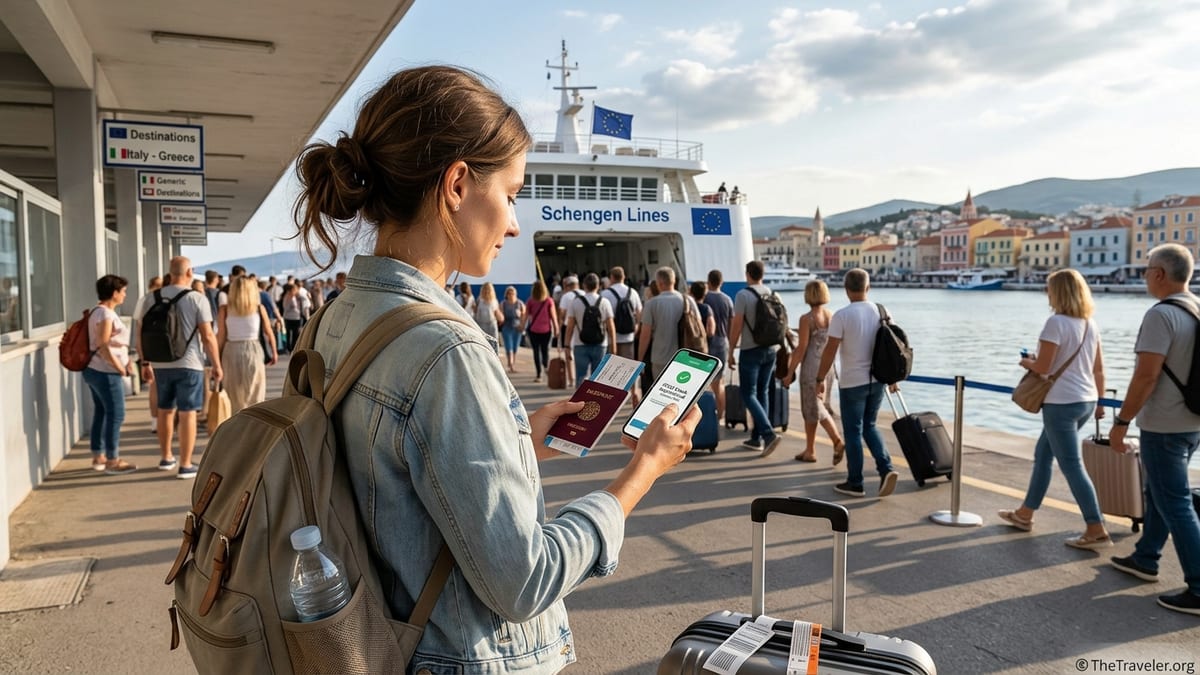
What ETIAS Is, in Plain Language
The European Travel Information and Authorisation System, commonly referred to as ETIAS, is a digital pre‑travel authorisation that will be required for visa‑exempt nationals visiting 30 European countries for short stays. It is designed for travelers who currently visit these countries without a visa for tourism, family visits, business trips or transit. Once ETIAS is in force, these travelers will need to obtain an approved travel authorisation online before boarding transport to Europe, in a similar way to systems used by the United States, Canada and Australia.
Importantly, ETIAS is not a visa. It does not replace existing visa rules and does not turn visa‑exempt travelers into visa holders. Instead, it adds a quick, largely automated security and migration‑risk check that happens before you travel. According to the official ETIAS information pages, the authorisation will be electronically linked to your passport and, once granted, will normally be valid for several years or until your passport expires, whichever comes first.
ETIAS is connected to, but distinct from, the Schengen Area. Most of the 30 countries that will require ETIAS are in the Schengen Area, where internal border checks have been removed. A few, like Cyprus, are included in ETIAS even though they are not yet fully applying Schengen rules. The key point for travelers is that ETIAS will cover 30 specific European destinations; if you are visa‑exempt and headed to any of them for a short stay, you will eventually need an ETIAS authorisation before departure.
Because ETIAS focuses on short‑term visits, it does not give the right to work or live long‑term in Europe. It is only one part of a wider system of EU border and migration management tools, and it will work alongside existing rules on maximum length of stay, purpose of visit and proof of sufficient means.
Current Status: ETIAS Not Yet Operational
As of the time of writing in November 2026, ETIAS has not started operations. The official ETIAS and EU home‑affairs pages state clearly and repeatedly that ETIAS is currently not in operation and that no applications for travel authorisations are being collected at this point. The same notices explain that the European Union will inform the public about the specific date for the start of ETIAS several months before its launch, through official channels.
That means there is currently no way for any traveler to submit an ETIAS application, no queue to join and no legitimate way to pay an official ETIAS fee. Although EU institutions have discussed target timeframes in public briefings and technical documents, the only authoritative information is that the system is not yet accepting applications and that a launch date will be announced well in advance.
Official guidance also confirms that once ETIAS goes live, travelers will apply via an official website and an official mobile app. There will be a set application fee, which EU institutions have indicated will be modest and aligned with similar programs elsewhere, and applications will normally be processed quickly, many in minutes. Until the system is declared operational, however, these are plans, not options you can act on today.
Because the timeline for launch has shifted in the past, it is essential that writers and travelers check the current ETIAS and EU home‑affairs pages shortly before relying on any date. This article was last checked against those official sources on 24 November 2026, and readers should verify again closer to their own departure.
Can Anyone Apply for ETIAS Right Now?
The direct answer is no. No traveler, from any country, can apply for ETIAS before the system officially starts operations. The official ETIAS information site includes a dedicated notice stating that ETIAS is not in operation and that no applications are being collected. EU home‑affairs pages on ETIAS repeat the same message and add that the precise start date will be communicated several months in advance.
This is not merely a technical detail. The legal framework behind ETIAS provides that applications can only be submitted once the system is live. Before that point, there is no valid application form, no official payment channel and no way for EU systems to process or store a request. Any website claiming to take an ETIAS application today is, at best, offering to take your personal data and money for something that cannot yet be filed, and at worst is engaging in outright fraud.
When ETIAS does become operational, travelers will be expected to apply themselves via the official website or mobile app, or to authorise a third party to do so through those same official channels. Even in the future, there will be no requirement to use commercial intermediaries or pay large service fees. For now, before launch, the most important fact is that applications simply do not exist.
If you are planning a trip in the coming months and encounter a page that appears to be an ETIAS application form, treat it as a red flag. Cross‑check what you see against the official ETIAS and EU home‑affairs pages and remember that, until the EU publicly announces the start date, no applications can be lodged.
When Will Applications Open and How Early Can You Apply?
The European Union has not yet published an exact calendar date for when ETIAS applications will open. Instead, official communications say that the EU will inform the public of the specific start date several months before ETIAS launches. In practice, this means there will be a public information campaign and clear notices on official EU sites before anything changes for travelers.
Once ETIAS is live, travelers will be able to apply online through the official website or the official mobile app. EU sources explain that the process is intended to be straightforward, mostly automated and relatively quick. Many applications are expected to be decided within minutes, though some may take longer if additional checks are needed. ETIAS authorisations will generally be valid for multiple trips over several years, as long as your passport remains valid.
The ETIAS regulation sets out an important transitional period. For six months from the date ETIAS starts operations, using ETIAS will be optional and the legal obligation to hold a valid ETIAS travel authorisation will not yet apply. During this phase, border guards will inform eligible third‑country nationals about the new requirement that will become mandatory after the transition. The law also allows the European Commission to extend this optional period, in six‑month blocks, if needed.
After this initial transitional period, there is for the moment also a grace mechanism that can allow certain travelers without ETIAS to cross the border in strictly defined circumstances, provided they otherwise meet all entry conditions. However, this is framed as an exception. Once ETIAS is fully in force, travelers should plan to apply several days or, more cautiously, a couple of weeks before departure to allow for any unforeseen checks or technical issues.
Recognising Misconceptions and ETIAS “Apply Early” Scams
The long lead‑up to ETIAS has created space for confusion and, in some cases, abuse. A number of non‑official commercial websites have appeared over the past few years using names and branding that resemble official EU services. Some suggest that travelers can already apply for ETIAS, lodge a pre‑application, reserve their place or secure early approval in exchange for a fee. Since ETIAS is not operational and no applications are accepted, these claims are not accurate.
Official ETIAS information warns that some commercial intermediaries may attempt to mislead applicants into believing their site is the official channel for submitting an application. In doing so, they can create the impression that their extra service fees are a mandatory part of the process. Other risks include misuse of personal and financial data, unreasonably high prices or failure to submit an application correctly once the system exists.
To protect yourself, focus on the basic markers of authenticity. The official ETIAS online information is hosted on EU institutional domains, and official guidance stresses that applications will only be possible via the official website and mobile app once the system goes live. Official pages consistently repeat that ETIAS is not yet operational and that no applications are being taken; a genuine site will not contradict this message or suggest that it can reserve or file an ETIAS today.
Travelers should be particularly cautious about paying any third‑party “ETIAS application service” before the EU has formally opened the system. While it may eventually be possible to authorise a trusted third party to apply on your behalf using the real ETIAS site or app, there is no obligation to use such services. Until launch, any payment made for an ETIAS application cannot correspond to a real, submitted request.
ETIAS Versus the Entry/Exit System (EES)
Travelers planning trips to Europe often confuse ETIAS with another major EU border initiative, the Entry/Exit System, or EES. Unlike ETIAS, EES is already in operation. It is an EU‑wide digital border management system that records the entry and exit of non‑EU nationals crossing the Schengen Area’s external borders for short stays. EES replaces manual passport stamping with electronic records and collects certain biometric data such as facial images and fingerprints.
The EES began a phased introduction in October 2025 and, according to official EU Council information, became fully operational at external Schengen borders in April 2026. This means that when you arrive by air, sea or land at many external Schengen crossing points today, you will encounter automated kiosks or staffed booths where your passport is scanned and, in many cases, your biometrics are captured. This process can take extra time on a first visit but should be faster on repeat trips once your data is in the system.
ETIAS, by contrast, is a pre‑travel authorisation that will be checked before you board transport and again at the border, but it is not itself a biometric system at the frontier. The two systems are designed to complement each other: ETIAS screens visa‑exempt travelers in advance, while EES records entries and exits for most non‑EU short‑stay visitors when they reach the border. When ETIAS starts, many visa‑exempt travelers will first obtain their authorisation online, then on arrival use EES procedures instead of getting a passport stamp.
For now, travelers should expect that EES may already affect their border experience, especially at busy airports and major land crossings, while ETIAS remains a future requirement. Being aware of this distinction helps avoid confusion and ensures that you prepare correctly for what actually exists today.
If You Are Traveling to Europe Before ETIAS Launches
If your trip to Europe takes place before ETIAS starts operating, your situation is essentially the same as in recent years, with the addition of the new EES procedures at many borders. Your existing visa‑free or visa requirements remain in force, and there is no extra pre‑travel authorisation that you need to apply for beyond any current national or Schengen rules.
For travelers from countries like the United States, Canada, the United Kingdom and Australia, that typically means you can still visit Schengen States and other participating countries visa‑free for short stays, usually up to 90 days within any 180‑day period, provided you meet all entry conditions. You should travel with a valid passport that has sufficient remaining validity, be ready to show proof of return or onward travel, accommodation details and evidence of sufficient funds if asked.
At many external Schengen borders you will encounter the EES, which may involve having your face scanned and, in some cases, providing fingerprints at a kiosk or booth. This is normal and part of the EU’s digitisation of border controls. It does not mean that ETIAS has started, nor does it involve any additional online application beforehand.
The main practical advice for near‑term travelers is to ignore any suggestion that you must apply for ETIAS today. Check the official EU information a few weeks before departure to confirm that ETIAS has not suddenly been activated, follow your airline or ferry operator’s latest instructions, and otherwise proceed as you would have done in the pre‑ETIAS environment.
If You Are Traveling After ETIAS Launches
Once ETIAS does launch, visa‑exempt travelers heading to any of the 30 covered countries will need to incorporate a new step into their pre‑departure checklist. First, verify that both your nationality and your destination are within the scope of ETIAS. Official guidance lists the European countries that will require ETIAS and the visa‑exempt countries whose nationals must apply; these lists may be updated, so always check the current version close to your trip.
Next, make sure you have a valid passport that meets the requirements for travel to Europe and for ETIAS, including minimum validity and, ideally, biometric features. Because ETIAS is electronically linked to your passport details, any change of passport will require a new ETIAS authorisation. It is sensible to renew an expiring passport well before you apply so that your authorisation remains usable for multiple trips.
Travelers should also budget for the ETIAS fee once the amount and any exemptions are fully confirmed through the final legal process. EU institutions have indicated that the fee will be modest in comparison with the overall cost of an international journey and aligned with other travel authorisation schemes worldwide. Be cautious about any service that charges much more than the official fee without offering clear, optional added value.
Finally, plan to apply online several days, and preferably a couple of weeks, before departure. Many applications are expected to be approved very quickly, but allowing extra time gives a buffer in case of additional checks or technical problems. Remember that in the first months after launch, there will be a transitional period during which not having ETIAS may still be tolerated at the border if you otherwise meet entry conditions, but that is intended as a temporary exception and not a substitute for applying in good time.
Bottom Line: You Cannot and Do Not Need to Apply Yet
For visa‑exempt travelers from the United States, Canada, the United Kingdom, Australia and many other countries, the key message is straightforward. At the time this article was last checked, on 24 November 2026, ETIAS is not operational and no travel authorisation applications are being accepted. The European Union has not announced an exact start date, but has committed to publishing that date several months before launch on its official channels.
This means you cannot apply early for ETIAS, you cannot reserve a place and you should be skeptical of any website or service that claims you can do so in exchange for a fee. While it may eventually be possible to authorise trusted third parties to submit an application on your behalf through the official website or app, that option only exists once the system is live.
If you are traveling to Europe before ETIAS starts, your existing visa‑free or visa regime continues to apply and, apart from adapting to the new Entry/Exit System at the border, you do not need an extra authorisation. If you are planning a trip after ETIAS launches, you should prepare by checking your passport, confirming your eligibility and setting a reminder to apply online in the weeks before departure once the official application channels open.
Ultimately, the best source of truth is the official ETIAS and EU home‑affairs information. Monitor those pages as your trip approaches, follow announcements from your airline or tour operator and treat any site that invites you to pay for an ETIAS application before the European Union itself has opened the system as a clear warning sign.